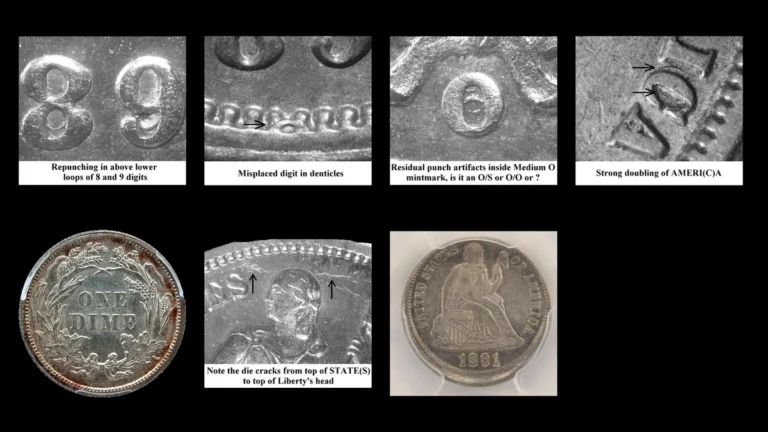
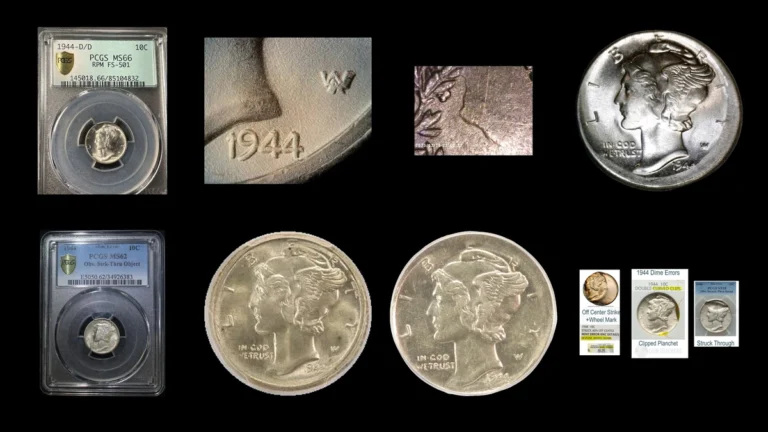
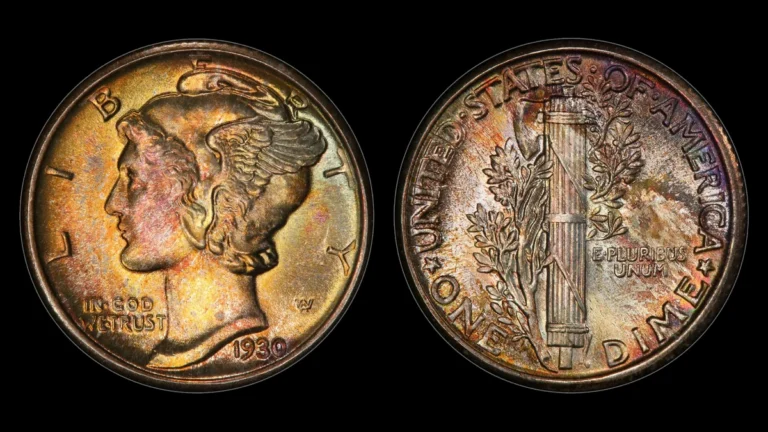
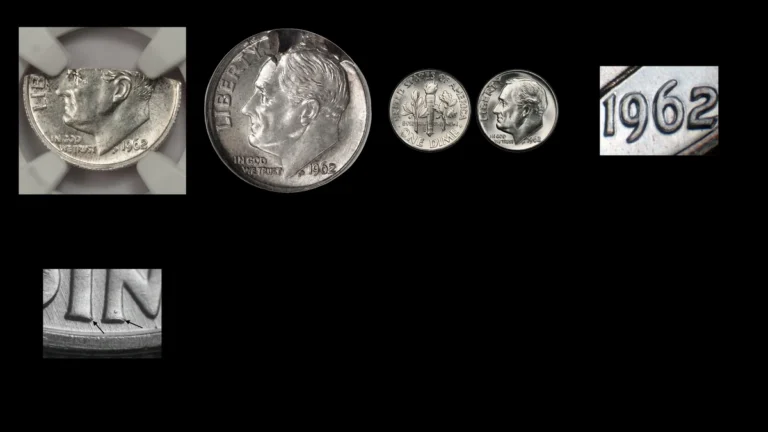
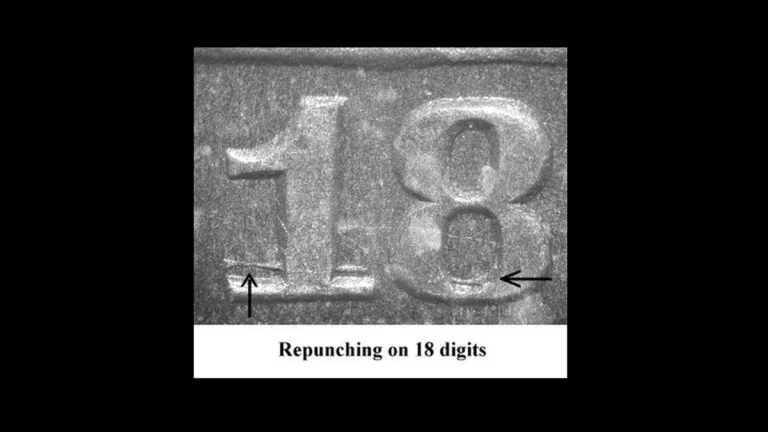
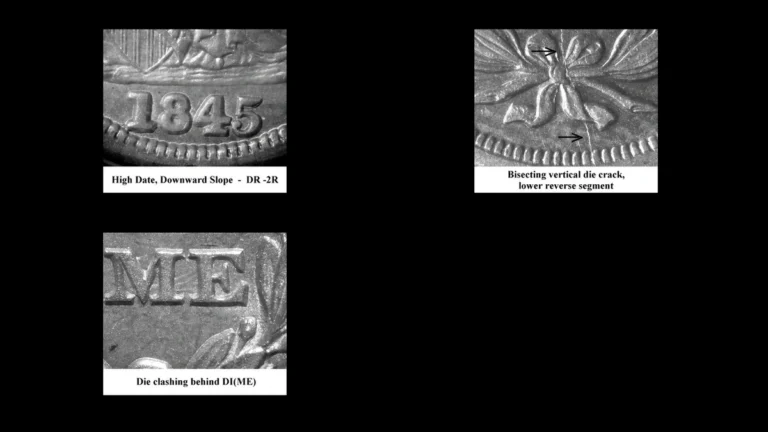
Rare 1990 Dime Errors (List & Pictures)
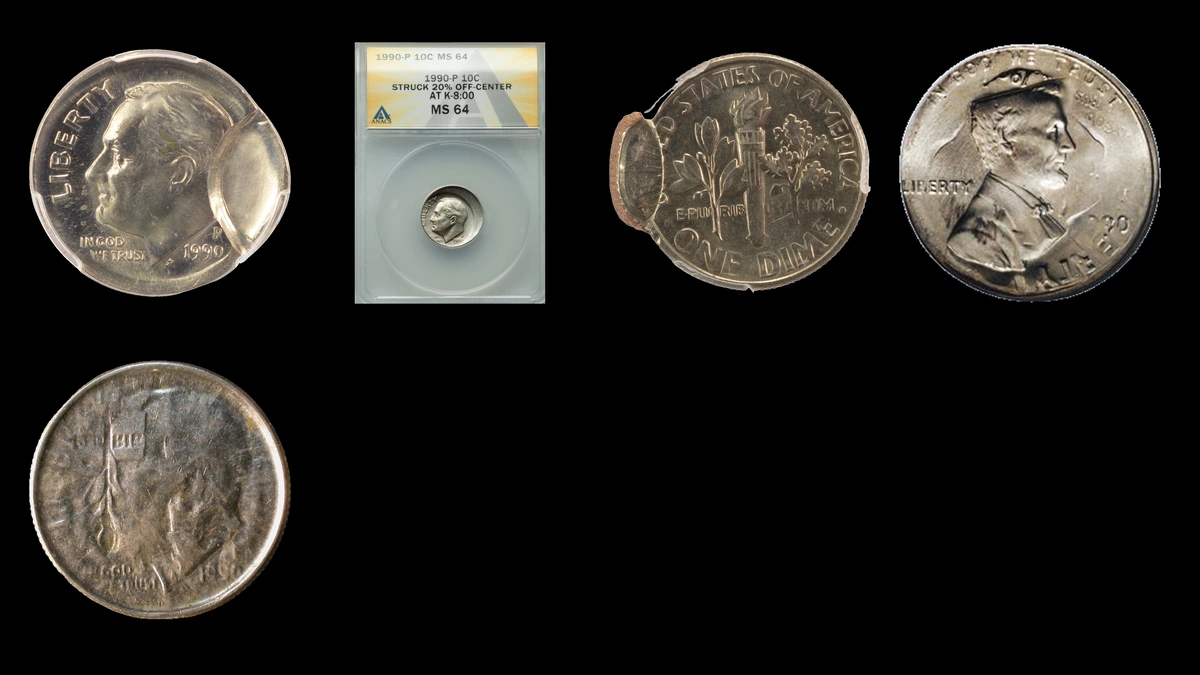
Viewed from the side, a tiny step can identify one of the 1990 dime errors that a face-on photograph misses. Other examples carry two dates or even two different portraits.
Estimated values run from $10–$3,000; a cent struck over a finished dime sold for $1,092.50 in April 2006. The inspection route below begins with the edge, then separates displaced designs, blocked impressions, and small details.
1. 1990 Dime A Step between Edge Bands: Partial Collar Strike Error
Turn the dime sideways to look for a narrow grooved band beside a wider, smoother band. This step can form when the blank sits only partly inside the collar, the ring that controls its width and makes the edge grooves.
How to Identify
Follow the boundary around the edge and examine where the grooves stop. A struck transition should be distinguishable from dents that crush the grooves or fold the rim.
GreatCollections listed a 1990-P example graded ICG MS63, an unworn coin with visible marks. The edge structure identifies the error; the grade describes preservation.
For physical comparisons throughout this guide, an ordinary clad dime weighs 2.268 grams and measures 17.91 mm across. Record loose coins gently, and use photographs or recorded measurements for sealed examples.
What It’s Worth
A clear partial collar strike is estimated at $20–$125. No realized price is supplied for the ICG example.
A visible, well-preserved step is easier to collect than a slight transition hidden by edge damage.
2. 1990 Dime A Wider Border around Complete Lettering: Broadstrike Error
If the whole design fits inside an expanded outline, the collar may have failed to restrain the blank. Metal spreads outward during the strike, producing a broadstrike.
How to Identify
Check the outer lettering on both sides before measuring the extra width. Loss of part of the intended design beyond the blank points toward an off-center strike instead.
Examine the expanded metal for struck surfaces and surviving central detail. Hammering can widen an ordinary coin while crushing its design, so size alone does not establish this error.
The recorded Philadelphia piece was graded ANACS MS64. Its auction partner was a 2005-P dime missing a reverse layer; that partner’s copper-colored face and low weight do not describe the 1990 coin.
What It’s Worth
The broadstrike estimate is $20–$150. The MS64 coin and the separate 2005-P error brought $89 together in March 2023.
That group total is not an individual sale price. Clear expansion and undamaged lettering help make a broadstrike visually convincing.
3. 1990 Dime A Straight Gap beside Expanded Metal: Broadstrike on a Clipped Blank Error
A straight missing edge and a spread-out border can occur on the same dime. The missing section formed when the blank was cut at the metal strip’s edge, before striking without normal collar restraint expanded the remainder.
How to Identify
Look closely at the junctions where the straight boundary meets the wider struck surface. Natural metal flow supports the sequence, while parallel file marks or sharp cut edges suggest later removal.
The documented 1990-P example weighs 2 grams and carries an NGC MS65 grade. That low weight fits its missing section; it is not evidence that this particular coin lost an outer layer.
Identify both features on the same piece. A straight cut alone does not establish a broadstrike, and an expanded outline alone does not establish a clip.
What It’s Worth
Comparable combined errors are estimated at $50–$250. The 2-gram Philadelphia example sold for $74 in July 2021.
This is one coin with one total value. Original edges and an undamaged date help preserve the evidence for both stages.
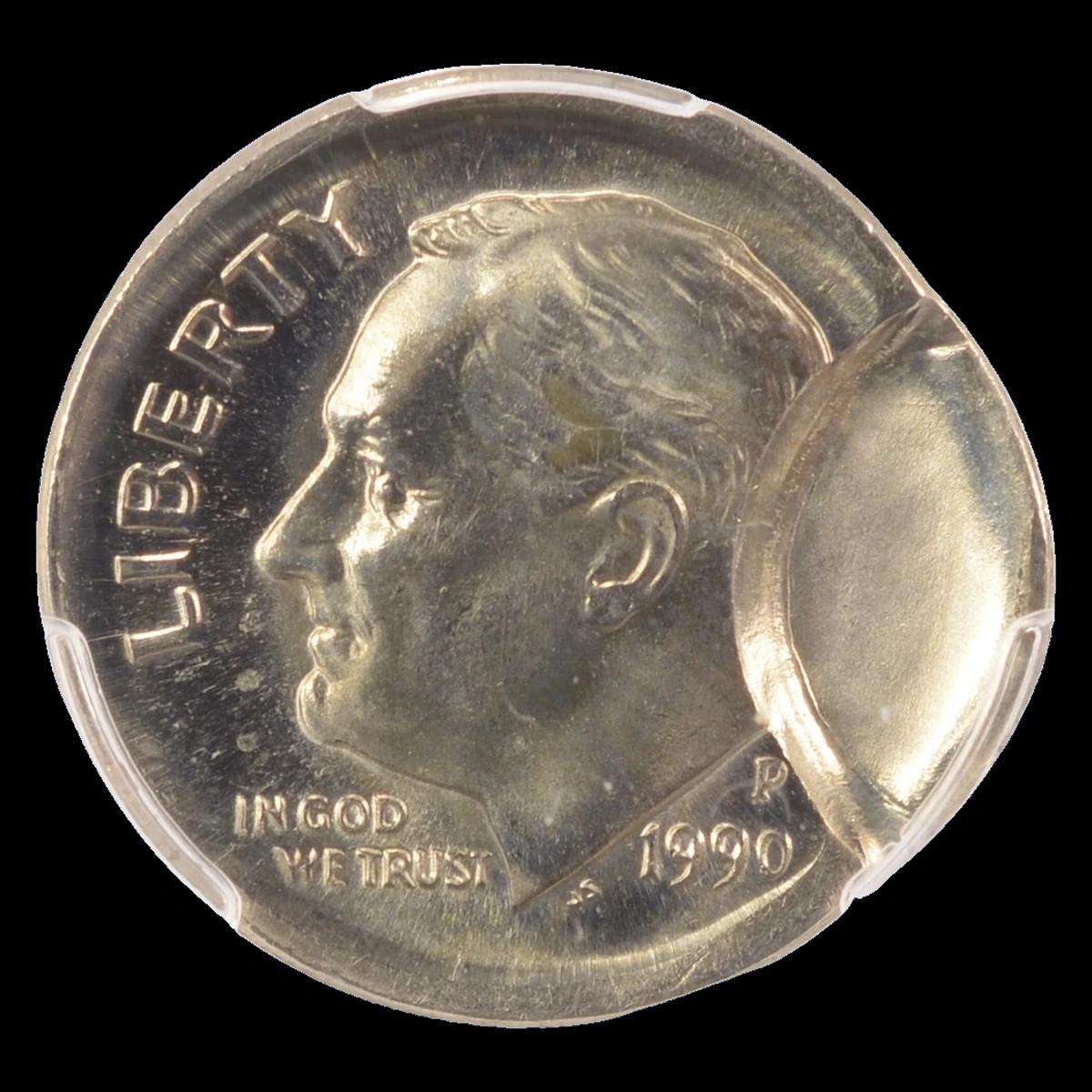
4. 1990 Dime A Rounded Missing Section: Curved Clipped Blank Error
A curved opening can be left when a blanking punch overlaps a previously cut hole. The incomplete blank can then receive an otherwise recognizable dime design.
How to Identify
Inspect both ends of the opening, not just its resemblance to a bite. Transitions shaped during striking differ from saw marks, sharp burrs, or a freshly filed surface.
A weak rim opposite the clip may support the identification, though it is not present on every example. Lower weight is also consistent with missing metal, but does not distinguish an original clip from a later cut by itself.
The supplied 1990 listing identifies neither a particular mint nor a fixed position for the gap. Those details must come from the actual coin under examination.
What It’s Worth
Genuine curved clips are estimated at $15–$100, without an individual sale supplied. A clearly visible gap with original surrounding surfaces makes a better comparison than a tiny notch on a corroded dime.
5. 1990 Dime Copper Where an Outer Face Should Be: Missing Clad Layer Error
Across a normal edge, the copper core lies between two lighter outer layers. If an outer layer was absent before striking, exposed copper can carry the design on that face.
How to Identify
Inspect the layer boundary at the edge and compare both faces without polishing. A genuinely absent layer should explain the exposed copper, struck design, and reduced weight together.
Stains or chemical treatment can change color without producing that original structure. Roughness from scraping also needs to be separated from a design struck into exposed metal.
The year guides report the category without identifying a particular certified 1990 example. The 1990-S Proof was clad too, so a collector finish does not imply a silver composition.
What It’s Worth
An identified missing-layer dime is estimated at $50–$300. For a different-year comparison, a 1995-P dime missing its full front layer brought $75 in July 2022.
The estimate requires actual layer loss. An ordinary brown surface does not receive the same value.
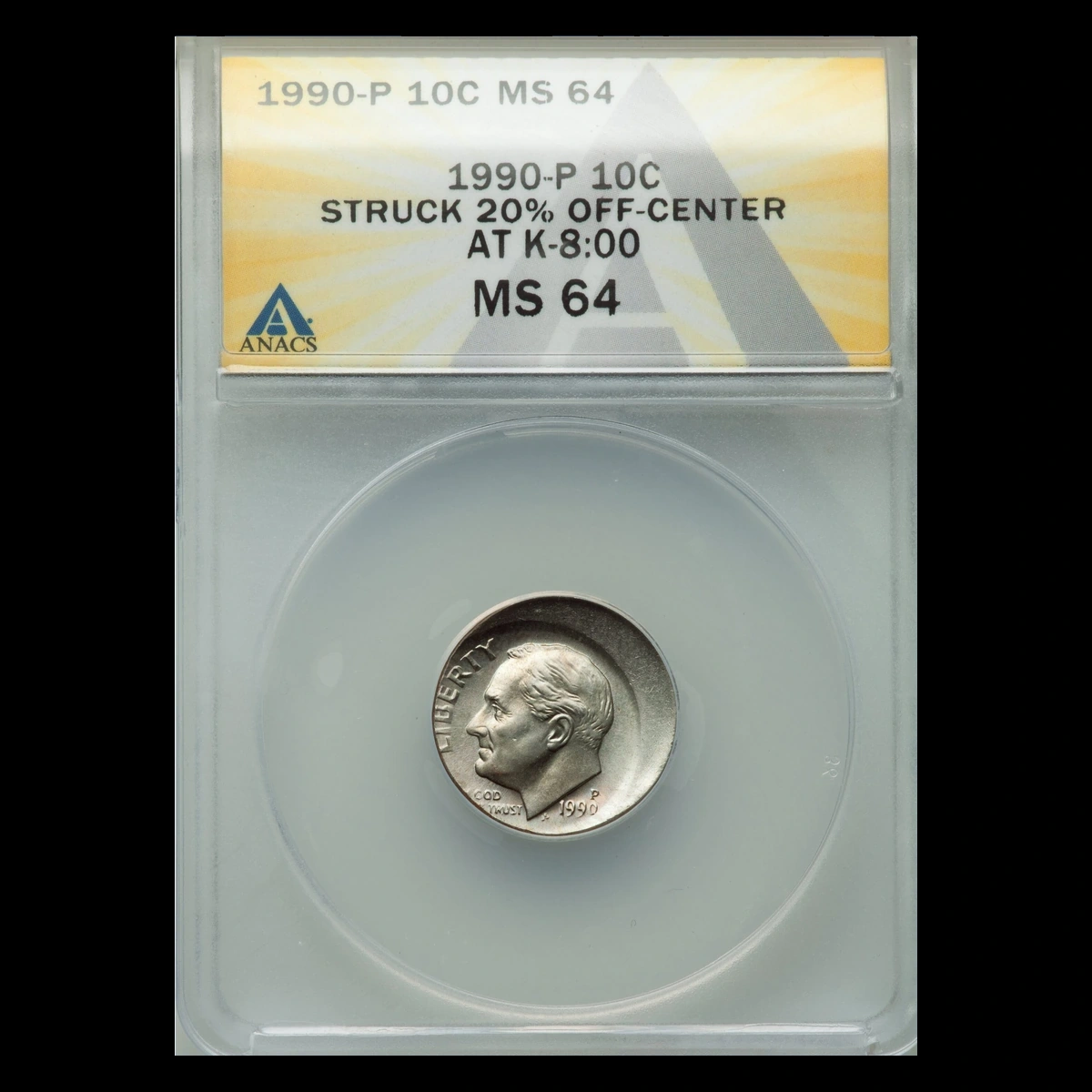
6. 1990 Dime The Design Running off One Side: Off-Center Strike Error
A blank crescent opposite missing design shows where the blank lay outside the stamping area. Both faces should agree with that displaced position.
How to Identify
Locate a readable date before assigning the year. A similar outline cannot supply a missing final digit.
An older dealer description identifies an unworn Denver example struck 55% off center toward 1 o’clock. These measurements describe that coin, not every 1990-D off-center dime.
Follow the design to its cutoff and the untouched crescent on the other side. A narrow rim on just one face is not the same evidence.
What It’s Worth
Clear dated examples are estimated at $25–$200. A separate 1990-P dime struck 30% off center sold for $69 in August 2011.
The Philadelphia sale is a same-year comparison, not the Denver coin’s result. A clean crescent and complete date may matter more to a buyer than a larger percentage.
7. 1990 Dime A Displaced Front with No Matching Back: Off-Center Uniface Strike Error
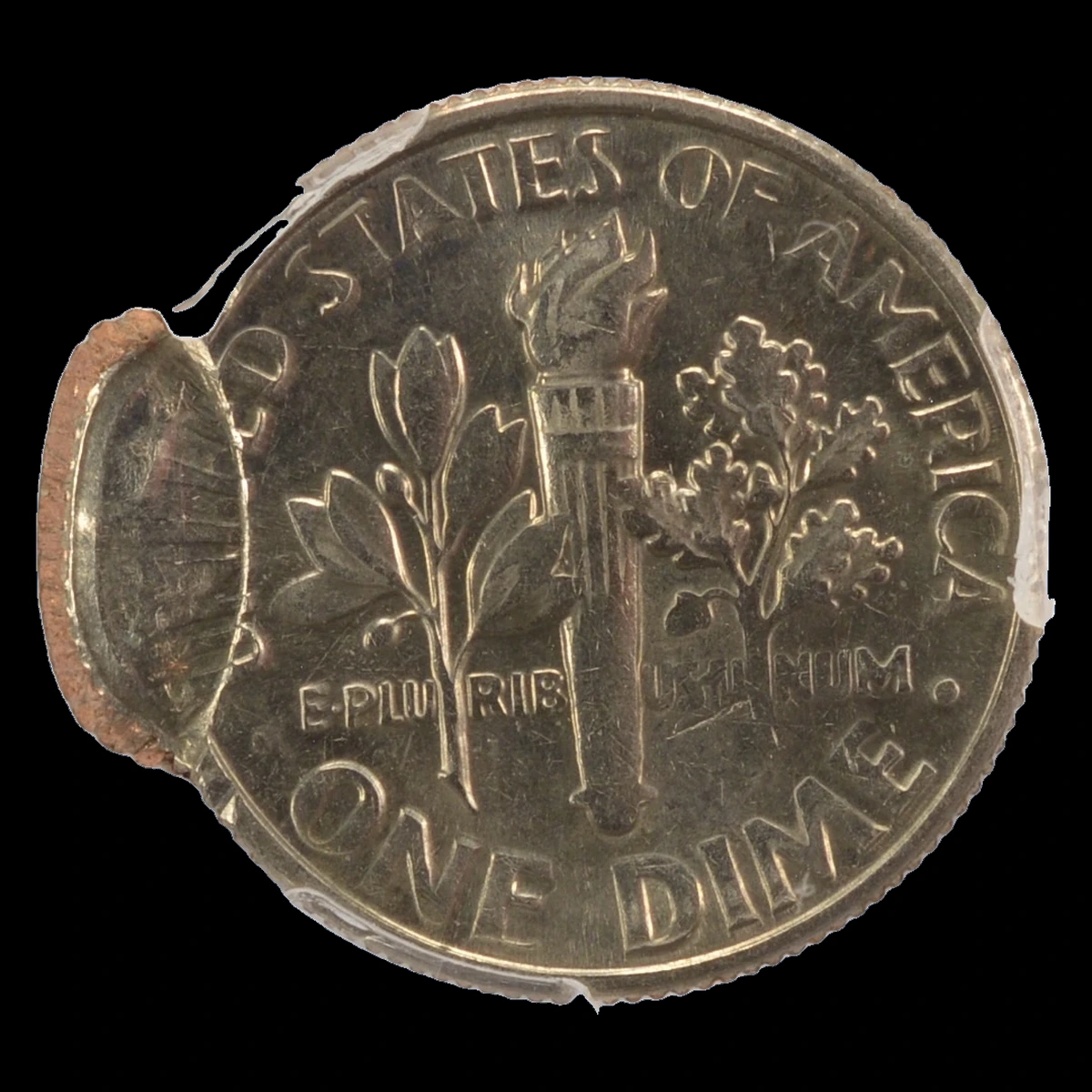
Turn an off-center coin over to see whether its struck area received a reverse design. An obstruction can block that contact, leaving a uniface strike—one without the expected design on one side.
The dealer-described 1990-P example is 70% off center toward 10:30, with the reverse strike blocked.
How to Identify
Align photographs of both faces and locate the reverse area corresponding to the struck front. That comparison connects the absent design to the actual strike.
Low-angle light can reveal grinding lines or a thinned, polished depression where a design was removed later. The blank reverse does not identify what material blocked the tool.
What It’s Worth
Comparable dated examples are estimated at $50–$350. The dealer listing specified a $22 minimum bid, which is not a completed sale.
Clear date visibility and an undisturbed blocked surface help show the combination. Later abrasion reduces both its appearance and the clarity of the evidence.
8. 1990 Dime Two Dates and Two Mint Letters: Double Strike with a Blocked Second Blow Error
The recorded Philadelphia coin preserves two dates and two P letters. After its initial strike, it moved and received a second blow 75% off center, with one side of that later strike obstructed.
How to Identify
Use the repeated dates and mint letters as landmarks for tracing two separate impressions. Their large displacement records movement of the whole coin between blows.
Now compare the area of the later strike on the other face. Its blocked portion should lack the normal second impression, fitting the uniface description.
The dealer called the coin unworn. That description does not turn every stretched letter or small doubled outline into another complete strike.
What It’s Worth
Similar double strikes are estimated at $100–$600. A 1995-P example with a 75% off-center second blow and front indentation sold for $124 in July 2022.
The comparison has a different date and additional features. Readable repeated landmarks generally explain the 1990 sequence more clearly than damaged or confused overlap.
9. 1990 Dime Lincoln and Roosevelt Together: Cent Design over a Finished Dime Error
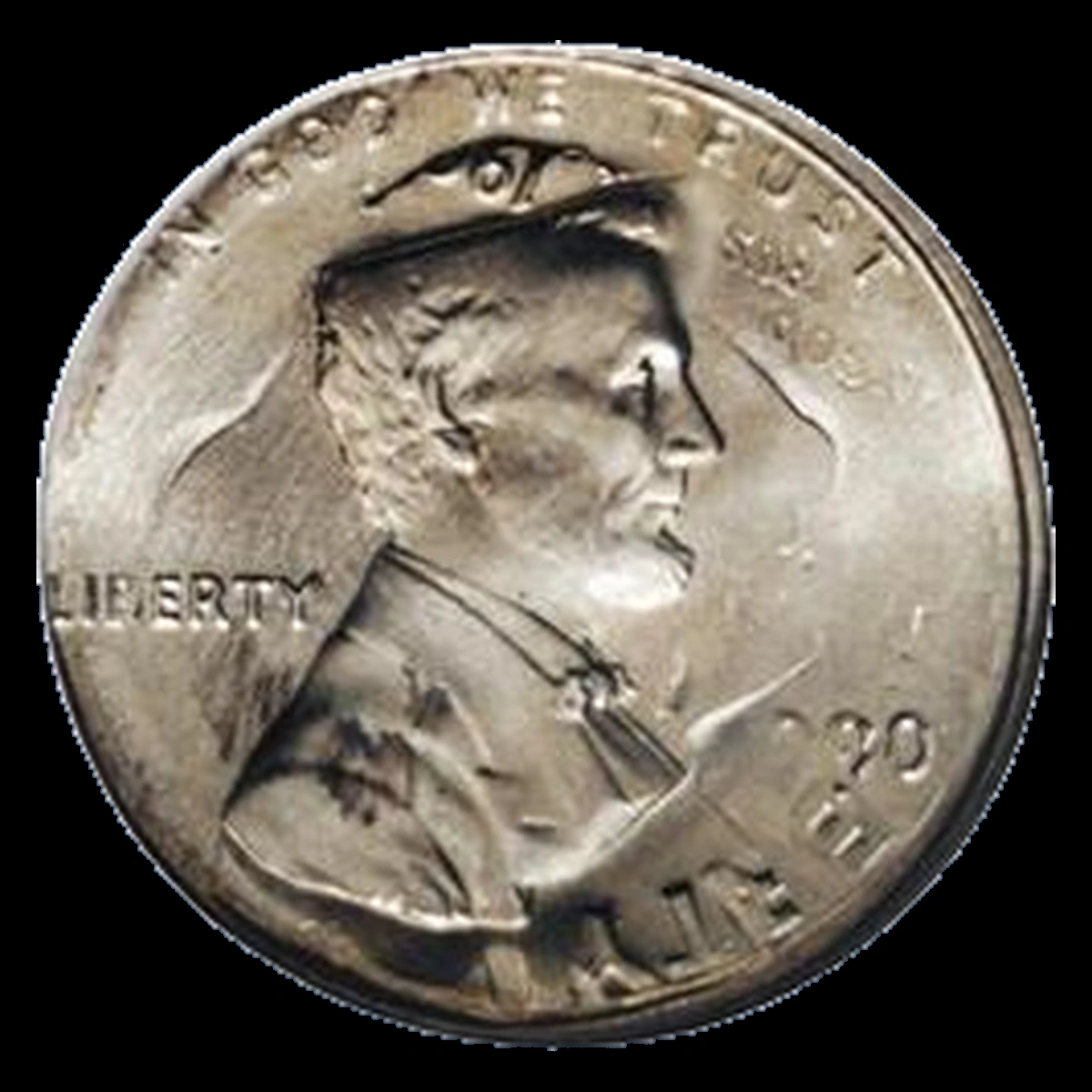
Two different portraits reveal more than a dime struck twice. A completed 1990-P dime entered a cent press and received the 1990 Lincoln design over its existing images.
How to Identify
Rotate the coin to read each date independently, then locate the dime’s P. The auction description records Roosevelt nearly upside down relative to Lincoln.
Trace surviving dime details beneath the newer cent impression. Those remnants distinguish a finished dime used as the host from an unused dime blank mistakenly placed in a cent press.
The starting weight is the dime standard, rather than the cent’s 2.50 grams. The later blow can expand the outline, so exact original diameter need not survive.
What It’s Worth
Comparable readable combinations are estimated at $1,000–$3,000. Heritage’s NGC MS67 example sold for $1,092.50 on April 29, 2006.
MS67 describes an exceptionally well-preserved unworn coin. Both dates and the surviving P make this particular striking sequence unusually easy to follow.
10. 1990 Dime A Raised Portrait beside Sunken Backward Details: Clashed-Cap Strike Error
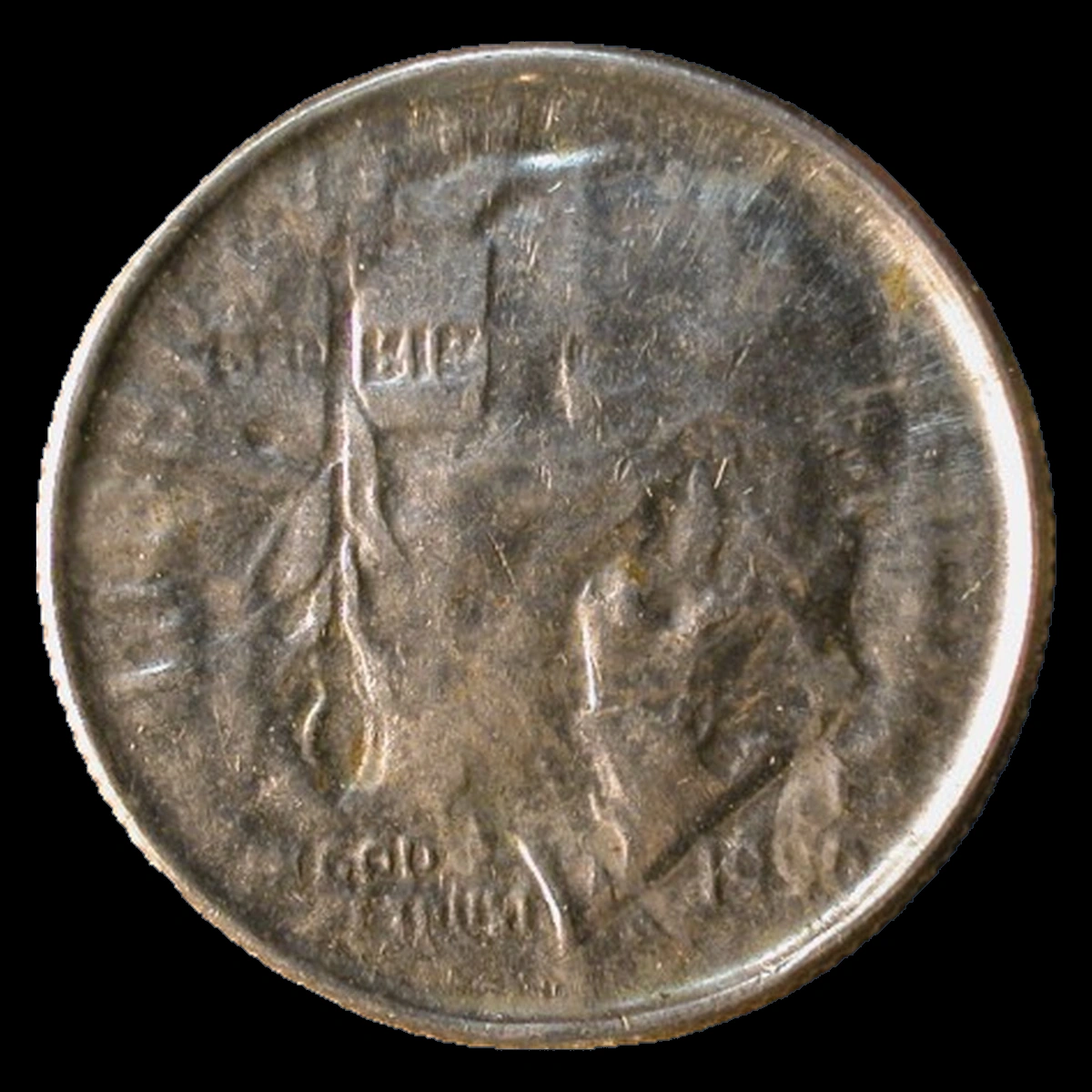
The height of the extra design is the key to this unusual front. Roosevelt appears as a raised ghost, while reverse details lie backward and sunken into the same face.
A thin coin cap covered the front tool, contacted the reverse tool, and picked up a fresh impression. It then transferred that impression to another blank while allowing a ghost of Roosevelt to show through.
How to Identify
Compare the two kinds of relief with the 1990-P example illustrated by Error-Ref. Its sunken mirror-image details remain compact rather than stretching widely across the face.
This dime received the cap impression; it is not the cap itself. A generally weak portrait does not establish the more specific clash sequence.
A separate dealer candidate suggests a simpler capped-die strike. Conflicting holder information prevents treating that candidate as another established certified example.
What It’s Worth
A clear clashed-cap impression is estimated at $200–$1,000; a simpler confirmed capped-die strike at $75–$300. These are comparison-based estimates, not supplied sales of the two listings.
Distinct raised and sunken details support the more unusual identification. An unresolved dealer title does not establish the higher range.
11. 1990 Dime Local Missing Letters or a Depression: Struck Through Grease or Debris Error
Interrupted detail deserves attention when the surrounding design remains sharp. Material between the tool and blank may prevent a small area from receiving its normal impression.
Grease can leave shallow weakness, while firmer debris can leave a more defined depression. The general 1990 reports identify no particular object or fixed location.
How to Identify
Compare the affected area with the portrait’s high points. Uniform loss from circulation differs from a local interruption beside otherwise strong detail.
Inspect the surface for smooth striking versus a sharp impact with metal pushed up around it. The reverse may remain unaffected, so matching weak areas on both sides are unnecessary.
Describe the visible impression before naming its cause. A vague shallow patch cannot establish a specific piece of debris.
What It’s Worth
Small identifiable examples are estimated at $10–$150. Larger, distinct impressions with attractive surrounding design can bring more than barely weakened letters.
This is a comparison range for modern clad strike-throughs. Wear alone does not qualify.
12. 1990 Dime An Extra Ear Outline: Reported Doubled Die Obverse Error
The reported 1990-D feature lies at Roosevelt’s ear on the obverse, or front. If caused by a doubled die, the extra outline belongs to the stamping tool and can repeat on coins made from it.
How to Identify
Keep the coin level and move the lamp to test whether the outline remains in place. A reflection can disappear or shift, while an actual raised feature stays fixed.
Compare the ear with an ordinary 1990-D dime under similar light. Rounded separation differs from a flat shelf or sideways smear produced during striking.
The year guide did not independently certify its ear example. Treat the report as a feature needing confirmation, rather than a settled variety based on one enlarged photograph.
What It’s Worth
Confirmed minor die doubling of this kind is estimated at $15–$100, based on comparable modern dime features. That conditional estimate does not establish a sale or certification for the reported coin.
Clean separation on an unworn ear is more persuasive than thickness obscured by scratches or wear.
Conclusion
For a 1990 dime, begin by deciding whether metal is missing, spread outward, or simply missing a design impression. Those differences lead to better comparisons than an unusual shape alone.
Keep a combined error’s features together when valuing it, and preserve the distinction between an individual sale, a group total, and a minimum bid. Small reported varieties need confirmation just as dramatic overlapping designs do.