Rare 1970 Dime Errors (List & Pictures)
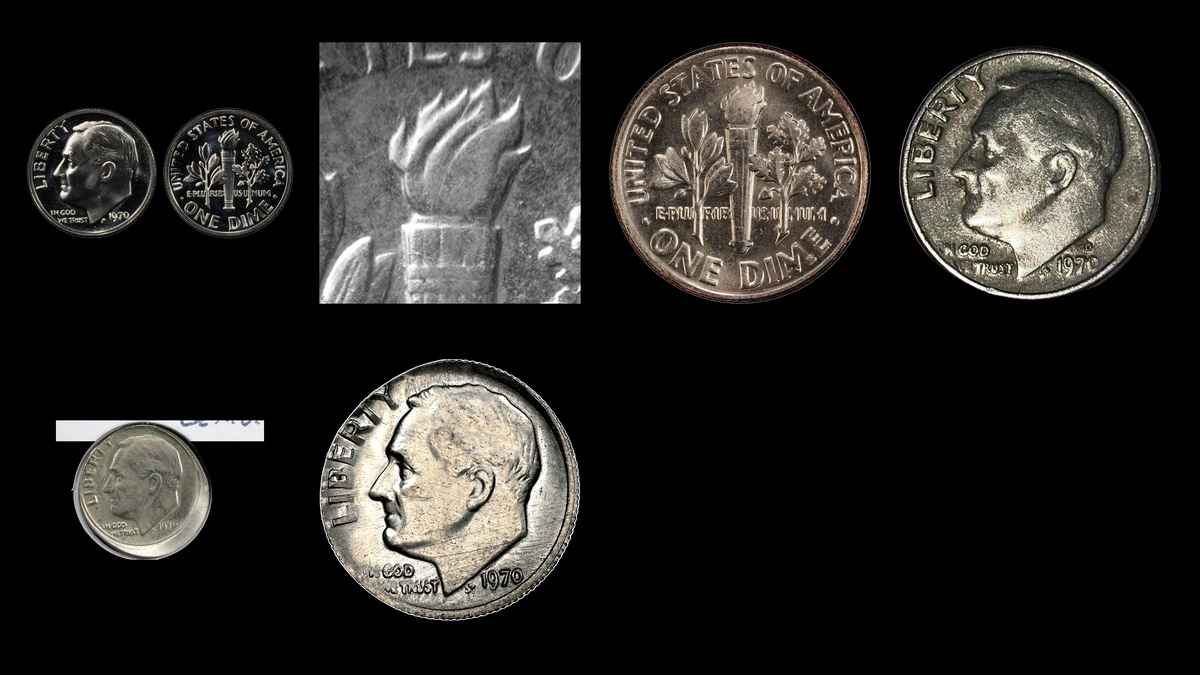
For 1970 dime errors, a missing mint letter matters only after the coin’s finish is identified. An authenticated No S Proof brought $5,750 in August 2007, while ordinary Philadelphia dimes correctly lack a letter.
The estimated $5–$30,000 range includes small tool breaks, unusual blanks, and a rare silver-blank report. Begin with finish and reverse detail, then use metal, edge, and strike evidence to select the right comparison.
1. 1970 Dime No Mint Letter on a Collector Coin: No S Proof Error
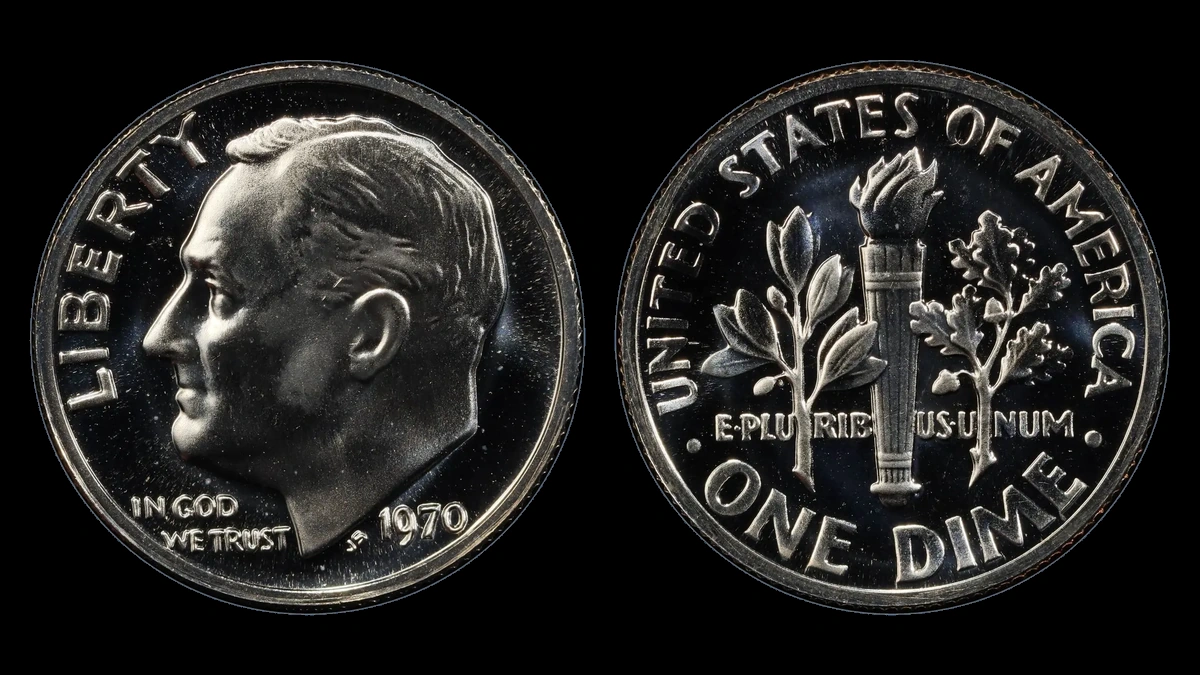
Determine whether the dime is a Proof before interpreting an empty mintmark position. These specially prepared San Francisco collector coins normally have S, whereas ordinary Philadelphia coins do not need a mint letter.
How to Identify
Compare the complete finish and sharp design with a genuine 1970-S Proof. Polishing ordinary pocket change does not reproduce an original Proof or create the scarce No S error.
Examine the position above the date for an undisturbed surface. Scraping away an S can leave tool marks or disturbed metal that must not be mistaken for an original omission.
The No S Proof is clad, not silver. Normal clad dimes weigh 2.268 grams, measure 17.91 mm across, and have grooved edges; those specifications alone cannot distinguish a Philadelphia coin from a Proof.
PCGS’s graded No S examples provide a useful finish and mintmark comparison. Keep certified pieces sealed when inspecting them.
What It’s Worth
Authenticated No S Proofs are estimated at $500–$6,000. PCGS records a PR69 Deep Cameo example sold for $5,750 in August 2007.
PR69 describes a nearly flawless Proof, while Deep Cameo refers to strong frosted-design contrast against mirrored fields. Haze, scratches, or weaker contrast can place another coin much lower.
2. 1970 Dime A Different Torch Flame: 1968-S Style Reverse Error
A sharper flame outline can distinguish a reverse design used on some Philadelphia and Denver 1970 dimes. Its resemblance to the 1968-S collector reverse does not make those ordinary coins Proofs.
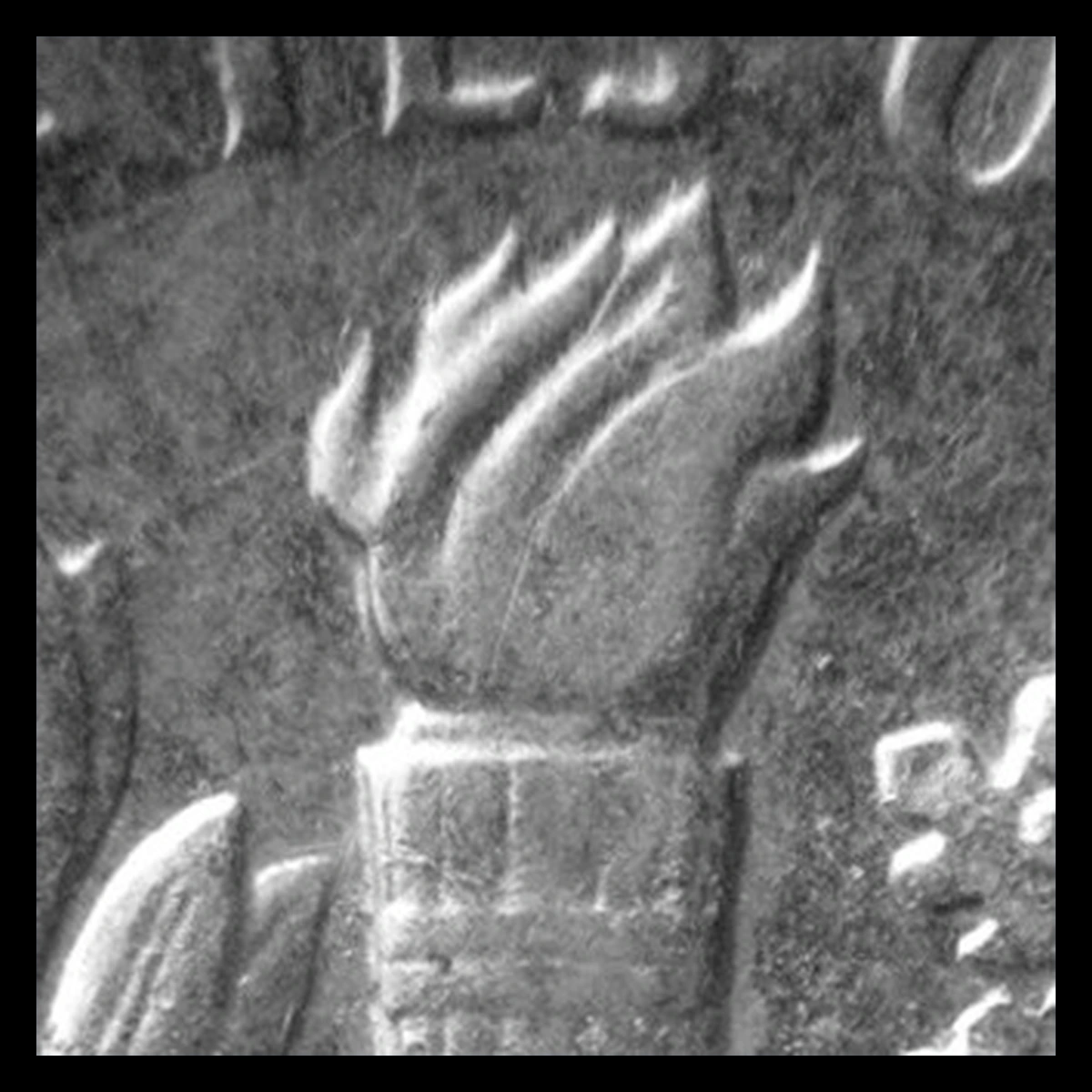
How to Identify
Compare the divided outline at the torch’s top with both reverse styles, rather than judging brightness or general sharpness. Wear and shadows can conceal the useful edges.
Error-Ref shows the Philadelphia and Denver versions. Philadelphia correctly lacks a mint letter; Denver has D.
This is a design variety carried by the reverse tool, not an extra flame from a second strike. The recognizable design also does not establish that workers selected the tool by mistake.
What It’s Worth
Clearly matched examples are estimated at $10–$150 across circulated and ordinary unworn grades. This modest variety range is separate from the No S Proof market.
Very high preservation can add value of its own. Do not credit the whole price of an exceptional grade to the flame design alone.
3. 1970 Dime Extra Raised Outlines on Digits or Torch Details: Doubled Dies Error
Repeated outlines can originate in the die, the steel tool carrying the design, before a coin is struck. The Philadelphia reports include minor doubling on the date’s 0 and several reverse patterns.
Denver has its own reverse patterns, including FS-801 and FS-802. The 1970-S Proof has a separate reverse pattern as well.
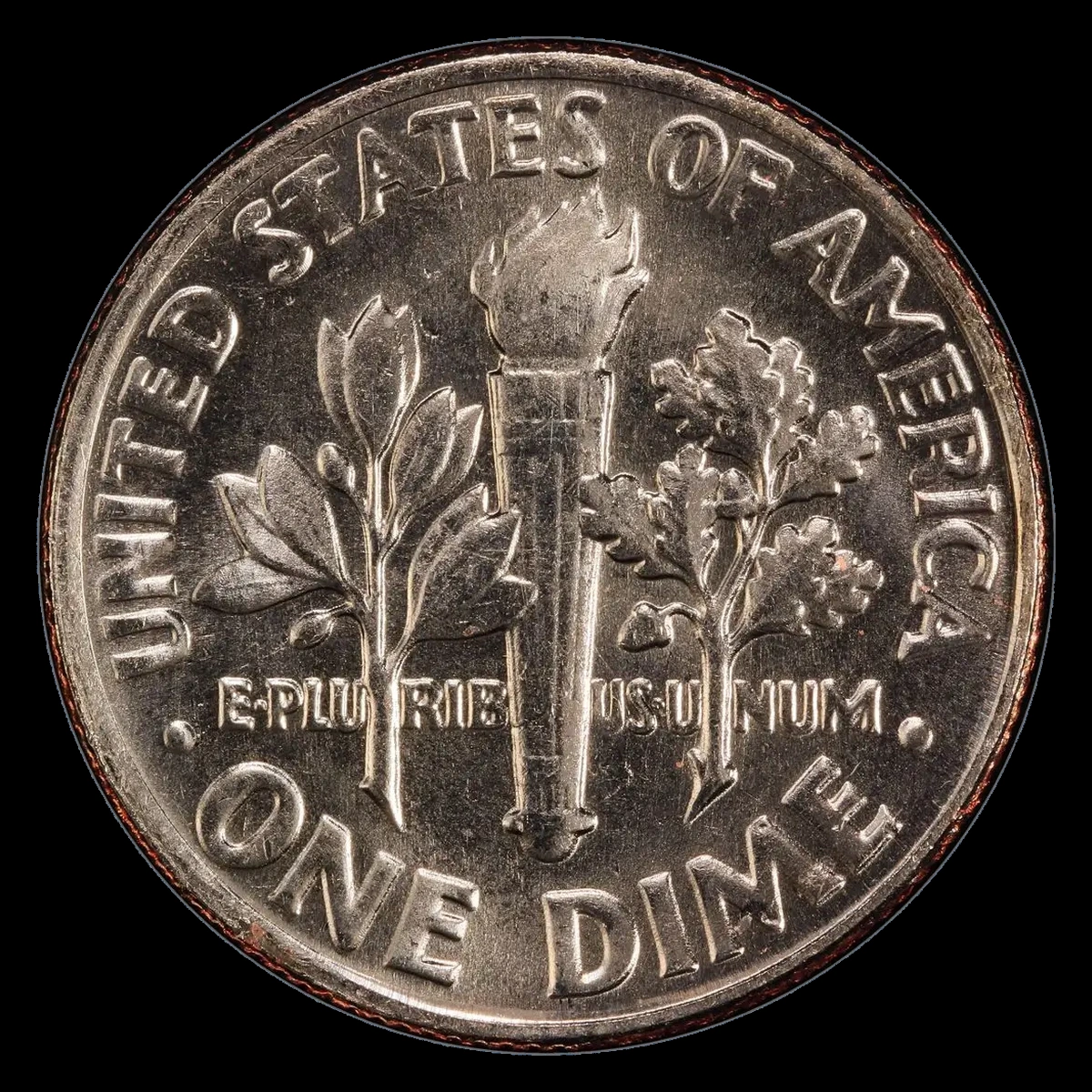
How to Identify
Choose the mint and finish first when using the Wexler photograph set. A match for one Denver reverse does not identify a Philadelphia or Proof coin.
Examine the small Philadelphia 0 feature separately from reverse lettering, flame, and upper leaves. For a reverse variety, compare the group of relevant details instead of one thick letter.
Rounded separation or split corners can support genuine die doubling. A low flat shelf that reduces the main letter points toward movement during striking instead.
What It’s Worth
Identified doubled dies are estimated at $15–$500. A clear recognized pattern in good condition offers a stronger comparison than a faint minor feature on a worn dime.
No individual auction result is supplied here for these varieties. Ordinary mechanical shelves generally add little special value.
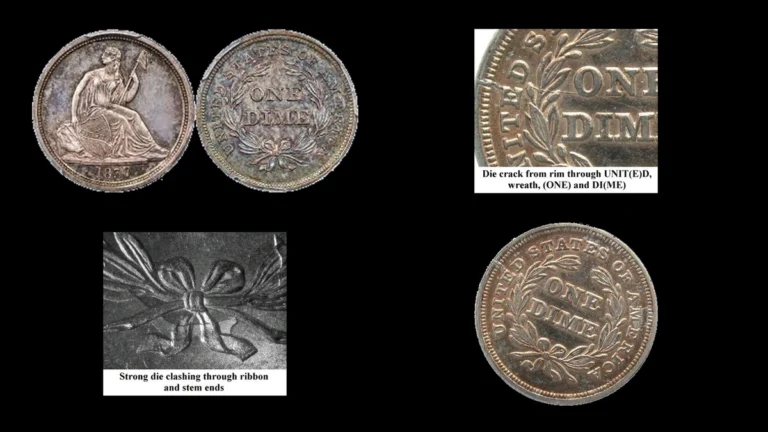
4. 1970 Dime A Raised Ridge or Patch Reaching the Rim: Die Crack or Cud Error
Metal entering a crack in the stamping tool leaves a line above the coin’s surface. When a larger piece breaks away at the tool’s edge, a broad raised patch can replace the design and join the rim.
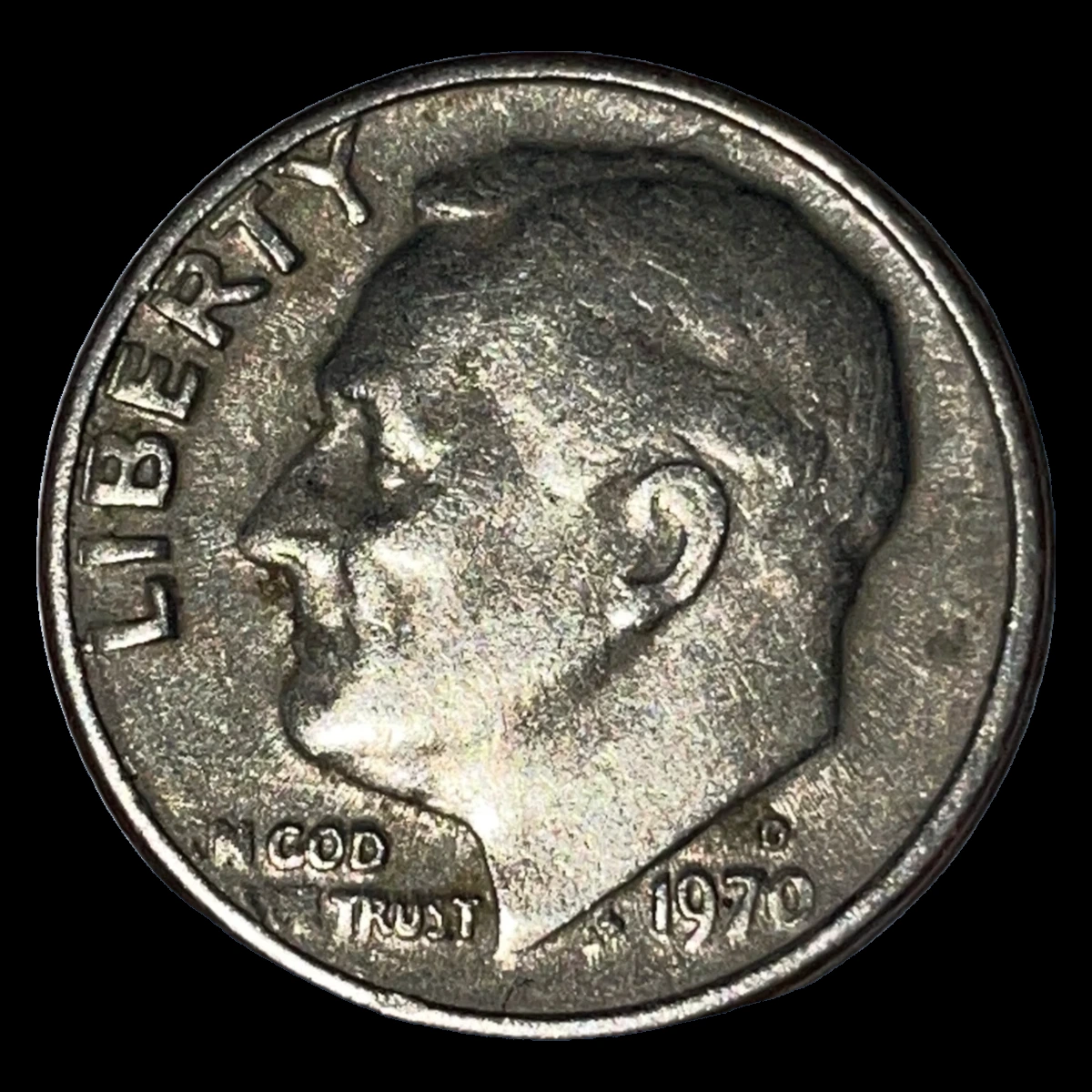
How to Identify
Follow the mark under side lighting and inspect its center. A scratch can raise metal beside its cut, making the edges misleading if the recessed groove is overlooked.
A cud needs a connection to the rim, not merely an isolated lump. Weakness on the opposite face may accompany a large break, but the raised rim-connected shape is the primary clue.
The 1970 reports establish no single path or mint. Inspect the actual feature rather than borrowing another coin’s crack diagram.
What It’s Worth
The estimated range is $5–$200, from minor cracks to bolder rim breaks. Shape, visibility, and preservation influence demand more than the length of a barely visible line.
Heavy wear or loss of useful date detail can limit an otherwise conspicuous break.
5. 1970 Dime Brown Front, Gray Back: Missing Front Layer with Lamination Error
The recorded Denver coin contrasts a mostly brown front, with traces of orange, against a nickel-gray reverse. It lacks the front outer layer and also has lamination, or separation along a weak metal boundary.
How to Identify
Compare both faces under the same light and examine the edge for the surviving layers. The design on exposed copper should be naturally struck rather than scraped through afterward.
Trace the peeling area without lifting attached metal. The missing layer and lamination are two features of this one ANACS MS60 coin.
No individual weight is established in the supplied description. Record a loose candidate directly instead of assigning it a standard figure copied from an auction page.
What It’s Worth
Identified front-layer losses are estimated at $30–$400. The ANACS MS60 Denver example sold for $33 in August 2004.
MS60 indicates an unworn coin with noticeable marks. The old result prices the complete object, not separate amounts to add for peeling and layer loss.
6. 1970 Dime A Straight or Curved Gap: Clipped Blank Error
The documented Denver clip removes a large straight section of the original blank. Its catalog gives a 35% clip and an actual weight of 1.5 grams.
Curved clips are also reported. A blanking punch can overlap an earlier hole to create a curved gap, while the strip’s boundary can produce a straight missing edge.
How to Identify
Inspect both ends of the opening for rim and design shaped toward the absent metal. Saw grooves, fresh burrs, or lettering sliced through later suggest a post-strike cut.
Opposite-rim weakness can support an original clip when visible. The wall of the opening and its interaction with struck detail still need examination.
The 1.5-gram reading belongs to the large straight clip, not every smaller curved example. Its NGC Uncirculated Details label identifies cleaning as a later condition problem.
What It’s Worth
Genuine straight and curved clips are estimated at $20–$300. The cleaned 35% Denver example sold for $37 in July 2021.
Unworn status does not erase the effect of cleaning. A large original opening still needs an attractive surface and a readable remaining date for a strong comparison.
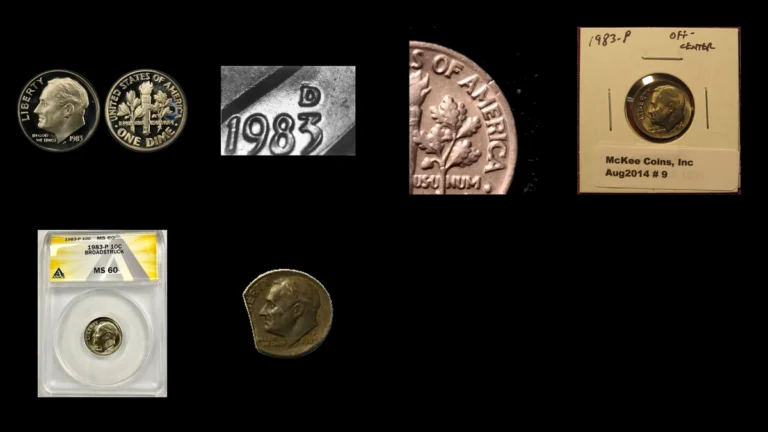
7. 1970 Dime A Broad Border around Complete Design: Broadstrike Error
A collar normally restrains the blank during striking. If that ring fails to contain it, the dime can expand while retaining all the intended design.
How to Identify
Check every outer letter on both faces before calling a wide rim a broadstrike. Unequal border widths can occur even though the design remains complete.
Examine the expanded surface and edge for original flow rather than hammering or squeezing. Later flattening can widen a coin while damaging its struck details.
One year guide specifically discusses Denver broadstrikes, but the reports do not supply measured coins for every claim. A slightly irregular border alone does not prove collar failure.
What It’s Worth
Straightforward dated examples are estimated at $20–$200. A different-year 1995-P broadstrike, graded NGC MS66 with sharp torch bands, sold for $45.
That comparison illustrates a modest uncomplicated error. More visible expansion and clean surfaces can support stronger interest.
8. 1970 Dime Design Missing beside Untouched Metal: Off-Center Strike Error
An off-center blank receives only part of the design, leaving a crescent untouched. Unlike a simple broadstrike, some intended detail falls beyond the metal.
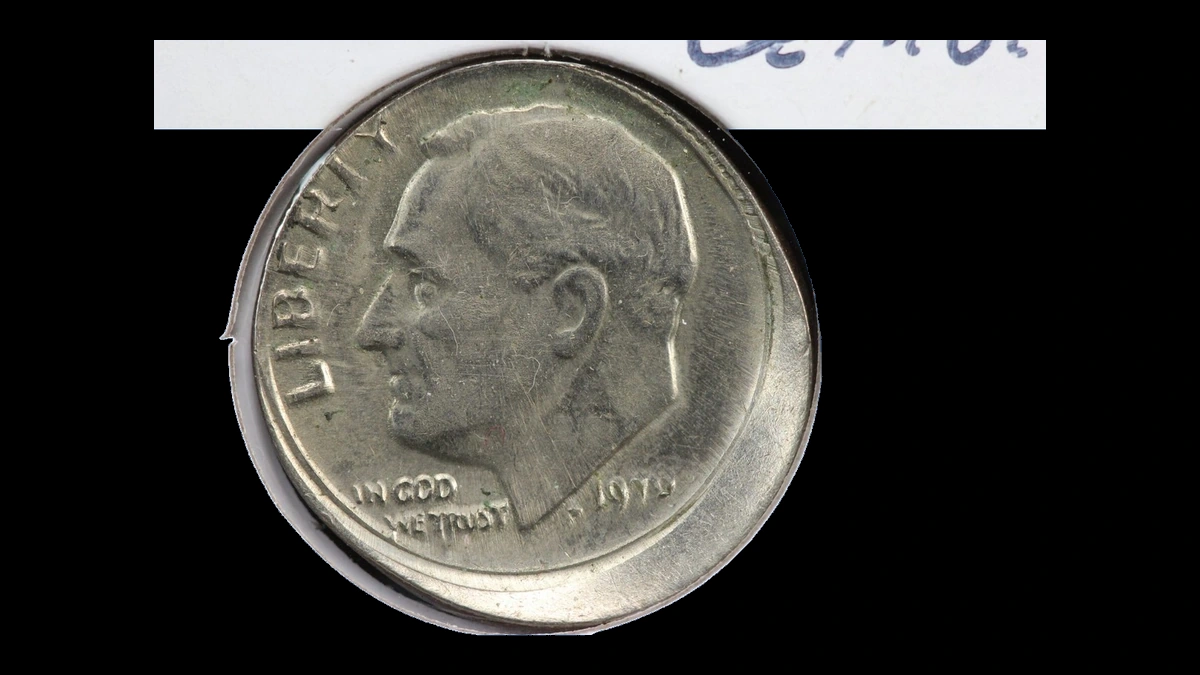
How to Identify
Locate the 1970 date and compare the displacement on both faces. A shift on only one face may come from one misaligned tool instead.
The blank crescent should retain an original surface and meet the struck portion naturally. Cutting or grinding can remove design but leaves worked metal rather than an untouched blank.
No specific mint, percentage, or direction is established for the year’s general reports. The separate double-struck coin’s second-blow percentage does not describe these single-strike examples.
What It’s Worth
Dated examples are estimated at $25–$250. A 1974-D dime struck 45% off center sold for $45 in January 2022, a different-year comparison.
A clear year and undamaged crescent can make a moderate shift more appealing than a larger one with the date gone.
9. 1970 Dime A Small Second Impression at the Edge: Double Strike Error
A nearly complete first design survives on the recorded 1970 dime because the second blow only caught an edge area. That later strike is described as 90% off center.
How to Identify
Find raised design belonging to the later impression, then trace where it crosses or flattens the earlier image. Check the other face for changes consistent with that same blow.
A folded rim or flattened dent has no separate struck design. The label’s percentage cannot replace visible evidence of the second impression.
The NGC MS62 description provides no clock direction or claim of a blank, flattened face. Those details should not be added to the identified sequence.
What It’s Worth
Comparable double strikes are estimated at $25–$500. The NGC MS62 example sold for $26 in January 2012.
A blow that barely touches the edge can be less conspicuous than widely separated portraits. The 90% figure alone therefore does not imply a high price.
10. 1970 Dime A Consistently Thick, Heavy Edge: Overweight Blank Error
The dealer-cataloged Denver example was struck on a 45-grain blank. That equals approximately 2.916 grams, substantially above the normal clad dime weight.
How to Identify
Measure a loose example instead of estimating weight by feel. Record thickness at several intact edge points, because a distorted rim can appear thick from only one direction.
Inspect for solder, plating, or joins that might have added material later. Extra weight and an originally struck thick blank need to agree.
The PCGS AU55 coin has slight wear, but the record does not establish where its stock originated. Calling it quarter-thickness stock or another denomination’s blank would add an unsupported identification.
What It’s Worth
An identified thick-blank dime of this kind is estimated at $150–$600. The catalog’s $85 minimum bid was an opening requirement, not a recorded sale.
Reliable measurements support the error more directly than an unexplained heavy feel.
11. 1970 Dime A Cut Fragment of Unusual Metal: Aluminum Scrap Strike Error
The known aluminum-scrap piece was later cut in half. It retains a genuine dime impression on scrap rather than a complete round blank prepared for another country’s coin.
How to Identify
Identify the surviving 1970 date and dime design, then separate the later cut from any original scrap boundary. The straight cut is damage to the error, not proof of a straight clipped blank.
The ANACS description gives an unworn design with a lower net assessment for condition. Preserve the holder and keep that later damage in the identification.
A fragment’s current dimensions cannot reconstruct the full scrap object’s outline or weight. Light weight alone also cannot prove aluminum, so composition may require testing without removing metal.
What It’s Worth
Comparable identifiable scrap pieces are estimated at $250–$1,000. This cut example sold for $322 in May 2011.
The result belongs to a damaged fragment. It should not be treated as the price of an intact foreign-blank dime.
12. 1970 Dime Very Light Aluminum or Heavier Silver: Foreign and Obsolete Blanks Error
The aluminum wrong-blank dime used a Philippine one-sentimo blank, called “1 Sen” in the auction title. The NGC MS62 example actually weighs 0.5 gram; a separate PCGS MS62 piece is also recorded.
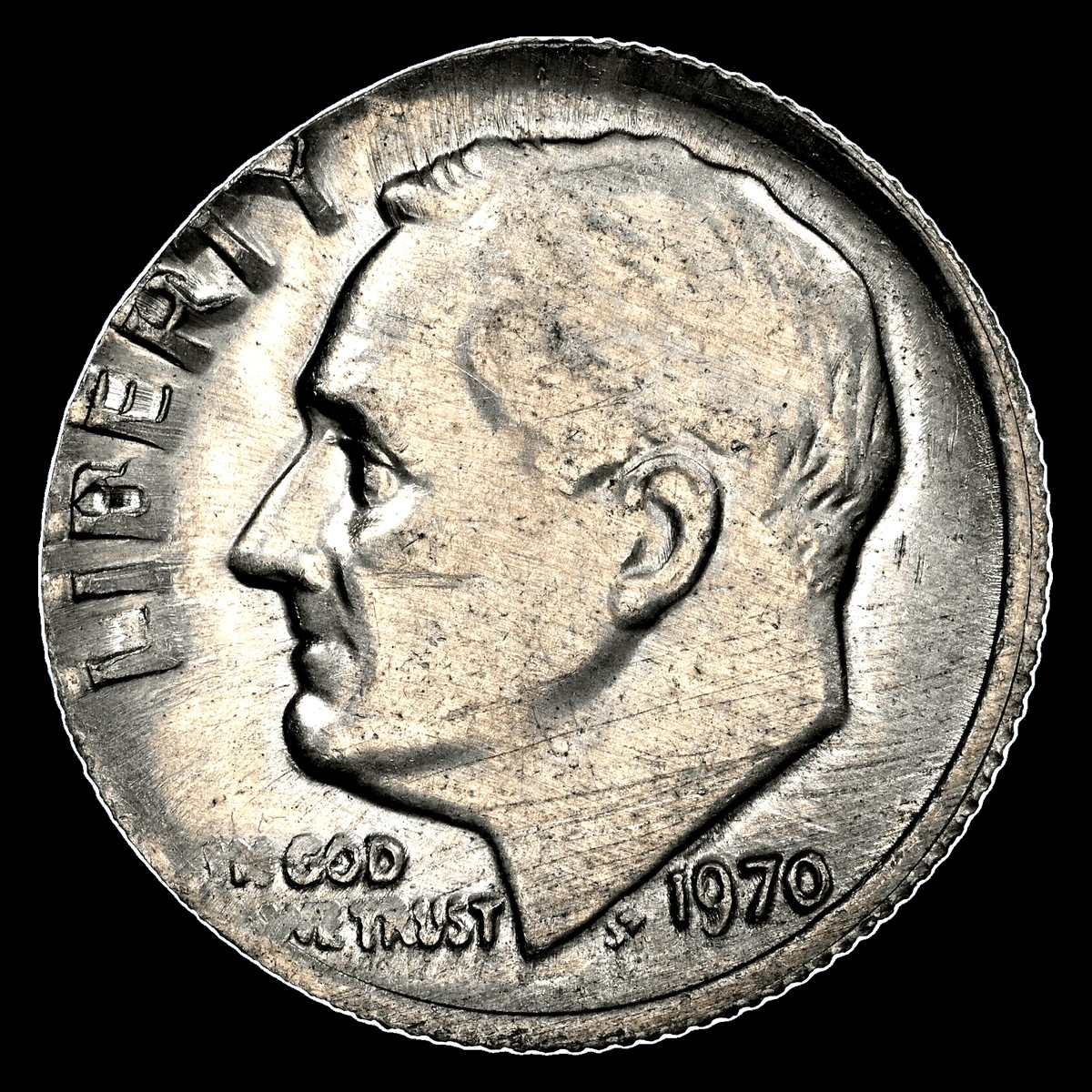
The Denver silver-blank coin is a different object, graded NGC AU50 and weighing 2.5 grams. Its 90% silver blank follows the earlier dime standard, five years after the regular change to clad metal.
How to Identify
Compare each actual weight and metal with its proposed host blank. Do not assume aluminum and silver blanks began at the same diameter or identify one merely by its resemblance to the other.
The edge of either solid metal should lack the usual clad copper center. Plating can conceal color, so preserve the surface and use nondestructive composition testing when needed.
The 0.5-gram Philippine-blank example supplies a measured comparison. It is separate from both the cut aluminum scrap and the Denver silver coin.
What It’s Worth
Philippine aluminum-blank examples are estimated at $1,000–$2,500. The NGC MS62 coin sold for $1,740 in October 2022, while the separate PCGS MS62 piece brought $1,006.25 in January 2008.
The rare Denver silver-blank error is estimated at $10,000–$30,000. Different-year 1965 silver-blank comparisons sold for $14,400 in MS62 in January 2023 and $9,150 in AU53 in January 2026.
Neither silver comparison is a recorded sale of the 1970-D coin. Metal identity, readable date, and preservation must be established before applying the range.
Conclusion
Start a 1970 dime assessment by separating an ordinary no-mintmark coin from a genuine Proof. The sharper reverse design and doubled dies then require their own pattern matches, not assumptions based on brightness.
For unusual metal, keep the thick blank, cut scrap, Philippine aluminum blank, and Denver silver blank distinct. Their measured weights and documented histories explain far more than color or size alone, and their prices should follow those separate identities.