Rare 1994 Quarter Errors (List & Pictures)
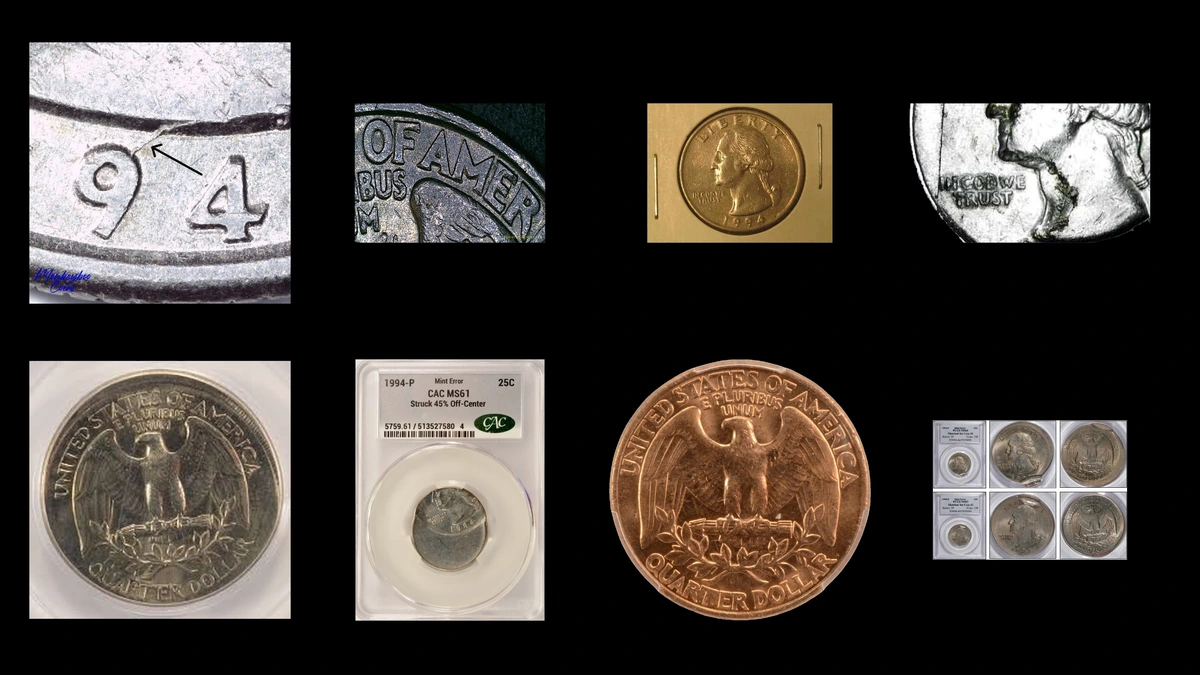
An extra sheet of metal, a missing face layer, and a smaller dime blank can all change a quarter’s appearance. The most valuable record in this list involves two separate 1994-P quarters preserved as a matched set, sold together for $1,610 in June 2008.
Estimated values for these 1994 quarter errors run from $2–$2,500. Start with the surface and edge, then compare the design’s position and the coin’s metal construction.
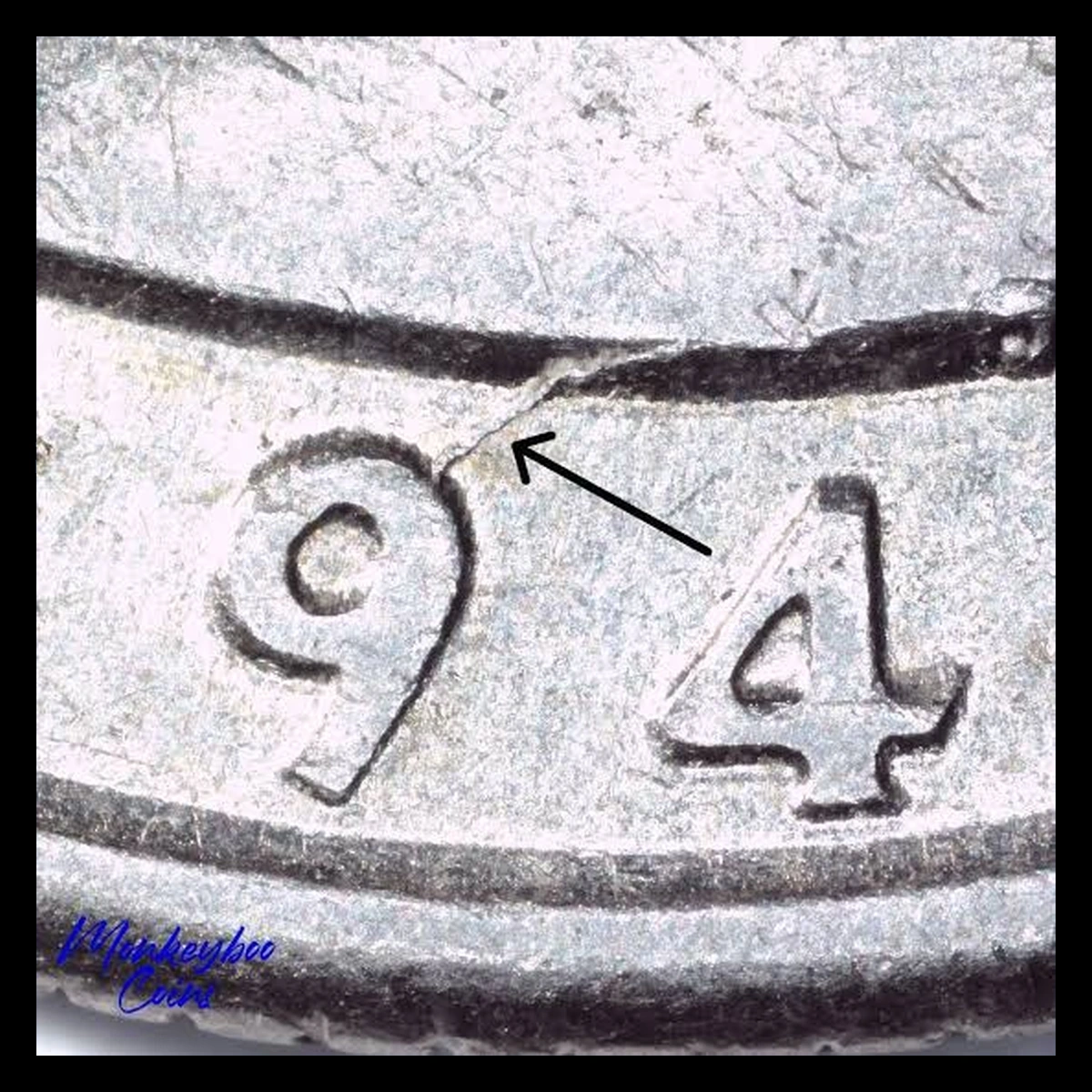
1. 1994 Quarter Raised Lines or a Patch at the Rim — Die Cracks and Cuds Error
A crack in the die can leave a thin raised line on a quarter. When a larger piece breaks away at the edge, metal fills the opening and creates a rim-connected patch called a cud.
The 1994 records include several Philadelphia front breaks, a Philadelphia reverse break, and a Denver front break. Some broken areas retain design because the separated die piece stayed in position.
How to Identify
Follow the full feature rather than matching one corner. Check the mint and affected face against the catalog photographs.
A true cud reaches the rim; a small interior bump does not establish one. Surviving detail inside an outlined area can fit a retained broken piece rather than a completely missing piece of the die.
What It’s Worth
$2–$300 spans minor cracks and larger breaks. Small ridges generally fit $2–$40, with clear rim-connected patches around $30–$300.
A 1970-D nickel with two cuds sold for $63 in October 2022. It is a different denomination and year, providing broad context rather than a price for a particular 1994 quarter.
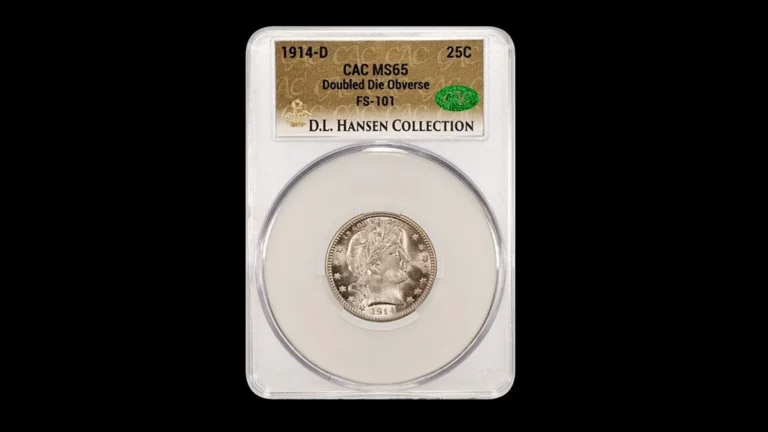
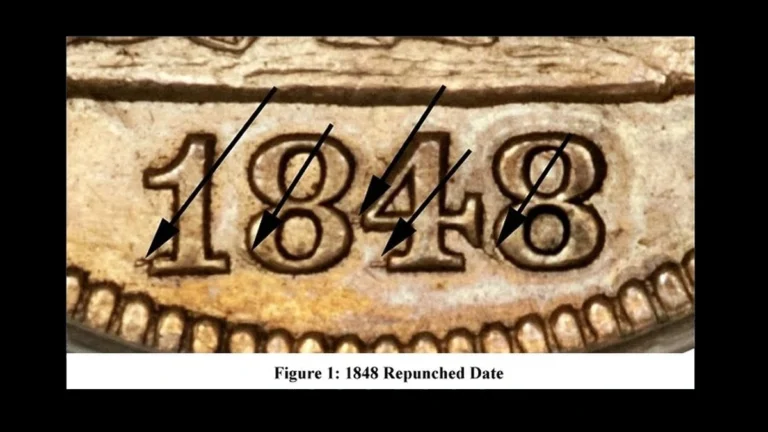
2. 1994 Quarter Rounded Extra Details or Flat Shelves — Doubled Design Error
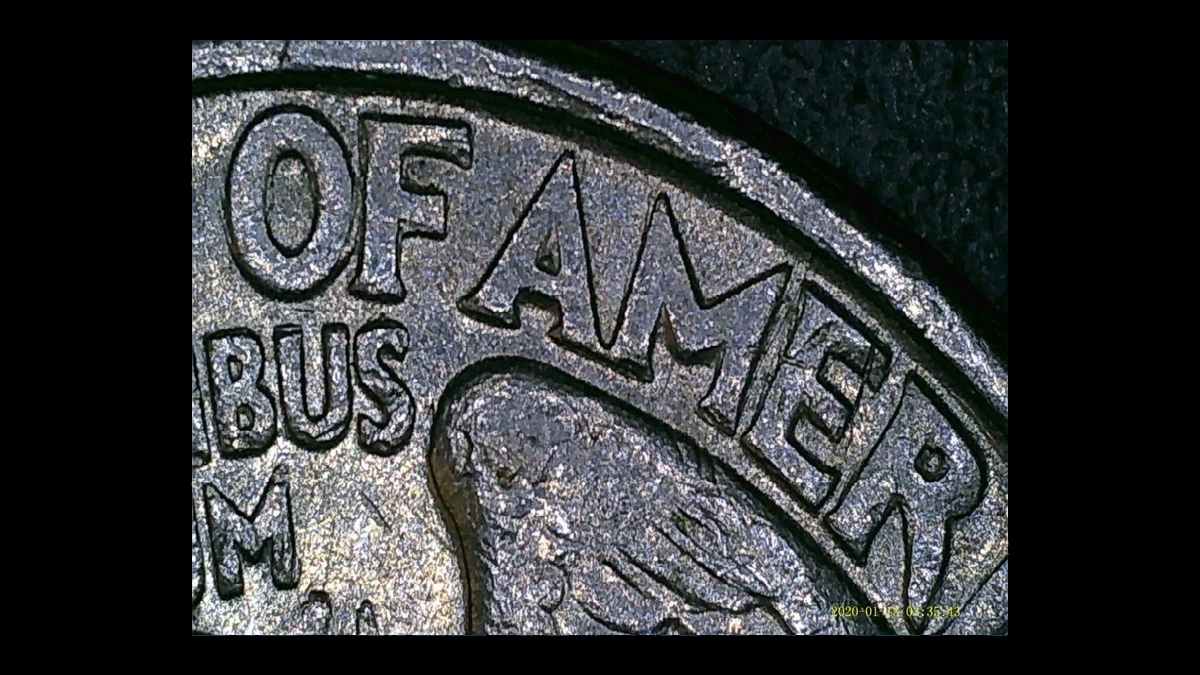
Reports for 1994-P quarters mention the front motto, date, and LIBERTY, plus the eagle’s beak, nearby leaves, and lettering on the back. A true doubled die repeats details already present on the striking tool.
A separate Denver example was identified as mechanical doubling. Its apparent extra E is a flattened ledge from movement during striking, not an established extra-letter variety.
How to Identify
Compare one clear feature with a normal quarter and an identified variety image. Rounded separation differs from a flat shelf that reduces the original letter’s width.
Keep front and back reports separate unless the actual coin supports both. A claimed catalog number cannot replace a matching pattern.
What It’s Worth
$10–$150 is an estimate for a matched doubled die on an ordinary 1994 quarter. Mechanical doubling commonly adds little or no premium and should not inherit that range.
Clear extra details and original surfaces make a true variety easier to collect.
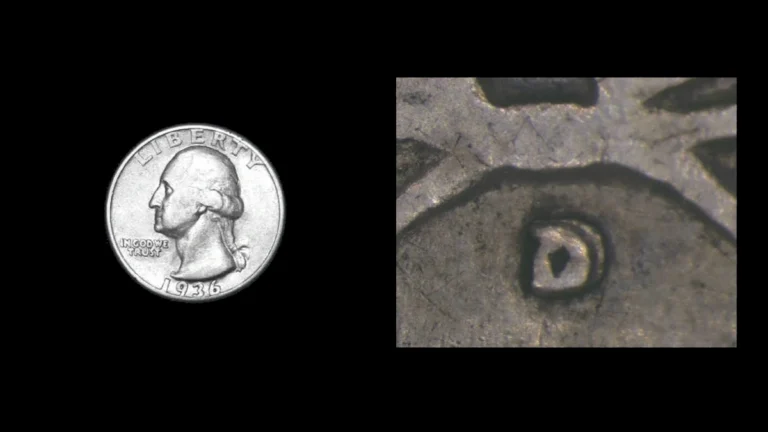
3. 1994 Quarter A Missing P or an Interrupted Patch — Blocked Design Error
Greysheet lists a 1994 No P quarter as FS-501. Grease filling the mintmark recess is a suggested explanation, rather than proof that the die was made without a P.
A separate 1994-D NGC MS67 quarter has a reverse struck-through error. Its blocking material has not been identified.
How to Identify
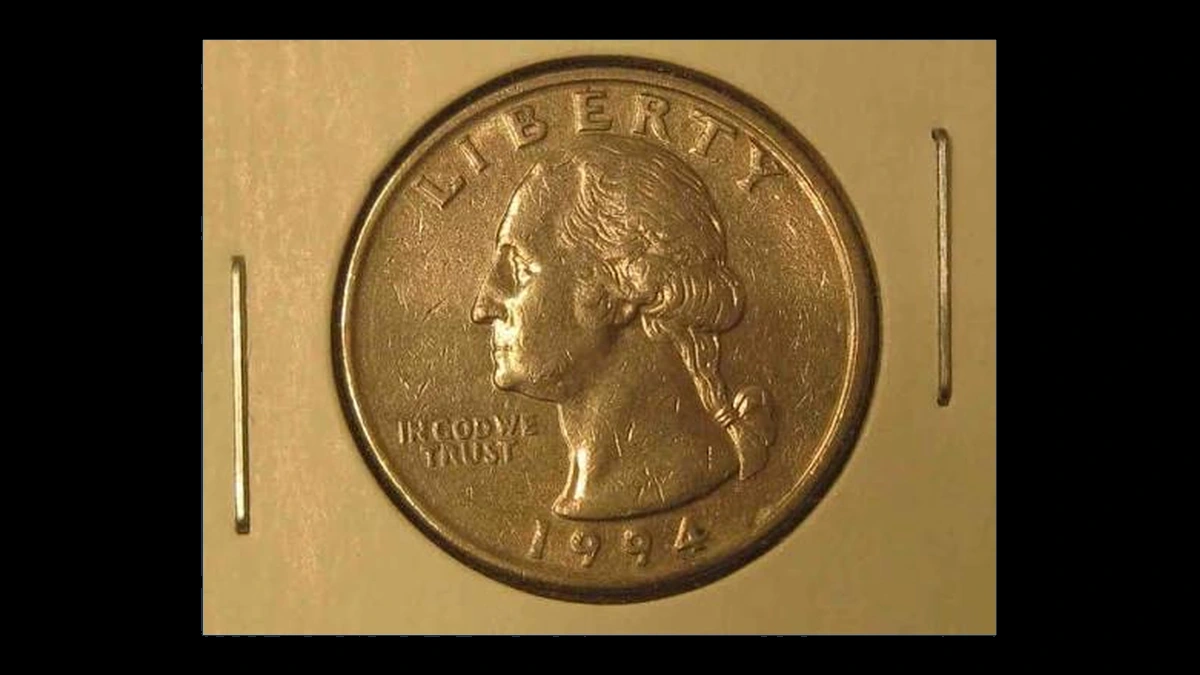
Check the normal mintmark position beside Washington’s hair ribbon for faint remnants, scratches, or an unnaturally smooth patch. Nearby sharp detail helps distinguish a local blockage from broad wear.
The No P listing does not replace that surface examination. On the separate Denver coin, follow the reverse impression’s own boundary instead.
What It’s Worth
$20–$500 covers estimated values within this broader group. Convincing blocked-P examples fit roughly $20–$200, while larger genuine Denver struck-through areas can fit $50–$500.
A 1986-P nickel with a struck-through error sold for $204 in June 2023. That comparison is not a transaction for the 1994 No P quarter.
4. 1994 Quarter A Thin Piece of Surface Metal Lifts — Lamination Error
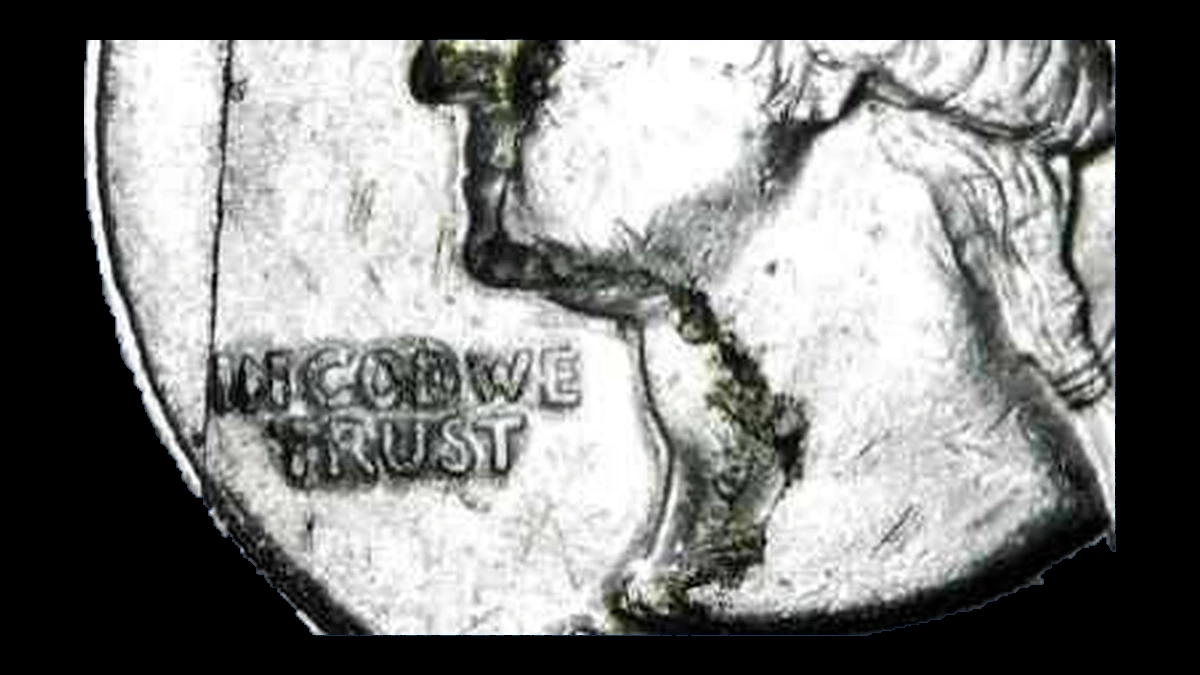
A local separation within the metal can leave a thin flap or shallow cavity. This lamination need not remove an entire outer face of the quarter.
The supplied 1994 report does not identify a mint or side. The location must be taken from the individual coin.
How to Identify
Start where the flap is still joined and follow the natural split. Avoid lifting it or pressing it down for a better photograph.
A tool-entry mark, gouge, or scraped design may reveal later damage. A local thin layer differs from a whole clad face separating at its bond to the copper core.
What It’s Worth
$15–$175 is an estimate for genuine local separations. A 1911 Liberty nickel with front lamination sold for $51 in January 2023, offering a comparison from another metal and design.
A broad original flap with readable surrounding details generally displays better than a tiny rough spot.
5. 1994 Quarter An Inward Curve or Oval Outline — Clipped Blank Error
A curved clip forms when the blank-cutting punch overlaps a previous opening. Other incomplete blanks can leave the finished coin with an oval shape.
A 1994-P ANACS MS62 quarter was cataloged as an elliptical clip, meaning an oval incomplete blank. Separate Philadelphia curved-clip and Denver clip reports should be assessed individually.
How to Identify
Decide whether the whole coin is oval or one curved section is missing. Follow how the struck letters and rim meet the incomplete edge.
Fresh burrs, saw tracks, or filing can reveal an artificial cut. An ordinary clad quarter weighs 5.67 grams and measures about 24.26 mm, but no actual weight is supplied for the oval specimen.
What It’s Worth
$25–$400 is the combined estimated range. Smaller curved clips generally fit $25–$175, while clear oval examples can fall around $100–$400.
A 1999-D Pennsylvania quarter with overlapping clips sold for $74 in December 2024. Its different outline limits a direct comparison with the 1994 oval coin.
6. 1994 Quarter A Denver Quarter Spreads beyond Its Usual Width — Broadstrike Error
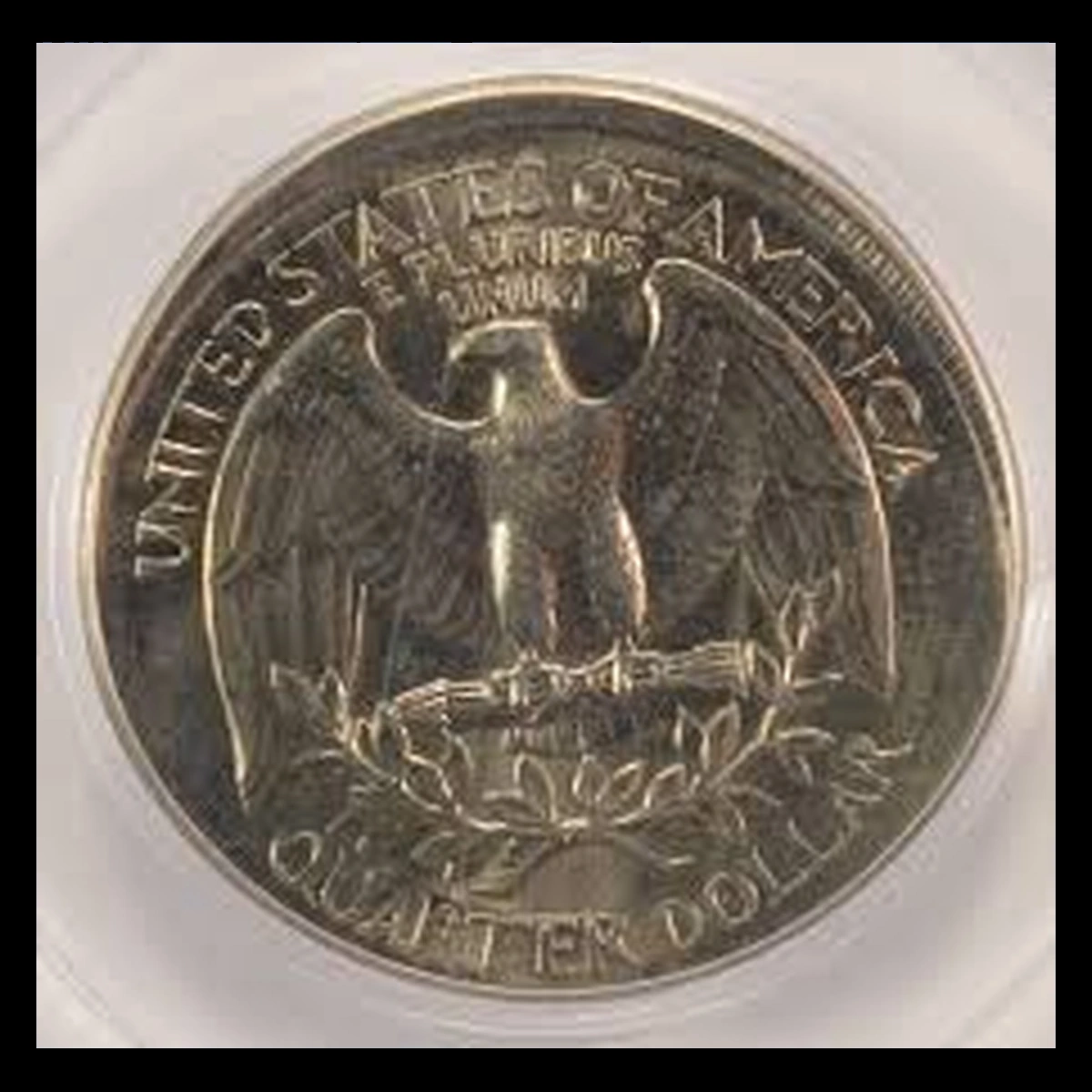
A broadstrike forms when the collar ring does not properly restrain the blank. The metal spreads outward while the complete quarter design can remain on it.
The reported Denver example is separate from Philadelphia coins that also received a second strike. Its actual diameter is not supplied.
How to Identify
Trace all the outer letters on both faces, then measure the expanded outline in several directions. Missing design beyond one edge calls for checking an off-center strike instead.
Inspect the border and edge for hammering, squeezing, or grinding. Natural spreading should agree with the original struck surfaces.
What It’s Worth
$40–$300 is the estimated range for a genuine ordinary Denver broadstrike. Greater visible expansion and clean design generally improve appeal.
A 1990-P nickel with a partial-collar error sold for $99 in June 2025. That related collar problem provides only broad context, not a direct quarter-broadstrike result.
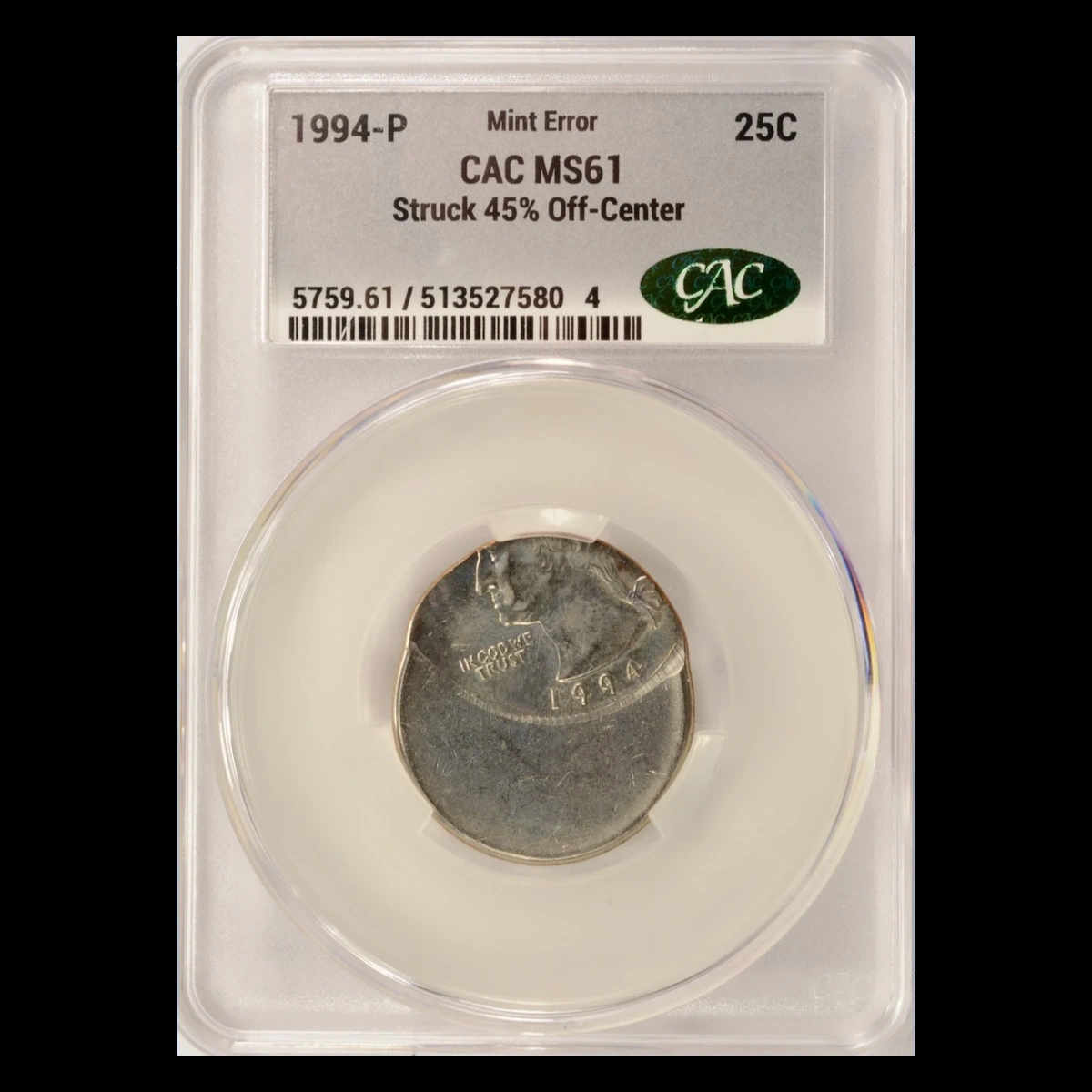
7. 1994 Quarter Bare Metal beside an Incomplete Design — Off-Center Strike Error
An off-center blank leaves an unstruck crescent opposite design that falls beyond the metal. Unlike a clip, the unused part of the blank is still present.
Philadelphia records include separate ANACS MS62 and NGC MS62 coins, with the latter described as about 10% off center. A Denver report describes roughly 20% displacement.
How to Identify
Check the date before comparing the size of the shift. The NGC catalog placed the year in parentheses, so retain its identification record rather than assuming every date digit is visible.
Both faces should show the corresponding displacement. A shift confined to one face can result from a misaligned die, and a ground-down border cannot supply original unstruck metal.
What It’s Worth
$30–$450 is an estimated range for genuine examples. A 1999-P Georgia quarter struck 40% off center sold for $192 in December 2024.
That comparison does not establish a 40% shift on either reported 1994 mint.
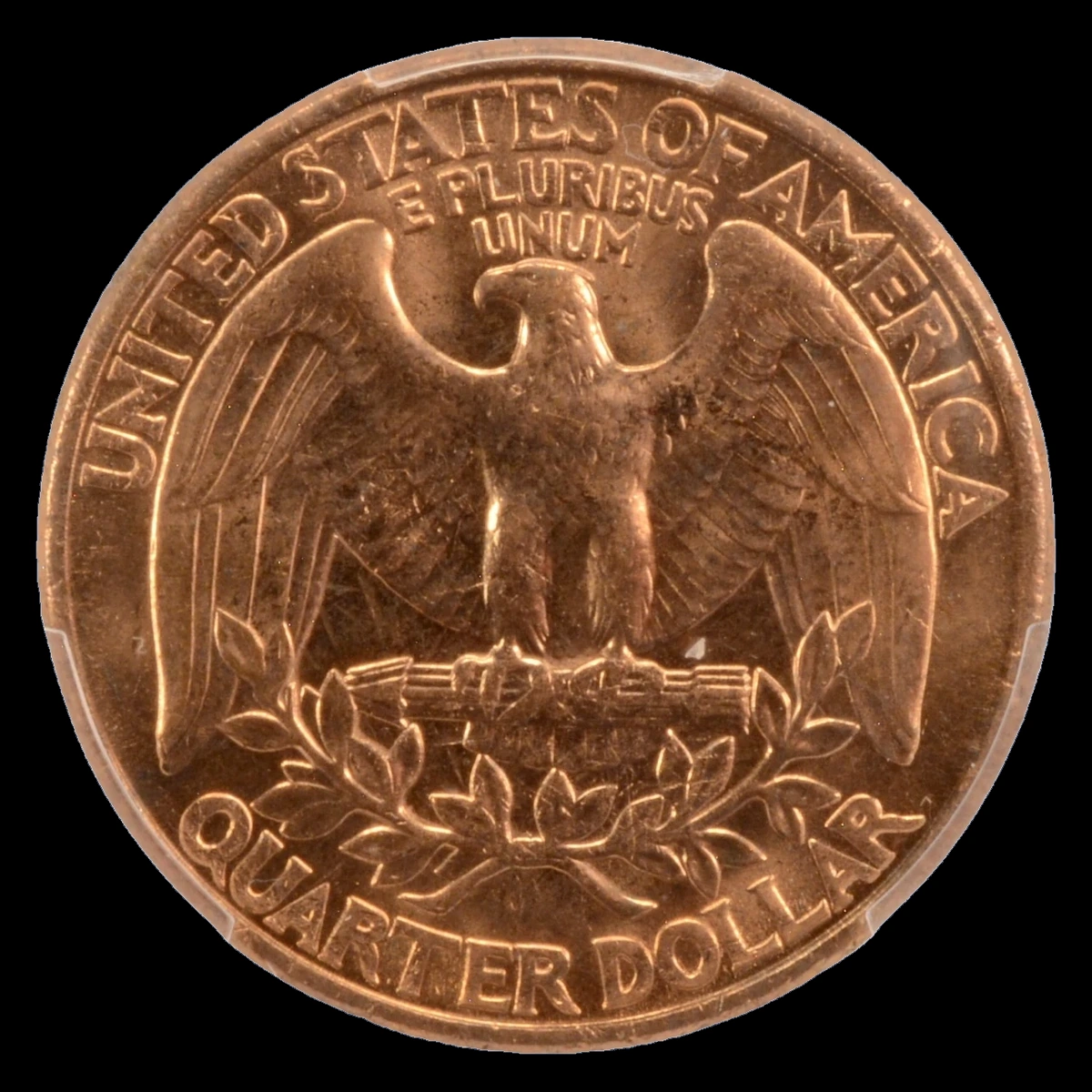
8. 1994 Quarter One Copper-Colored Face — Missing Clad Layer Error
An ordinary clad quarter can lose an outer copper-nickel layer and expose its copper center. A Denver NGC MS64 example lacks the reverse layer, while a separate Philadelphia ANACS AU58 coin lacks the front layer.
The Philadelphia piece weighs 4.69 grams. Silver Proof quarters have a different construction and should not be assessed as ordinary clad coins.
How to Identify
Combine the weight reduction with the original struck copper and remaining edge layers. Diameter need not shrink when one outer face is missing.
Check for chemical stripping, grinding, or added copper plating. Keep the 4.69-gram measurement with the Philadelphia front-loss coin; the Denver piece needs its own reading.
What It’s Worth
$50–$600 is the estimated range for genuine layer losses. The Philadelphia AU58 front-loss quarter sold for $65 in January 2023.
Compare the actual exposed side and condition when judging another quarter. A reddish stain alone does not qualify for the error premium.
9. 1994 Quarter A Thin Extra Sheet on the Back — Bonded Metal Layer Error
One 1994-P quarter gained metal instead of losing it. An additional thin sheet bonded to the back, giving the coin an extra outer-metal layer.
The recorded specimen was graded ANACS MS63. Its attachment and edge seam distinguish it from a normal copper stripe or missing-layer error.
How to Identify
Follow the sheet into the struck design without lifting or probing it. Glue, solder, or a coating over finished details can indicate a later addition.
Record the coin’s own weight and thickness if available. The auction information here supplies no measured weight for this specimen.
What It’s Worth
$600–$1,800 is the estimated range for a recognizable genuine bonded-layer error. The ANACS MS63 quarter sold for $1,080 in October 2022.
An undisturbed attachment preserves the evidence that makes this unusual construction collectible.
10. 1994 Quarter Two Positions for Washington’s Design — Double Strike Error
A coin that moves before receiving another blow can preserve two rims or overlapping portraits. One 1994-P ANACS MS61 quarter was described simply as double struck.
Other Philadelphia examples also spread beyond normal width. An NGC MS62 expanded example has the later strike toward about 11:30, while a separate ANACS MS60 coin has no direction supplied.
How to Identify
Find a second border and trace the portrait or letters that belong to it. The linked details should explain a second position of the design rather than one thick letter.
Check the back before deciding whether the coin turned over between blows. Keep each specimen’s grade, expansion, and direction with its own photographs.
What It’s Worth
$75–$700 is an estimated range for genuine double strikes, including expanded combinations. A 1998-P double-struck quarter graded NGC MS63 sold for $312 in December 2024.
The range values each coin as a whole. Expansion and the second strike are not automatically separate premiums to add.
11. 1994 Quarter A Stretched Portrait Opposite a Sharp Eagle — Die Cap Error
A coin stuck on a die can change shape as it meets more blanks. The documented 1994-P cap stayed on the reverse die, keeping a sharp eagle while its Washington image stretched.
The auction description suggested one or perhaps two later blows. It did not establish an exact count.
How to Identify
Compare the clear reverse with the elongated front and naturally altered edge. Those features should explain the coin’s role as the cap itself.
View its shape from the side without trying to straighten it. A separate coin struck against the cap would have different evidence.
What It’s Worth
$150–$900 is an estimated range for a comparable cap. The ANACS MS63 1994-P coin sold for $149.50 in June 2000.
A different 1998-P front-side cap graded NGC MS68 brought $1,035 in March 2010. Its taller rim and exceptional condition make it a stronger example, not a direct price match.
12. 1994 Quarter A Small, Light Coin with Quarter Details — Dime Planchet Error
A dime blank leaves less space for Washington and the quarter lettering. One 1994-P example retains its full date and P but loses part of the motto, with the design shifted toward about 10:30.
A separate NGC MS64 example weighs 2.3 grams. These were unstruck dime blanks, so an earlier Roosevelt design is not part of the identification.
How to Identify
A normal clad dime blank starts at 2.268 grams and 17.91 mm, much lighter and smaller than a quarter blank. Striking can enlarge its outline.
Check that the cropped quarter details fit the small metal piece naturally. Grinding down a normal quarter leaves worked edges and does not explain the same original strike.
What It’s Worth
$350–$1,200 is the estimated range for genuine dime-blank quarters. The full-date ANACS MS63 example sold for $863.65 in April 2006.
The separate 2.3-gram NGC MS64 coin brought $504 in April 2022. A higher numerical grade alone does not guarantee a higher selling price.
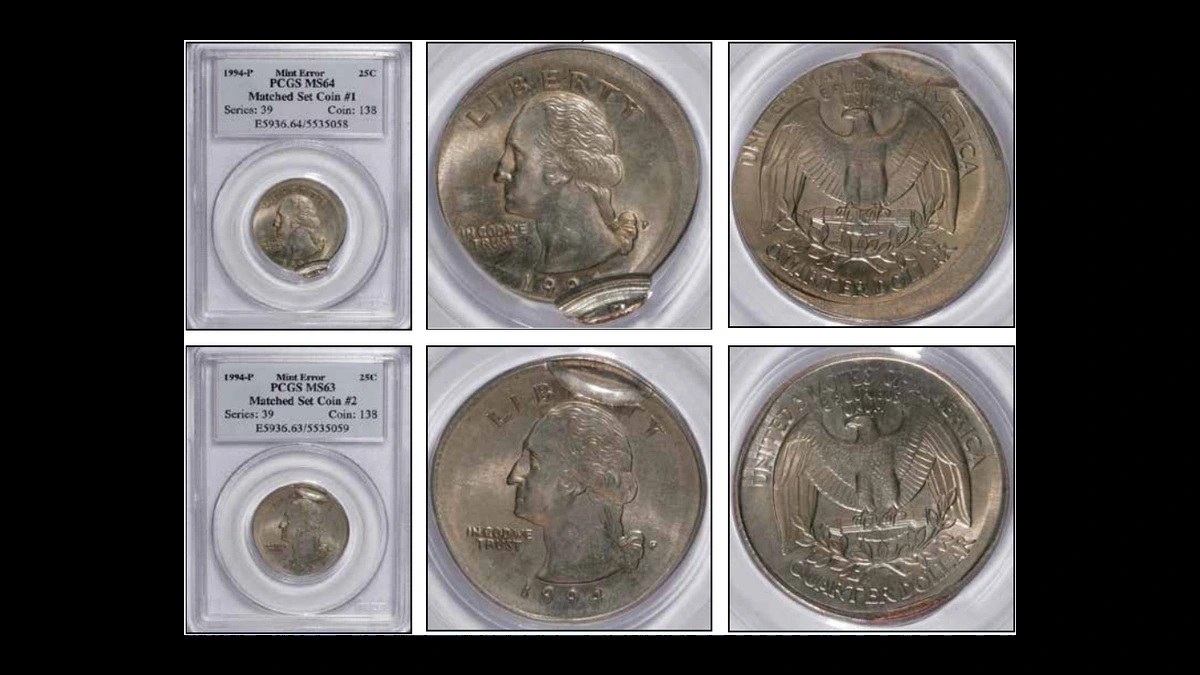
13. 1994 Quarter Two Coins That Preserve One Accident — Matched Error Set Error
A documented 1994-P set contains two separate quarters, graded PCGS MS64 and MS63. Their related features preserve evidence of the same event in the press.
They are not fused into one object. The supplied description does not establish a particular brockage pattern or indentation size.
How to Identify
Compare the affected areas on both coins with the matched-set record. Their shapes should support the same accident, rather than merely look unusual in similar ways.
Keep both pieces together and do not press them against each other to test the fit. The different grades help distinguish the coins but do not prove their relationship alone.
What It’s Worth
$800–$2,500 is an estimated range for the complete matched set. The recorded two-coin set sold for $1,610 in June 2008.
That total is neither a price for each quarter nor an amount to divide evenly without studying the features. Keeping the pair intact preserves much of its appeal.
Conclusion
Small raised flaws and unusual coin construction require different checks on a 1994 quarter. Follow the design into the affected area, and use the edge and actual measurements to support what you see.
Keep separate specimens’ weights and grades separate, especially among missing-layer and dime-blank examples. For the matched set, the useful evidence comes from both coins together, so its price belongs to the complete pair.