Rare 1944 Dime Errors (List & Pictures)
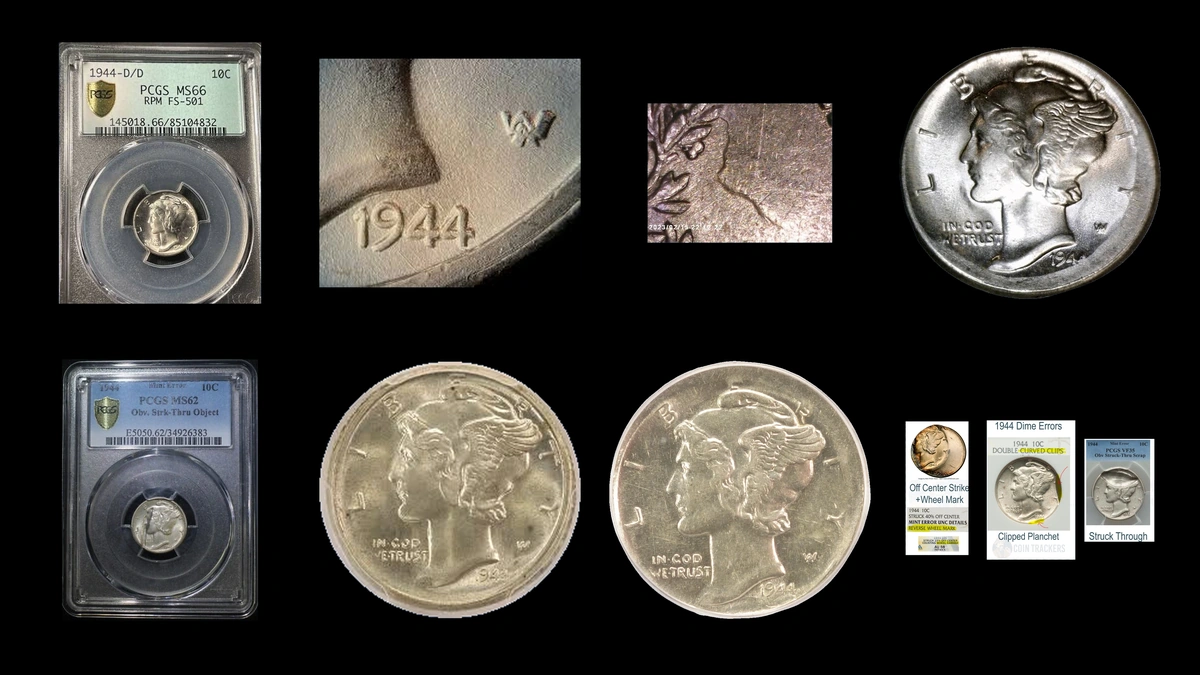
Extra lettering, an open metal boundary, and an enlarged outline lead to different 1944 dime errors. Estimated values span $10–$6,000, and a documented 0.8-gram fragment sold for $1,080 in October 2022.
A separate flipover double strike brought $3,450 in January 2007, but its final date digit remains uncertain. Begin with the small die details, then compare the surface metal, edge, and overlapping impressions.
| Visible evidence | Possible identification | Estimated value |
|---|---|---|
| Another D or S stroke | Repunched mintmark | $20–$350 |
| Repeated date or lettering | Doubled die | $20–$300 |
| Faint opposite-design fragments | Die clash | $15–$200 |
| Raised ridge or rim patch | Die crack or cud | $10–$750 |
| Peeling or missing surface metal | Lamination | $15–$250 |
| Blocked detail or depression | Struck through material | $10–$500 |
| Two levels along the edge | Partial collar | $50–$500 |
| Wide outline with complete design | Broadstrike | $30–$600 |
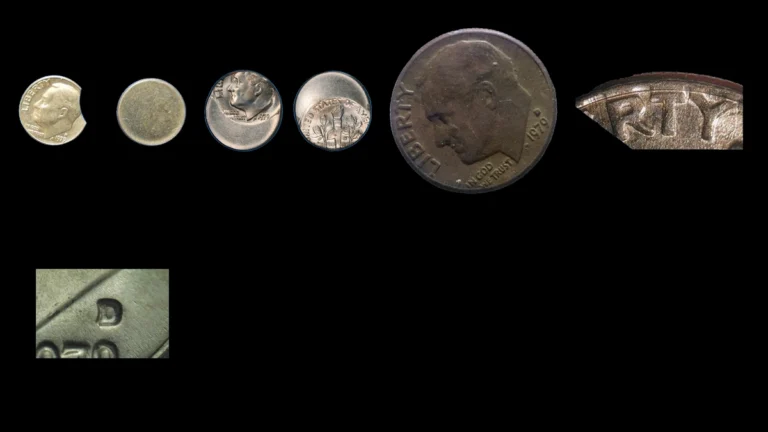
| One or more missing edge sections | Clipped planchet | $30–$600 |
| Excess thickness and mass | Thick-stock planchet | $200–$1,000 |
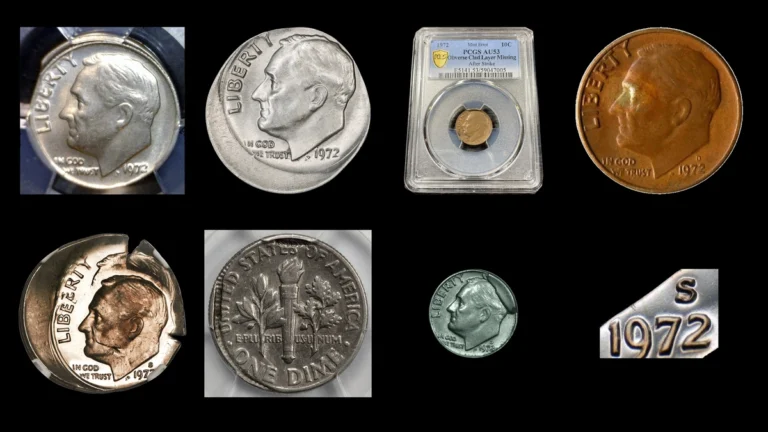
| Blank crescent beside cropped design | Off-center strike | $75–$1,500 |
| Dime design on irregular scrap | Struck fragment | $500–$3,000 |
| Different metal or blank dimensions | Reported wrong planchet | $500–$4,000 if authenticated |
| Distinct overlapping impressions | Double strike or flipover | $200–$6,000 |
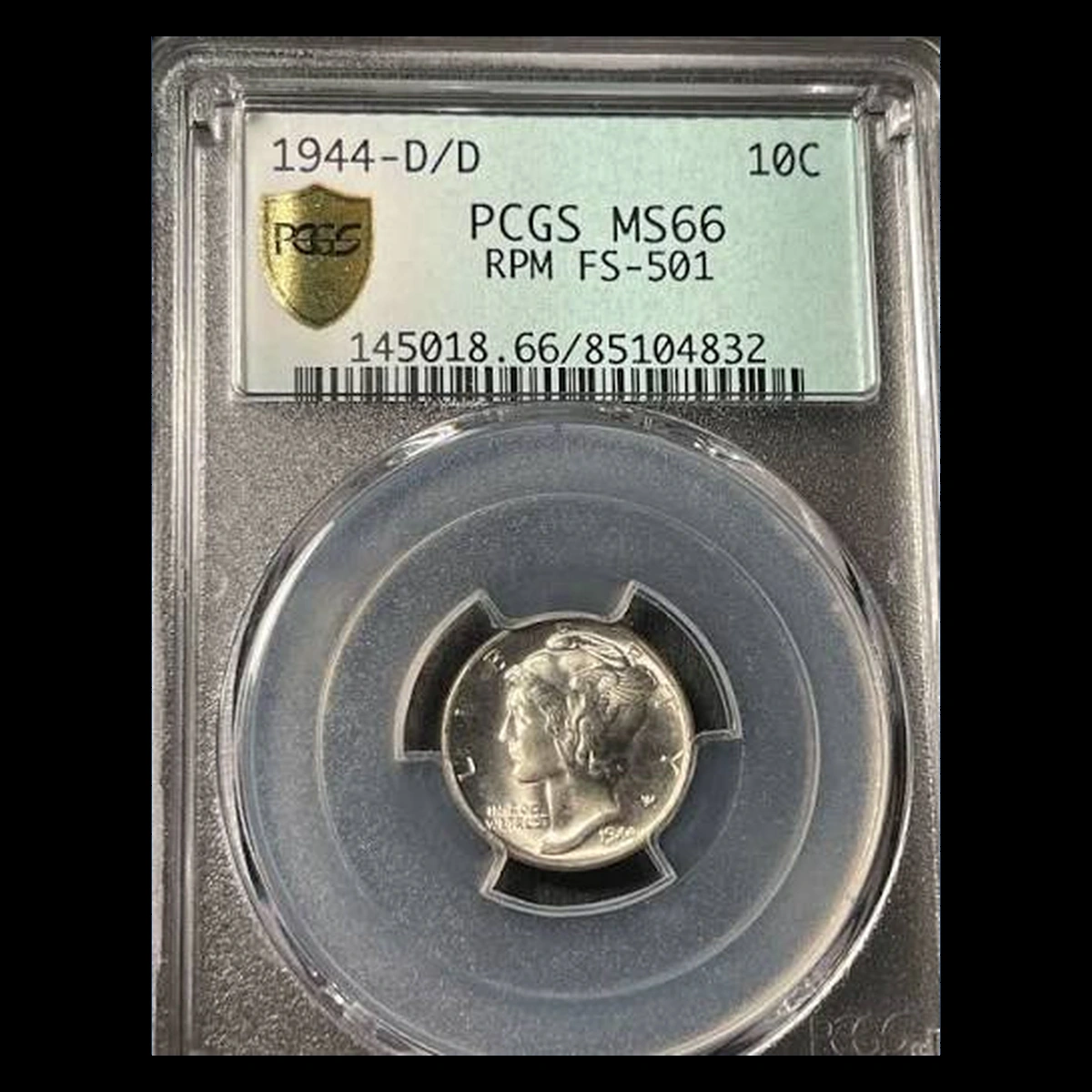
1. 1944 Dime An Extra Letter Fragment Appears beside D or S: Repunched Mintmark Error
The mint letter sits below the left side of the reverse’s central bundle of rods. An earlier hand-punched impression can remain visible when a later application does not cover it completely.
Denver patterns have traces above, below, southeast, or rotated relative to the main D. The reported San Francisco pattern has an extra S outline to the west.
How to Identify
Orient the reverse upright and compare the direction and shape of the extra letter with the appropriate catalog image. Southeast means below and right; it does not describe the north, south, or rotated Denver patterns.
Supporting scratches and die cracks can help after the main letter impression matches. Filing, added metal, and random lumps near the mintmark need separate explanations.
What It’s Worth
$20–$350 is the estimated whole-coin range for recognized minor D/D and S/S varieties. No completed sale was supplied for an individual pattern.
A clear earlier curve on an attractive coin provides a stronger comparison than a partly worn trace. Several strokes from the same earlier punch still constitute one variety.
2. 1944 Dime The Date or Design Has Repeated Contours: Doubled Die Error
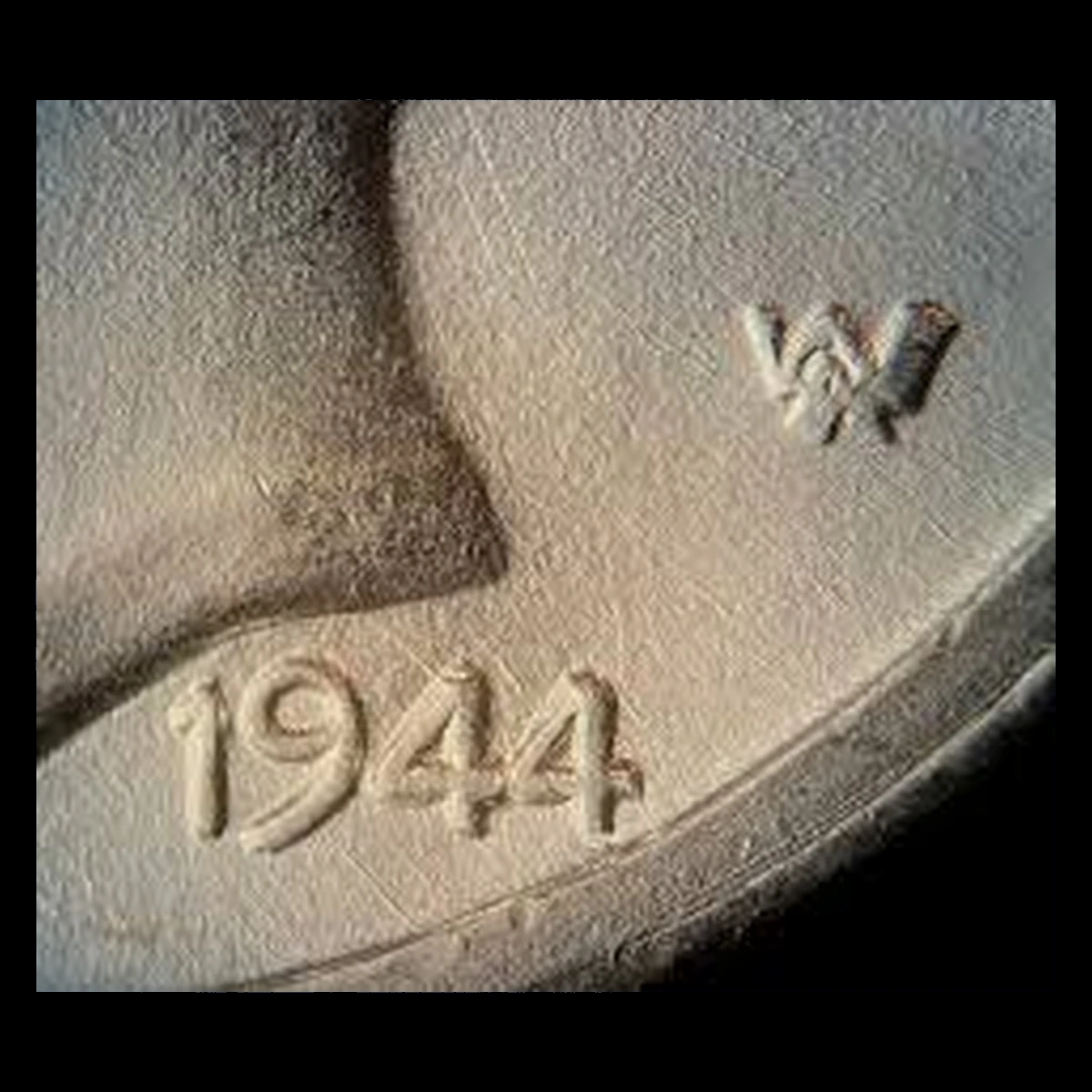
Philadelphia front varieties affect the date, AW initials, or lettering through different forms of separation and thickening. Separate reverse doubling involves lettering, stars, and the lower end of the central rods.
Denver reports concern the date, motto, or broader thickening, while a San Francisco listing has slight date separation. These are different doubled designs already present in the dies before striking.
How to Identify
Choose the mint and face before comparing the date, AW, and affected letters. For a Philadelphia reverse pattern, the N in ONE and the lower rods can offer clearer checks than overall thickness.
Match the details from one die rather than combining several listings. A flat shelf from striking movement does not establish the cataloged rounded separation or repeated contour.
What It’s Worth
$20–$300 is the estimate for matched minor doubled designs in differing conditions. No completed result was supplied for these particular patterns.
A clash or small crack may support the same die attribution but does not supply another full coin price. Clear linked details matter more than one bright or blurry edge.
3. 1944 Dime Faint Unwanted Shapes Echo the Opposite Face: Die Clash Error
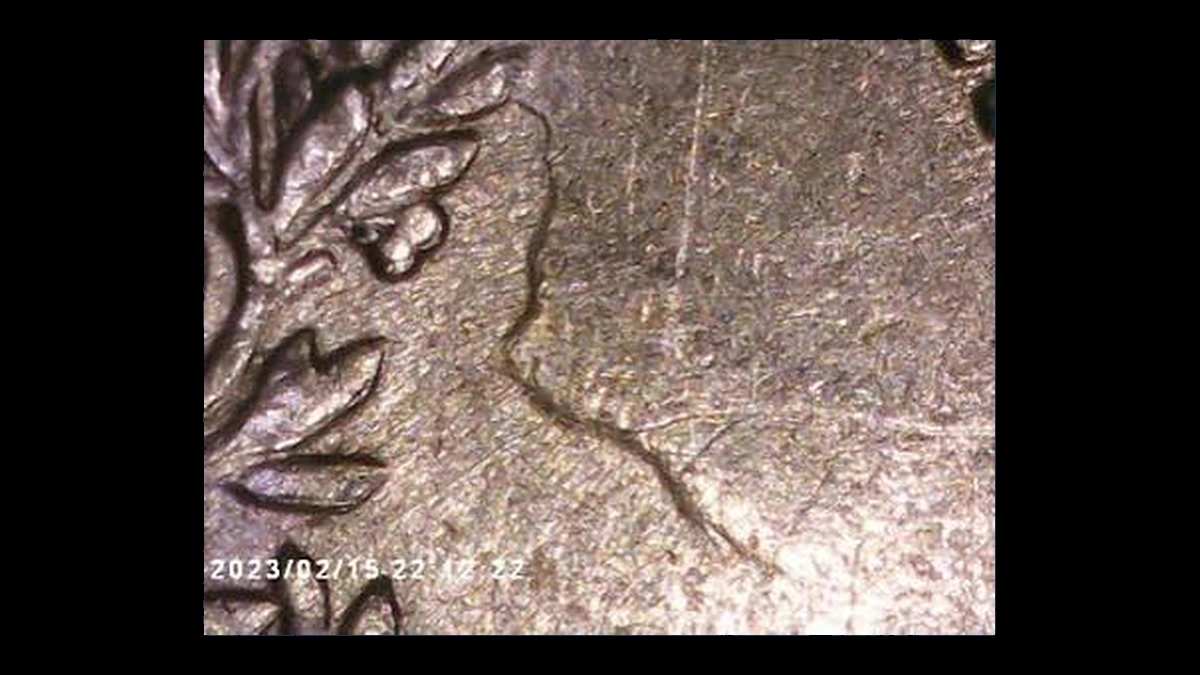
Philadelphia reports place clash marks near Liberty’s throat, nose, and forehead, or above the reverse motto and near the left branch. Those locations do not all belong to one die pairing.
Dies can mark each other when they meet without a blank between them. Later coins receive some of those transferred shapes.
How to Identify
Compare the unexpected mark with the opposite design and look for a plausible transferred fragment. A random scratch in the same area is insufficient.
The reported examples also carry doubled designs, which should match the same pairing. Keep their supporting details together instead of borrowing a doubled letter from another clash photograph.
What It’s Worth
$15–$200 is the estimate for recognizable clashes on otherwise ordinary silver Mercury dimes. No sale of an exact pairing was supplied.
Wear can soften the transferred outlines. Price a coin carrying both doubling and clash marks as one object rather than adding two whole-coin estimates.
4. 1944 Dime A Raised Line or Rim-Connected Lump Replaces Detail: Die Cracks and Cuds Error
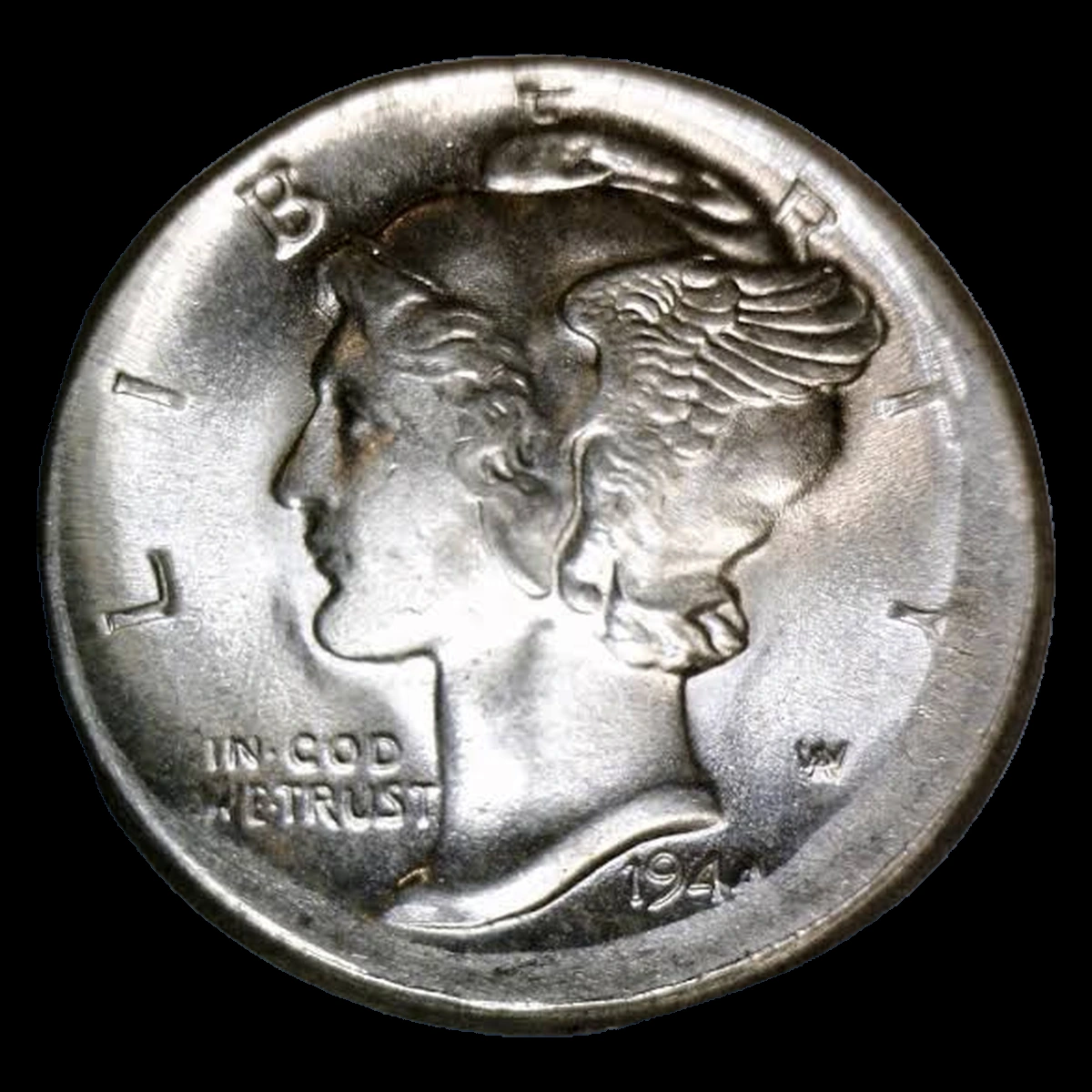
Denver records describe separate front and reverse crack paths, while a San Francisco example has its own cap-area and reverse ridges. Philadelphia examples include larger raised patches attached to the rim.
A crack in a die leaves a ridge on the coin. A substantial missing die section at the rim leaves a broader raised area called a cud.
How to Identify
Trace the feature with angled light and determine whether it is a ridge or a broad patch with missing design. One illustrated Philadelphia coin has front patches around eight to ten, two to three, and four to five o’clock.
Those three patches belong together, while other photographed groups and Denver or San Francisco cracks remain separate. Inspect the edge for a dent that could explain metal pushed upward after striking.
What It’s Worth
$10–$100 is the estimate for smaller original cracks, with $100–$750 for obvious rim-connected breaks. The ranges reflect visibility and condition rather than a supplied specimen-specific sale.
Several cuds on one coin receive one total value. Solder, corrosion, and impact lips do not create additional mint-error premiums.
5. 1944 Dime A Flake or Rough Missing Area Interrupts the Surface: Lamination Error
A Philadelphia guide example has separation before striking that affected how the design formed. A separate Denver listing describes peeling in a band across the reverse center.
Both involve weakness within the alloy. A normal 1944 dime contains 90% silver and 10% copper, rather than a copper core beneath modern clad skins.
How to Identify
Follow the design into the missing area to evaluate whether the flaw preceded the strike. A later scrape cuts through already completed detail.
Keep any attached flake intact and inspect the boundary without pressing it. The normal references are 2.50 grams and approximately 17.9 mm with a reeded edge, allowing for metal already lost.
What It’s Worth
$15–$250 is the estimate for genuine surface separations. A 1942 Mercury dime with major front peeling sold for $89 in March 2023.
That nearby-year result is not a sale of either 1944 example. A larger flaw can be dramatic while also losing identifying detail that collectors would prefer to retain.
6. 1944 Dime A Depression or Weak Area Blocks the Design: Struck Through Scrap or Grease Error
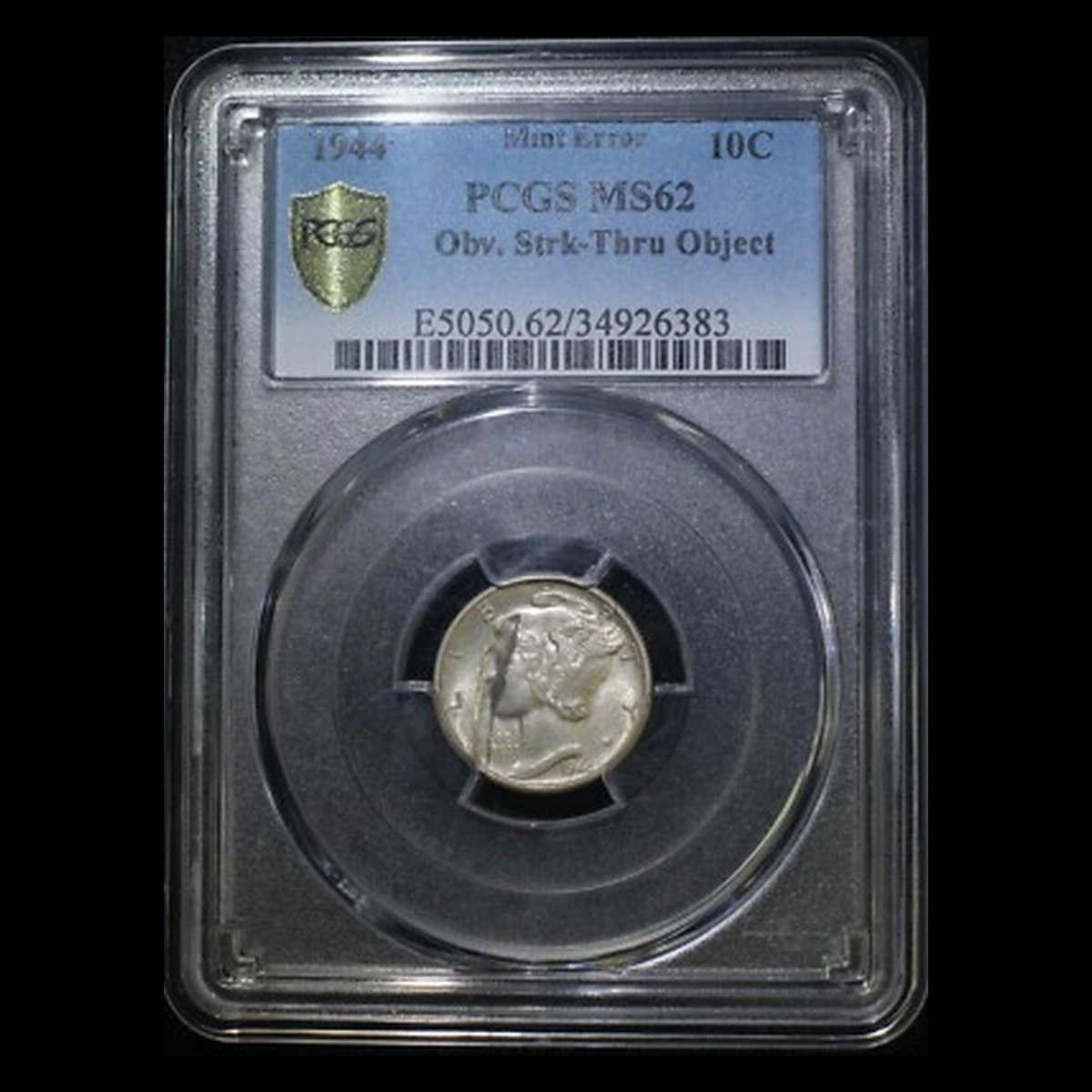
A Philadelphia PCGS VF35 dime has a front impression attributed to scrap caught in the strike. The object did not necessarily remain attached.
Grease-blocked detail is also reported for 1944. A solid object can leave a definite boundary, whereas grease may create a softer area of incomplete design.
How to Identify
Inspect the transition from normal detail into the affected area and compare wear across the rest of the coin. A faint letter on a uniformly worn surface is weak evidence for grease.
Nearby impact damage or a gouge can explain a depression made after striking. Do not identify cloth, wire, or a retained fragment without evidence beyond the general scrap attribution.
What It’s Worth
$50–$500 is the estimate for clear solid-object impressions, while modest grease-blocked areas may fall around $10–$100. The VF35 scrap-impression coin sold for $104 in January 2017.
Moderate wear is part of that specimen’s condition. A sharp original boundary provides a more useful comparison than an uncertain rough patch or later scratch.
7. 1944 Dime A Step Separates Two Edge Levels: Partial Collar Error
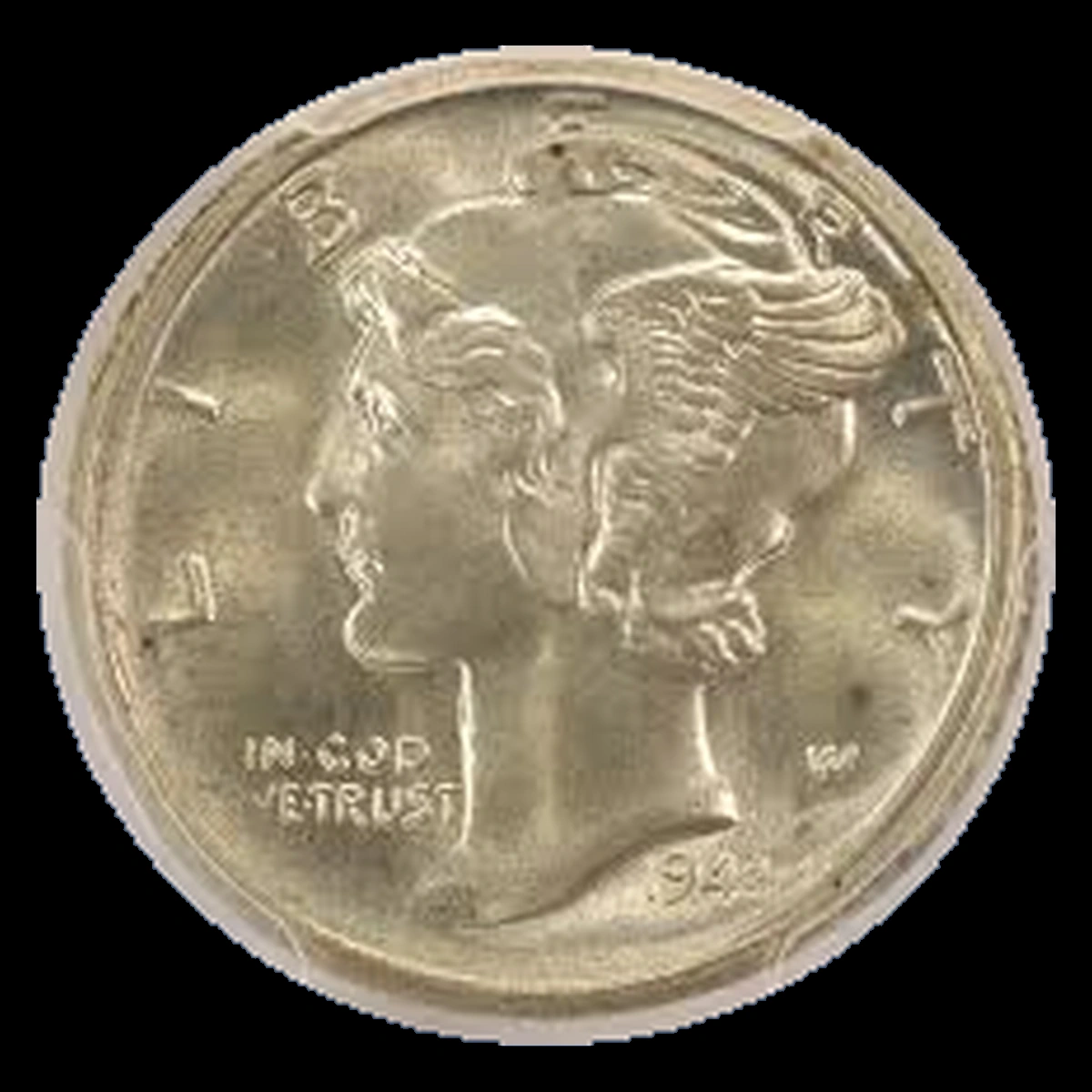
A blank partly seated inside the collar can have one band restrained while another spreads outward. The contained portion may retain normal reeding beside the expanded portion.
Philadelphia records include an NGC MS64 and a separate ANACS AU58. Their grades and edge shapes describe different specimens.
How to Identify
Photograph the edge from the side and follow the junction between the reeded contained section and the metal that escaped the ring. A wider face rim alone does not demonstrate this structure.
Compare both faces with the original edge shape. Filing and rim impacts can remove grooves or move metal without producing a genuine partial-collar strike.
What It’s Worth
$50–$500 is the estimate for genuine examples with differing clarity and preservation. No completed sale was supplied for the two 1944 specimens.
A 1952 silver dime combining a partial collar and ragged clip sold for $144 in July 2021. That price covers a different year’s combined error rather than a simple 1944 edge defect.
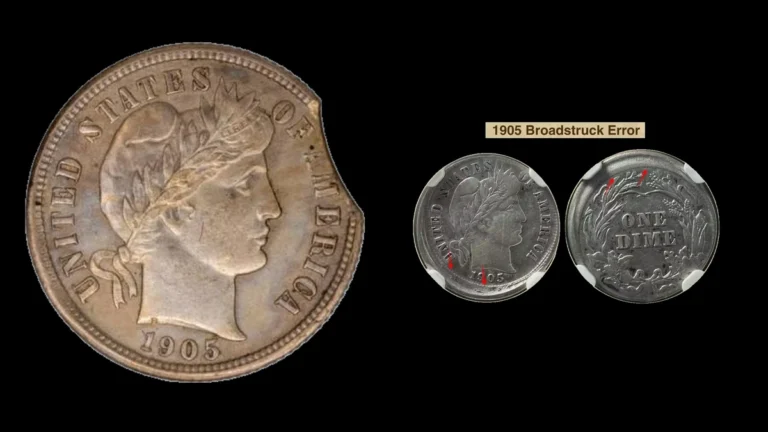
8. 1944 Dime Complete Designs Sit within Expanded Metal: Broadstrike Error
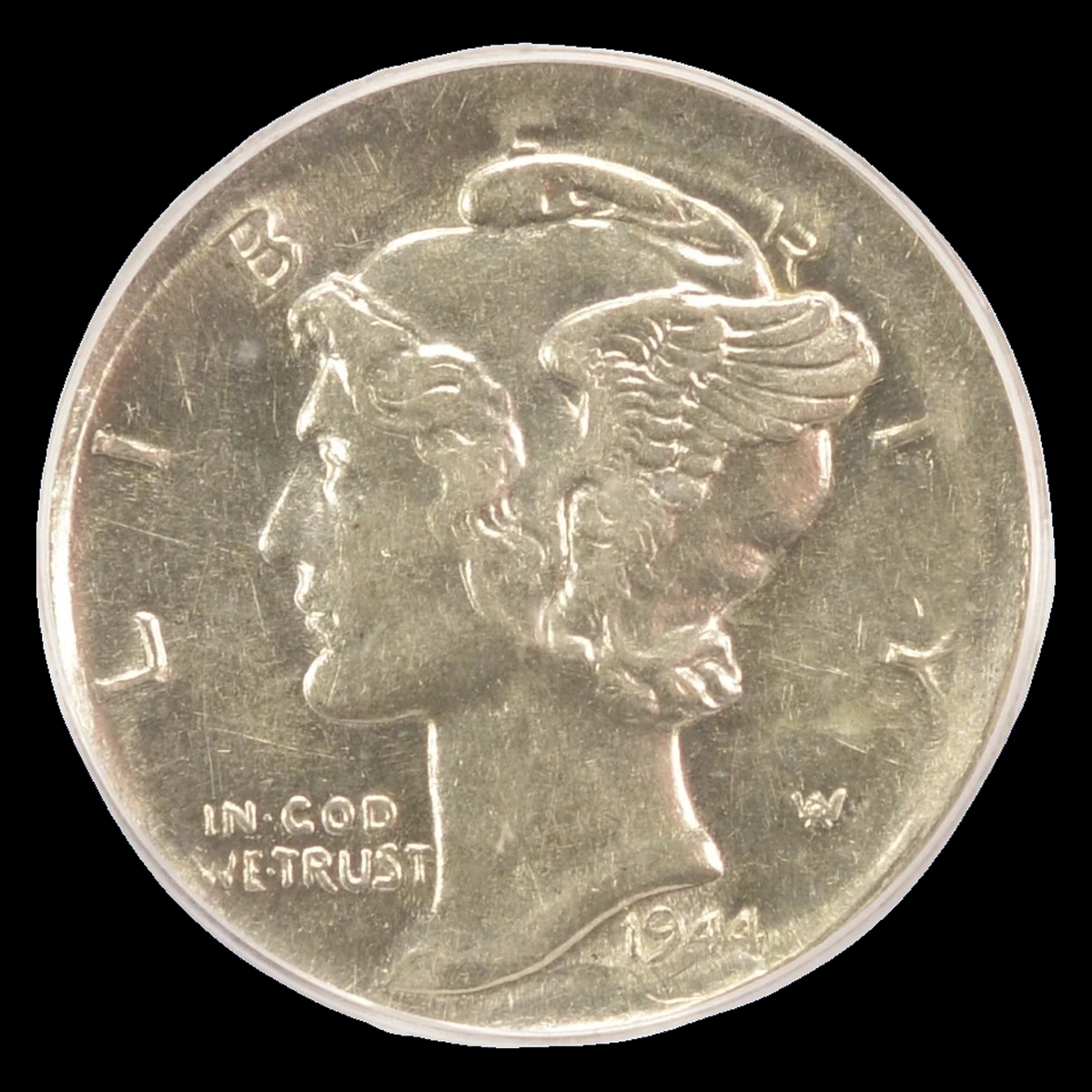
Philadelphia, Denver, and San Francisco broadstrikes are recorded for 1944. One Philadelphia ANACS MS63 is nearly a millimeter wider than normal.
An uncentered broadstrike still retains the intended design, even when its borders differ in width. Some examples were struck on Type One blanks, which had not received a prepared raised border before striking.
How to Identify
Trace the outer details on both faces to see whether they fit inside the expanded outline. Design lost beyond an edge instead requires an off-center comparison.
Inspect natural metal flow and the actual edge form, including any evidence supporting a Type One blank. Later hammering disturbs completed detail and can imitate width without the same formation.
What It’s Worth
$30–$600 is the estimate across genuine broadstrikes. A Philadelphia MS65 sold for $94 in October 2022.
The separate ANACS MS63 with almost a millimeter of expansion brought $115 in July 2006. Do not transfer that width or price to every mint or blank-preparation type.
9. 1944 Dime Curved or Straight Gaps Remove Part of the Outline: Clipped Planchet Error
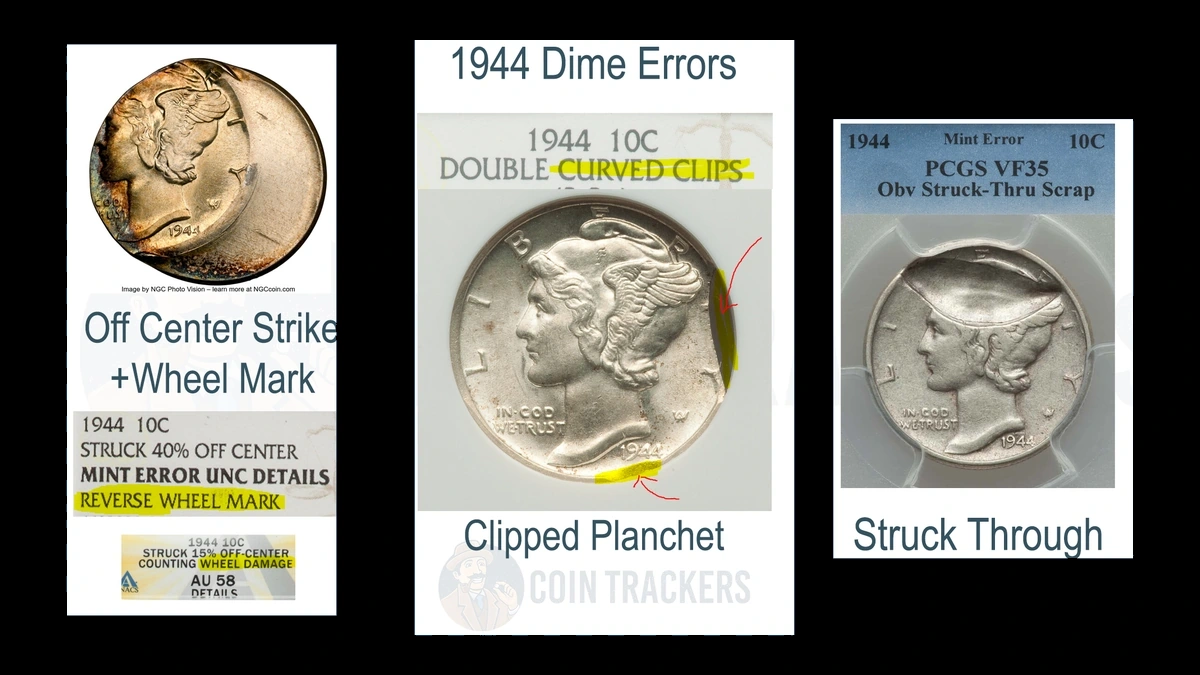
Philadelphia reports include several clip sizes and a double-clipped coin weighing 2.3 grams. A separate San Francisco specimen has a 5% straight clip.
These shortages arose before striking when an incomplete blank was cut from the strip. A later cut can mimic the outline while leaving different boundary evidence.
How to Identify
Inspect each missing boundary for natural production texture, rim formation, and the absence of fresh burrs or saw marks. Opposite-rim weakness can help when present but does not replace examination of the gap.
The 2.3-gram measurement applies only to the Philadelphia double clip. Neither its two gaps nor the San Francisco percentage describes all other clipped 1944 dimes.
What It’s Worth
$30–$600 is the estimated range for genuine single and multiple clips. A 7% Philadelphia clip sold for $126 in July 2021.
The separate 5% straight-clipped San Francisco coin brought $55 in October 2022. Each whole-coin result includes all of that specimen’s shortages.
10. 1944 Dime The Coin Has Excess Thickness and Mass: Thick-Stock Planchet Error
A Philadelphia PCGS MS63 dime weighs 3 grams and is described as struck from metal rolled 20% too thick. The extra material belongs to its blank.
The attribution is thick stock, not a cent blank or a named foreign alloy. A mass resembling another denomination’s standard does not establish that denomination as the source.
How to Identify
Verify a loose candidate’s weight and compare thickness at several points. A bulky rolled edge can look thick while the body remains ordinary.
Inspect for solder, plating, or other added material that could increase mass after minting. A different candidate needs its own composition and dimensional evidence rather than inheriting the recorded 20% figure.
What It’s Worth
$200–$1,000 is the estimate for authenticated thick-stock silver dimes. No completed sale was supplied for the 3-gram MS63.
A 1969-D dime made from quarter-thickness clad stock sold for $253 in January 2006. Its different construction supplies context, not proof that the 1944 silver example used quarter stock.
11. 1944 Dime A Blank Crescent Marks a Displaced Strike: Off-Center Strike Error
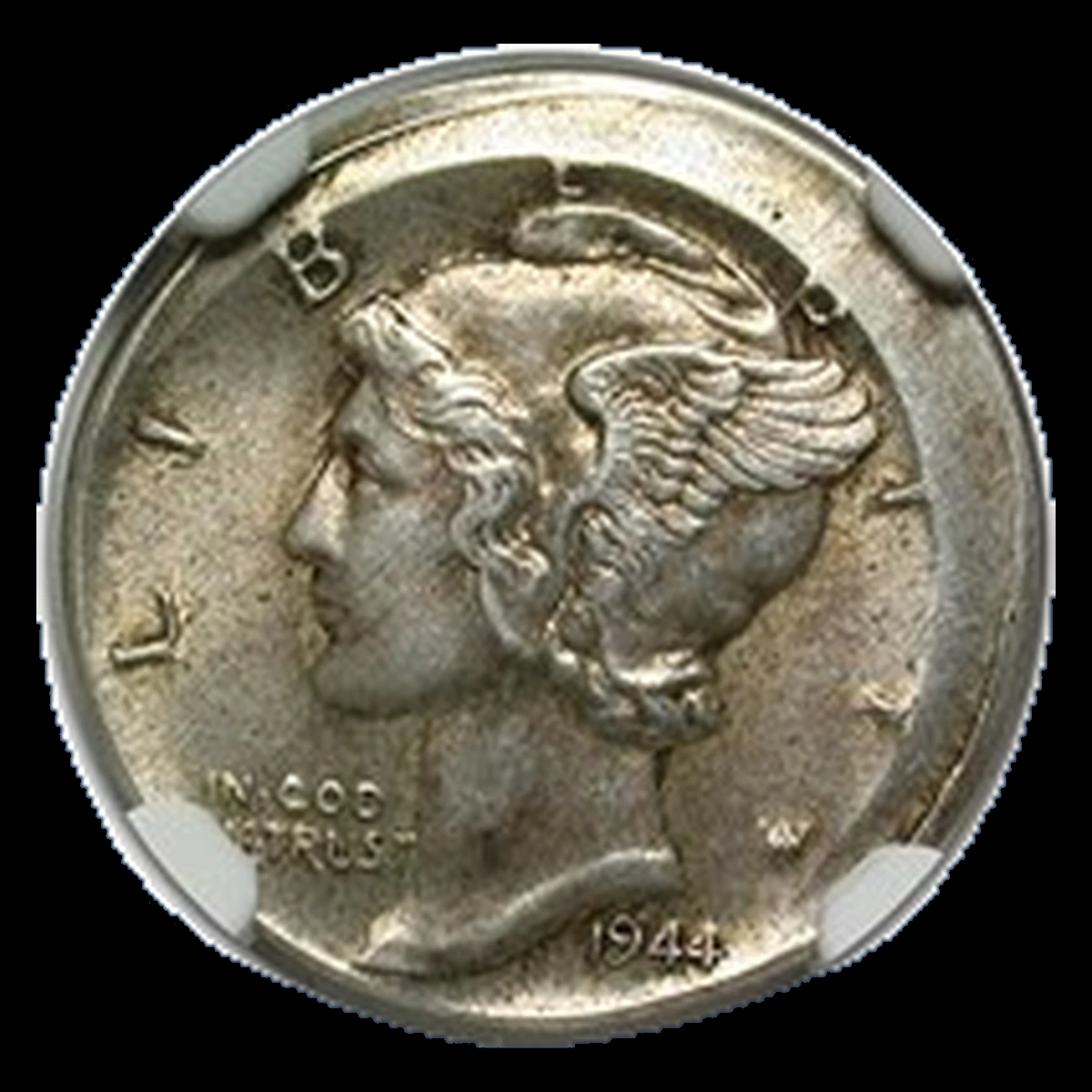
Philadelphia examples include a 20% displacement near 9:30 and a separate 40% displacement near ten o’clock. Their positions and missing details belong to different coins.
Another 10% off-center example also has a front struck-through area. The local blocked impression and the unstruck crescent have different causes.
How to Identify
Compare untouched metal and design cutoff on both faces, keeping the readable date in view. Their relationship should fit a displaced blank rather than one shifted die.
On the combined 10% example, locate the separate obstruction within the struck area. That patch was blocked during striking, whereas the crescent lay outside the area reached by the dies.
What It’s Worth
$75–$1,500 is the estimate for genuine dated examples of varying displacement. The 40% specimen brought $805 in July 2002.
A separate 15% coin with slight wear and counting-wheel damage sold for $89 in October 2022. Its result illustrates why condition and later damage matter alongside the percentage.
12. 1944 Dime Dime Detail Appears on a Small Irregular Piece: Struck Fragments and Scrap Error
A 0.8-gram fragment graded NGC MS64 carries a 1944 dime design with little or no normal reverse detail. Its original intended denomination is not established.
A separate published account describes scrap sticking to the front die and receiving repeated pressure against new blanks, strengthening its front while flattening its back. That account does not establish identity with the 0.8-gram auction piece.
How to Identify
Photograph both faces and the full boundary while supporting the fragment without flattening it. Follow the design to the edge for evidence that the irregular metal received the strike in that form.
A piece cut from a finished dime can retain design but show later tool marks. A flattened or nearly blank back does not prove brockage unless an actual reversed impression is visible.
What It’s Worth
$500–$3,000 is the estimate for genuine comparable struck fragments. The 0.8-gram NGC MS64 sold for $1,080 in October 2022.
Readable identity and a clear relationship between the strike and fragment matter. The separate repeatedly struck scrap account must not inherit that specimen’s measured weight or sale automatically.
13. 1944 Dime Metal or Dimensions Suggest Another Blank: Reported Wrong Planchets Error
Year guides report cent- and foreign-blank categories without a particular certified 1944 specimen established here. These claims require a dime design struck on a different coin’s blank.
A forum owner separately reported a 1.65-gram dime and suggested aluminum. Low weight alone cannot identify that metal or rule out corrosion and later removal.
How to Identify
Record the actual weight, dimensions, design fit, and edge structure, then examine the surface for coatings or removed metal. Composition testing should agree with a plausible alternative blank.
A different denomination struck on a dime blank is the opposite error. The forum measurement must remain a reported reading rather than evidence of tested aluminum composition.
What It’s Worth
$500–$4,000 is a conditional estimate for authenticated cent- or foreign-blank Mercury dimes of this year. No completed sale authenticates the supplied 1944 candidates.
A 1973-S Proof dime on an identified Liberian one-cent blank sold for $1,560 in November 2020. Its different year, collector format, and established blank make it only a broad comparison.
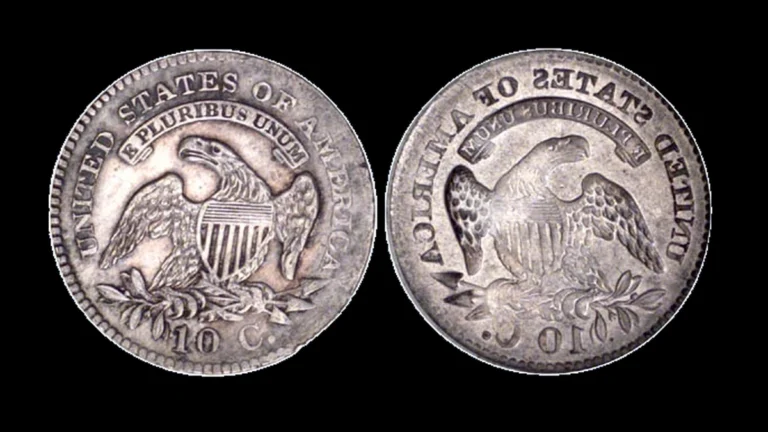
14. 1944 Dime Separate Impressions Cross or Exchange Faces: Double Strikes and Flipovers Error
One Philadelphia 1944 dime has a second strike 98% off center plus broad spreading on a blank without a prepared border. A separate published coin shows two in-collar impressions rotated about 90 degrees.
A third coin flipped between strikes, placing ONE DIME near the date and cap detail across OF AMERICA. Heritage cataloged it as 194?, believed to be 1944, with an indistinct final digit and later reverse counting-wheel marks.
How to Identify
Map coherent letters and portrait details into their respective impressions. The 98% second blow occupies only a small area, while the separate 90-degree example records rotation without necessarily flipping.
A flipover places front and reverse designs on the same face, as the misplaced ONE DIME and cap details demonstrate. Later wheel marks remain outside the strike sequence, and overlap cannot supply the hidden final date digit.
What It’s Worth
$200–$1,500 is the estimate for smaller second impressions, with roughly $1,000–$6,000 for dramatic rotated or flipover strikes. Readable overlapping designs and original condition govern the comparison.
The partly dated 194? flipover double strike sold for $3,450 in January 2007. That is a result for the uncertain-date specimen, not a securely dated 1944 auction record.
Conclusion
A 1944 dime’s evidence should connect the design to the metal and the edge. Small die varieties, thick stock, struck fragments, and overlapping impressions each require different comparisons.
Keep fragile flakes intact and retain the uncertainty attached to reported wrong blanks or partly hidden dates. The $3,450 flipover remains a 194? record, while the 0.8-gram fragment has its own documented identity and sale.