Rare 1986 Quarter Errors (List & Pictures)
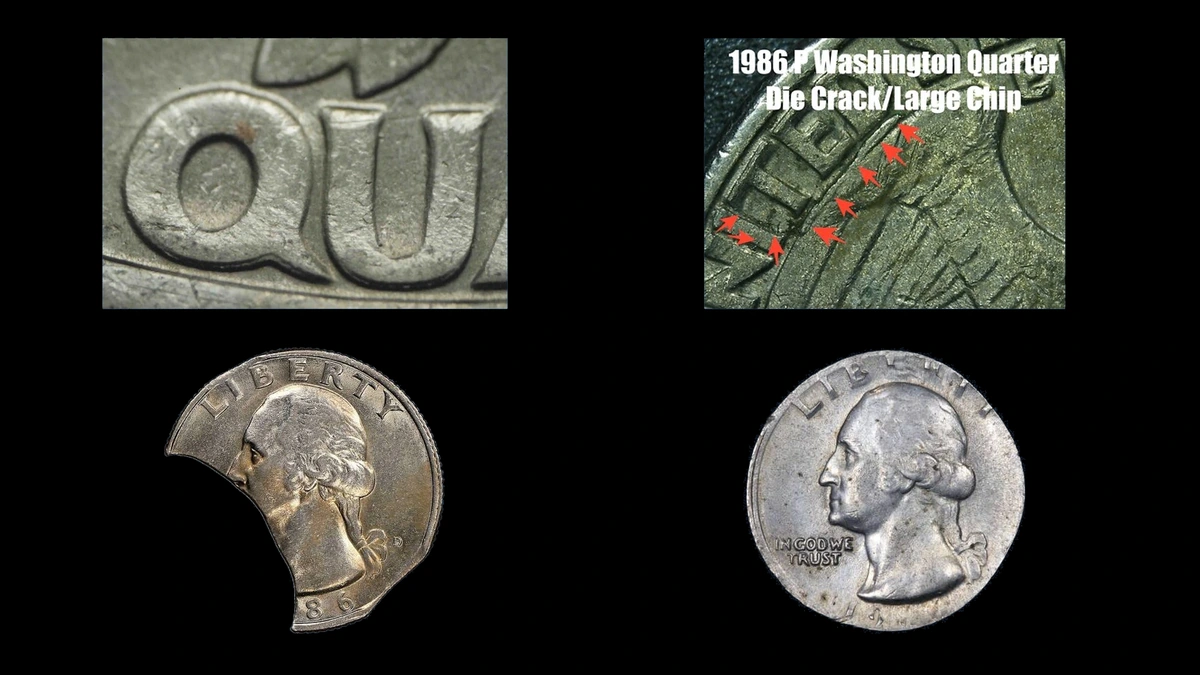
Begin an error check on a 1986 quarter by deciding whether the oddity is in the design or in the metal carrying it. A Philadelphia quarter struck on a smaller nickel blank sold for $195.50 in March 2006, while other collectible features need a magnifier to see.
These 1986 quarter errors have estimated values of $10–$1,500. The comparisons below separate doubled details, incomplete blanks, and coins whose design moved during striking.
1. 1986 Quarter Extra Detail inside the Reverse Lettering — Doubled Die Error
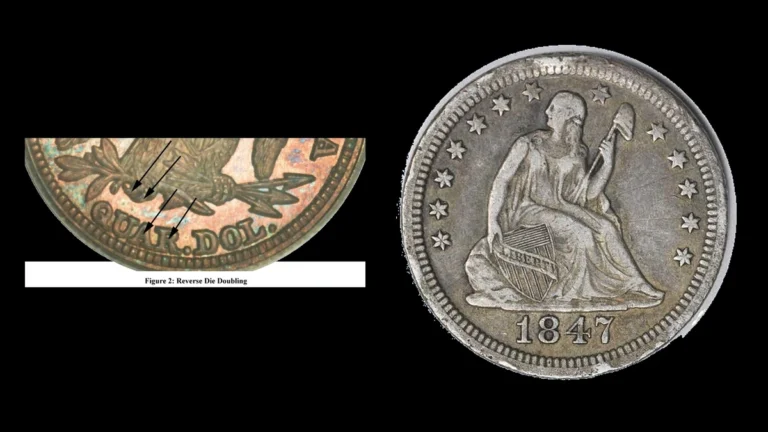
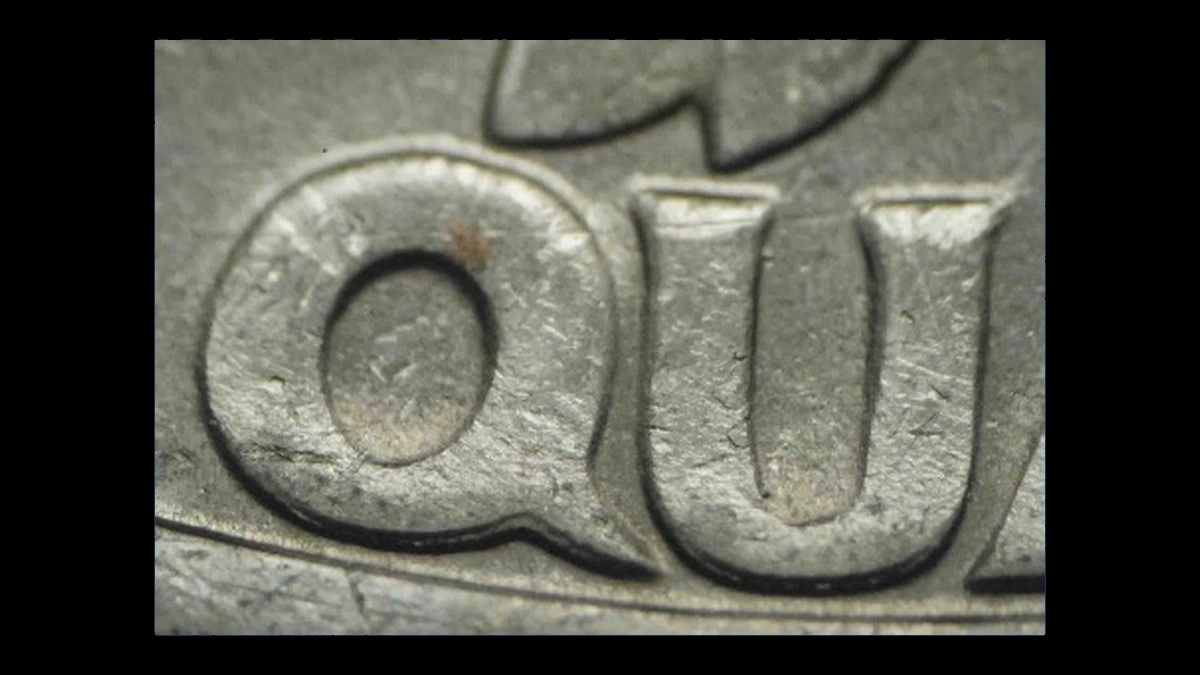
The cataloged 1986-P WDDR-001 shows inward doubling on parts of UNITED, QUARTER DOLLAR, and AMERICA. Leaves and branch ends below the eagle also carry extra detail.
The die already had those repeated outlines before striking. A separate front-doubling report mentions LIBERTY, the motto, and Washington’s eye and ear, but cannot borrow the reverse variety’s catalog number.
How to Identify
Compare the whole reverse pattern with the WDDR-001 reference. A short vertical line inside the lower part of the O in OF is a supporting marker, not a substitute for the doubling.
Rounded extra contours differ from low, flat shelves caused by movement during the strike. Any front-side candidate needs its own matched pattern.
What It’s Worth
$15–$200 is an estimate for matched doubled-design examples. Clear detail and good preservation help, while worn outlines can be harder to show.
The cataloged reverse offers a firmer comparison than an unexplained thick letter on the front.
2. 1986 Quarter A Second Curve beside the D — Reported Repunched Mintmark Error
A mintmark punched into the die more than once can leave part of an earlier letter beside the final one. This is a repunched mintmark, often shortened to RPM.
The 1986 Denver report does not establish a catalog number or direction for the claimed extra D. A damaged or flatly doubled letter can create a similar first impression.
How to Identify
Compare the normal D shape with another 1986-D quarter. Follow the possible extra curve to see whether it fits a separate placement of the same letter.
One lump or thick corner is not enough. Check the adjoining metal for scratches and look for a flat ledge that cuts into the original D.
What It’s Worth
$10–$150 is an estimated range for an identified repunched D. The range requires a convincing second punch outline, not merely the presence of the year-guide report.
3. 1986 Quarter Shallow Design across Much of the Coin — Weak Strike Error
A 1986-P NGC AU55 quarter was cataloged as a die-adjustment strike. Its visible feature is a very weak strike; the label suggests a press-setup explanation.
Shallow detail does not prove exactly why the press made the coin. Later wear, polishing, or flattening can also leave a faint design.
How to Identify
Place a normally struck quarter with similar wear beside the candidate. Compare both high points and protected lower details on both faces.
Original surfaces within broadly shallow details support weak striking. Polishing lines, crushed edges, or flattened finished design suggest later treatment instead.
What It’s Worth
$20–$250 is an estimated range for genuine weak strikes. The documented NGC AU55 coin sold for $36 in March 2010.
A readable date and intact surfaces matter more than using a press-adjustment name alone.
4. 1986 Quarter A Raised Patch by the Eagle-Side Rim — Cud Error
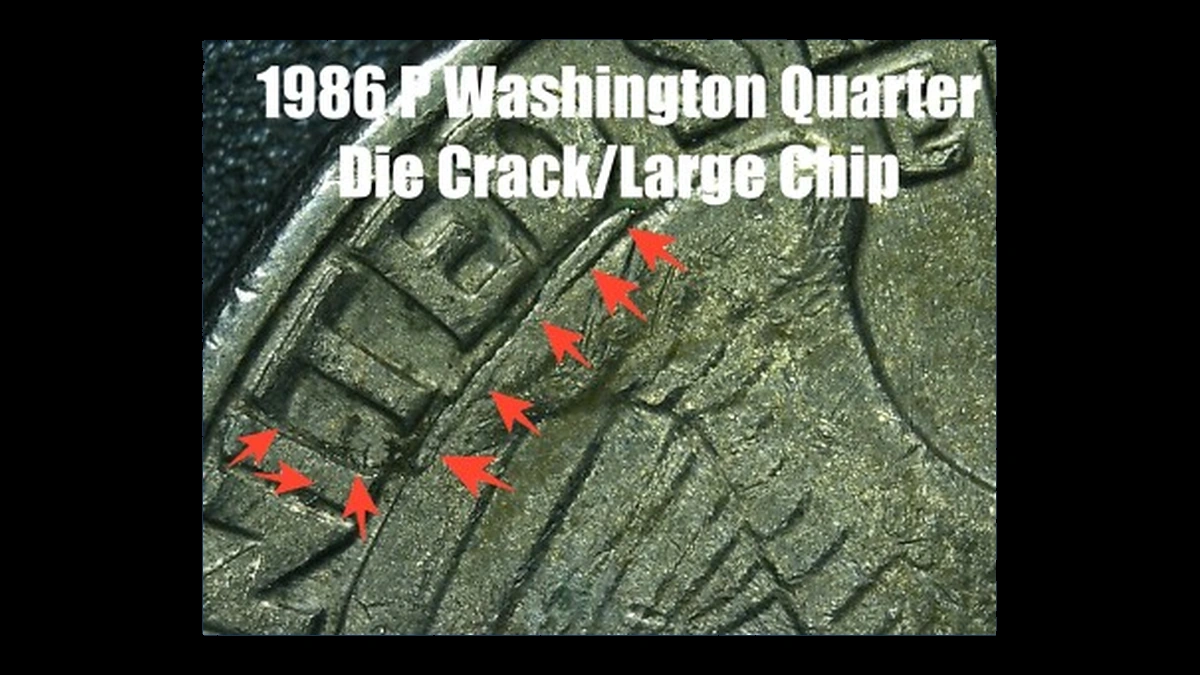
A seller’s 1986-P report places a raised rim break near ten o’clock on the back. A cud forms when part of the die breaks away at its edge and coin metal fills the opening.
The patch replaces normal design and joins the rim. An isolated blob elsewhere is not enough to establish this type of break.
How to Identify
Follow the reported patch into the rim and nearby original design. Check the opposite face for related weakness.
Solder, added metal, or a later rim hit can imitate a lump. The boundary needs to show a natural raised feature made during striking.
What It’s Worth
$30–$300 is an estimated range for a genuine rim-connected cud. A 1970-D nickel with two cuds sold for $63 in October 2022.
That different-year and denomination result gives broad context, not an authenticated sale of the reported 1986 quarter.
5. 1986 Quarter Three Curved Gaps in the Outline — Clipped Blank Error
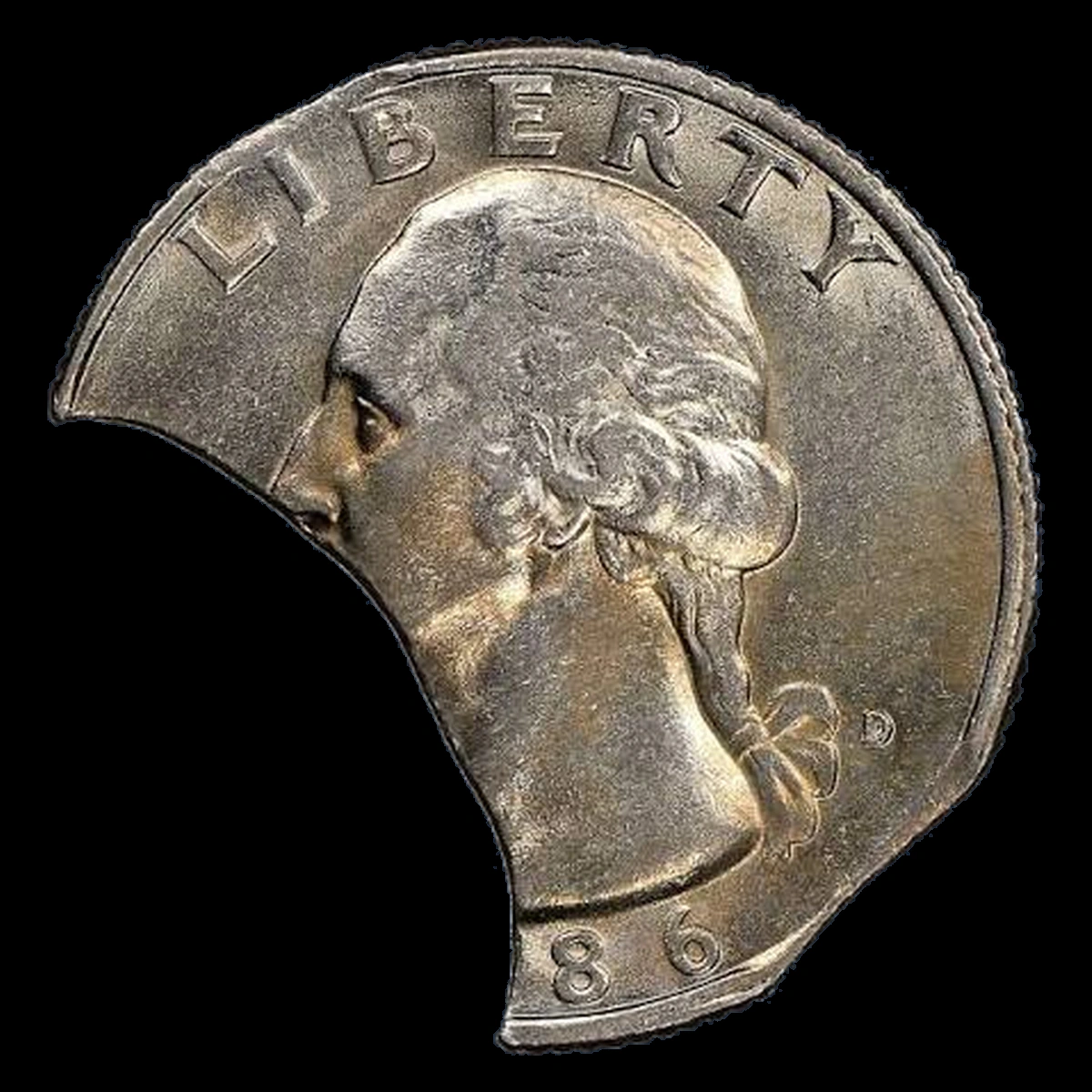
A Denver NGC MS61 example was reported with three curved clips. The largest reaches Washington’s face, while the others affect the date and LIBERTY area.
Only 86 survives from the date, which is recorded as (19)86. A separate Philadelphia clip report does not inherit that same arrangement.
How to Identify
Retain the grading record with the partly dated triple-clip coin. Examine each boundary for original struck metal rather than saw tracks or filing.
A normal clad quarter weighs 5.67 grams and measures about 24.26 mm across. These are reference figures, not recorded measurements of the triple clip.
All three missing sections should fit an incomplete original blank. They are three features on one coin, not three independent specimens.
What It’s Worth
$25–$500 spans modest clips and clearer multiple-clip pieces. A single modest clip generally fits $25–$175, with strong multiple clips around $100–$500.
A 1999-D Pennsylvania quarter with overlapping clips sold for $74 in December 2024. Do not multiply that result by three to price the Denver coin.
6. 1986 Quarter The Metal Spreads around a Complete Design — Broadstrike Error
A broadstrike happens when the collar ring fails to contain the edge during the blow. The coin spreads outward while its intended design remains on the metal.
The recorded Philadelphia example is ANACS AU50 Details, indicating wear and a separate condition problem. Denver has its own broadstrike report.
How to Identify
Follow the date and outside lettering around both faces. Measure the enlarged outline in several directions while checking the border for later hammering.
The Philadelphia details-grade piece should not be used as an example of a problem-free unworn coin. Keep its condition issue separate from the original spreading.
What It’s Worth
$25–$300 is the estimate for genuine broadstrikes. Strong expansion with clear original detail usually offers a better example than slight spreading on a worn coin.
Two 1990-P ANACS MS63 broadstrikes sold together for $101 in July 2021. That is a later-year lot total, not a price for either individual 1986 quarter.
7. 1986 Quarter A Solid Crescent beside Cut-Off Design — Off-Center Strike Error
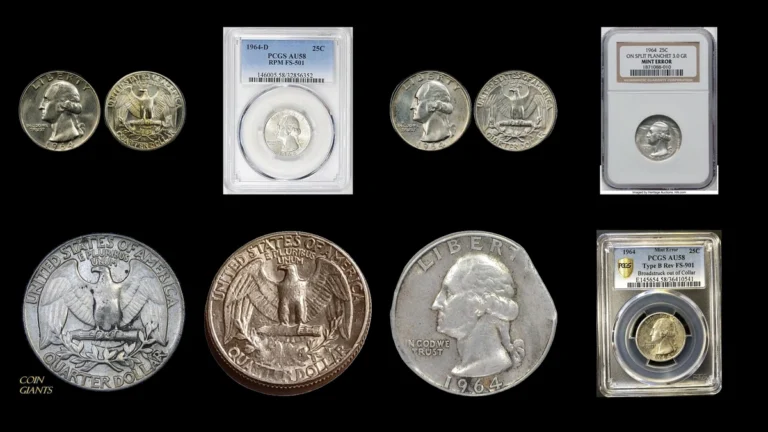
Philadelphia records include a 30% off-center quarter and separate 20% shifts toward 9:30 and two o’clock. A Denver report describes 60% displacement toward eleven o’clock.
Each coin received its design on a blank positioned partly outside the dies. The remaining plain crescent is metal that was not struck, rather than metal missing from a clip.
How to Identify
Compare both faces for the same displacement and inspect the transition into untouched metal. Read the actual surviving date and mintmark.
Keep the directions with their own examples. A large blank area with grinding marks needs a different explanation from an original off-center strike.
What It’s Worth
$50–$500 is an estimated range for genuine examples. The Philadelphia 30% off-center NGC MS65 coin sold for $139 in October 2022.
The 60% Denver report should not receive a higher figure just because its shift is larger. Date visibility and overall condition remain important.
8. 1986 Quarter Copper-Colored Washington with a Normal Back — Missing Front Layer Error
A 1986-P PCGS AU55 quarter lacks its front copper-nickel layer, exposing the copper core. Its reverse still has the normal outer face.
The grade indicates light circulation wear. The available auction record does not give its actual weight.
How to Identify
Compare both faces and follow the layer boundary around the grooved edge. Genuine loss should produce a meaningful weight reduction from the ordinary clad standard.
Stains or copper plating can alter color without removing a layer. Grinding and chemical stripping can remove metal later, so the exposed design and boundary must remain naturally struck.
What It’s Worth
$50–$600 is the estimated range for genuine front-layer losses of varying condition. The PCGS AU55 specimen sold for $62 in September 2024.
That result shows a genuine missing-layer quarter can sell near the lower end, especially with wear.
9. 1986 Quarter Overlapping Designs inside an Expanded Border — Double Strike Error
A documented 1986-P ANACS MS64 quarter combines a second strike with broad spreading. The coin moved between blows, leaving repeated parts of the design inside the enlarged outline.
This differs from small doubled letters already present on a die. A second strike can shift the portrait, border, and lettering together.
How to Identify
Trace one recognizable design position to its rim, then locate the details belonging to the second rim. Earlier features may be partly flattened by the later blow.
Check that the reverse supports the same explanation and inspect the edge for later hammering. A wide outline or one thick letter alone does not prove the combination.
What It’s Worth
$100–$700 is an estimated range for clear expanded double strikes. The ANACS MS64 1986-P example sold for $129.25 in October 2014.
Both effects receive one overall price based on the whole coin’s clarity and preservation.
10. 1986 Quarter Quarter Lettering Runs off a Smaller Disc — Wrong Planchet Error
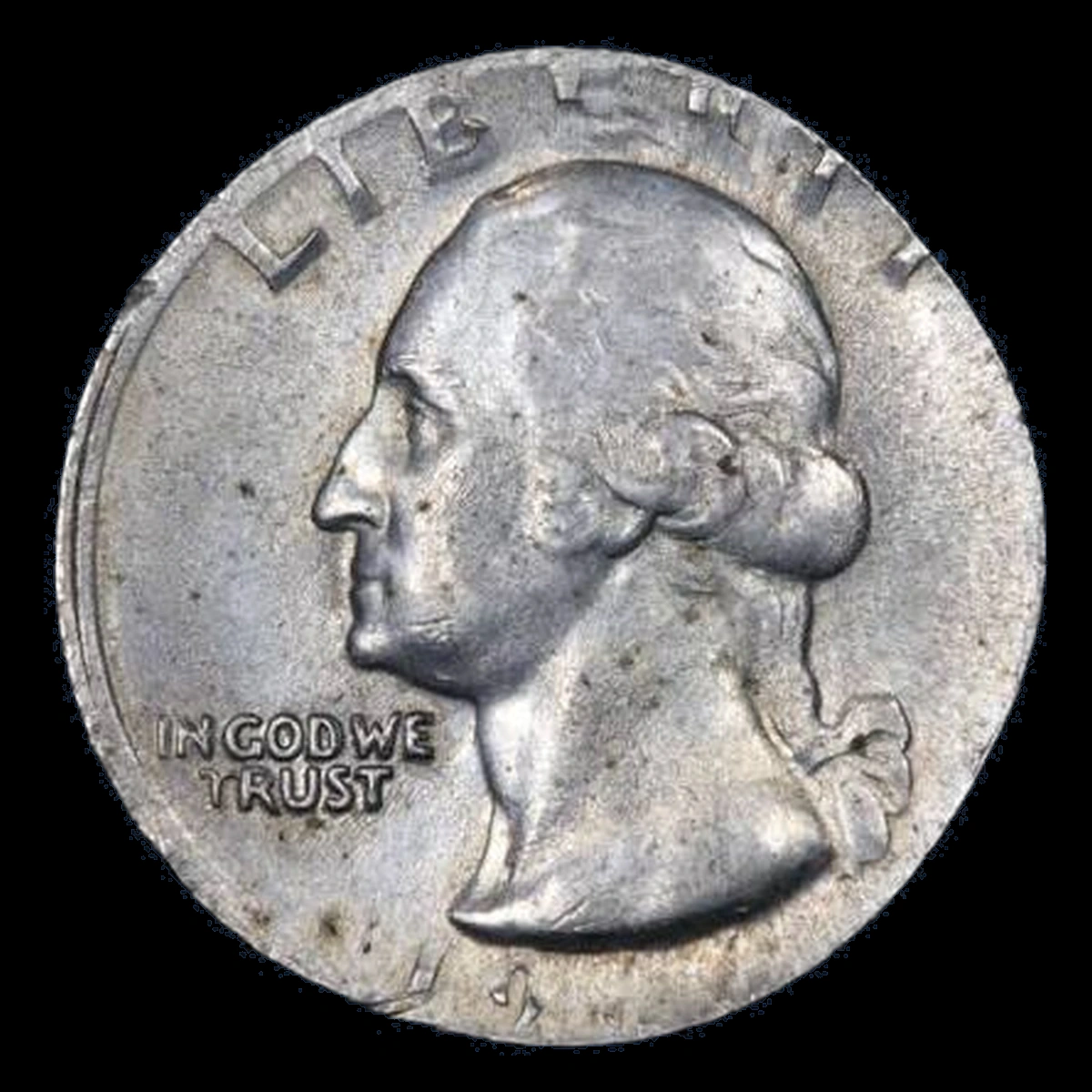
A quarter design can land on a blank intended for a smaller denomination. The records include a Philadelphia ANACS MS61 nickel-blank quarter and a separate Denver NGC MS64 nickel-blank example.
A dime-blank quarter is also reported, with no mint established. These descriptions concern previously unstruck blanks, not a nickel or dime design lying beneath Washington.
How to Identify
Nickel blanks normally start at 5 grams and 21.2 mm, while clad dime blanks start at 2.268 grams and 17.91 mm. Compare the actual coin’s metal and measurements, allowing for spreading during striking.
Peripheral quarter details should run naturally beyond the smaller blank. Check the edge for grinding that could have reduced an ordinary quarter after minting.
What It’s Worth
$150–$1,500 spans the two reported blank types. Genuine nickel-blank quarters generally fit $150–$700; the Philadelphia example sold for $195.50 in March 2006.
Authenticated dime-blank quarters are estimated at $400–$1,500. A different-year 1994-P NGC MS64 example sold for $504 in April 2022, without establishing the mint or measurements of the 1986 report.
Conclusion
A magnifier helps with the 1986-P reverse doubled die, but larger errors need full views of both faces and the edge. Small outlines, missing sections, and unstruck crescents should each fit a different physical explanation.
Keep incomplete dates with their grading records and measurements with their own specimens. When comparing prices, a worn details-grade coin belongs in a different condition group from a clean unworn example.