Rare 2011 Quarter Errors (List & Pictures)
Some reported 2011 quarter errors changed names after closer examination: a Vicksburg coin described as off center was identified as a one-tool shift, and its doubling as mechanical.
Estimates for genuine errors run from $2–$1,500. A different-year missing-layer quarter brought $384 in January 2022; that is not a 2011 sale.
Compare the position of both designs first, then inspect metal loss and small raised or missing details on the correct park.
1. 2011 Quarter One Face Crowded against the Rim: Misaligned Die Error
Compare Washington’s position with the placement of Vicksburg’s USS Cairo scene. If one design is shifted while the opposite remains nearly centered, a displaced tool can explain the uneven rim.
How to Identify
Photograph each face straight on with the coin lying flat. Tilted photographs or a dented rim can distort the apparent spacing outside the lettering.
A one-tool shift differs from an entire blank sitting off center. The report concerns sideways placement, not a measured rotation between the faces.
The Vicksburg discussion revised its original identification. Use the resulting explanation and both-face evidence rather than the thread title alone.
What It’s Worth
A clear genuine misalignment is estimated at $5–$100. Tiny rim-width differences may attract little extra money.
Visible crowding of lettering and a clean surface offer a stronger comparison than an apparent shift produced by photography or later damage.
2. 2011 Quarter A Blank Crescent on a Shifted Coin: Off-Center Strike Error
The Denver Gettysburg report concerns displacement of the whole blank. Part of the design misses the metal, while a crescent on the opposite side receives no impression.
How to Identify
Locate 2011 on the park side and D on Washington’s side. Keep those landmarks visible when comparing the two faces.
Follow the untouched crescent and the opposite cut-off design on both sides. Their positions should fit the same misplaced blank rather than a shift confined to one tool.
No exact percentage is supplied for the reported specimen. A whole-coin view is necessary before estimating displacement or comparing it with the Vicksburg misalignment.
What It’s Worth
Genuine Gettysburg off-center examples are estimated at $50–$1,000. A slight shift belongs below a more obvious displacement with date, mint letter, and recognizable monument remaining.
A heavily scratched large error may be less appealing than a clean moderate one. Size alone does not establish a price.
3. 2011 Quarter A Full Scene inside Expanded Borders: Broadstrike Error
Gettysburg and Denver Chickasaw reports describe quarters that spread beyond normal width. The collar, the surrounding ring that restrains a blank and forms its edge grooves, failed to contain the metal properly.
How to Identify
Check that both intended designs remain on the metal. The Gettysburg monument or Chickasaw’s Lincoln Bridge should sit within the expanded border rather than run beyond the blank.
An ordinary clad quarter is about 24.26 mm across and weighs 5.67 grams. Measure actual width in several directions and inspect the changed groove structure at the edge.
Hammering can also spread a coin, usually while crushing detail or working the surface. A wide rim in one photograph is insufficient without naturally struck expansion.
What It’s Worth
Genuine examples are estimated at $30–$500. Conspicuous spread with clear park detail generally offers a stronger display than a nearly normal-looking border.
The range concerns actual broadstrikes. A small one-face misalignment needs the different comparison described earlier.
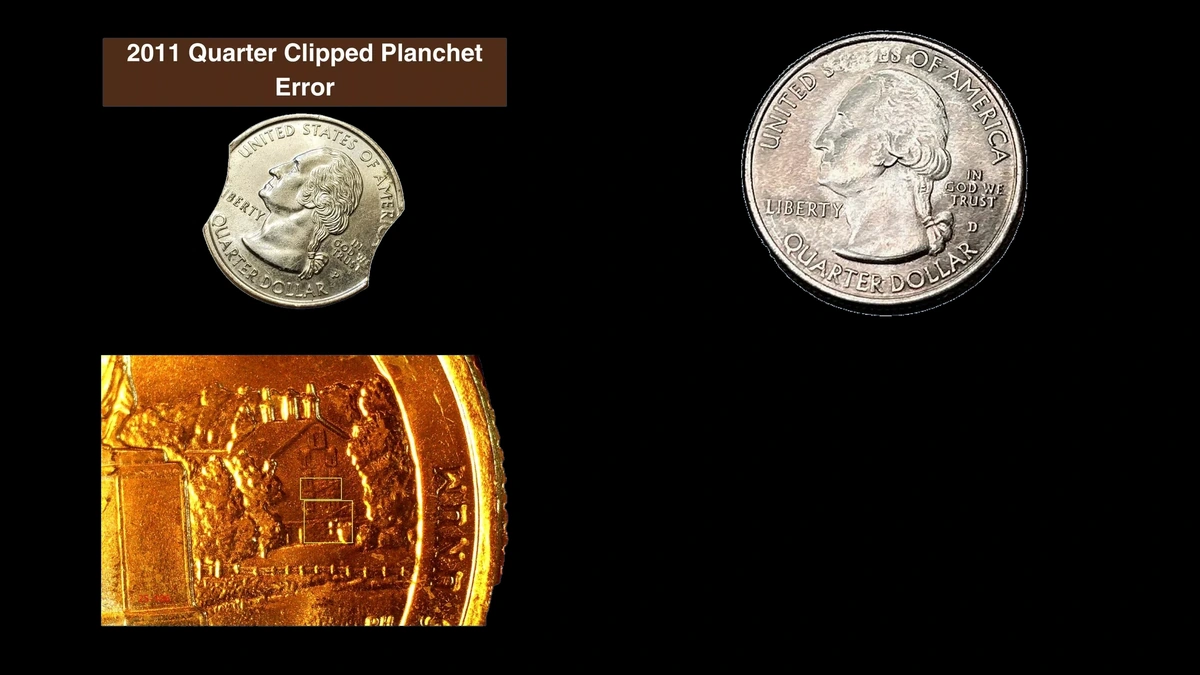
4. 2011 Quarter A Missing Section through the Edge: Clipped Blank Error
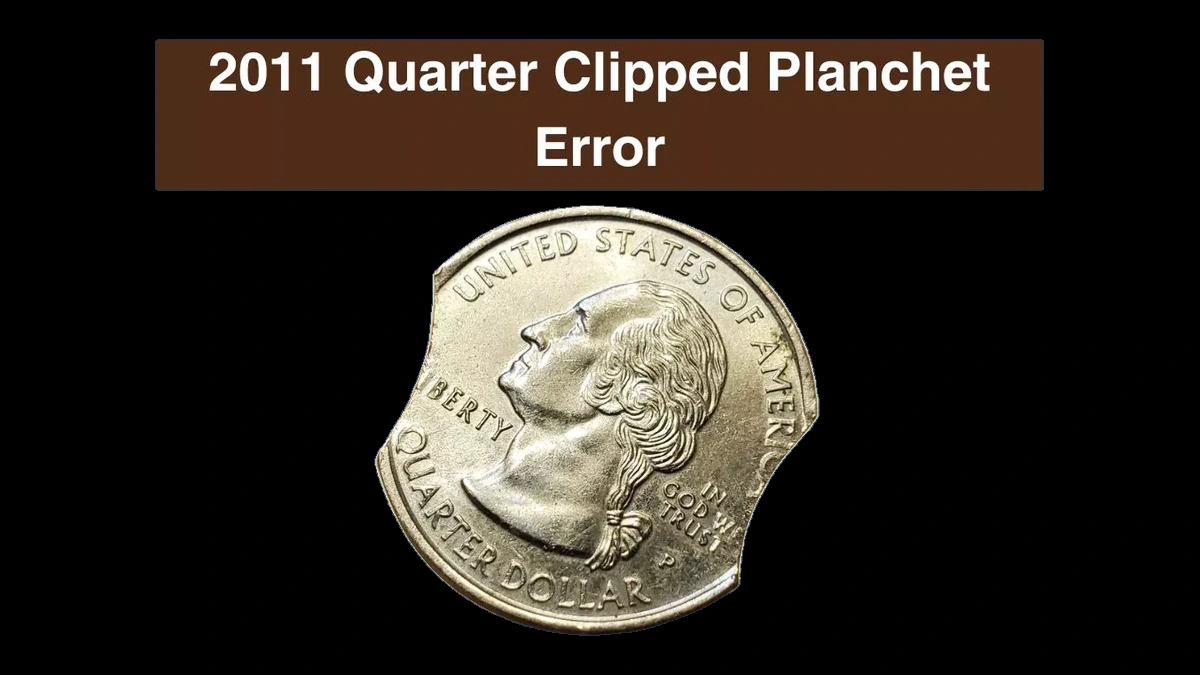
The reported Denver Glacier example has metal absent from its original blank. Cutting equipment can overlap an earlier hole or an incomplete part of the strip, leaving a disk that still proceeds to striking.
How to Identify
Inspect the opening from both faces and the side. Its endpoints should meet design shaped around the original gap rather than show freshly sliced detail.
Look for saw marks or sharp burrs from later removal. Softened nearby design and opposite-rim weakness can support an original clip, but opposite weakness is not required on every example.
The report gives no fixed position or size. The measured loss should fit the actual opening, while the mountain goat scene, date, and D establish the reported issue.
What It’s Worth
Genuine 2011-D Glacier clips are estimated at $25–$500. Larger missing areas often draw attention, but damage to the opening can outweigh their size.
A clean small clip may compare more favorably than a larger heavily scratched coin. A notch cut into a completed quarter is outside the range.
5. 2011 Quarter A Bubble or Lifted Patch: Peeling and Layer Separation Error
The Gettysburg report describes bubbling and peeling without settling the failed boundary. Separation may occur within the metal or at a bond between the outer layers and copper center.
How to Identify
Photograph the raised area from above and from the edge without pressing it down. Design continuing across a flap and the exposed boundary can help explain what separated.
A retained flap may leave weight near normal even when it is conspicuous. Later heating can create bubbles too, sometimes with altered color and additional surface damage.
The shape alone does not settle mint origin or identify the layer involved. Preserve the intact feature for examination instead of pulling it open.
What It’s Worth
Confirmed mint-made peeling or partial separation is estimated at $25–$500. A visible original flap with recognizable design can be more appealing than a shallow rough patch.
Heat damage does not qualify for the estimate. Cleaning, corrosion, or a bent flap also reduces the quality of the comparison.
6. 2011 Quarter A Copper-Colored Face with Missing Metal: Missing Clad Layer Error
A separate Gettysburg report concerns an absent outer layer. If the copper center is exposed before striking, it receives the design directly.
The report establishes neither the mint nor which face is affected. It should remain separate from the smaller peeling-patch description.
How to Identify
Compare both faces with the edge and measured weight. Genuine complete layer loss should explain a meaningful reduction in metal along with an absent outer sheet on the copper-colored side.
Scraping, stains, chemical treatment, and residue can alter color without reproducing that original structure. The design should be struck into the exposed surface, even if some details are weak on the thinner blank.
Identify finish and composition before applying the clad standard. San Francisco produced collector Proof quarters in clad metal and 90% silver; the silver version normally weighs 6.25 grams.
What It’s Worth
Confirmed Gettysburg missing-layer errors are estimated at $150–$1,500. A copper-colored park side may appeal to collectors seeking different reverse designs.
For an older comparison, a 1973 quarter missing its front layer sold for $384 in January 2022. That NGC MS64 coin weighed 4.7 grams; neither figure is a measurement or sale of the 2011 report.
7. 2011 Quarter A Missing L or a Depressed Design Area: Struck Through Material Error
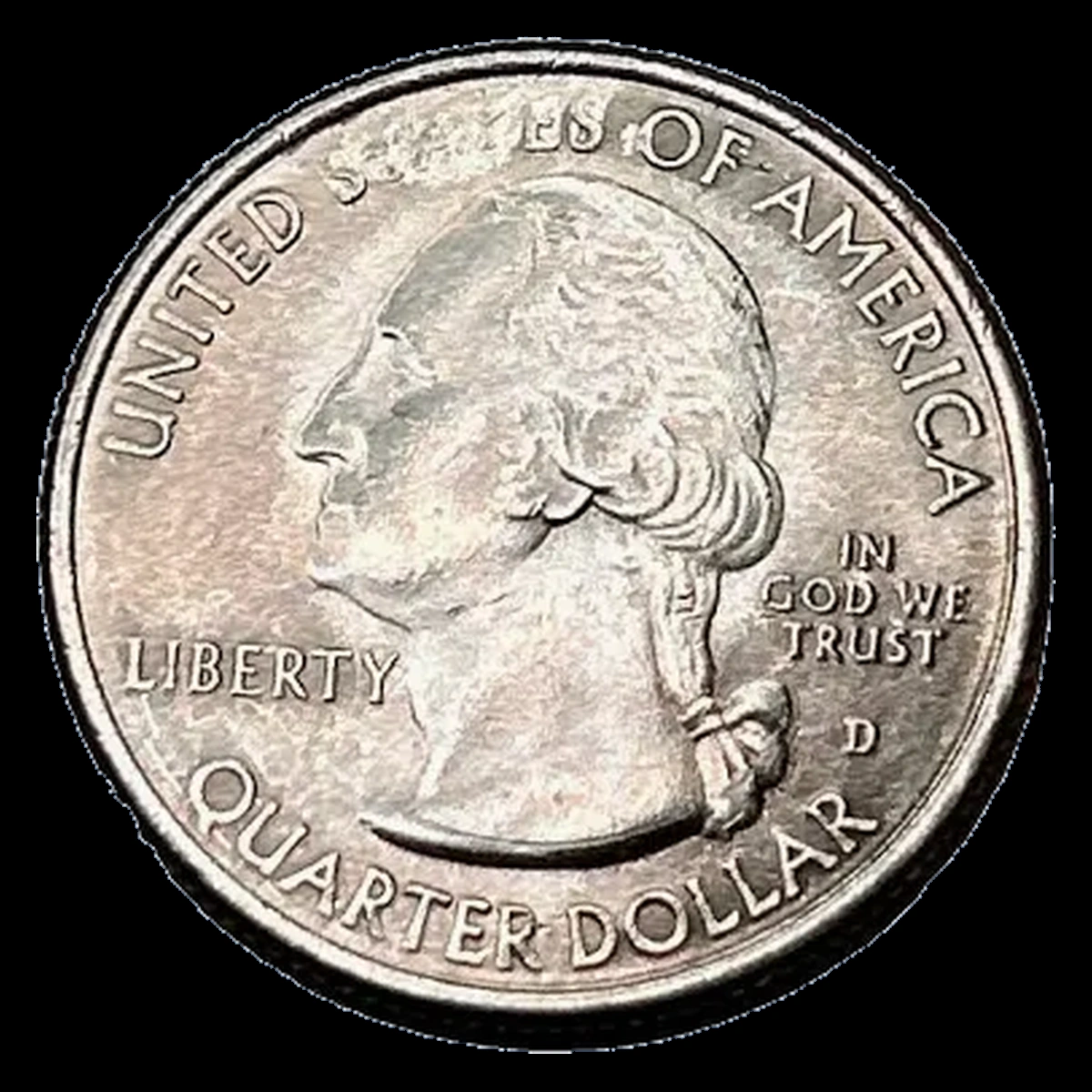
The Glacier missing-L report also describes a weak I and nearby hair. A forum explanation linked that localized combination to grease blocking the tool.
Other strike-through reports concern Gettysburg, Denver Vicksburg, and both faces of a Philadelphia Chickasaw coin. The obstructing material is not identified for those examples.
How to Identify
Read Glacier’s LIBERTY and compare the three weak areas with stronger surrounding detail. General wear provides a different explanation from a local blockage.
For a depression, follow its transition into intact design under changing light. A gouge with metal pushed up around it can indicate later damage.
Use the correct monument, ship, or bridge scene for each park comparison. Photograph both Chickasaw faces together with the edge, keeping the reported two-face effect tied to the same coin.
What It’s Worth
Minor grease-related weakness is estimated at $2–$20, and larger clear strike-throughs at $20–$600. Missing lettering needs enough surrounding evidence to exclude ordinary wear.
Two affected Chickasaw faces still receive one whole-coin price. They do not automatically double the value.
8. 2011 Quarter A Ridge, Small Island, or Rim Patch: Die Cracks, Chips, and Cuds Error
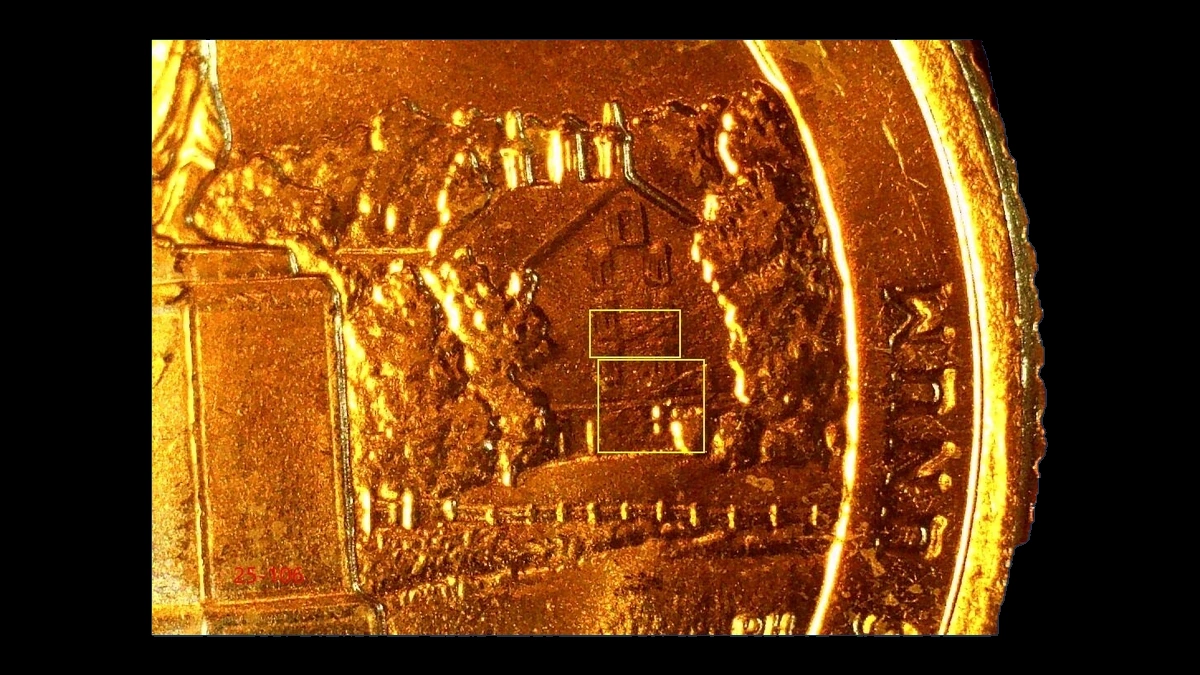
Damaged tools can add raised shapes as metal fills the broken areas. A thin opening makes a crack line, a small missing piece makes a chip, and a larger rim-connected break can make a cud.
Gettysburg reports locate lines near the rim and monument base. The Philadelphia Olympic chip has no fixed location, and the Denver cud report does not identify its park.
How to Identify
Trace the feature’s shape with surrounding design visible. A cud must reach the rim and replace edge-area detail rather than resemble a blob attached on top.
For Gettysburg, compare the monument base and rim with an ordinary example. Inspect beside any lump for scrapes or displaced metal from a later impact.
Vicksburg cracks and cuds remain reported possibilities. A Denver lump alone cannot assign the park-unspecified cud to Vicksburg.
What It’s Worth
Small cracks and chips are estimated at $2–$30; larger genuine cuds at $30–$300. Confirm the rim connection before applying the higher range.
The amount of replaced design and the coin’s condition matter more than a nickname.
9. 2011 Quarter Faint Opposite-Design Traces: Die Clash Error
Denver Vicksburg and Philadelphia Olympic quarters are reported with clash marks. Contact between the tools without a blank can transfer fragments of one design into the other tool’s surface.
How to Identify
Learn the normal reverse before interpreting extra lines: Vicksburg shows USS Cairo, while Olympic shows an elk, the Hoh River, and Mount Olympus. A transferred fragment must fit the appropriate design.
Follow several portions of the suspected shape in photographs. No exact transferred outline is established in these reports, and a random ridge can instead be a die crack.
Sunken scrapes with torn metal suggest later damage. Compare images rather than pressing coins together to recreate the effect.
What It’s Worth
Visible genuine clashes are estimated at $10–$200. Recognizable fragments on sharp surrounding design support more than an isolated uncertain line.
The estimate requires an identified clash on the correct park coin, not any mark crossing Washington’s portrait.
10. 2011 Quarter Repeated Letter Edges: Doubled Die or Mechanical Doubling Error
The Vicksburg collector’s apparent doubled sunken lettering was later accepted as mechanical doubling. That corrected example is not an established doubled die.
Separate reports concern front doubling on Denver Gettysburg and reverse doubling on Philadelphia Glacier. A true doubled die carries the repeated design in the tool before coins are struck.
How to Identify
Vicksburg’s E PLURIBUS UNUM sits below the surface. Determine whether the lettering is raised or sunken before applying comparisons intended for raised letters.
On Gettysburg, examine Washington’s side for matching rounded outlines or split corners. The date is on the park side, so it cannot be used as a front-side doubling location.
On Glacier, compare the goat, nearby ground, and lettering with an ordinary example and the reported feature. A clear repeated shape should remain visible under different lighting, whereas flat shelf-like trimming can arise during the strike.
What It’s Worth
Identified true doubled-die features are estimated at $5–$250. Ordinary Vicksburg mechanical doubling belongs around $0.25–$2, often with no meaningful premium.
A seller’s large asking price cannot convert a mechanical edge into a confirmed die variety. The Gettysburg and Glacier reports each require their own match.
Conclusion
Identify the park and examine both faces before naming a 2011 quarter error. A one-tool shift differs from an off-center blank, and mechanical doubling on sunken lettering needs a different comparison from a genuine doubled die.
Keep layer loss separate from bubbling or local weakness, and preserve attached metal. Original boundaries, correct design matches, and each coin’s own measurements provide a stronger basis for value than an appealing title or unusual color.