Rare 2003 Quarter Errors (List & Pictures)
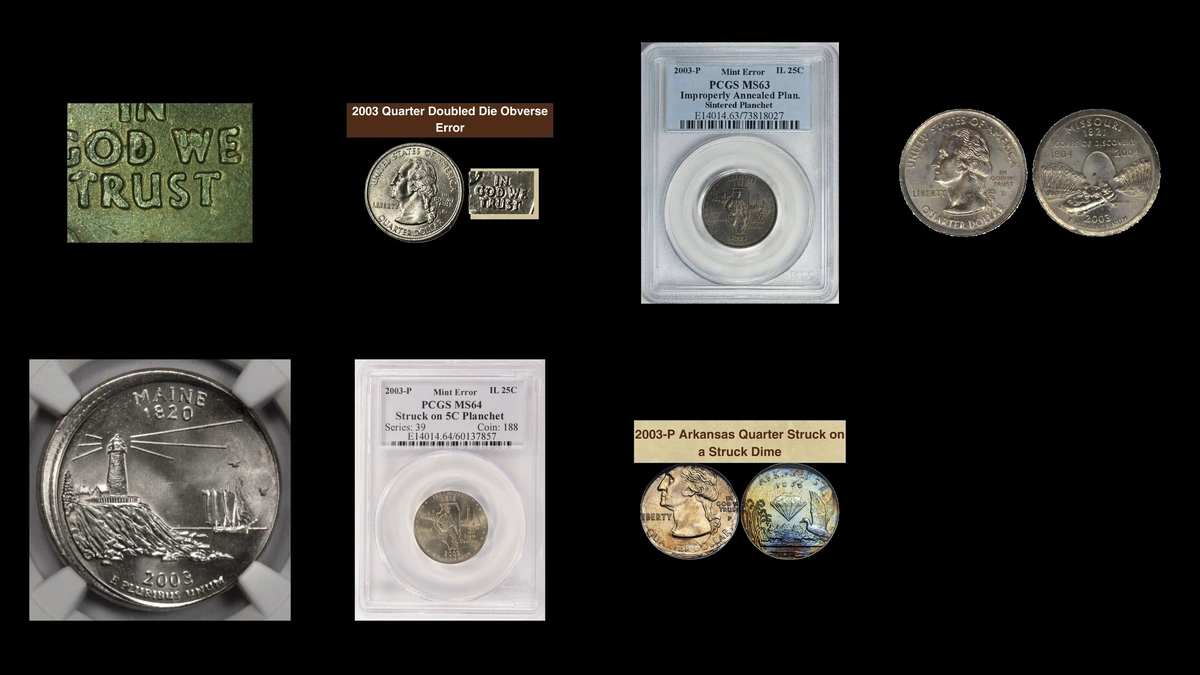
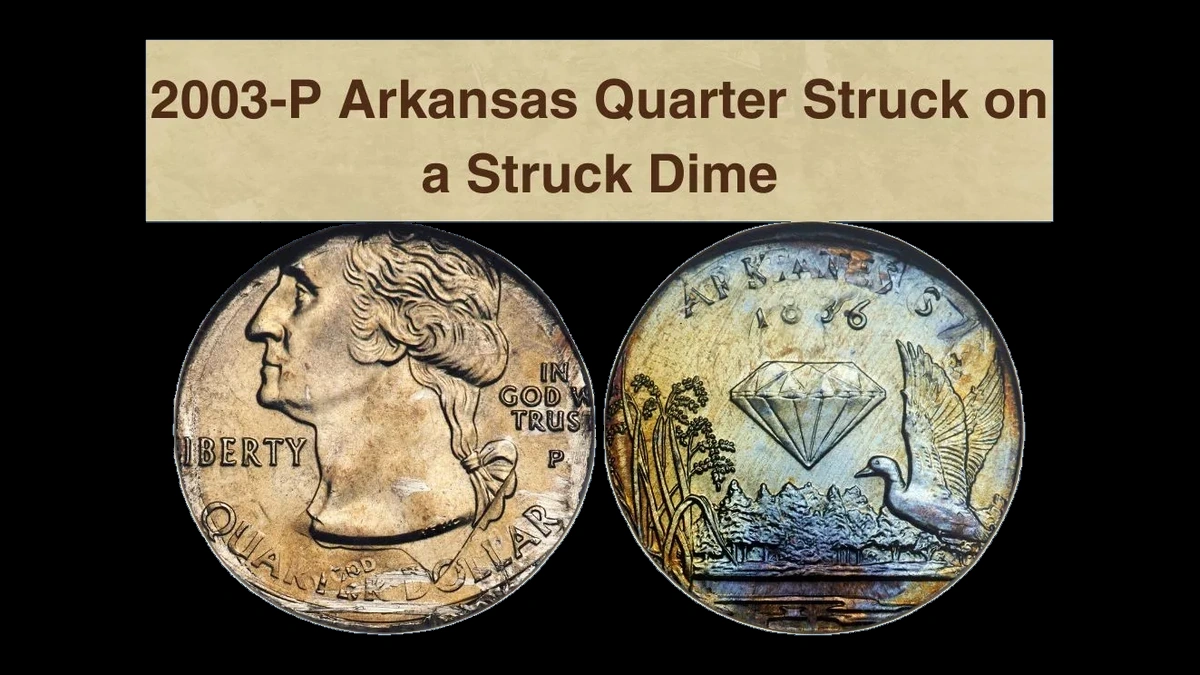
An Arkansas quarter design struck over a finished dime sold for $5,640 on August 16, 2024. Its quarter date missed the small host coin, but the Arkansas scene and surviving P still identified the issue.
These 2003 quarter errors have estimated values of $2–$8,000. Start with the state and actual issue date, then compare the surface, edge, and any evidence of a second design.
1. 2003 Quarter A Line or Lump Stands above the Design — Die Crack, Chip, or Cud Error
Reports cover Maine’s cliff, Illinois near IN, Alabama near the chair or Braille dots, and Denver Missouri rim cracks. Arkansas includes ordinary P and D reports plus a separate S clad Proof reverse crack.
A crack in the die leaves a raised ridge; a broken piece can leave a lump. A larger raised patch that reaches the rim is called a cud.
How to Identify
On Alabama, compare the normal Braille pattern first: the intended dots are part of the design. An extra bump must differ from that normal arrangement.
Follow a suspected ridge under light from opposite directions to separate it from a scratch. A cud must connect to the rim, while an interior chip does not.
The Arkansas Proof’s reverse crack needs its own comparison. It cannot establish a front-side path or a feature on another state.
What It’s Worth
$2–$500 spans the supplied groups. Small ordinary cracks or chips generally fit $2–$40, larger cuds $40–$300, and a clear original Arkansas clad Proof crack about $100–$500.
Proof finish and preservation contribute to that last range.
2. 2003 Quarter A Second Rounded Edge on a Letter — Doubled Die Error
Reports include front lettering or portrait details and reverse features on Maine, Illinois, Alabama, and Arkansas quarters. A doubled die carries those repeated outlines before striking the blank.
An older Illinois claim calls its mintmark repunched, but mintmarks were no longer individually punched into working dies by 2003. A doubled-looking letter needs another explanation.
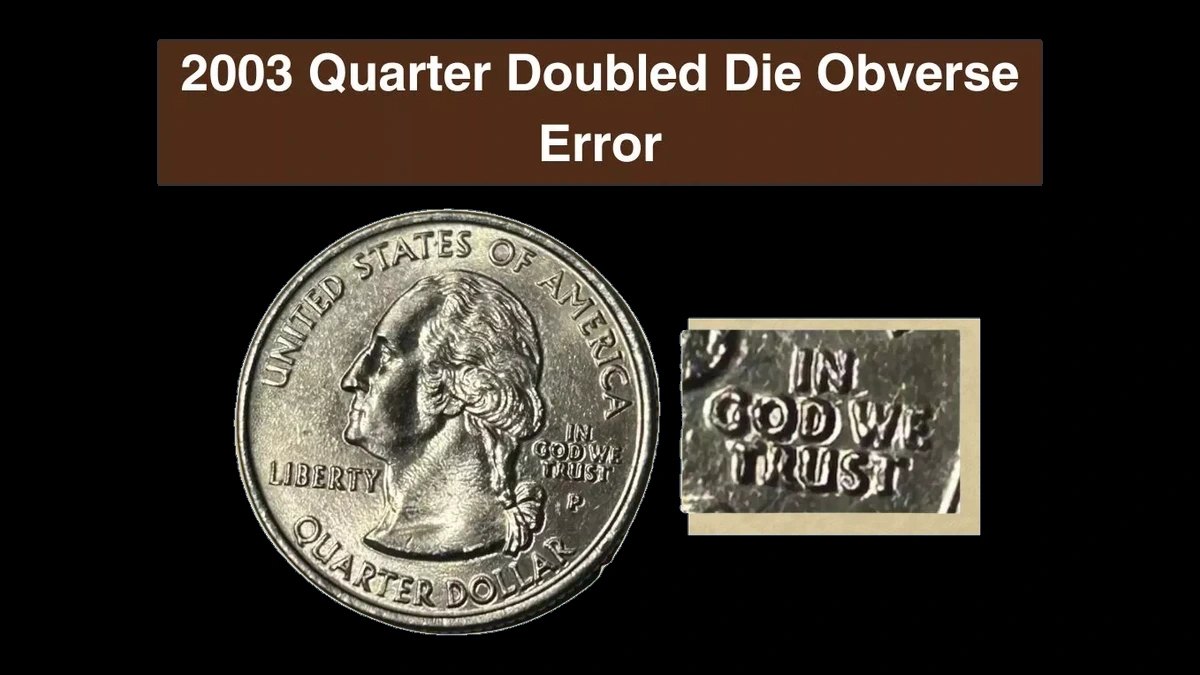
How to Identify
Keep one face and state in view: Washington, LIBERTY, and the motto are on the front, while the 2003 date is on the back. Illinois’s Lincoln and skyline need a different reference from Alabama’s words and date.
Look for rounded separation or split corners rather than a flat shelf from strike movement. A bright edge or lump beside the modern mintmark does not prove a second punch.
What It’s Worth
$5–$300 is an estimate for an identified visible doubled die. Clear detail on a well-preserved coin supports stronger examples.
Mechanical doubling and ordinary mintmark irregularities often add no premium, leaving typical examples around $0.25–$2. The old repunched-mintmark label does not change that.
3. 2003 Quarter A Letter Stroke Is Missing or the Field Looks Grainy — Struck Through Error
Reports involve Maine, Philadelphia Missouri, Denver Alabama, and both P and D Arkansas quarters. Blocking material can keep a letter stroke or wider area from forming.
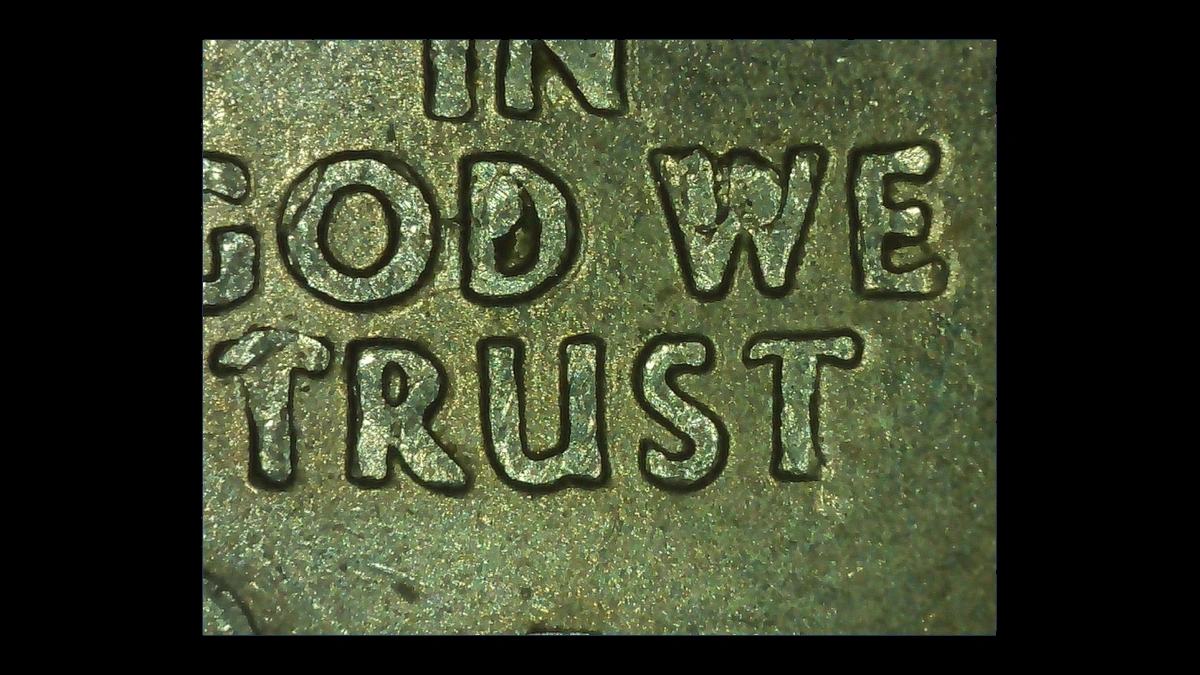
The Maine-related IN COD WE TRUST nickname refers to a missing short bar on the G. A separate Philadelphia Arkansas example has a granular reverse impression with fine die lines extending into some affected areas.
How to Identify
For the G, compare the short inner bar and nearby lettering under changing light. Wear or later damage can remove a stroke without changing the original wording of the die.
For Arkansas, follow the fine raised lines into the textured area’s boundary. Mike Diamond’s discussion links that appearance to material caught during striking.
Do not assume all weak marks have the same substance or cause. Preserve any retained material and compare the correct state design.
What It’s Worth
$2–$800 is the estimated span. Minor missing strokes or grease weakness generally fit $2–$30, while larger clear impressions or granular areas can fit $30–$800.
A readable boundary beside sharp original design is more useful than an unexplained worn patch.
4. 2003 Quarter A Loose Flap or Shallow Separation — Lamination Error
Philadelphia Maine appears in a list of layered-metal defects. A separate Denver Illinois report combines peeling metal, a depression, and an edge feature on one coin.
The Illinois marks do not necessarily share one cause. A sunken depression should not be called a cud, which is raised and rim-connected.
How to Identify
Follow the peeling boundary without moving the loose metal. Original design continuing onto a flap can help show how the separation relates to the strike.
Map the Illinois depression and edge feature separately before combining explanations. Neither report establishes that an entire outer layer was missing.
What It’s Worth
$25–$600 is an estimated range for genuine original peeling or partial separation. Small shallow patches generally fit below broad attached flaps with readable design.
The reported Illinois combination receives one overall value. Tearing or cleaning an attached layer can reduce both its appeal and its identifying evidence.
5. 2003 Quarter A Coppery Film with the Layers Still Present — Heat-Related Color Error
Reports of copper wash include Philadelphia Maine and Arkansas, plus Denver Missouri quarters. Heat treatment during manufacturing is one proposed explanation for coppery surface color.
The metal can remain fully layered, unlike a coin missing an outer face. Later heating and staining can imitate the appearance.
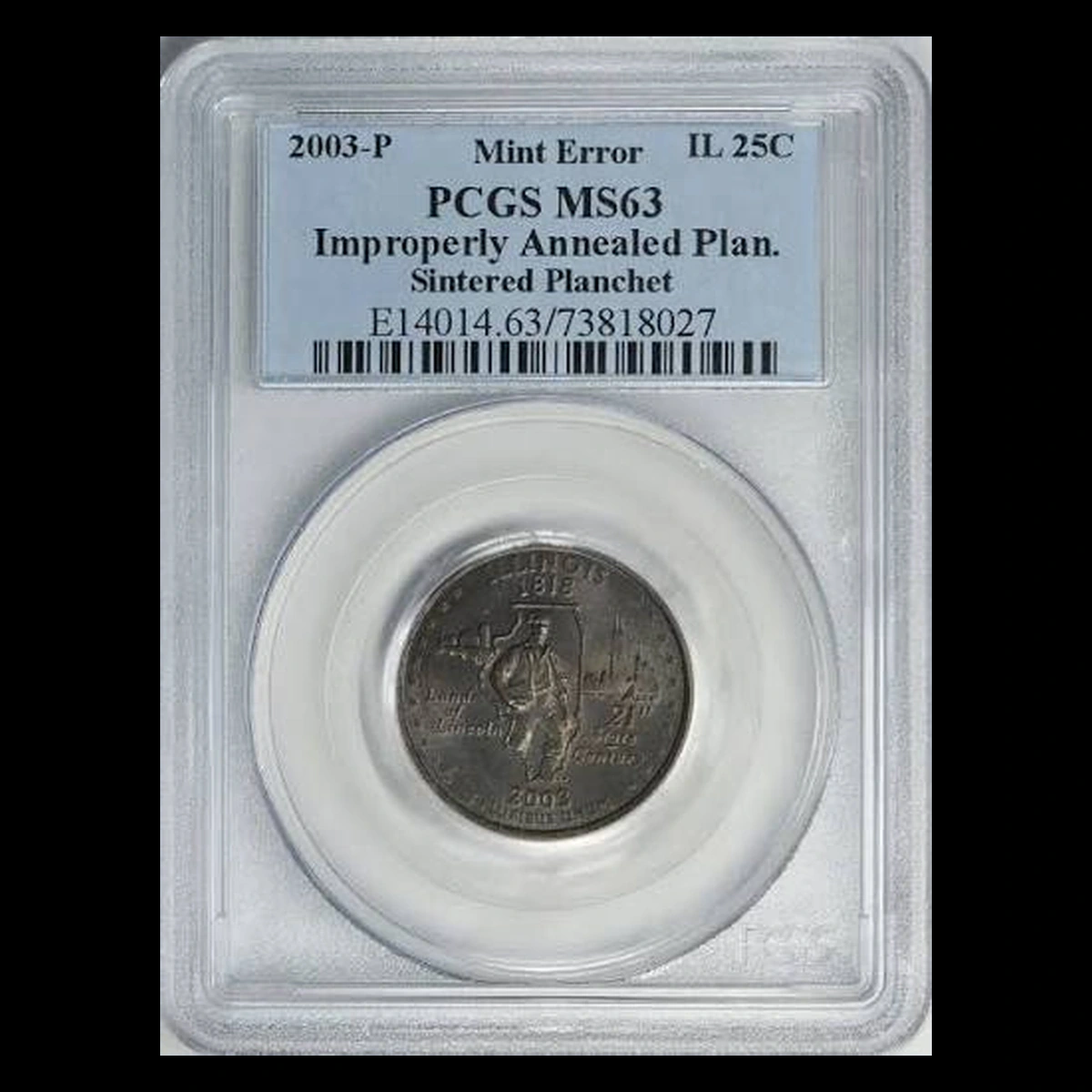
How to Identify
Inspect the edge for pale outer bands around the copper center. A near-normal clad weight of 5.67 grams supports intact metal but does not prove when the color formed.
Compare protected and exposed areas for residues, stains, or heat damage. Leave the film untouched for examination rather than polishing it away.
What It’s Worth
$20–$200 is the estimated range for confirmed manufacturing-related color of this kind. Original even color on a well-preserved coin can be more appealing than a dark damaged surface.
A stained or later-heated quarter may receive no error premium.
6. 2003 Quarter Copper Exposed where Metal Is Gone — Missing Clad Layer Error
Reports include Denver Maine partial loss, Philadelphia Alabama front loss, and Philadelphia Arkansas reverse loss. A separate Denver Illinois quarter missing its front layer was recorded at 4.71 grams.
These are different specimens. Color and the missing side must be matched to the actual coin.
How to Identify
Inspect the original layer boundary at the edge and how the design meets the exposed copper. Scraping, chemical attack, or copper wash can provide different explanations.
The Illinois ANACS AU58 example supplies its own 4.71-gram reading. Do not assign that weight to the other states.
An S silver Proof needs a different comparison: the normal 90% silver version weighs 6.25 grams and lacks the clad coin’s copper-core stripe. That construction is not an error.
What It’s Worth
$100–$1,500 is an estimate across genuine partial and whole-layer losses. Clear original state-side designs on exposed copper can make especially recognizable examples.
The extent of the loss and surface condition matter alongside its measured weight.
7. 2003 Quarter A Sharp Uneven Lip along the Rim — Reported Burr Error
A Philadelphia Illinois report describes a rough projection at the rim. The term burr names its shape without establishing when it formed.
Manufacturing can leave irregular edges, but a later impact can also push a thin lip outward. Its base and the nearby design need to explain the cause.
How to Identify
Use a side photograph instead of feeling the sharp edge with a finger. Show where the projection joins the rim and include the neighboring letters.
Look for a dent opposite the lip, crushed design, or scraping that could explain later damage. Do not file the feature flat during the examination.
What It’s Worth
$5–$75 is the estimate for a confirmed mint-made rim irregularity. A later scrape or impact may leave the quarter with only ordinary value.
8. 2003 Quarter One Face Sits Closer to the Edge — Misaligned Die Error
A Denver Alabama report describes a displaced image and a distorted edge. A misaligned die can move one design toward the edge while the opposite design remains centered.
The edge distortion requires separate inspection. Damage to the outline can make a normal design appear uneven.
How to Identify
Take straight-on photographs of both faces and compare the full circular design boundaries. A tilted camera or one large dent can exaggerate a rim difference.
If both faces miss the same area of the blank, consider an off-center strike instead. Unaffected edge sections should still support any claimed one-face displacement.
What It’s Worth
$5–$100 is an estimate for a clear genuine misalignment. Slight rim-width differences attract less interest than an obvious shift crowding letters.
Later edge damage can lower the reported Alabama coin’s appeal or explain the appearance without a mint error.
9. 2003 Quarter An Edge Band Meets an Expanded Step — Partial Collar Error
When the collar ring contains only part of a blank’s edge, a grooved band can sit beside a wider section. The stepped appearance is sometimes called a railroad rim.
A dealer list includes Philadelphia Illinois, Alabama, Missouri, and Arkansas examples. A Denver Missouri partial collar is reported separately.
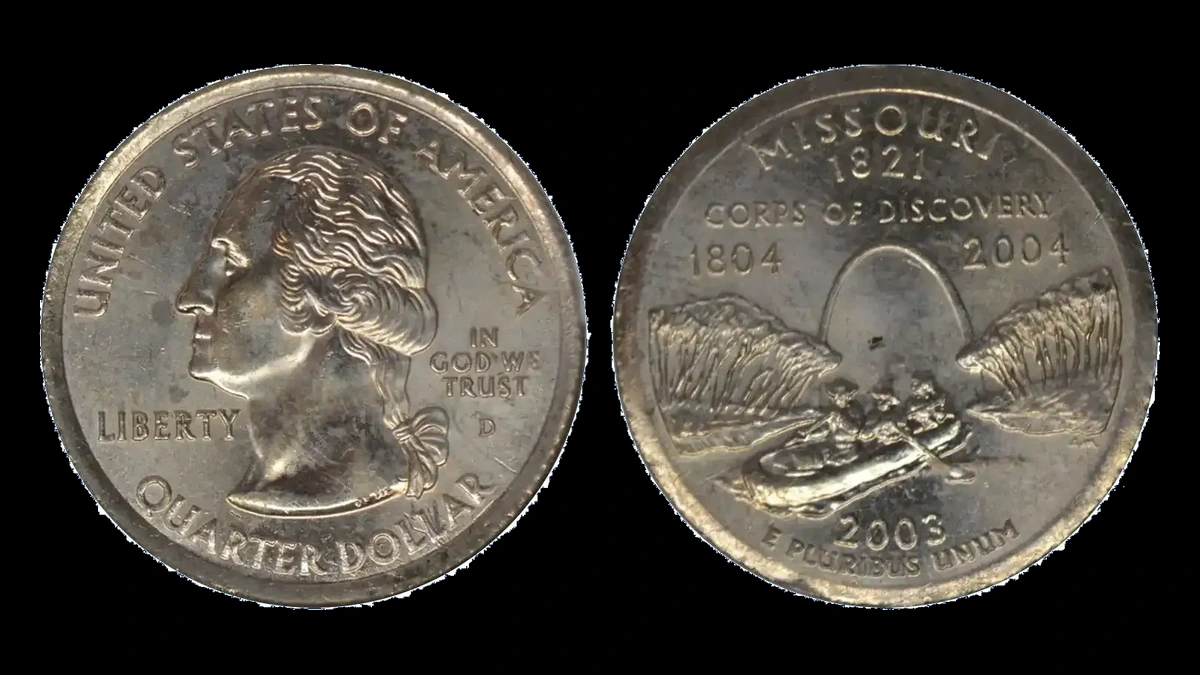
How to Identify
Follow the step around the edge and note whether its height changes. The feature is an edge structure, not a line within the state scene.
Check for file marks, a local dent, or flattened letters that could indicate later treatment. Keep the mintmark and state visible in the full-coin photographs.
What It’s Worth
$15–$150 is the estimated range. Historical dealer asks were $15 for Philadelphia Alabama and $25 each for Illinois, Missouri, and Arkansas.
Those amounts were offers, not auction results, and do not identify the separate Denver Missouri coin’s price.
10. 2003 Quarter Unevenly Placed Design inside a Larger Outline — Broadstrike Error
A design can be uncentered yet remain entirely on an expanded coin. That is consistent with a broadstrike when the collar failed to contain the blank.
A specialist dealer listed Philadelphia Alabama, Maine, Missouri, and Arkansas examples. Their uneven placement should not automatically be called off center.
How to Identify
Compare the outline with a normal 24.26 mm quarter, then trace the outermost letters and state details. A complete design within expanded metal supports broadstriking.
Inspect the border and edge for natural spreading instead of hammer marks or crushed finished detail. If design runs beyond one edge opposite bare metal, check for an off-center strike.
What It’s Worth
$30–$300 is an estimate for comparable simple broadstrikes. Historical asking prices were $30 for Alabama, $40 for Maine and Missouri, and $60 for Arkansas.
Visible expansion and clean surfaces matter more than the word uncentered alone.
11. 2003 Quarter A Gap Formed before the Design — Alabama Clipped Blank Error
The Alabama clipping report describes a coin struck on an incomplete blank. It does not specify the gap’s shape, position, or percentage.
A later cut can remove similar metal without producing an original mint error. The boundary’s relationship with the struck design is the useful evidence.
How to Identify
Examine the opening through the thickness of the coin and along both faces. Metal flow or softened adjacent design can support a blank that was incomplete before striking.
Look for burrs, file lines, or letters cut abruptly through after completion. Keep the actual 2003 date visible rather than using Alabama’s admission year to date the coin.
What It’s Worth
$25–$800 is the estimated range for genuine Alabama clips. Larger original gaps with readable dates and recognizable Helen Keller details can make stronger examples.
12. 2003 Quarter A Plain Crescent Opposite Cropped Design — Off-Center Strike Error
Maine, Illinois, Alabama, and Arkansas have published off-center reports. A Philadelphia Maine description specifies a modest shift of about 5%.
The other records do not establish an exact direction or percentage. Their own two-face photographs must show how the blank was misplaced.
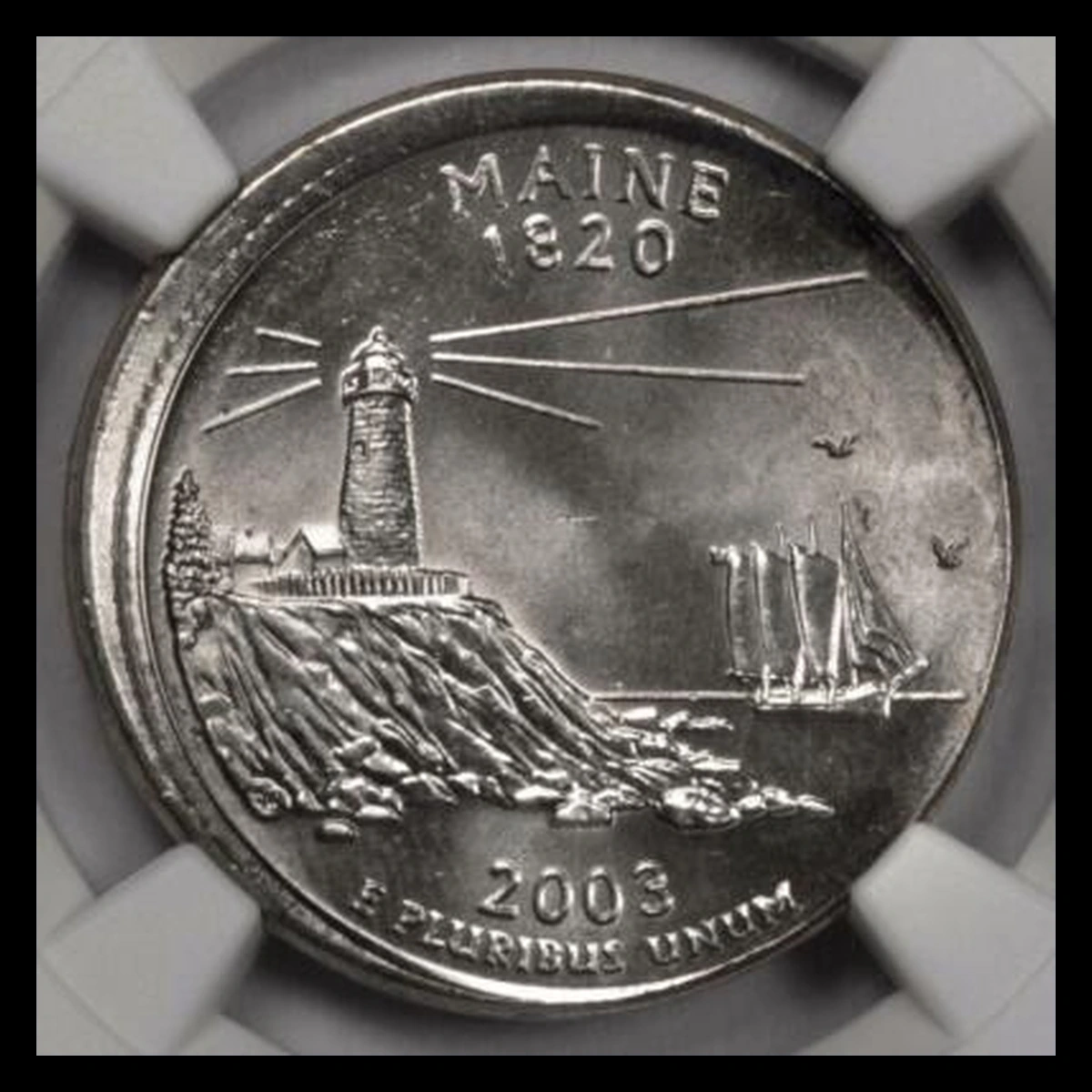
How to Identify
Locate the actual 2003 issue date, which differs from the older state admission year. Then compare the design boundary on both faces.
Both sides should show corresponding unstruck metal and design running beyond the edge. One shifted face points toward misalignment; a full design on expanded metal points toward broadstriking.
What It’s Worth
$30–$1,000 spans modest and larger dated shifts. Small genuine displacements generally fit $30–$150, while more dramatic readable examples can fit $150–$1,000.
The 5% Maine report belongs with small shifts, not automatically with the strongest examples from other states.
13. 2003 Quarter Illinois Details Fill a Smaller Disc — Nickel Planchet Error
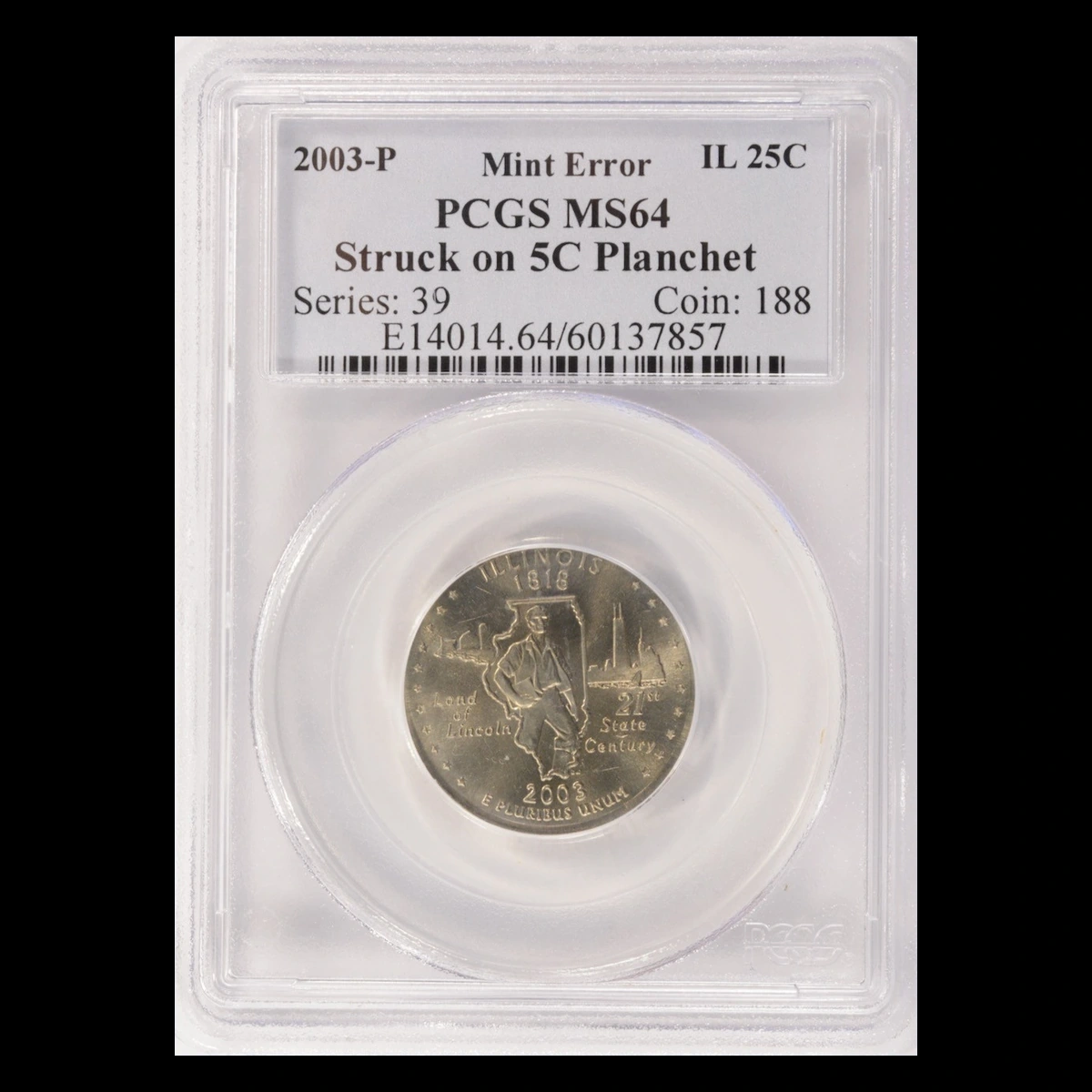
A nickel blank entering the quarter press leaves less room for Illinois’s design and surrounding lettering. Documented Philadelphia examples include a PCGS MS65 coin and a separate dealer-described MS64 piece.
These are blank-metal errors. Their descriptions do not require Jefferson or Monticello beneath the quarter design.
How to Identify
A nickel blank normally begins at 5 grams and about 21.2 mm across, compared with a quarter’s 5.67 grams and 24.26 mm. Striking can expand its final outline.
Look for uniform nickel-alloy color at the edge and naturally cropped quarter details. An earlier nickel design would indicate a finished host coin instead of an unused blank.
What It’s Worth
$600–$2,000 is the estimated range for comparable Illinois nickel-blank errors. The PCGS MS65 example sold for $793 at Heritage on March 23, 2026.
The separate dealer-described MS64 coin should not automatically inherit that result.
14. 2003 Quarter Two or Three Positions of the Design — Repeated Strikes Error
Alabama has a double-strike report, and Philadelphia Illinois has a triple-strike report. Their descriptions do not establish exact angles or distances between blows.
A second strike follows movement of the coin and can shift whole groups of details. That differs from a small doubled feature already present on the die.
How to Identify
Trace one portrait, rim, date, or state feature into a coherent design position, then map the next. On Alabama, keep Helen Keller’s normal outline in view; on Illinois, do not count ordinary lines near Lincoln as separate blows.
Check the front for evidence supporting the same movements. Each claimed impression should connect several features rather than rely on one bright line.
What It’s Worth
$300–$3,000 is the estimate for genuine repeated strikes of these reported types. Readable dates, separated images, and original surfaces support stronger examples.
A third blow does not automatically make a coin more valuable than a clear double strike.
15. 2003 Quarter Arkansas Appears over an Older Dime Design — Double Denomination Error
The documented Philadelphia Arkansas quarter was struck over a finished dime. Surviving dime details distinguish it from a quarter struck on an unused dime blank.
The quarter date missed the small host, but the Arkansas scene identifies 2003 and the P remains visible. NGC graded the coin MS64.
How to Identify
Locate Arkansas and the P, then separate traces of Roosevelt or the dime’s torch from the later design. The earlier image may be flattened or partly covered.
Do not expect a full quarter date on this recorded specimen. Full-coin images should keep the surviving host details connected with the new state design.
What It’s Worth
$3,000–$8,000 is an estimated range for comparable authenticated overstrikes. The Arkansas-over-dime specimen sold for $5,640 on August 16, 2024, including buyer’s premium.
The two denomination designs belong to one coin, valued once as a complete error.
Conclusion
Start a 2003 quarter check with the state design and the correct issue date. Normal Braille, admission years, and ordinary metal layers should be identified before an unusual mark receives an error name.
For larger mistakes, show both faces and the edge so missing metal, expansion, and repeated designs remain connected. A blank nickel and an already-struck dime require different evidence even though each can host a quarter design.