Rare 1983 Quarter Errors (List & Pictures)
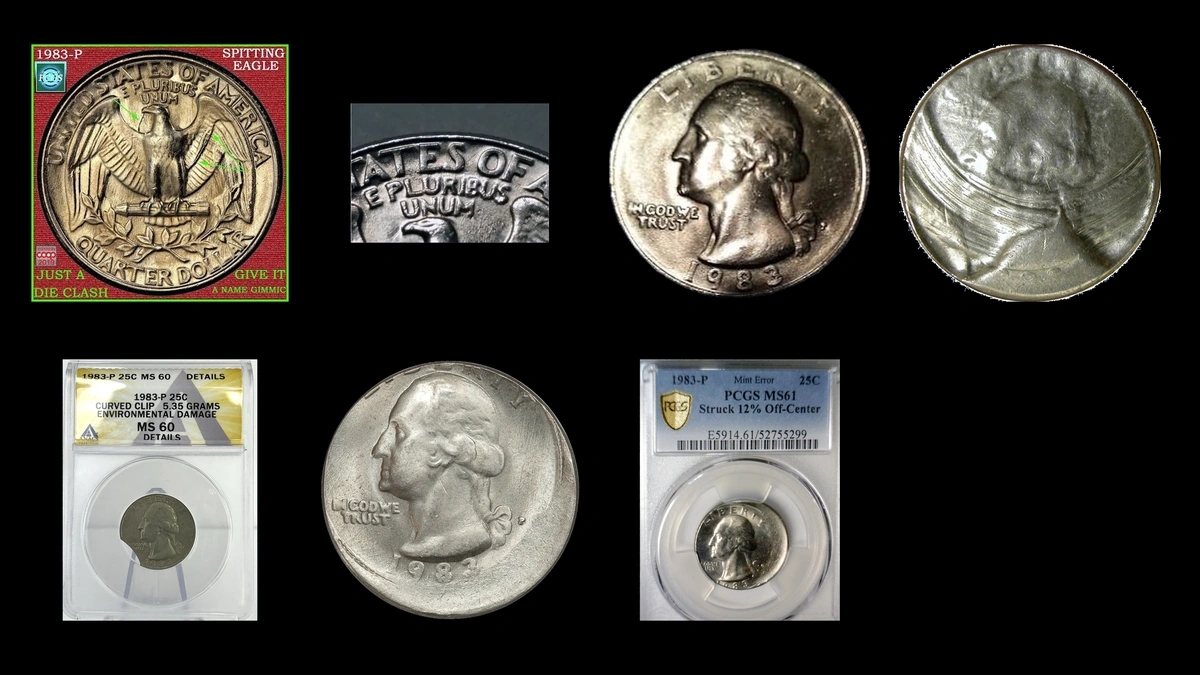
The most valuable supplied example of 1983 quarter errors carries designs from two different objects: a quarter and an amusement token. That authenticated overstrike brought $15,862.50 in January 2014.
Estimated values across this guide run from $1–$25,000, with most familiar errors far below the token’s price. Examine the eagle first, then the lettering, metal, and outline to work out which comparison fits your coin.
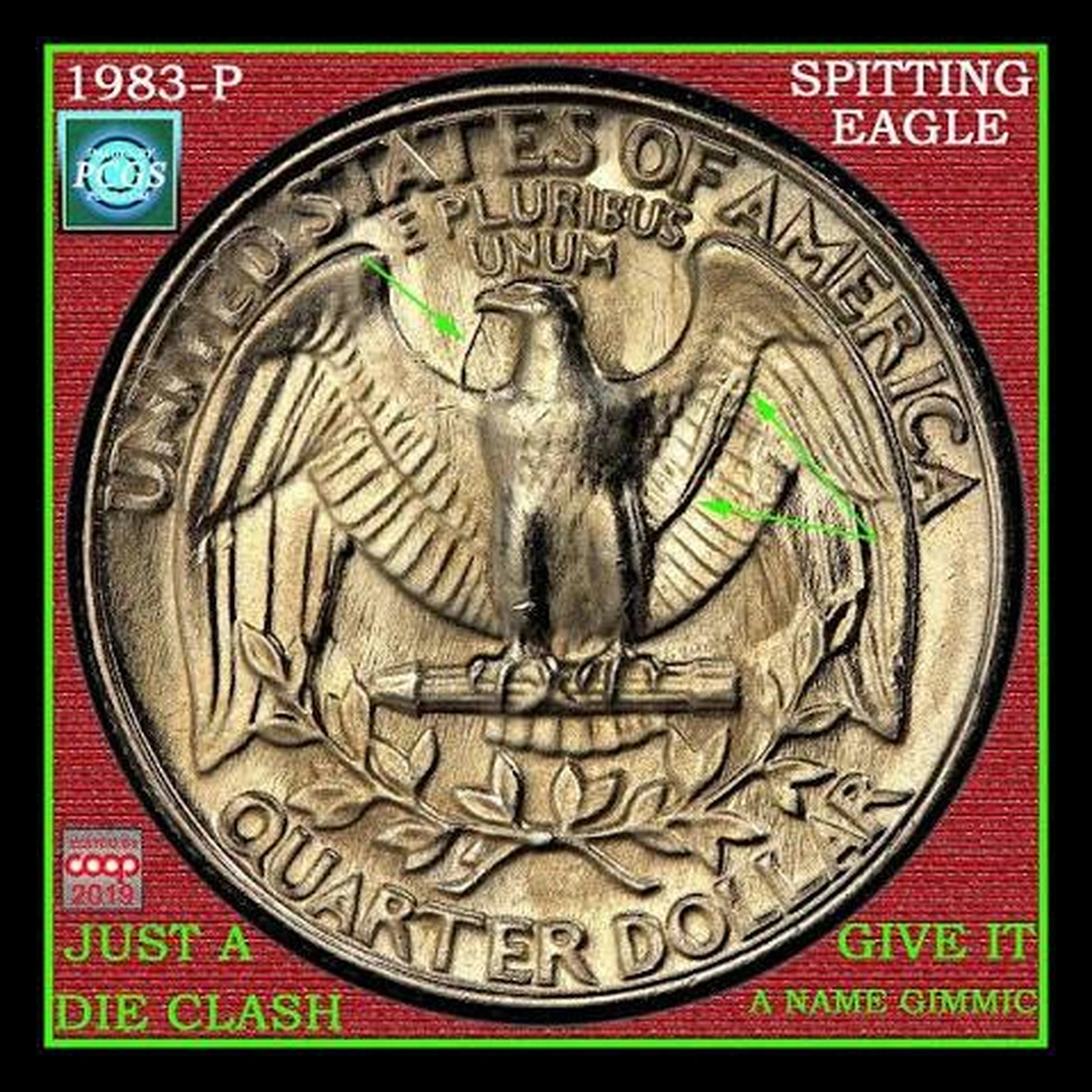
1. 1983 Quarter A Ridge Below the Beak: Spitting Eagle Die Clash Error
The Spitting Eagle is a specific 1983-P variety, identified as FS-901. Its short raised line below the eagle’s beak comes from part of Washington’s neck outline.
The dies struck each other without a blank between them, transferring that outline onto the reverse die. Later quarters received the extra ridge during otherwise normal strikes.
How to Identify
Confirm the P beside Washington’s hair ribbon, then compare the beak area with NGC’s illustrated Spitting Eagle. The feature must match the position and shape, not merely look like a line near the mouth.
Side lighting helps show that the ridge is raised. A scratch is cut into the surface, although displaced metal along its sides can create misleading highlights.
What It’s Worth
$1–$750 spans worn examples through exceptionally well-preserved coins. PCGS records a $504 result in March 2018 for MS66+, a particularly clean unworn example whose grade is an important part of the price.
2. 1983 Quarter Repeated Lettering or Portrait Edges: Doubled Dies Error
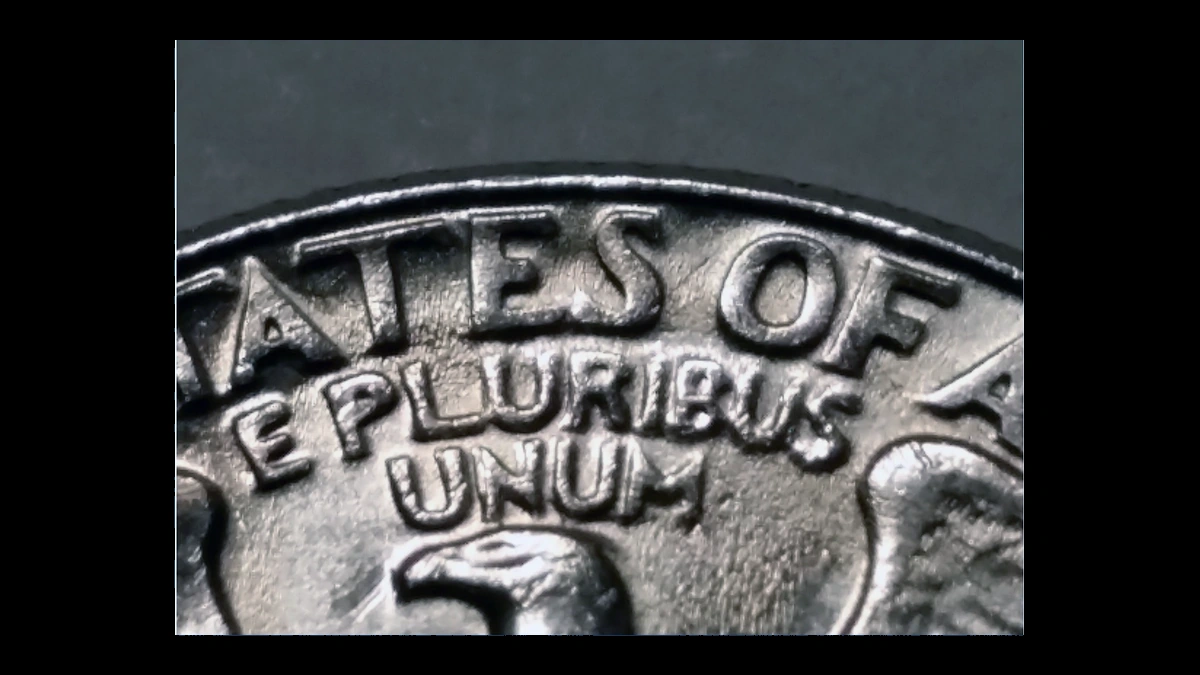
Several 1983-S Proof varieties have duplication in the front design, and a separate reverse variety affects lettering, wings, and lower leaves. Proofs are collector coins made with specially prepared dies and surfaces.
These patterns originate in the dies, rather than from striking one coin twice. Ordinary circulation-coin reverse doubling is also reported, including a disputed Denver “ghost” pattern involving two design styles.
How to Identify
On an S Proof, inspect LIBERTY, the motto, date, ribbon, and upper portrait, matching each proposed variety independently. A raised dot on one variety’s Y is a supporting marker, not itself the doubled design.
For the Denver ghost report, the A in QUARTER and the eagle’s beak need comparison with normal coins before accepting the disputed explanation. Flat ledges from mechanical doubling and thickened worn-die detail should not be mistaken for rounded secondary outlines.
What It’s Worth
$20–$500 is an estimate for identified S Proof doubled dies, while $10–$150 applies provisionally to authenticated ordinary-coin varieties. The Denver nickname alone does not establish a doubled die or its premium.
3. 1983 Quarter Unexpected Words and Clovers: Token Overstrike Error
An amusement token retained its lucky-day message and clovers after being struck with the 1983-P quarter design. Its play-only and no-cash-value wording survives on the reverse beneath the later quarter features.
The documented coin has a clear date and P and was graded NGC MS65. How the token entered the press is unknown; deliberate placement was an auction-house suggestion, not an established fact.
How to Identify
Follow the older words as a coherent design and see where the quarter impression overlaps them. Compare both faces with the cataloged amusement-token overstrike.
The recorded edge is lightly grooved on the left and plain on the right. Plating can change a quarter’s color, and later novelty punches can add words, but neither establishes an older token design beneath a genuine quarter strike.
What It’s Worth
$10,000–$25,000 is a working estimate for an authenticated piece of this exceptional type. The documented MS65 token overstrike sold for $15,862.50 on January 10, 2014.
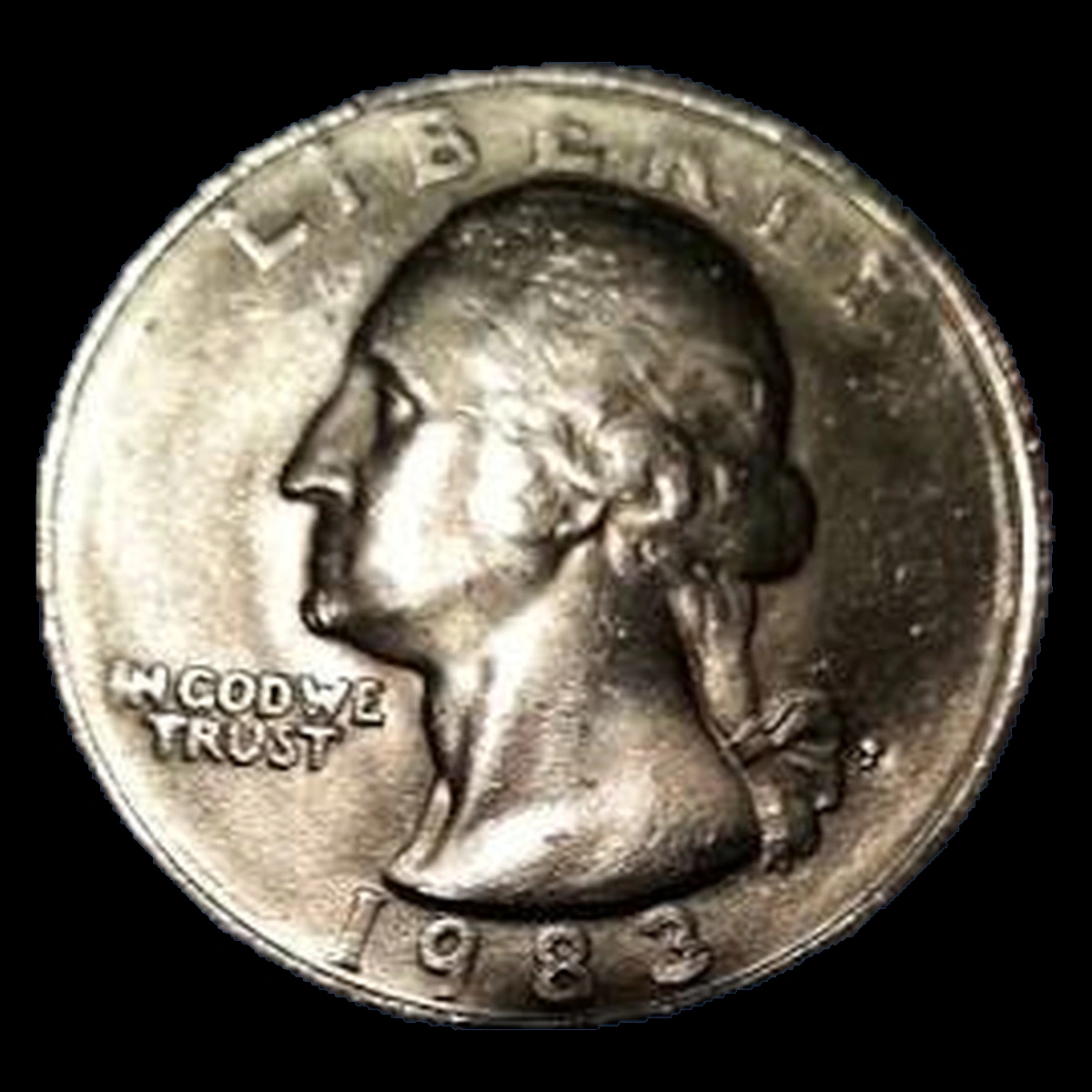
4. 1983 Quarter A Copper Washington Side: Missing Front Clad Layer Error
A Philadelphia example exposes the copper core across the front while the reverse keeps its pale outer layer. Its recorded weight is 4.61 grams, and PCGS graded it MS63.
For reference, normal 1983 quarters weigh 5.67 grams and measure about 24.3 millimeters across. All regular issues that year, including S Proofs, are clad rather than silver.
How to Identify
Compare the two faces and follow the boundary between exposed copper and surviving outer metal along the edge. A normal copper stripe confined to the edge does not indicate a missing layer.
Check for naturally struck detail on the copper and record a loose coin’s actual weight. Brown staining, added copper plating, chemical attack, or grinding can imitate some features without establishing original clad-layer loss.
What It’s Worth
$150–$750 is an estimated range for comparable front-layer errors. The 4.61-gram 1983-P in PCGS MS63 sold for $336 in June 2024; those measurements and grade describe that particular coin.
5. 1983 Quarter A Blank Reverse and Tall Front Rim: Blocked Strike Error
One 1983-P has no normal eagle design because another blank completely blocked its reverse during striking. The same coin has a thin, unusually high front rim, or fin, from about 11 to 5 o’clock.
ANACS graded the coin MS63. Washington’s major features remain, although some are softly formed.
How to Identify
Check the whole reverse rather than looking for a small local depression. This example combines a fully blocked face with the tall front rim, so both features belong in the identification.
A side view should show the fin without bending or pressing it. Grinding can remove a reverse design later, but it would need to explain the surface, weight loss, and edge differently.
What It’s Worth
$200–$1,000 is an estimated range for a comparable authenticated combination. The Philadelphia MS63 example sold for $310.50 in April 2002, a single price for the blocked reverse and fin together.
6. 1983 Quarter A Raised Triangle with Weak Design: Torn Die-Cap Strike-Through Error
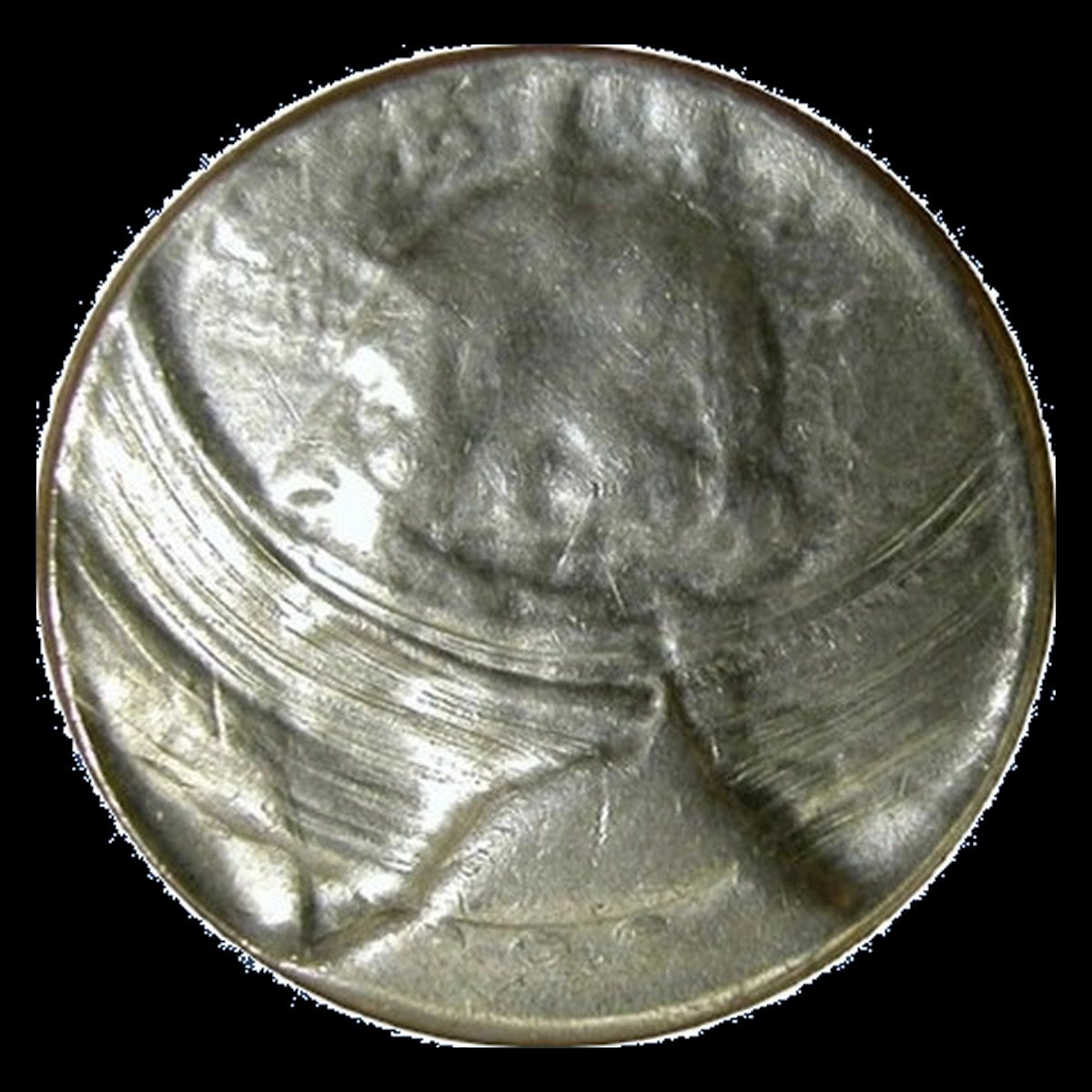
A triangular raised patch carries weak parts of Washington’s bust and date, while the corresponding reverse area is recessed and blank. The paired shapes record a more complicated obstruction than grease or a loose fragment.
A struck coin had stuck to a die as a cap, then torn and shifted. Metal from the new blank pushed into the opening and reached the die, receiving weak detail on the bulge.
How to Identify
Match the raised front patch to the depression directly opposite it, using the illustrated explanation of the cap obstruction. The 1983 quarter received a strike through the damaged cap; it was not itself the cap.
Look for struck bust and date detail on the top of the bulge, without assuming a complete date or visible mintmark. A later impact may push metal outward but does not explain that naturally struck detail in the same way.
What It’s Worth
$300–$2,500 is an estimated range for this complex mechanism. No supplied sale establishes the value of the illustrated 1983 example, and the bulge should not receive a separate price from the event that formed it.
7. 1983 Quarter Quarter Details Crowded onto Smaller Metal: Nickel Planchet Error
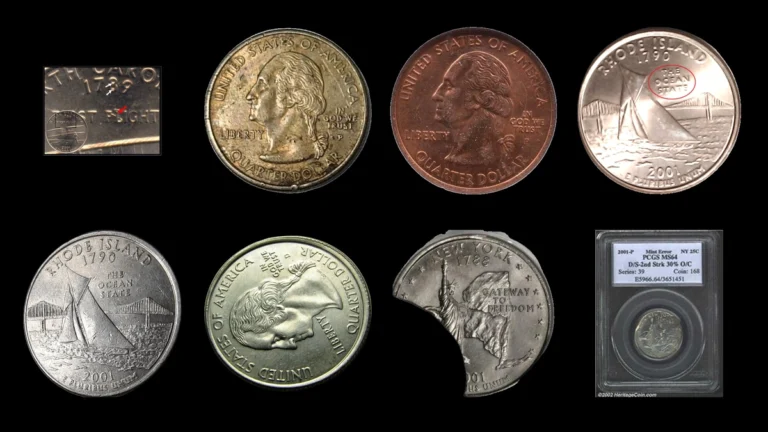
A nickel blank provides less room than a quarter blank, so a quarter design struck on it can lose its outer lettering. A documented 1983-P example was certified PCGS MS62.
The nickel’s solid copper-nickel alloy also differs from the quarter’s layered construction. That distinction can be easier to assess at the edge than on toned faces.
How to Identify
Look for a solid alloy edge and natural loss of peripheral design where the larger quarter image ran beyond the smaller blank. Later filing instead removes already struck parts of a finished quarter.
A normal nickel blank starts near 5.0 grams and 21.2 millimeters, although striking can expand it. Those are reference standards, not published measurements of the MS62 specimen.
What It’s Worth
$200–$1,200 is an estimate for an authenticated 1983-P nickel-planchet error. A different-year 1995-P in MS64 sold for $216 in July 2022; readability and preservation need comparison before using that result.
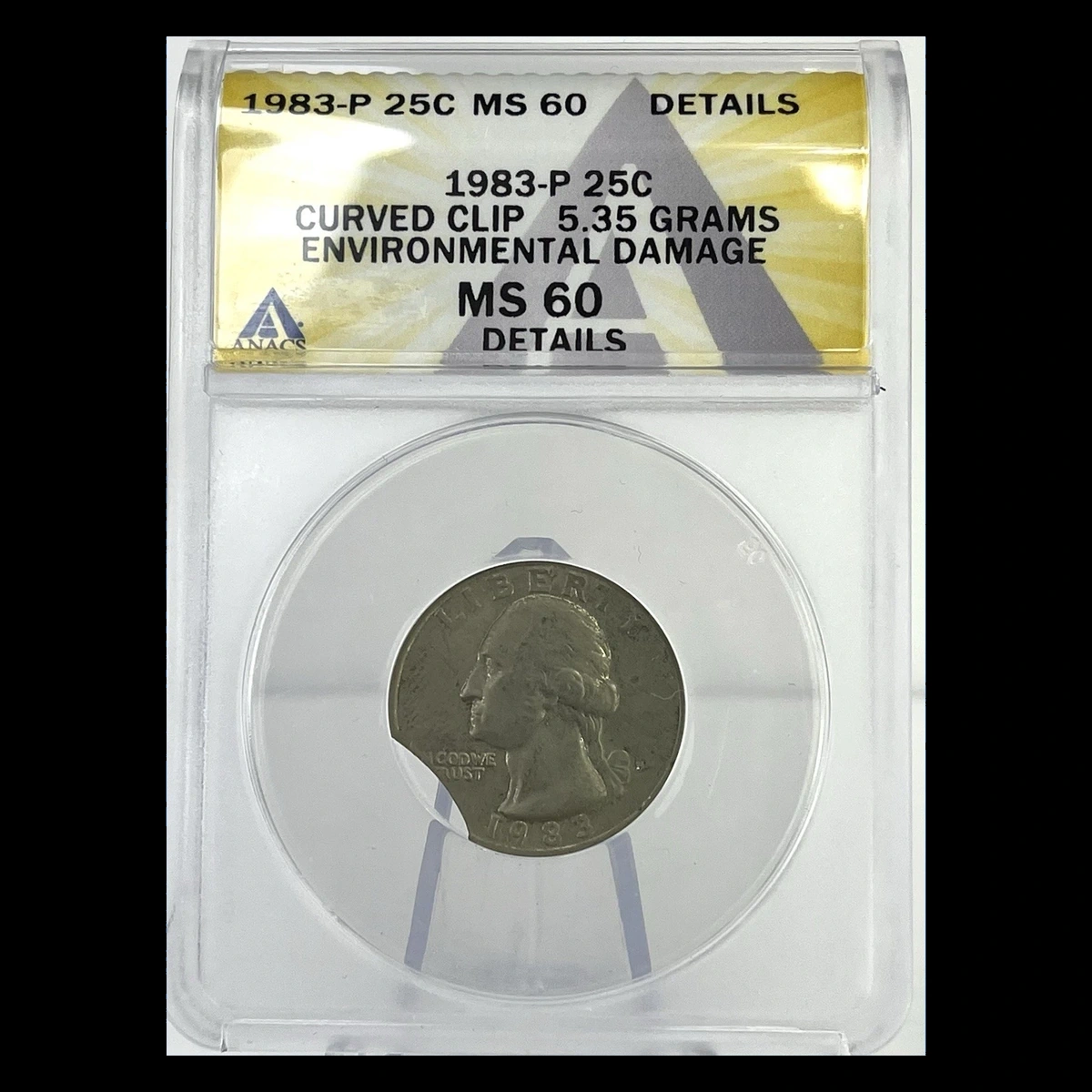
8. 1983 Quarter A Curved Opening at the Rim: Clipped Planchet Error
A notch may begin when the blanking punch overlaps a hole already cut in the metal strip. The incomplete blank then receives its quarter design around an edge that was missing from the start.
How to Identify
Inspect the opening from the side for filing or saw marks, then trace the rim and lettering toward its endpoints. Metal flow around an original clip may weaken or distort nearby details.
Weakness opposite the gap can be helpful but is not compulsory on every genuine clip. The 1983 report supplies no single mint or notch position for the whole category.
What It’s Worth
$10–$150 is an estimate for small genuine curved clips. A readable date, clear original opening, and undamaged surfaces make a better comparison than a large but questionable cut.
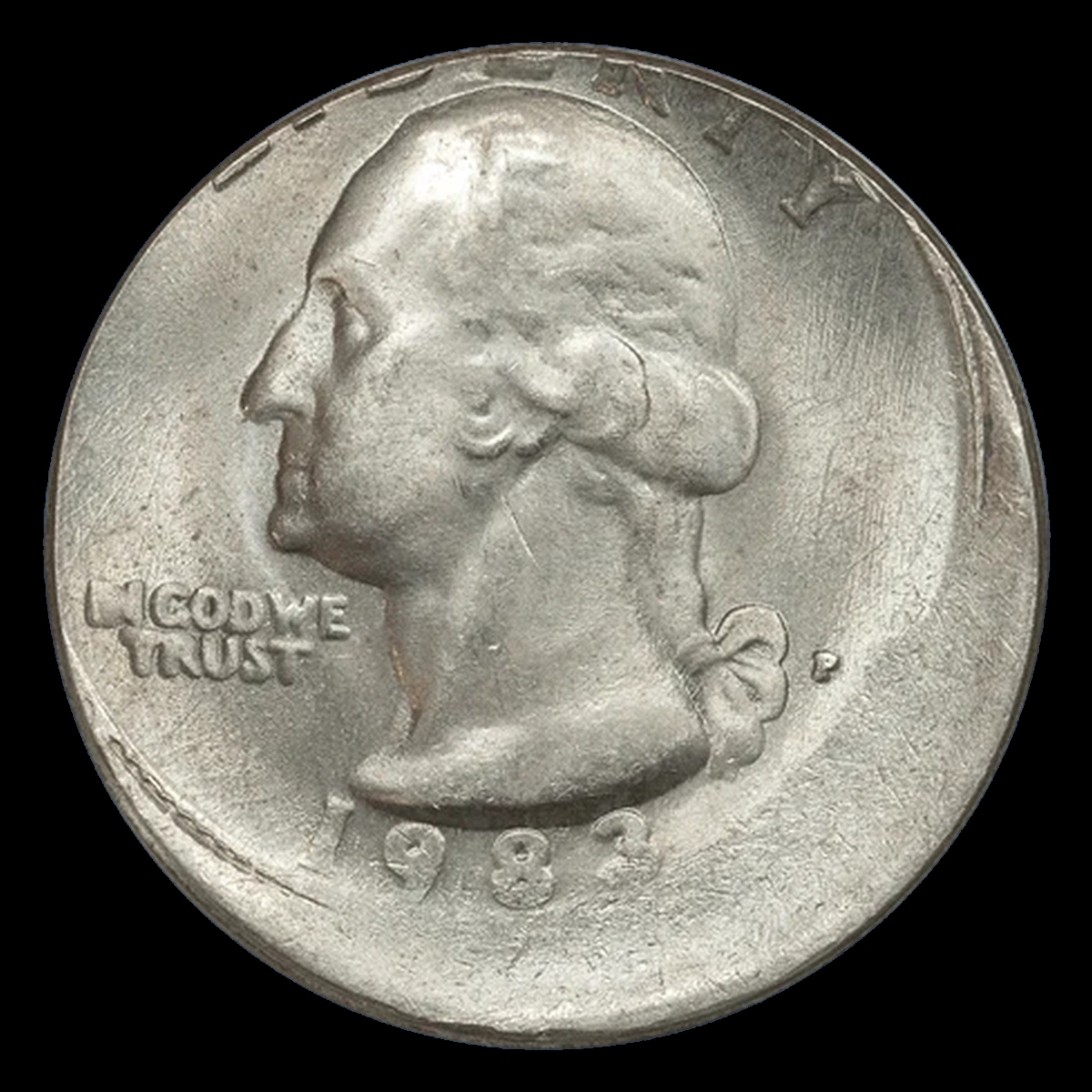
9. 1983 Quarter A Wide Border Around Complete Designs: Broadstrike Error
Philadelphia broadstrikes are reported for 1983. They result when the collar, the ring that controls the edge, fails to contain the expanding blank during striking.
How to Identify
Check that the outer lettering and main designs remain complete inside the spread metal. If part of the design missed the blank entirely, consider an off-center strike.
Compare width in more than one direction, and inspect for crushed detail from later flattening. A smooth edge by itself can result from wear or alteration and does not establish a broadstrike.
What It’s Worth
$20–$200 is a working estimate for ordinary 1983-P broadstrikes. A 1987-P example in MS63 sold for $20 in August 2009, a different-year comparison showing that a modest broadstrike need not command a large price.
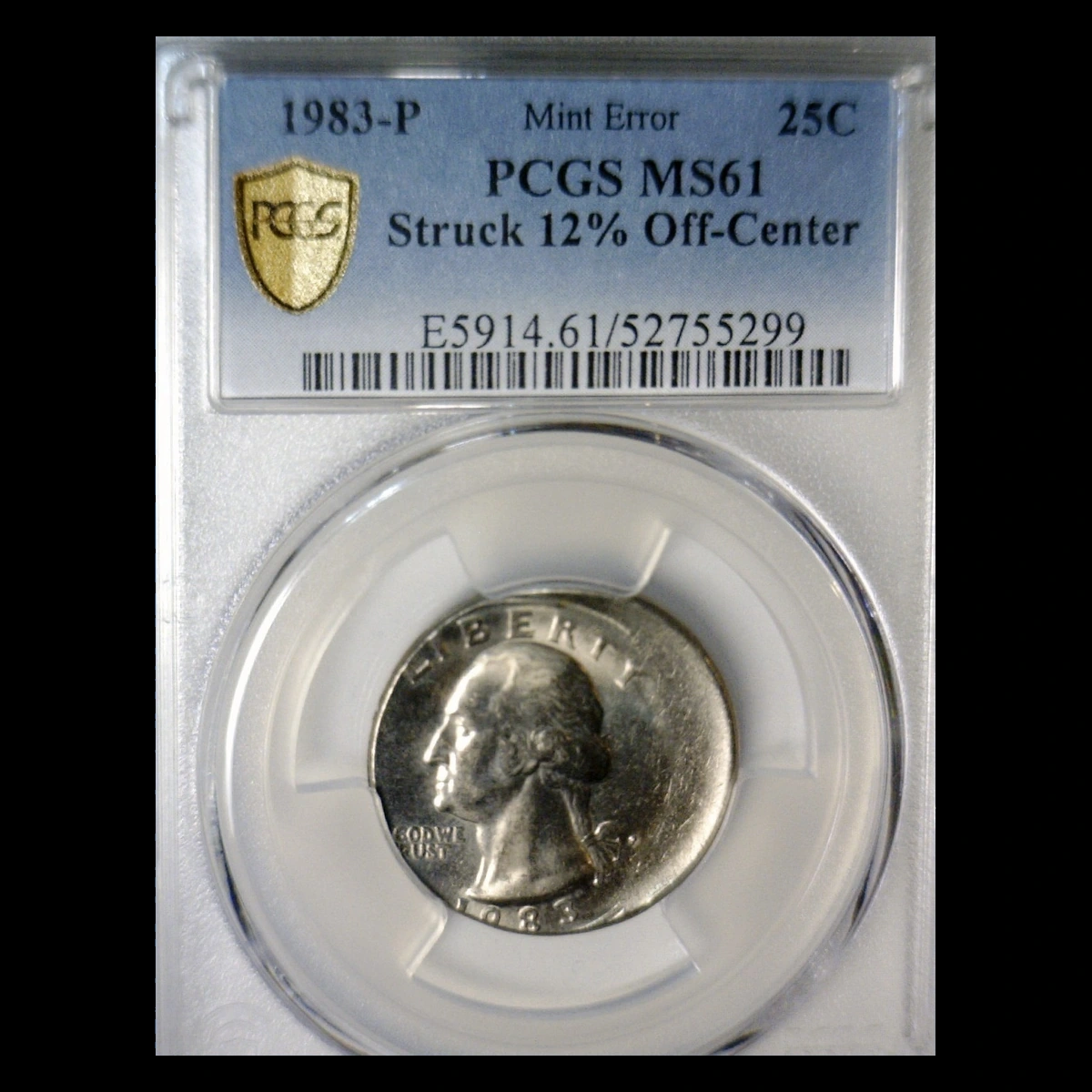
10. 1983 Quarter An Unstruck Crescent Beside the Image: Off-Center Strike Error
Off-center examples range from modest shifts to coins preserving only a small portion of the design. Documented 1983 pieces include a Philadelphia 15% error in NGC MS67, a separate Philadelphia 25% error in MS65, and a 70% error in MS63 with no established mint.
How to Identify
Locate the date and any surviving mintmark before describing the shift. An unstruck crescent remains physically present; a clip is an opening where metal is absent.
Compare the displaced design on both sides and inspect blank-looking areas for grinding. Keep each percentage with its own specimen and grade rather than combining details from the three reports.
What It’s Worth
$50–$400 is an estimate for comparable ordinary off-center quarters. In December 2025, the 15% Philadelphia MS67 sold for $192 and the separate 70% MS63 coin sold for $198, showing that displacement alone does not determine price.
11. 1983 Quarter Two Displaced Groups of Detail: Double Strike Error
After receiving one strike, a coin may move and receive another. Portions of the first image can survive around the later impression, which may flatten some earlier details.
Two Philadelphia examples have second strikes about 78% and 65% off center, graded PCGS AU58 and MS62 respectively. In these descriptions, D/S abbreviates double struck, not a D over S mintmark.
How to Identify
Build each image from connected letters or portrait features rather than interpreting isolated thick edges as another strike. Study their overlap for evidence that one impression came after the other.
The reverse may preserve a different amount of detail from the front. Use separate photographs for the 78% and 65% specimens so their grades and layouts stay correctly identified.
What It’s Worth
$150–$1,500 is an estimated range for authenticated repeated-strike combinations. A 1995-D with a second strike 60% off center brought $312 in July 2022, but that different date is a comparison rather than a sale of either 1983 coin.
Conclusion
The familiar Spitting Eagle requires a matching raised clash line on a Philadelphia coin, while Proof doubling needs its own variety identification. Neither should be identified from a vague resemblance alone.
For the more dramatic pieces, keep both faces and the edge in the examination. An older token design, a blocked reverse, or a raised patch opposite a hollow each tells a different production story and calls for its own evidence.