Rare 2012 Quarter Errors (List & Pictures)
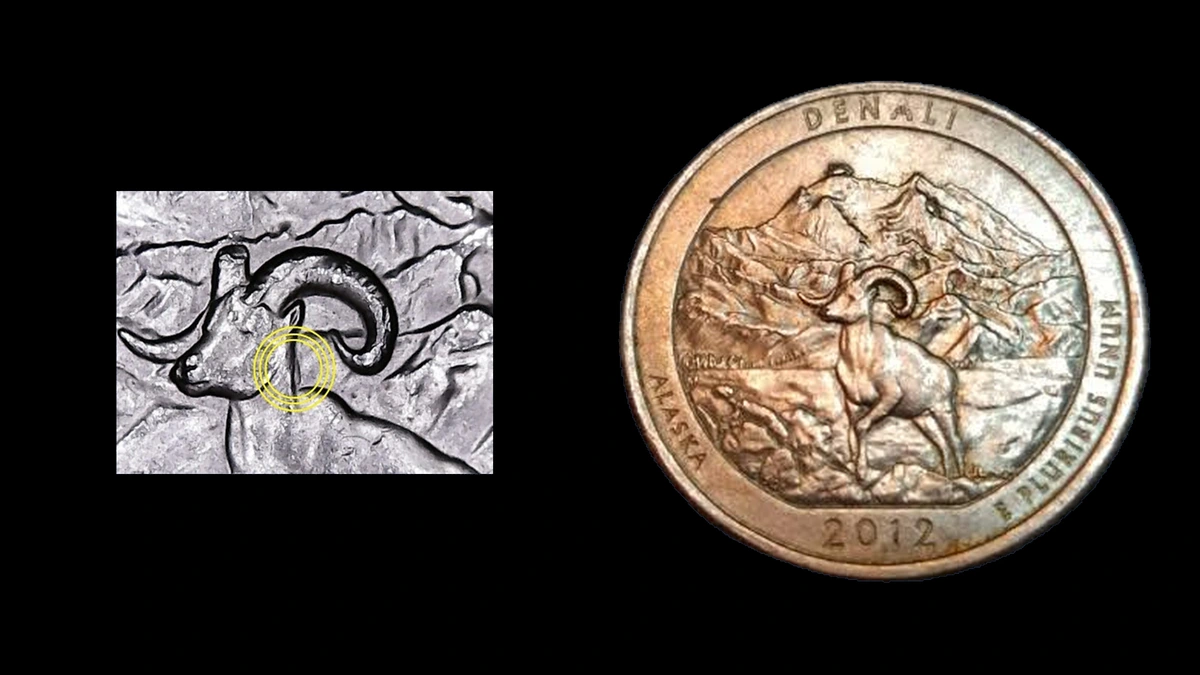
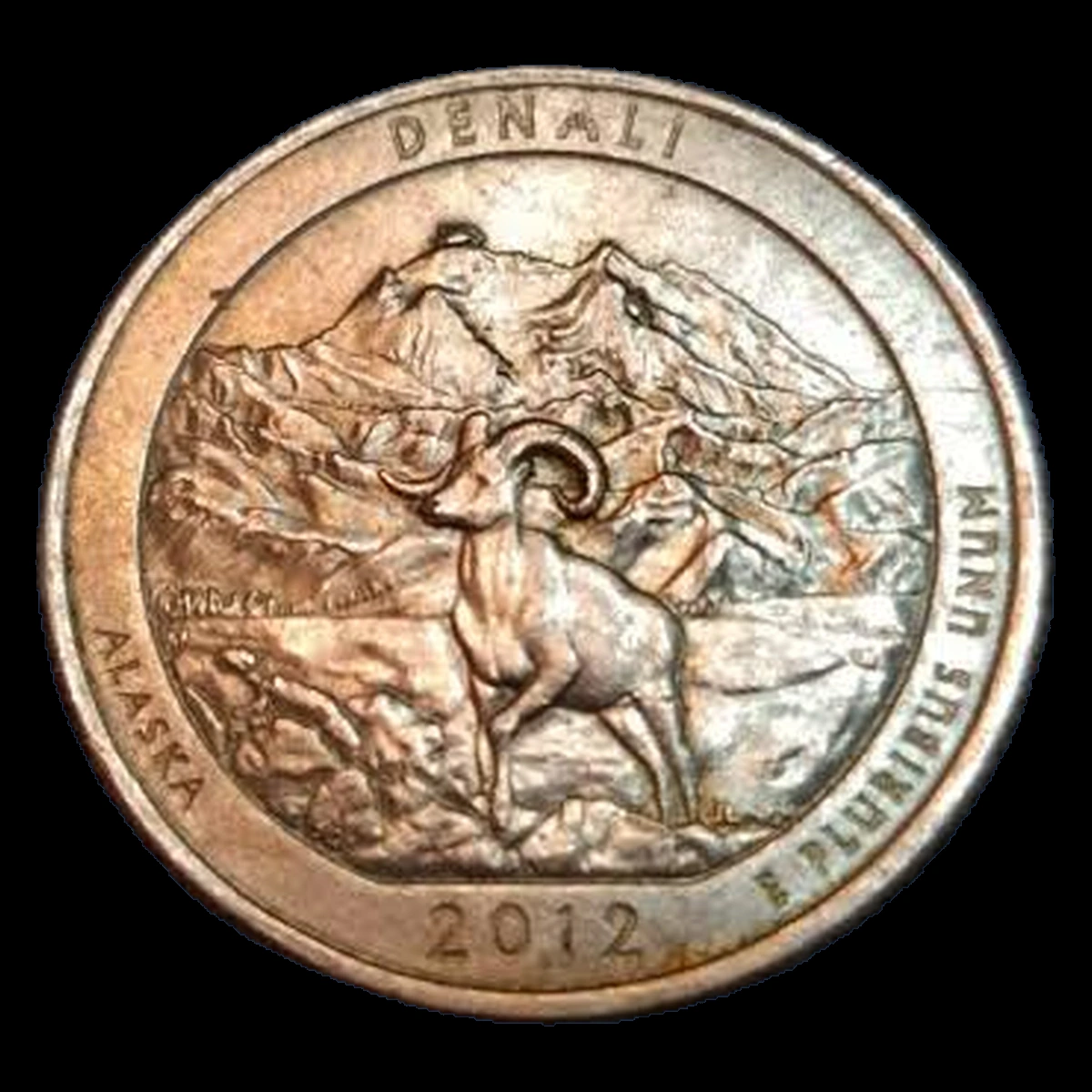
Identify the park before comparing an unusual 2012 quarter: Denali’s sheep, Chaco’s buildings, and Acadia’s lighthouse offer different clues. The 2012 quarter errors covered here have estimated values of $2–$2,500.
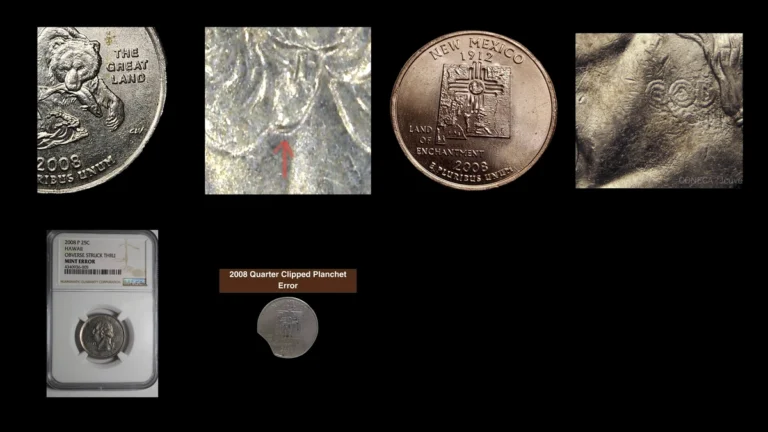
A supplied market comparison reached $336 for a 2000-P South Carolina quarter missing its reverse clad layer in September 2024; it was a different-year coin. Follow the design details first, then inspect the surfaces and outline, keeping confirmed varieties separate from reports.
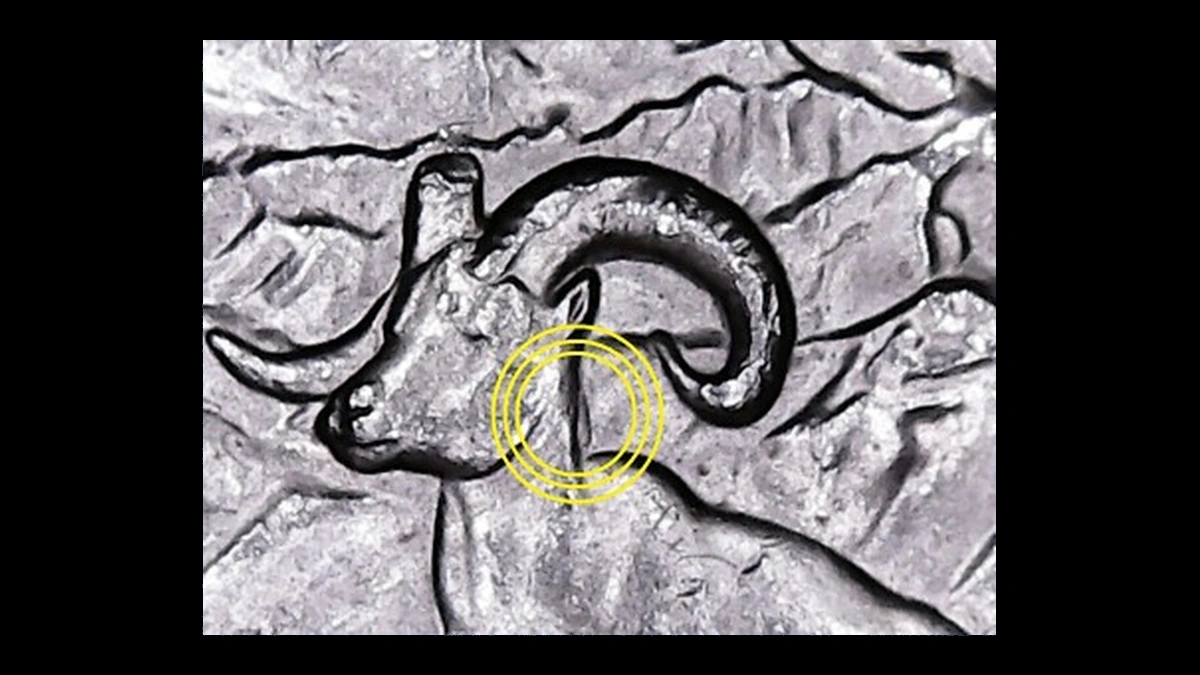
1. 2012 Quarter Extra Detail Behind the Sheep’s Neck: Doubled Die Error
The back edge of the Dall sheep’s neck is a useful place to examine a Philadelphia Denali quarter. Small repeated detail there can identify a doubled die even when the lettering does not look dramatically doubled.
A doubled die is a steel stamping tool carrying duplication in its design. Separate front-side reports for Philadelphia Denali and Hawaii Volcanoes quarters concern LIBERTY or IN GOD WE TRUST.
How to Identify
Match the neck feature to the Wexler Denali listings, paying attention to its exact shape and location. Normal fur can look irregular without being doubled.
Front lettering needs its own comparison rather than borrowing the neck variety’s identity. Flat shelves can result from movement during striking, while worn dies may produce broad, stretched outlines.
What It’s Worth
$10–$75 is an estimate for the small Denali neck varieties. Stronger front-side doubling may fall around $20–$100 if it is matched to a genuine doubled die rather than ordinary strike doubling.
2. 2012 Quarter A Mark Inside the Date: Reported Date Anomaly Error
A Hawaii Volcanoes quarter has been described online as “2112/2012” because of an extra feature around the zero. That nickname does not establish an overdate.
Modern dates were not individually punched into each working die. A story about a worker punching a one over the zero therefore does not fit this issue’s production.
How to Identify
Read HAWAII VOLCANOES, HAWAII, and the date on the reverse, while checking the P mintmark separately on the front. Magnify the zero under light from two directions to determine whether the feature is raised, cut in, or possibly a deposit.
A small die break could leave raised metal; an impact or carving can push metal across the digit later. Preserve the surface and describe the visible mark without calling it a confirmed extra digit.
What It’s Worth
$5–$50 is a conditional estimate for a small, genuine mint-made raised feature at the date. It is not a price range for a recognized 2012 overdate, and dirt or later damage adds no error premium.
3. 2012 Quarter Faint Lines in Chaco’s Buildings: Reported Weak Strike Error
Upper building lines on a reported Chaco Culture quarter appear softer than the nearby scene. The observation is useful, but the supplied report does not establish whether weak striking, die wear, or an obstruction caused it.
How to Identify
Compare two Chaco quarters under the same changing light. Thin lines hidden by a reflection may reappear when the lamp moves, unlike a persistently weak area.
Check surrounding stonework and Washington’s cheek for general circulation wear. Keep grease-filled detail separate from simple striking weakness unless the coin supports that more specific explanation; the report also leaves the mint unspecified.
What It’s Worth
$2–$25 is an estimate for a noticeable production-related weakness on a lightly worn or unworn coin. Ordinary wear and a seller’s “missing buildings” label do not establish a valuable mint error.
4. 2012 Quarter Building-Like Traces Around Washington: Die Clash Error
The reverse of a Chaco Culture quarter depicts Chetro Ketl’s double kiva structures. A reported Philadelphia clash may leave echoes of that scene near Washington on the front.
Clashing occurs when the dies contact one another without a blank between them. Marks transferred to a die can then appear on coins struck afterward.
How to Identify
Compare a group of stray shapes with the opposing design, allowing for its reversed orientation. Several adjoining contours that fit together make a stronger case than one curve that vaguely resembles a building.
Inspect the lines themselves for cut trenches or displaced metal from damage. The report requires an exact pattern match and should not turn every scratch around Washington into a clash.
What It’s Worth
$15–$125 is a working estimate for a recognizable Chaco clash. Stronger transferred detail on an intact surface generally offers a clearer collectible feature than faint lines obscured by circulation marks.
5. 2012 Quarter Ridges, Lumps, or an Edge Patch: Die Cracks and Cuds Error
A crack in a die can leave a thin raised ridge, while a missing piece can produce a larger lump of metal. A substantial break connected to the rim is called a cud.
Reports include Denver El Yunque and Denali coins, Philadelphia Hawaii Volcanoes coins, and Chaco examples of unspecified mint. A Denver Acadia cud is described as extending from the rim into the lighthouse and coastal scene.
How to Identify
For the Acadia report, follow the raised patch to its continuous rim connection. An isolated lump is a chip rather than a cud.
Compare the scene with a normal coin so that rocks, lava, and other intended irregular detail do not become false errors. Raised lines from die cracks also need separation from scratch grooves and metal displaced by an impact.
What It’s Worth
$2–$40 is an estimate for tiny cracks or chips, with larger clearly formed lumps around $40–$100. A substantial authenticated Acadia rim cud may fall around $75–$250, depending on its extent and preservation.
6. 2012 Quarter A Hollow Interrupts the Design: Struck-Through Error
A 2012-S El Yunque Proof is cataloged with material struck through its front and an NGC Proof 69 Ultra Cameo grade. That grade describes nearly flawless collector surfaces with strong contrast between frosted detail and mirrored fields.
Other reports include a Philadelphia Denali MS65 and effects on the remaining park designs. The mechanism is an obstruction between the die and blank, with grease tending to leave soft detail and firmer material potentially leaving a distinct impression.
How to Identify
Inspect Washington’s side on the El Yunque Proof instead of assuming the error is near the frog or parrot. For other designs, establish the affected face and boundary before guessing the obstructing material.
Later dents often push metal up around their edges. A strike-through needs an impression consistent with interrupted design formation, not simply a damaged spot.
What It’s Worth
$10–$60 is estimated for small missing details, while obvious larger impressions may fall around $60–$500. The El Yunque Proof listing records a June 2013 sale without displaying its final price.
A 2020-P Samoa reverse strike-through in AU58 sold for $104 in September 2024. That later circulated example is a separate comparison, not a price for the nearly flawless 2012 Proof.
7. 2012 Quarter Dark or Uneven Metal: Reported Annealing Error
A Philadelphia Denali example described as MS63 has been reported as an annealing error. Annealing heats and softens blanks before striking, and problems during that step can affect the surface.
How to Identify
Use neutral light and inspect the intact struck surface, looking for pits, crust, or residue that may indicate environmental exposure. Soil, chemicals, and later heating can all change a quarter’s color.
An MS63 grade describes preservation but does not by itself prove the proposed heating cause. Do not polish or heat the coin to investigate it; the original surface is the evidence an examiner needs.
What It’s Worth
$20–$150 is a conditional estimate for a genuine blank-heating error. A brown or black quarter with no established production-related cause should not receive that premium based on color alone.
8. 2012 Quarter Copper Exposed Across a Face: Missing Clad Layer Error
A clad quarter has pale outer layers bonded to a copper center. Losing an outer layer before striking can leave the design impressed directly into the exposed copper.
The supplied 2012 category does not establish a specific park or mint. Identify the normal issue first: clad quarters weigh about 5.67 grams, while a 2012-S may instead be a 90% silver Proof with a 6.25-gram standard.
How to Identify
For a clad candidate, compare the copper-colored face with the edge layers and the opposite side, recording the loose coin’s weight. The normal copper stripe along the edge is not a missing layer.
A naturally struck surface should be distinguishable from grinding or rough chemical removal. Low weight and brown color are supporting observations, not a complete authentication.
What It’s Worth
$100–$400 is estimated for a confirmed one-sided loss, with partial losses potentially lower. Different-year 2000-P examples missing their reverse layers sold for $149 for Maryland and $336 for South Carolina in September 2024.
9. 2012 Quarter Part of the Outline Is Missing: Clipped Planchet Error
A reported Chaco Culture error concerns a blank that was incomplete before striking. Overlapping blanking cuts or a cut near the metal strip’s edge can produce that result.
How to Identify
Inspect the gap’s boundary for burrs, tool marks, or a cut through already finished lettering. An original clip may show tapering rim detail or stretching beside the opening.
The supplied Chaco report gives no fixed shape, size, or mint, so a curved bite should not be assumed. Opposite-rim weakness can support a clip diagnosis but need not appear on every example.
What It’s Worth
$30–$300 is an estimated range for genuine Chaco clips. A 2000-P New Hampshire elliptical clip in PCGS MS66 brought $288 in September 2024, but its shape and grade do not describe the reported 2012 coin.
10. 2012 Quarter A Blank Arc Beside an Incomplete Scene: Off-Center Strike Error
A Denver El Yunque quarter is reported as 30% off center. A separate Chaco Culture report provides neither a percentage nor a mint.
These strikes occur when the blank is not centered beneath the dies. Unlike a clip, displacement leaves unused metal beside the design rather than removing a piece of the blank.
How to Identify
Check the reverse date and front mintmark, then compare how both designs fit on the same disk. If only the front is displaced while the back remains centered, a different alignment error may be responsible.
Look for a natural unstruck area beside missing portions of the design. Filing or grinding can erase detail later, and an uneven rim alone is not enough to establish an off-center strike.
What It’s Worth
$50–$600 is an estimate based on displacement, identity, and condition. A 2000-P Virginia coin struck 20% off center in NGC MS64 sold for $154 in September 2024, providing context without establishing a 2012 sale.
11. 2012 Quarter A Cup Shape or Softened Face: Reported Die-Cap Error
The phrase “capped die” has been used for a Denver Denali report without enough detail to identify the physical result. A coin stuck to a die can stretch into a cup, while later coins struck beneath that cap may remain flatter with blocked or distorted detail.
How to Identify
Begin with a side view, preserving the shape without pressing or straightening it. A possible cap body needs examination of its stretched wall and interior, including any marks from later tools.
A flatter coin requires comparison of the two faces for a pattern consistent with obstruction by a cap. Ordinary weak detail alone cannot confirm that mechanism, and it should not be described as a cup-shaped cap without that shape.
What It’s Worth
$100–$700 is a conditional estimate for a coin struck beneath a cap; $500–$2,500 applies to a genuine cap body. These describe different outcomes, not two established values for one confirmed Denali specimen.
Conclusion
A useful 2012 error description names the park, mint, affected face, and visible feature before proposing a cause. That keeps a Denali neck variety separate from a Chaco report or an El Yunque Proof.
Photograph the coin uncleaned, including its edge when metal or shape is involved. Reported date marks, heating effects, and cap-related pieces need their uncertainty preserved until the actual coin supports a firmer identification.