Rare 1945 Quarter Errors (List & Pictures)
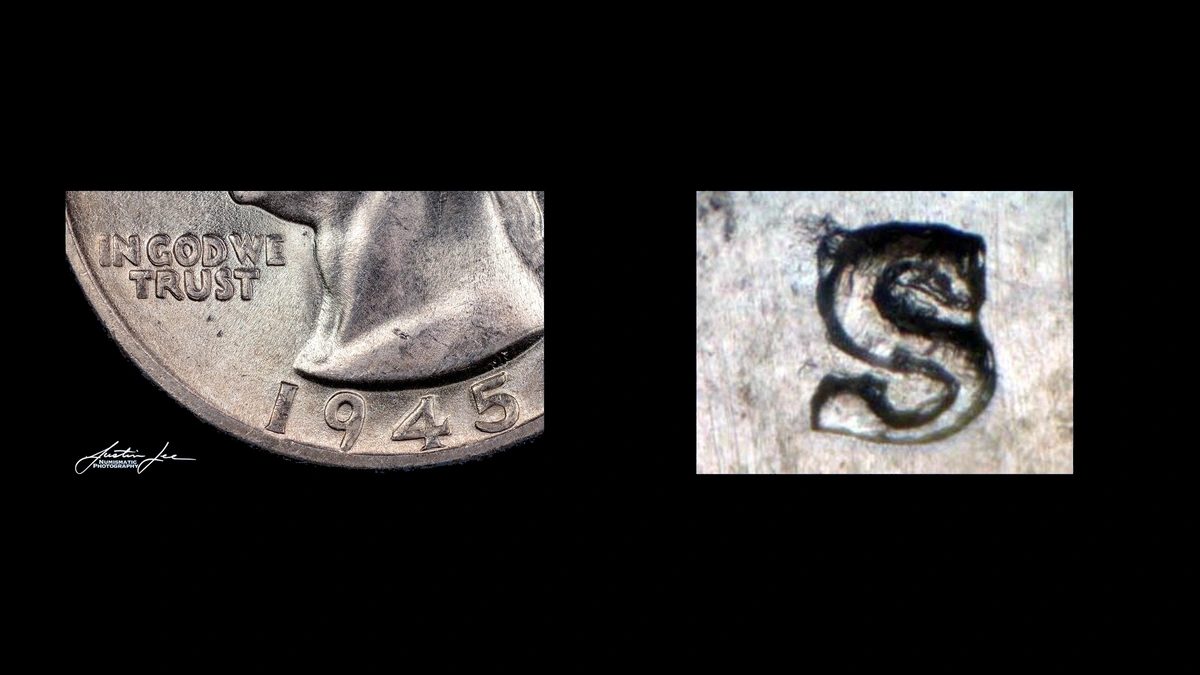
The mint letter helps decide which small details to examine on a 1945 quarter. Supplied whole-coin estimates for 1945 quarter errors and doubled-die varieties range from $20 to $1,500.
A San Francisco FS-102 doubled die graded MS66 sold for $840 on March 29, 2018. Compare the appropriate mint’s lettering first, then examine missing edges and expanded or displaced designs.
| What differs | Possible identification | Estimated value |
|---|---|---|
| Repeated or thickened design details | Doubled die | $25–$1,000 |
| Additional outline at S or D | Repunched mint mark | $20–$600 |
| Straight missing section | Clipped planchet | $25–$300 |
| Spread outline retaining the design | Broadstrike | $75–$700 |
| Blank crescent opposite lost artwork | Off-center strike | $100–$1,500 |
1. 1945 Quarter Lettering Separates or Thickens: Doubled Die Error
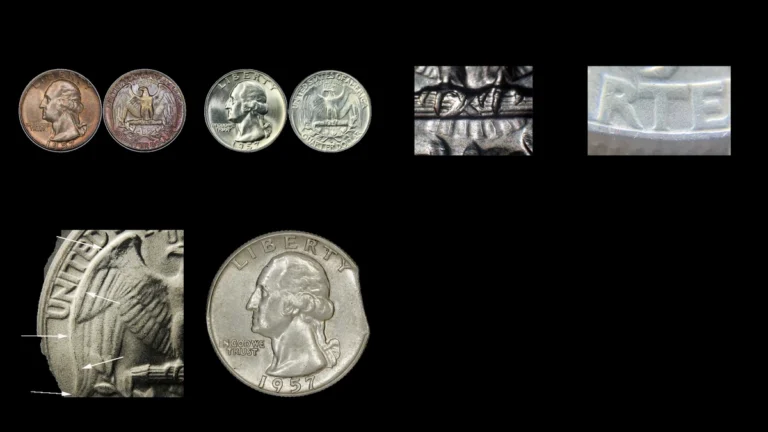
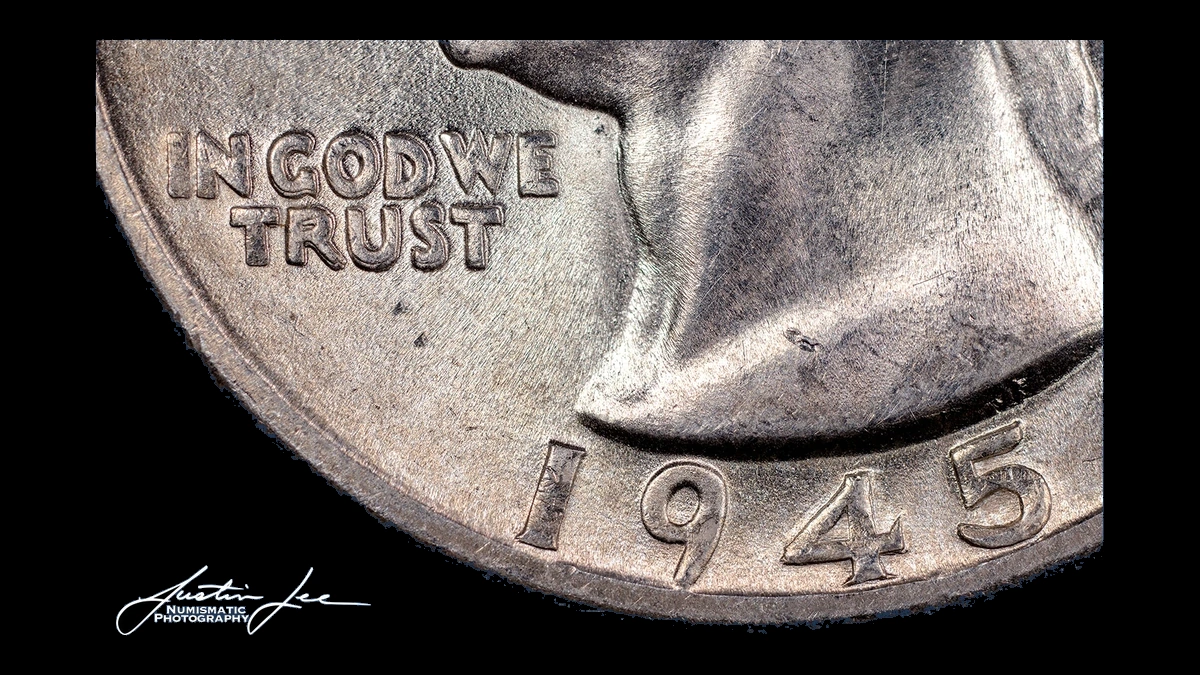
Philadelphia FS-101 shows counterclockwise separation in front lettering, the date, and other details. San Francisco FS-102 has a different appearance, with strong thickening in the lettering, date, and hair ribbon.
These patterns originated in the dies rather than from two blows on an individual coin. Other Denver and San Francisco front varieties and reported reverse varieties from all three mints need separate comparisons.
How to Identify
Read the mint mark on the reverse before choosing an attribution photograph. The same FS number on coins from different mints does not guarantee the same pattern.
For Philadelphia FS-101, compare the motto, LIBERTY, date, and ribbon ends for the listed counterclockwise separation. For San Francisco FS-102, examine the specific thickening across its letters, date, and ribbon.
A reverse claim must match its own repeated lettering, leaves, or other documented details. Flat ledges from strike movement differ from the rounded repeated features of a doubled die.
What It’s Worth
$25–$1,000 is the supplied estimate for identified doubled-die varieties of this year. A Philadelphia FS-101 graded MS65 sold for $552 in March 2018.
The separate 1945-S FS-102 variety brought $840 in MS66 on March 29, 2018. Each is a whole-coin result for its own mint, variety, and grade.
2. 1945 Quarter An Extra S or D Outline: Repunched Mint Mark Error
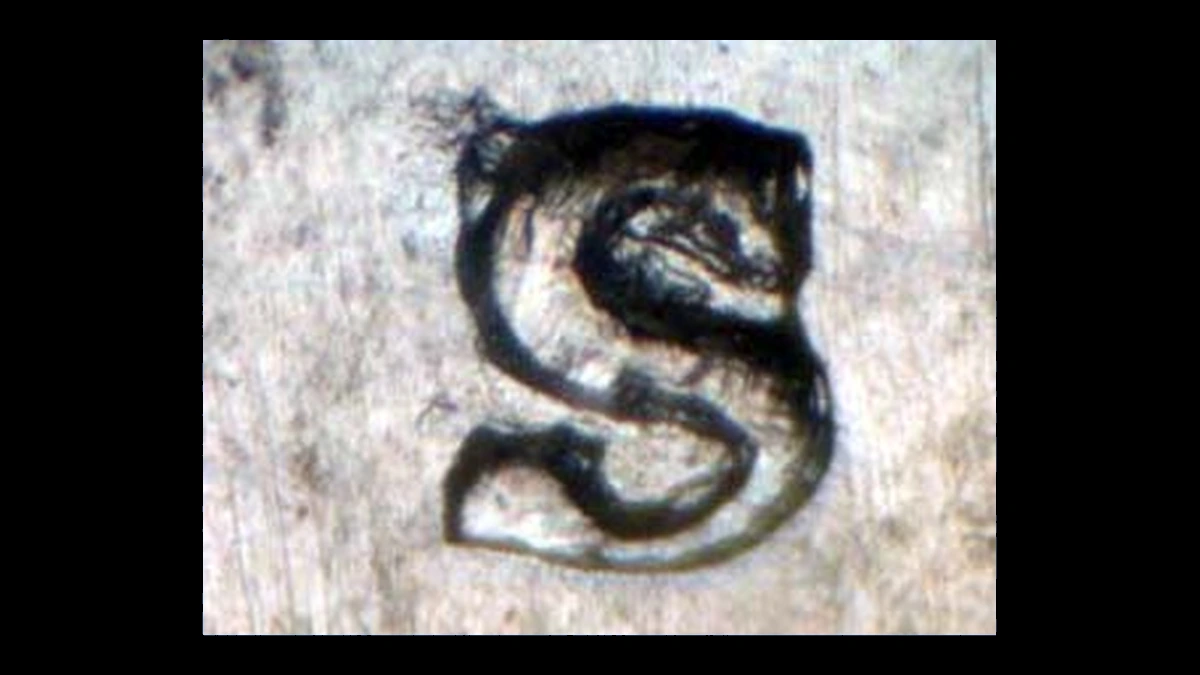
Mint letters were added to the dies with a separate punch. A repeated impression in a slightly different position could leave another outline on every coin struck from the die.
On 1945-S FS-501, the earlier S appears above the main letter. Denver RPM-001 instead shows an extra D below, while other S varieties have their own directions.
How to Identify
Inspect the mark below the reverse branches, following both its center and outside contour. Philadelphia has no mint letter, so an RPM claim requires an actual D or S.
The Wexler mint-mark references distinguish the listed patterns and a damaged S-punch lookalike. An unusual center caused by punch damage does not establish a second S impression.
Match the extra upper S for FS-501 rather than substituting a westward S outline. Likewise, the Denver feature belongs below the D and must be assessed independently.
What It’s Worth
$20–$600 is the estimated whole-coin range for confirmed repunched mint marks. Clear attribution and little wear support stronger comparisons.
A different-year 1949-D D/D FS-501 graded MS65 sold for $384 in March 2018. It is not a sale of the 1945-S variety, despite sharing the FS-501 number.
3. 1945 Quarter A Straight Section Is Missing: Clipped Planchet Error
A reported 1945-S example has a straight clip. This shape can occur when the blank cutter reaches the edge of the metal strip and produces an incomplete disk.
The coin receives its design after the metal is already missing. That order leaves evidence in how the nearby rim and letters form.
How to Identify
Follow the straight boundary and both points where it meets the rounded edge. Look for original metal flow beside the gap instead of saw marks or a cut through completed design.
A weak opposite rim can support a clip, but it is not required on every genuine piece. No fixed percentage or clock position is supplied for the reported 1945-S coin.
The normal silver-quarter weight is about 6.25 grams. Both an original clip and a later cut reduce weight, so preserve the visible date, S, and edge evidence in the comparison.
What It’s Worth
$25–$300 is the supplied estimate for a genuine 1945-S straight clip. Larger clear gaps and original surfaces can be more appealing than a small loss on a heavily worn coin.
A 1953 curved-clip quarter graded ANACS MS64 sold for $79 in June 2026. That silver-quarter comparison differs in year and clip shape and does not establish a grade for the 1945-S report.
4. 1945 Quarter The Coin Spreads Beyond Its Normal Border: Broadstrike Error
A broadstrike forms when the collar does not contain the metal normally during the blow. The blank can expand while retaining the intended quarter design.
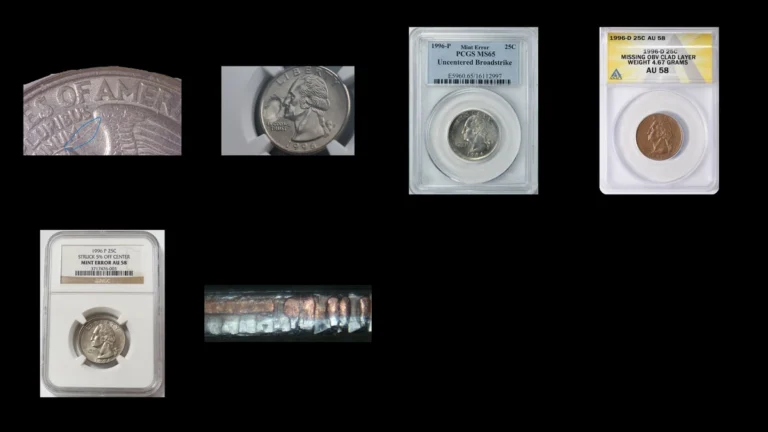
The supplied Philadelphia example is graded NGC Uncirculated Details because it has front scratches. A separate San Francisco broadstrike is reported with a weak date.
How to Identify
Check the expanded outline against the normal 24.3-millimeter diameter and trace the surviving design. Missing or weak edge grooves can accompany the lack of normal collar restraint.
Later scratches do not explain why the Philadelphia coin originally spread, although they affect its condition. On the San Francisco report, verify the weak date and S from that coin’s own image.
Hammering can also widen a finished quarter while crushing its details. A broadstrike should show an original design formed within the expanded metal.
What It’s Worth
$75–$700 is the supplied broadstrike estimate. The scratched Philadelphia specimen sold for $134 on June 29, 2026.
“Uncirculated Details” indicates little circulation wear alongside the noted damage. Its price is neither an undamaged-coin result nor a sale of the separate weak-date San Francisco example.
5. 1945 Quarter The Design Ends Beyond One Edge: Off-Center Strike Error
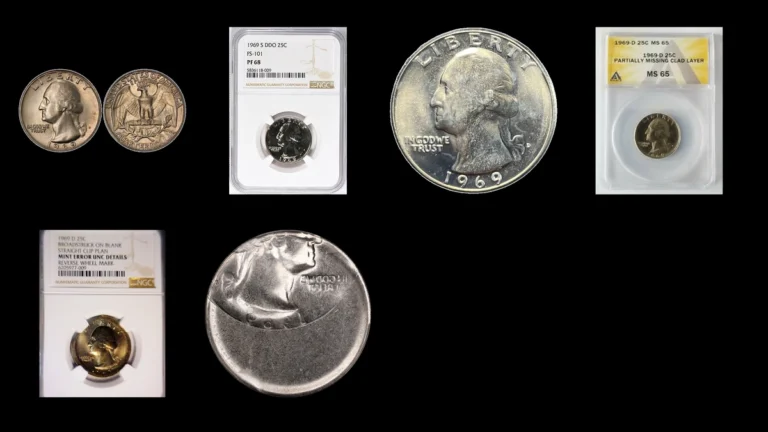
A quarter struck on a misplaced blank can lose part of the intended picture beyond one edge. A crescent of untouched metal remains opposite the missing design.
How to Identify
Compare both faces to see whether their designs fit the same displaced disk. One uneven face rim can result from a misaligned die and does not prove that the blank itself was off center.
Check how much of 1945 survives before assigning the date. If the reverse mint-mark area missed the blank, an absent D or S cannot establish Philadelphia origin.
Look for a natural transition between struck and unstruck metal rather than grinding or hammering that removed existing detail. The reports do not supply a universal mint, direction, or percentage for this year.
What It’s Worth
$100–$1,500 is the estimated whole-coin range for genuine dated 1945 off-center quarters. Clear displacement, readable identity, and surface quality all affect the result.
A 1965 quarter struck 25% off center sold for $180 in December 2025. That later clad coin illustrates the mechanism without assigning its displacement or value to an unrelated silver example.
Conclusion
A 1945 quarter can require either a close design match or a physical explanation of its shape. Keep the mint-specific doubled dies and repunched marks distinct, even when their catalog numbers resemble those used elsewhere.
For clips, broadstrikes, and off-center strikes, let the edge and both faces establish how the coin formed. The scratched Philadelphia broadstrike also shows that an authentic mint error can carry later damage that reduces its appeal.