Rare 1839 Quarter Errors (List & Pictures)
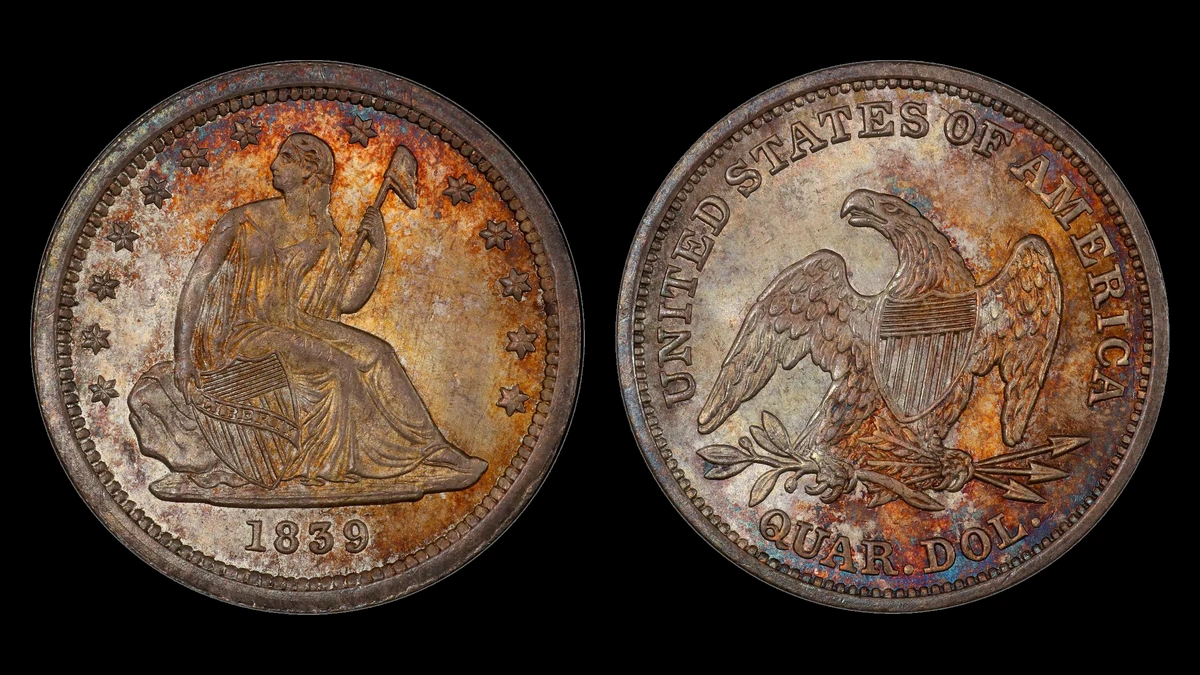
Before identifying a line as an error, check whether it is on the silver or the plastic above it. That distinction matters on a documented quarter sold for $8,625 at Heritage on April 18, 2012.
This guide to 1839 quarter errors covers die cracks on that PCGS MS64 example, with estimated whole-coin values of $100–$10,000 across different conditions. Follow the two crack paths while keeping the holder’s separate scratch out of the comparison.
1839 Quarter Raised Lines across the Rock and Eagle: Die Cracks Error
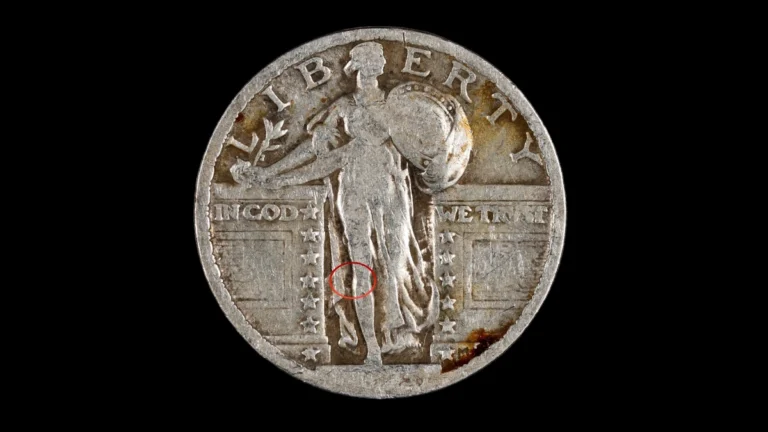
Two sides of the recorded quarter preserve evidence of cracked dies. On the front, a line travels from the lower rim to the left side of the rock beneath Liberty.
The reverse line passes through the T in UNITED, the wing on the viewer’s left, and the shield. Those routes describe the documented coin rather than every line that might appear on an 1839 quarter.
A die is the steel tool that forms the design. When a crack opens in that tool, silver can enter it under striking pressure and leave a narrow raised ridge on the coin.
The resulting line does not mean the quarter’s own metal has split. The front and reverse cracks are also features of one coin, not two separate objects to value.
How to Identify
If the coin is encapsulated, focus on the design itself before following any line. Change the viewing angle gently: a scratch in the plastic may appear to shift relative to the metal underneath.
The auction example has a holder scratch between ES and O in the upper reverse lettering. That mark should remain separate from the raised line through the T, wing, and shield.
Use magnification and low-angle light to examine whether each suspected crack stands above the silver. A scratch cut directly into the coin may catch a bright highlight but remains a groove rather than the same raised feature.
Match the full routes, including where they meet recognizable letters and design elements. One short bright segment in roughly the right area is weaker evidence than a continuous pattern.
Also note that the coin uses the early No Drapery design. The lack of an extra cloth fold below Liberty’s elbow is normal for that design and should not be counted as missing detail from an error.
What It’s Worth
$100–$10,000 is an estimated range for complete examples of this type with visible die cracks, from worn coins to well-preserved survivors. A thin line is not independently responsible for the top end of that range.
The Heritage MS64 example realized $8,625 on April 18, 2012. MS64 describes an unworn coin whose preservation and early design contributed to the price.
A heavily worn quarter with a similar ridge needs a condition-appropriate comparison. Neither a holder scratch nor two cracks on one coin creates an additional amount to add to the auction result.
Conclusion
A careful focus check can prevent a plastic scratch from becoming a supposed mint error. Once the line is confirmed on the metal, compare its relief and complete path with the recorded front and reverse cracks.
Keep the normal No Drapery design and the coin’s preservation in view. The $8,625 result values one high-grade quarter, while the broader estimate covers complete coins in very different conditions.