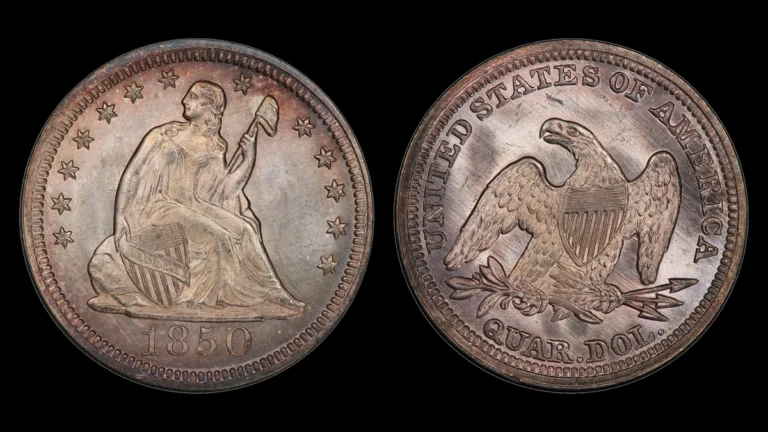
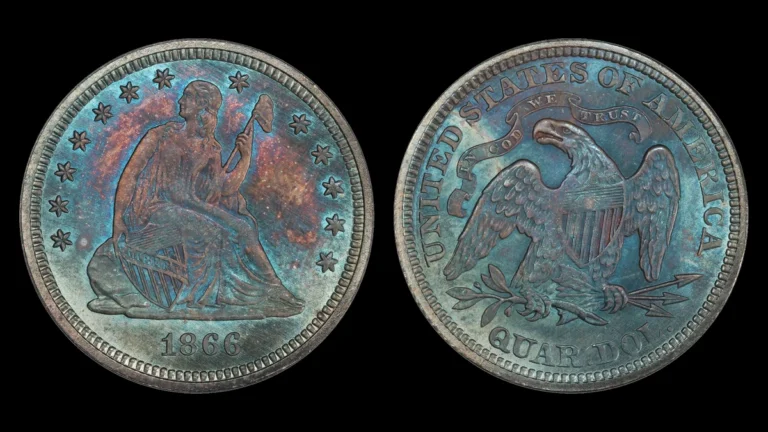
Rare 1843 Quarter Errors (List & Pictures)
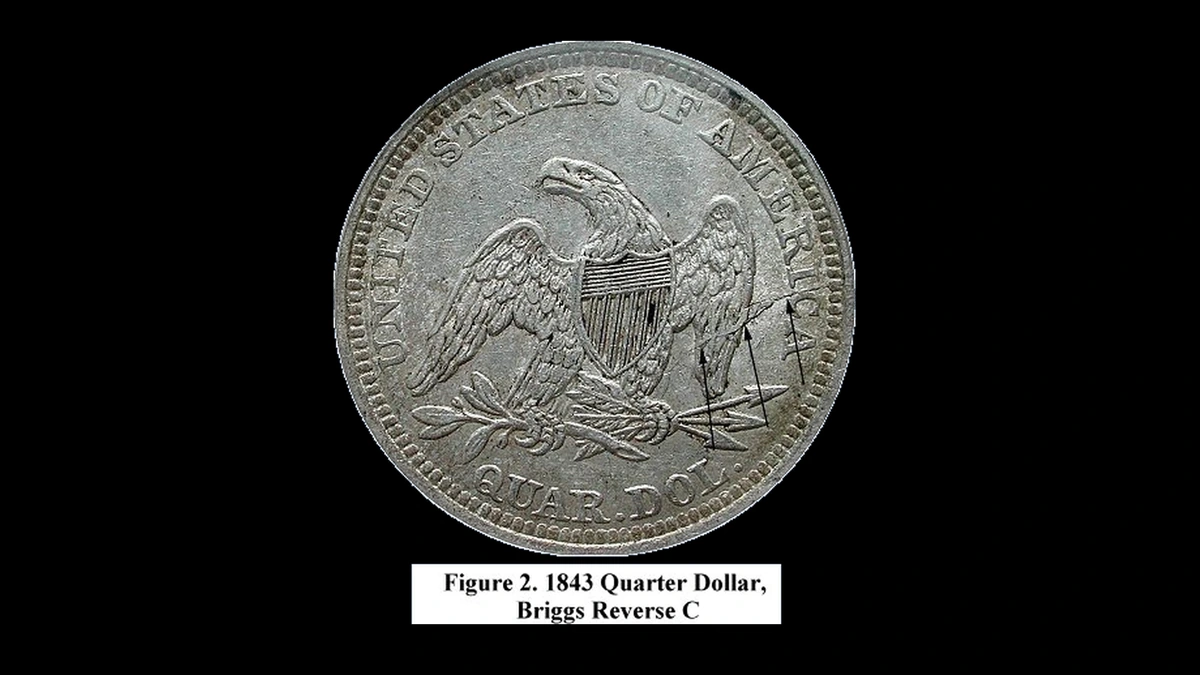
A raised crack network is the clearest starting point among the supplied 1843 quarter errors. Estimated whole-coin values span $100–$15,000, with plain-edge and off-center claims requiring their own confirmation.
A published comparison reports $10,200 for a different-year 1891 quarter struck 35% off center and graded NGC MS61. Begin with the reverse crack pattern, then examine the complete edge and the placement of both designs.
| Feature to inspect | Identification | Estimated value |
|---|---|---|
| Raised branching or lightning-shaped lines | Cracked or shattered die | $100–$3,500 |
| Grooves absent around the edge | Reported plain edge | $500–$5,000 if Mint-made |
| Displaced design and original blank area | Reported off-center strike | $1,500–$15,000 if authenticated |
1. 1843 Quarter Raised Lines Divide the Eagle Side: Cracked and Shattered Dies Error
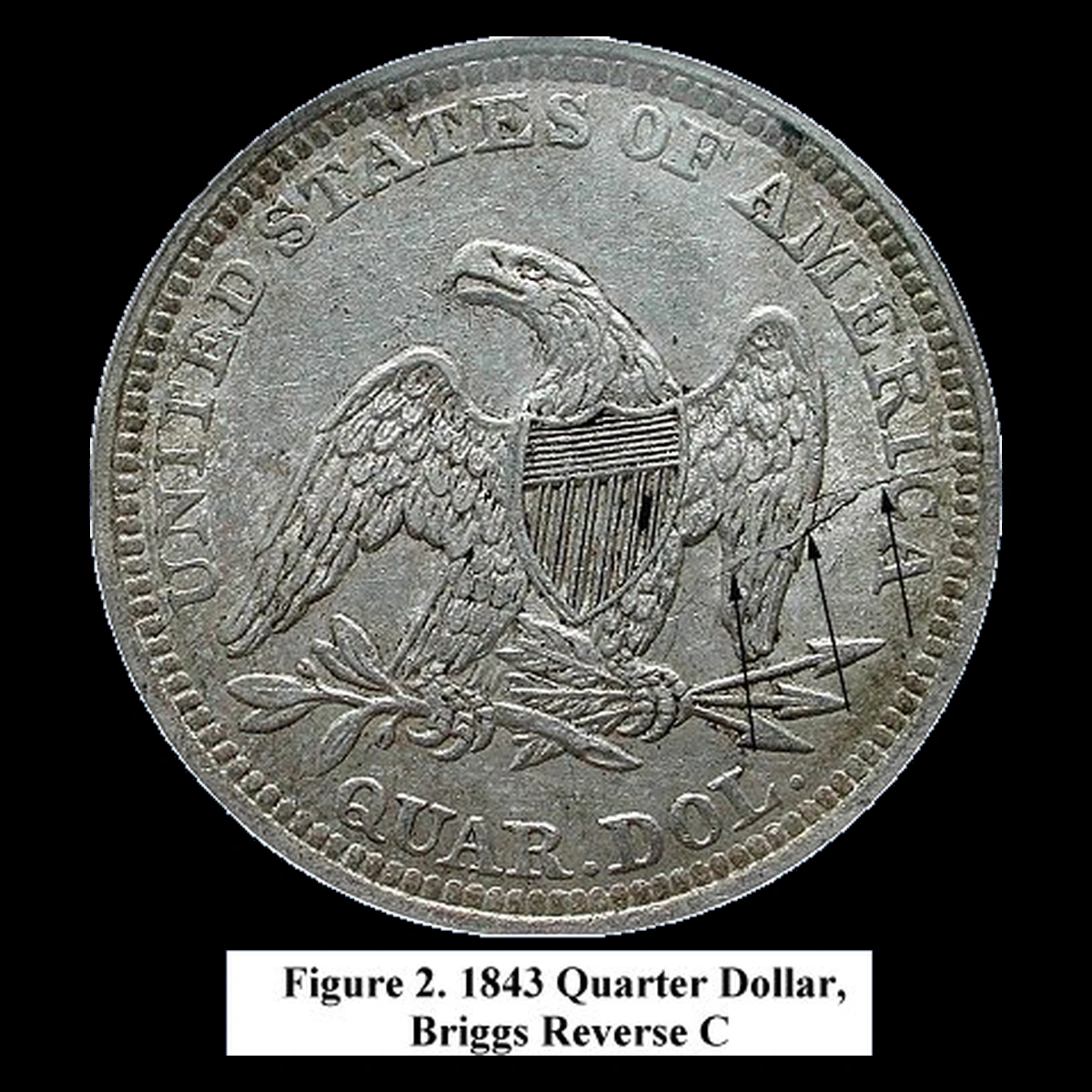
The famous “Lightning Bolt” appearance is one of two distinct Philadelphia reverse patterns described for 1843. Reverse A has a branching network, while reverse C carries the jagged lightning-shaped crack.
The fractures were in the dies, not breaks through the coins themselves. Silver entered those openings during striking and reproduced them as raised lines.
How to Identify
Compare the entire reverse with the appropriate images in Greg Johnson’s 1843 study. Trace the turns and junctions of the branching or lightning pattern before concentrating on one striking line.
Use side lighting to confirm raised relief. A scratch usually has a recessed channel, even when it pushes some metal upward beside it.
Read the 1843 date and inspect the reverse mint-mark area. These two recorded varieties are Philadelphia issues without an O below the eagle.
A dramatic-looking ridge is not enough by itself. Its complete route must agree with the correct die rather than with selected fragments from both patterns.
What It’s Worth
$100–$3,500 is the supplied estimate for worn through lightly worn examples with clear cracks. The AU58+ Lightning Bolt auction record gives a $2,640 Stack’s Bowers result in August 2020.
The reverse A branching variety requires its own condition and demand comparison. It should not automatically receive the reverse C sale price merely because both dies fractured.
2. 1843 Quarter The Edge Looks Smooth All Around: Reported Plain Edge Error
A historical auction catalog described a heavily worn 1843-O quarter graded Good as having a plain edge. That records an appearance without establishing how the ordinary grooves disappeared.
The collar ring normally forms those grooves during striking. Wear, filing, or later smoothing can also produce an edge that looks plain.
How to Identify
Inspect the full circumference through overlapping edge photographs or a careful view of a loose coin. Look for remaining grooves, filing lines, flat spots, and a rolled lip.
Record actual dimensions and weight without scraping the metal. The normal 1843 quarter standards are about 24.3 millimeters and 6.68 grams, with wear capable of reducing mass.
Confirm the date and O below the eagle, then have the original edge assessed. The report does not establish collar failure or expansion beyond normal diameter.
What It’s Worth
$500–$5,000 is a conditional estimate for an 1843-O quarter confirmed to have a Mint-made plain edge. The underlying coin’s rarity, mint-mark variety, and condition remain part of that whole-coin value.
A filed edge does not receive the same premium. Evidence of original formation is more important than smoothness alone.
3. 1843 Quarter Both Designs Miss Part of the Metal: Reported Off-Center Strike Error
An off-center blank can leave an untouched area beside an incomplete seated figure and eagle. Part of the intended design falls beyond the opposite edge because the disk was misplaced between the dies.
The supplied category does not establish a particular authenticated 1843 specimen. A general Seated-quarter description cannot supply the missing date-specific evidence.
How to Identify
Read 1843 on the actual coin and confirm that the surviving designs belong to a quarter. An unreadable date or another Seated denomination cannot establish the requested identity.
Compare both faces for displacement consistent with one misplaced blank. A shifted front with a centered reverse may instead involve die alignment, while a broadstrike can retain the whole design within expanded metal.
Inspect the unstruck area for original texture rather than grinding or traces of removed lettering. The blank-looking surface should explain where the design never formed.
What It’s Worth
$1,500–$15,000 is the conditional estimate for a genuine clearly dated 1843 off-center quarter. Preservation, readable identity, and the amount of lost design would determine the appropriate comparison.
A published auction summary reports $10,200 for an 1891 quarter struck 35% off center and graded NGC MS61. That is a later-year comparison, not an 1843 transaction or a percentage to assign to a candidate.
Conclusion
The two documented Philadelphia crack patterns offer specific shapes to match on an 1843 quarter. Follow each raised network as a whole, keeping the branching and Lightning Bolt dies distinct.
A smooth edge or displaced design requires different evidence and may remain only a report until the actual coin is examined. Preserve both faces, the complete edge, and the readable date so condition and original formation can support the value comparison.