Rare 1821 Quarter Errors (List & Pictures)
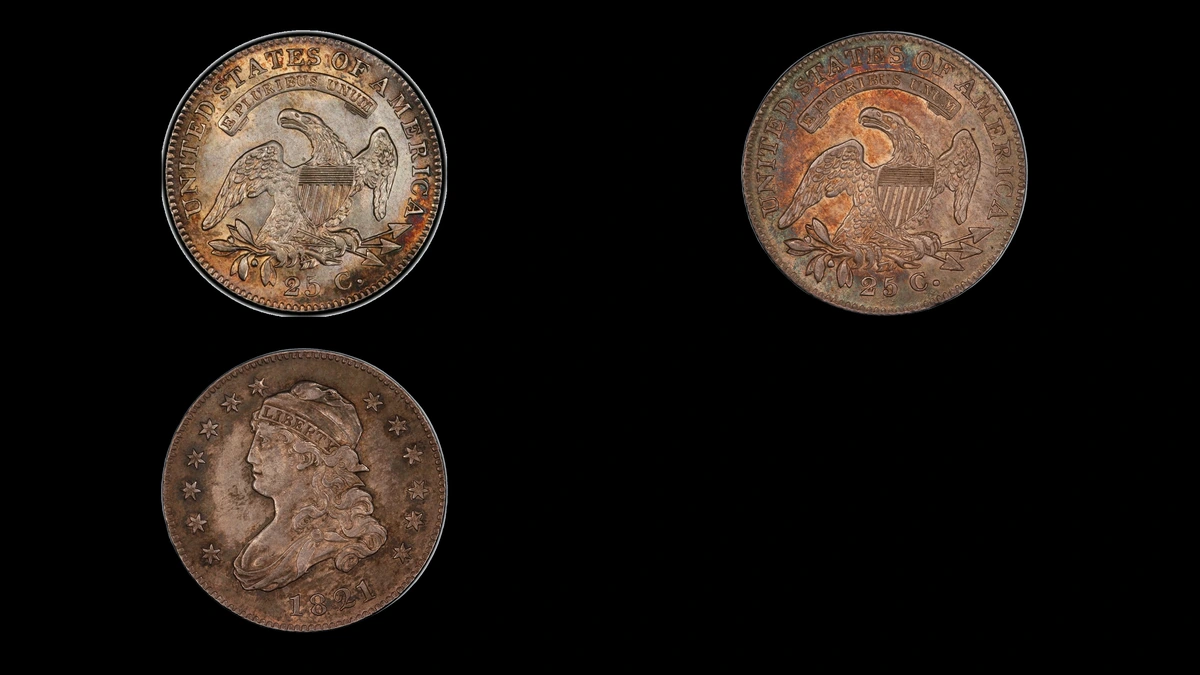
A B-3 quarter with shield-related clash marks and a star crack sold for $1,898 in August 2011. Estimated whole-coin values for the 1821 quarter errors below range from $150–$6,000 for circulated examples.
This guide explains the different traces left by imperfect letters, rusted tools, cracks, and contact between the dies.
| Feature | Variety reference | Estimated value |
|---|---|---|
| Defective T bases | B-1 | $150–$3,000 |
| Raised die-rust texture | Separate B-1 and B-2 patterns | $200–$4,000 |
| Cracks and chips | B-1, B-2, or B-3 pattern | $200–$5,000 |
| Shield clash below the ear | B-3 | $250–$6,000 |
1. 1821 Quarter Defective T Letters Error
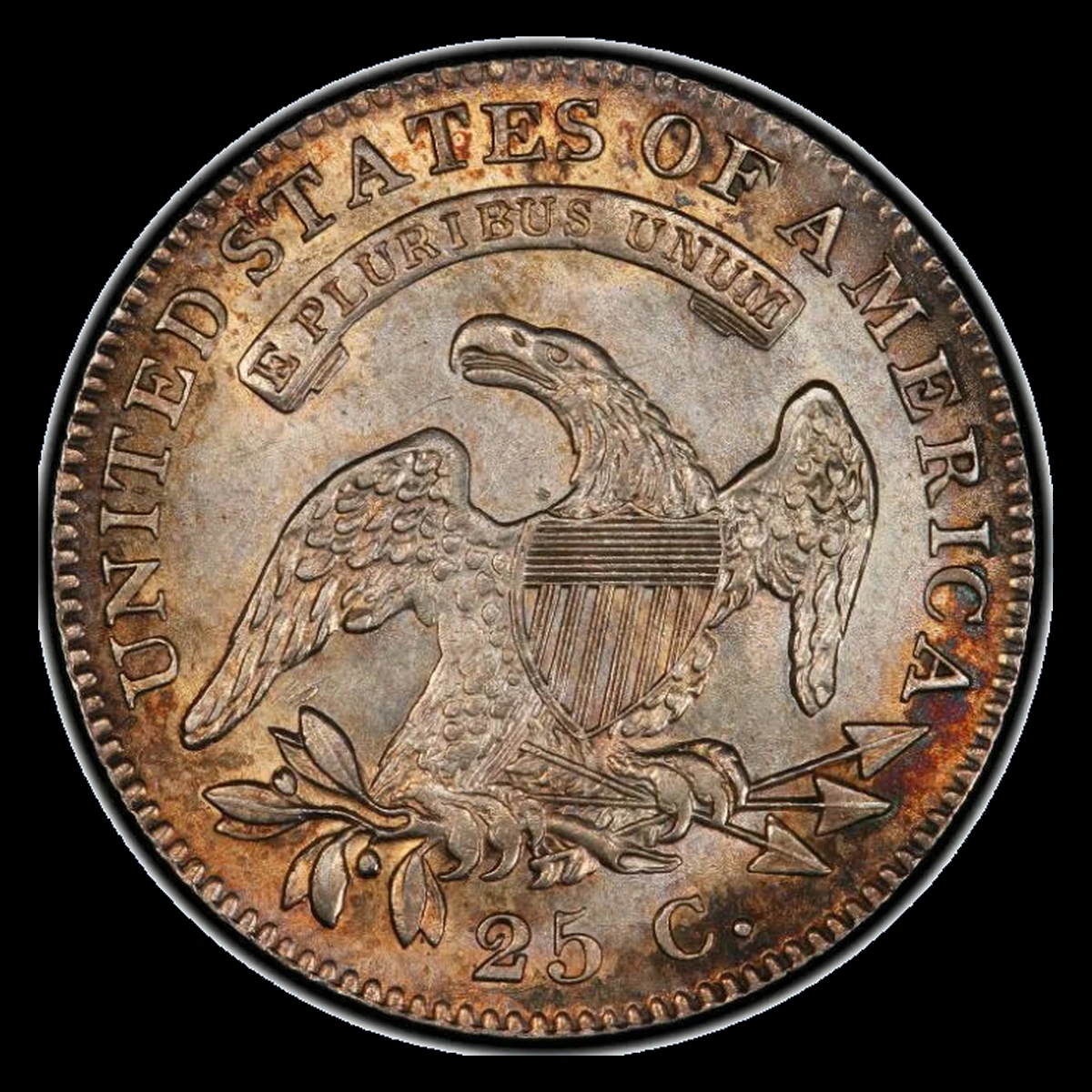
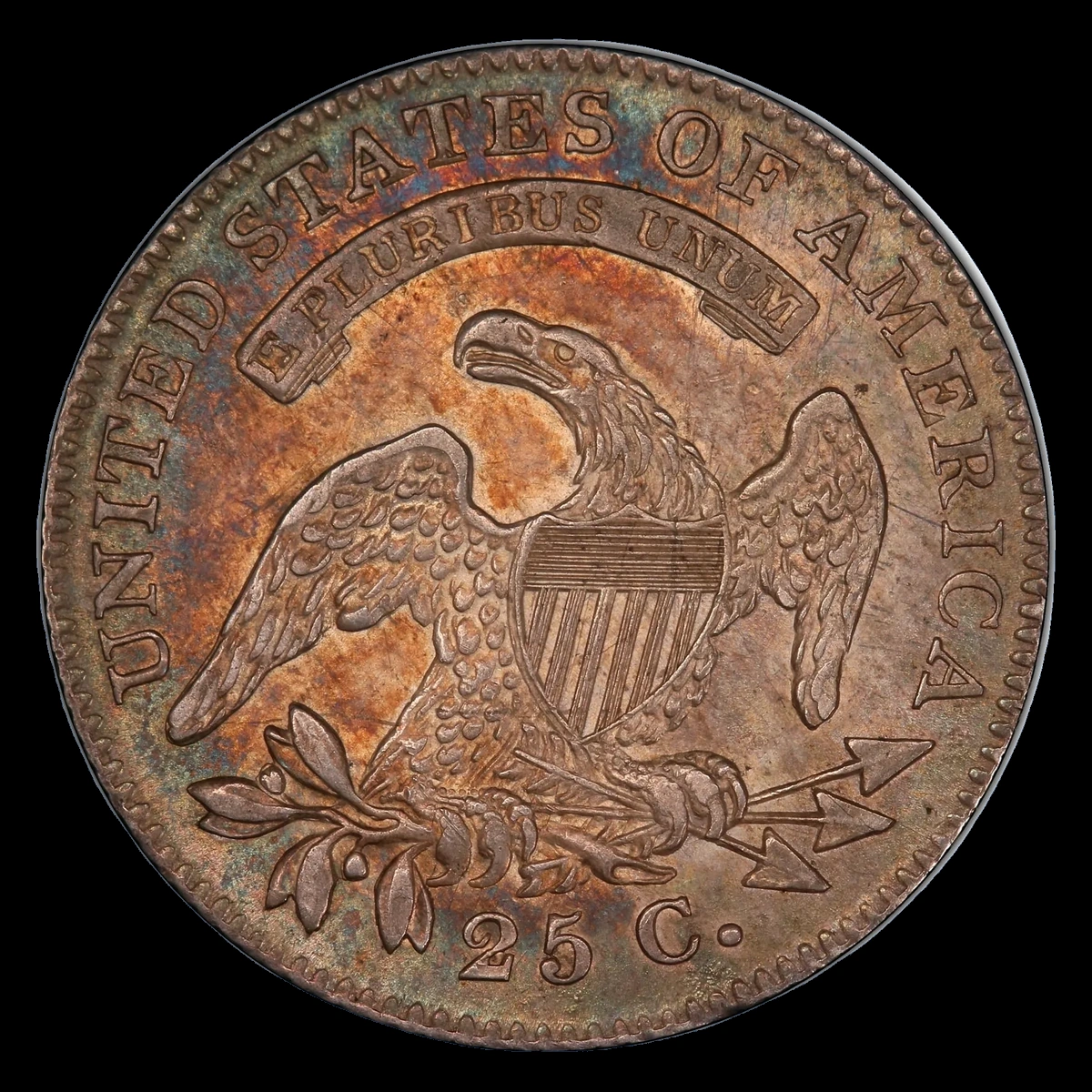
On B-1, the reverse T letters share an irregularity at the lower right of their bases. Repeated shape across several letters is the useful clue.
An imperfect letter-making tool could place that shape into multiple letters on a die. Later coins then reproduced the flawed form, unlike random damage to one finished letter.
How to Identify
Compare T in UNITED with both Ts in STATES at the same scale. Inspect the lower-right base on each and account for the wear affecting neighboring letters.
Confirm the B-1 attribution from both faces before relying on the small defect. A gouged T with fresh cuts cannot replace a repeated match across the expected letters.
What It’s Worth
Recognizable worn through lightly worn B-1 examples have estimated whole-coin values of $150–$3,000. A PCGS VG10 B-1 sold for $204 at Heritage in July 2025.
That result concerns an ordinary circulated example and does not isolate a price for each defective T. Preservation and original surfaces remain central to the comparison.
2. 1821 Quarter Texture from Rusted Dies Error
Rust pits in a steel die can produce tiny raised dots when silver enters them during striking. “Die rust” therefore describes the tool rather than rust developing on the silver coin.
B-1 has texture between the olive leaves and the denomination’s 2. Separate B-2 patches are reported below 5 and above AME in AMERICA.
How to Identify
Select the correct variety and location before examining the dots. Their position and clustered pattern should match a coin struck from the same tool.
Use different lighting directions to distinguish raised metal from cavities or deposits. General corrosion across unrelated areas needs another explanation, and suspected dots should not be scraped.
What It’s Worth
Circulated B-1 or B-2 coins with these original textures have estimated whole-coin values of $200–$4,000. Compare the variety and condition before considering the extent of the patch.
The B-1 VG10 result provides one low-grade reference, while B-2 needs its own comparisons. A sharper coin can be worth more without showing a larger area of die-rust texture.
3. 1821 Quarter Die Cracks and Chips Error
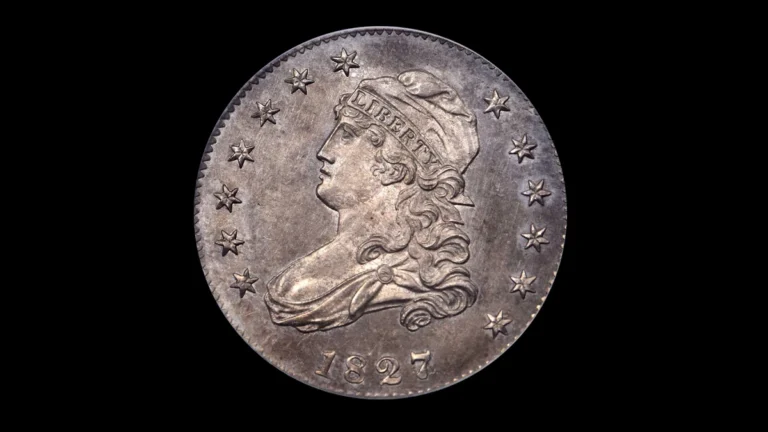
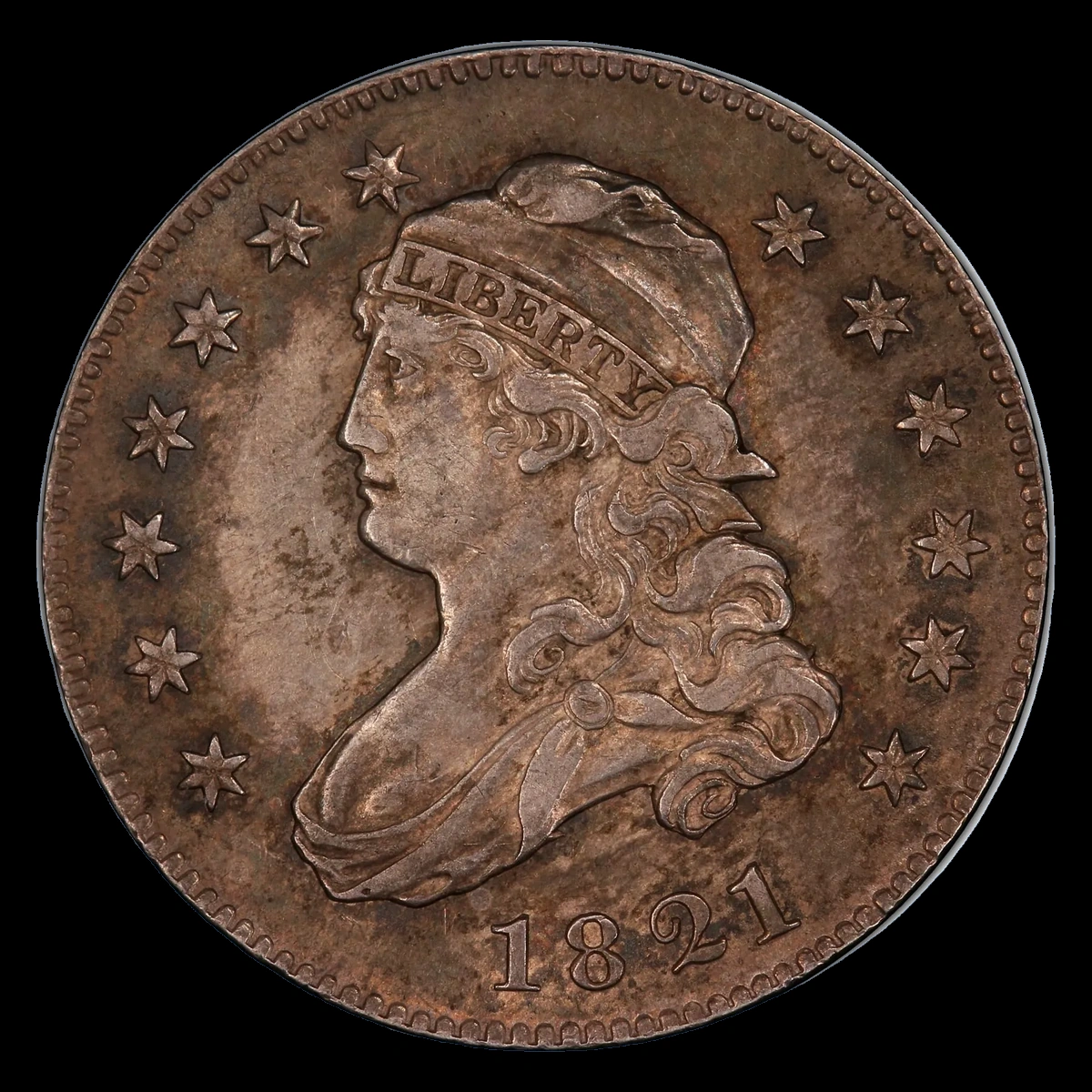
Some B-1 and B-2 quarters have a raised line from the cheek through L in LIBERTY, sometimes extending toward the rim beside the upper-left star. B-2 also has a chip in the lower portion of the denomination’s 2.
A separate B-3 example has a crack through the second-lowest right-hand star. These are different tool patterns, not a collection of required marks on one coin.
How to Identify
Identify the variety before tracing the full line through its landmarks. For the B-2 chip, examine the lower part of 2 for original raised metal rather than an attached deposit.
A scratch can push up a bright lip beside its recessed center. Inspect both the line’s height and complete route before matching it to a die crack.
What It’s Worth
Circulated examples with these features have estimated whole-coin values of $200–$5,000. Variety, remaining detail, and surface condition usually matter more than a tiny lump.
The B-3 coin discussed next carries both a star crack and a clash. Its price cannot be divided into two independent error values.
4. 1821 Quarter Clashed Dies Error
On the recorded B-3 quarter, faint eagle-shield traces appear below Liberty’s ear. They originated when the dies met without a blank and marked one another.
Subsequent coins reproduced those transferred shapes. The same specimen’s star crack has a separate cause and does not turn the clash into a second coin strike.
How to Identify
Begin below the ear and compare the faint outlines with a recognizable portion of the reverse shield. Several connected features provide better evidence than an isolated line.
Change the lighting and check for marks on a holder that could imitate a trace. The shield-related shape must belong to the struck surface, not to scraping or a reflection.
What It’s Worth
Circulated B-3 examples with comparable clashing have an estimated whole-coin range of $250–$6,000. The NGC AU50 B-3 example sold for $1,898 at Stack’s Bowers in August 2011.
The catalog describes both the clash and star crack, along with minor marks. Its preservation must be considered when comparing a cleaner or more heavily worn coin.
Conclusion
The most useful evidence is a repeated shape in the correct place: matching T bases, a raised texture cluster, a crack route, or shield traces beneath the ear. Each points to a different change in the tools.
Keep B-1, B-2, and B-3 references separate and compare similar preservation. The estimates value complete circulated quarters, so neither a small defect nor several marks on one coin should be priced as independent additions.