Rare 2018 Sacagawea Dollar Errors (List & Pictures)
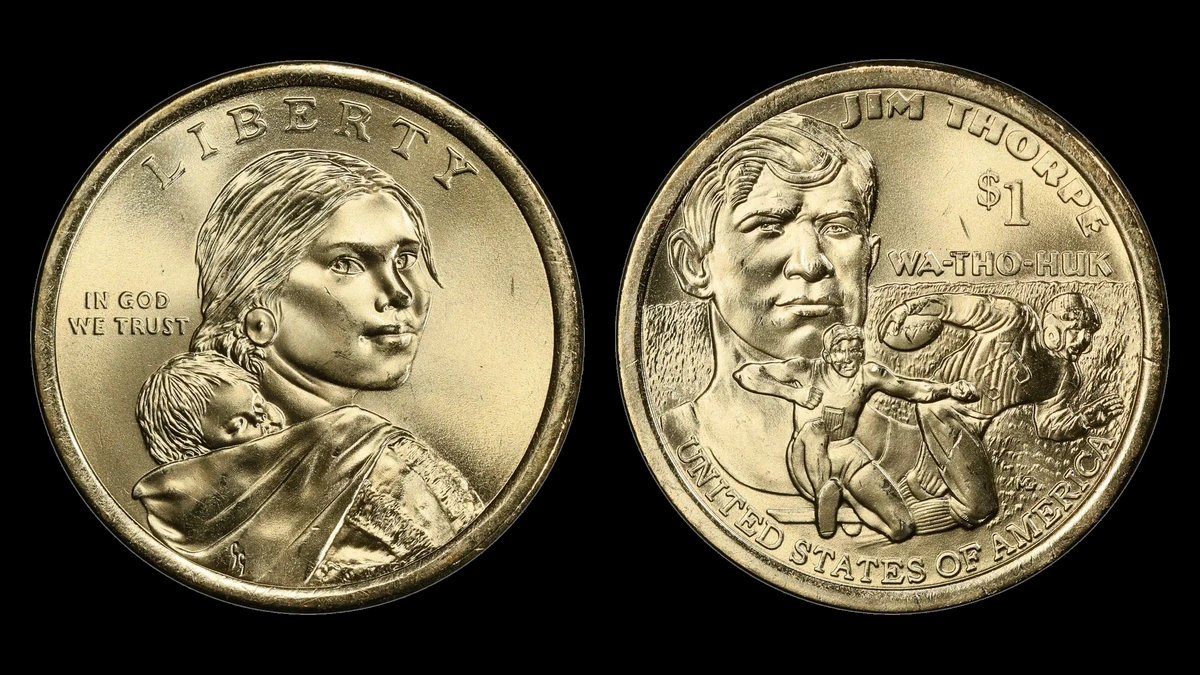
Jim Thorpe and the sports figures identify the 2018 reverse, even if the edge year is missing. The two reported 2018 Sacagawea dollar errors below have conditional estimated values of $30–$10,000.
A different-year 2002-D dollar on a quarter blank sold for $8,050 in January 2009. Use the correct Jim Thorpe design first, then examine either the complete edge or the metal itself.
2018 Dollar No Inscription around the Edge: Reported Missing Lettering Error
The normal edge carries the year, mint letter, and E PLURIBUS UNUM. On ordinary dollars, that inscription is added after the faces are struck.
A coin that misses the separate lettering step can remain plain around the edge. The year-specific 2018 report supplies no authenticated specimen or identified mint.
Letters facing the other direction are a different observation. Faint lettering also differs from a completely absent inscription.
How to Identify
Use a normal Jim Thorpe dollar beside the candidate and rotate both slowly under a light. Examine the entire circumference, including shallow marks that hide in shadow.
Record any surviving character. One faint letter means the edge is not completely unlettered, even if the rest appears smooth.
Inspect where the edge meets each rim for filing, polishing, or a coating filling the inscription. Later smoothing can remove letters without a production error.
The Jim Thorpe reverse identifies the issue. If the mint letter is truly absent, the edge does not tell you whether P or D belongs on the coin.
What It’s Worth
$30–$500 is the estimated range for an authenticated 2018 missing-edge-lettering example. Complete original absence and preserved faces would help support the comparison.
A 2007 Madison missing-edge dollar graded NGC MS67 sold for $119 in July 2025. It is a different-year Presidential dollar, not a sale of a Jim Thorpe specimen.
An edge erased by tools or wear does not qualify for that mint-error range.
2018 Dollar The Dollar Design Is on Different Metal: Reported Wrong Blank Error
A blank is the plain metal disk before striking. If one intended for another coin reaches the dollar press, it can receive Sacagawea and the Jim Thorpe reverse instead.
A smaller disk may lose outer design because the image extends beyond its edge. The 2018 report does not identify a particular substitute blank.
A different color alone cannot establish a quarter blank, nickel blank, or any other denomination. Coatings and chemicals can alter a finished dollar’s appearance.
How to Identify
The Mint’s Jim Thorpe specifications give 8.10 grams and 26.49 millimeters for a normal coin. Record the candidate’s weight and width before proposing another blank.
Inspect the edge for original metal structure, filing, corrosion, or added coatings. Natural design loss at a small blank’s edge differs from cutting away a completed coin.
Keep both faces in the same set of photographs. The normal gold-colored dollar contains no gold, so its color is not a metal test.
A specialist can examine composition without scraping the surface. The alloy, dimensions, and original strike must support the same alternative blank.
What It’s Worth
$1,000–$10,000 is the conditional estimate for an authenticated 2018 wrong-blank dollar. The identified blank and condition would guide a closer comparison.
A 2002-D dollar on a quarter blank graded NGC MS66 brought $8,050 in January 2009. A specialist record lists that coin’s history.
Its quarter-blank identity and grade cannot be transferred to an unexamined 2018 candidate.
Conclusion
A plain edge requires a full check for missing inscription and later smoothing. An unusual blank needs compatible metal, measurements, and an original dollar strike.
Keep the Jim Thorpe design visible in either comparison and preserve the untouched edge. The supplied reports provide categories to investigate, while their price ranges apply only when the proposed error is authenticated.