Rare 1916 Standing Liberty Quarter Errors (List & Pictures)
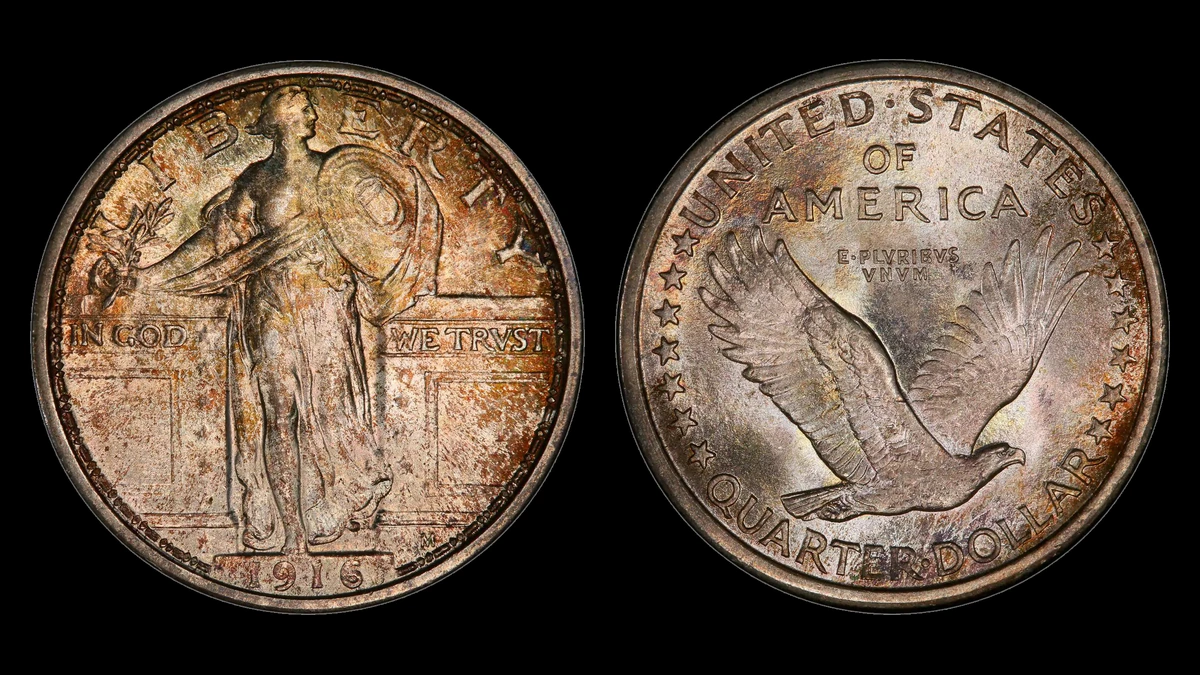
A different-year broadstrike, a 1919 quarter in MS67 Full Head, sold for $35,250 in June 2014. Estimated whole-coin values for the 1916 Standing Liberty quarter errors discussed here span $3,000–$60,000, with major-error ranges conditional on identifying genuine examples.
This guide distinguishes the documented small shield flaw from three categories still needing a confirmed 1916 specimen.
| Category | Evidence status | Estimated whole-coin value |
|---|---|---|
| Doubled die | Feature to investigate; no established pattern supplied | $3,000–$25,000 |
| Small shield blank flaw | Documented PCGS MS65 example | $3,000–$35,000 |
| Off-center strike | Conditional on a confirmed dated coin | $10,000–$50,000 |
| Broadstrike | Conditional on an independently identified example | $15,000–$60,000 |
1. 1916 Quarter Doubled Die Candidate Error
A consistent secondary outline on letters or design features could indicate that the die carried a doubled image. Such a pattern would appear on coins struck from that tool without each coin needing another blow.
No specific 1916 Standing Liberty doubled letter, date digit, or established variety is supplied here. This remains a feature to investigate rather than a named confirmed variety.
How to Identify
Compare the suspected detail with a normal 1916 coin at the same scale. Follow several corners and curves to determine whether the extra shapes form one consistent pattern.
A flat lowered shelf can result from movement during striking. Reflections and isolated thick strokes do not supply evidence of a separate rounded design.
Document both faces and every related feature for a variety specialist. A doubled coin from another year cannot establish a new 1916 attribution.
What It’s Worth
A conditional whole-coin estimate is $3,000–$25,000 for a genuine circulated through moderately unworn 1916 quarter with confirmed doubling. This is not a recorded doubled-die sale.
The rare date already contributes substantial value. Minor doubling could matter less than wear and original preservation, while an ordinary striking shelf deserves no doubled-die premium.
2. 1916 Quarter Small Shield Blank Flaw Error
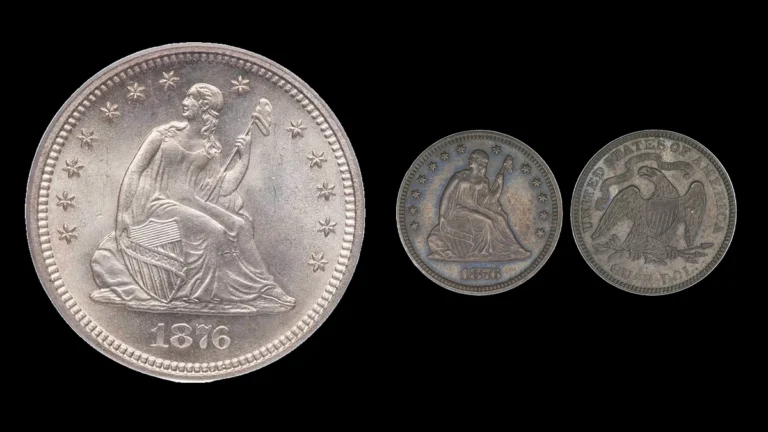
The documented PCGS MS65 quarter has a small flaw at the center of Liberty’s shield. Heritage described it as a planchet flaw, meaning a defect in the metal blank.
The modest description does not establish a large lamination or identify an object struck into the surface. It helps recognize this individual coin without making every shield mark a mint error.
How to Identify
Locate the shield center in the auction image and compare the irregularity with its surrounding lines. A dark spot alone cannot establish an original blank flaw.
Inspect for a sharp contact cut or pushed-up metal that could explain a later mark. Leave dirt or uncertain material untouched rather than scraping to reveal the surface.
What It’s Worth
Genuine examples with small original blank flaws have estimated whole-coin values of $3,000–$35,000. Much of that range reflects the scarce date and preservation rather than an error premium.
The documented PCGS MS65 specimen sold for $18,600 on August 26, 2025. That was the price of the complete attractive unworn coin.
A distracting imperfection can reduce visual appeal. The presence of a flaw does not automatically increase an already valuable quarter’s price.
3. 1916 Quarter Off-Center Strike Candidate Error
An off-center strike places part of the design beyond the blank and leaves untouched metal elsewhere. Both faces should support the same displaced disc.
This category is not represented here by a confirmed 1916 Standing Liberty specimen. Any estimate first requires secure identification of the coin and its original strike.
How to Identify
Read the date and identify Liberty standing before judging the displacement. Barber quarters also bear 1916 dates, and their portrait-head design belongs to another series.
Compare both faces for an unstruck crescent and cut-off design, inspecting the transition for grinding or filing. An uneven front beside a centered reverse may instead indicate a shifted die.
If the date is missing, do not complete it as 1916 from a similar design. The year and error need to be assessed together.
What It’s Worth
A confirmed, identifiable 1916 off-center example has a conditional estimated range of $10,000–$50,000. The date’s normal rarity is part of the whole-coin figure.
A different 1924 quarter struck about eight to ten percent off center sold for $3,840 in January 2023. That sale does not establish a 1916 market result.
4. 1916 Quarter Broadstrike Candidate Error
A broadstrike expands outward without normal collar restraint while retaining the main design. The collar normally controls the outline and forms the edge grooves.
Other Standing Liberty dates have documented examples, but they do not establish a 1916 broadstrike. Later flattening can also widen a coin and must be excluded.
How to Identify
A normal silver quarter measures about 24.3 millimeters and weighs 6.25 grams. Additional width is a reason to examine the design, edge, and original metal flow rather than an identification by itself.
Check whether the complete image formed as the metal spread or was crushed after striking. Inspect the date for alteration and retain the full outline in photographs.
What It’s Worth
A genuine independently identified 1916 broadstrike has a provisional estimated range of $15,000–$60,000. No confirmed sale of such a 1916 specimen is supplied here.
A 1919 broadstrike brought $35,250 in June 2014. Its MS67 Full Head grade indicates exceptional unworn preservation and sharply formed head detail, which a worn candidate cannot automatically inherit.
Conclusion
The documented shield flaw provides a useful reminder that an auction price belongs to the whole coin. A scarce, attractive 1916 quarter can be valuable even when its imperfection contributes little or reduces visual appeal.
For the other categories, first establish a genuine 1916 Standing Liberty example and explain the feature. Preserve the surfaces and complete date evidence before applying conditional estimates or borrowing a different year’s major-error result.