Rare 1896 Quarter Errors (List & Pictures)
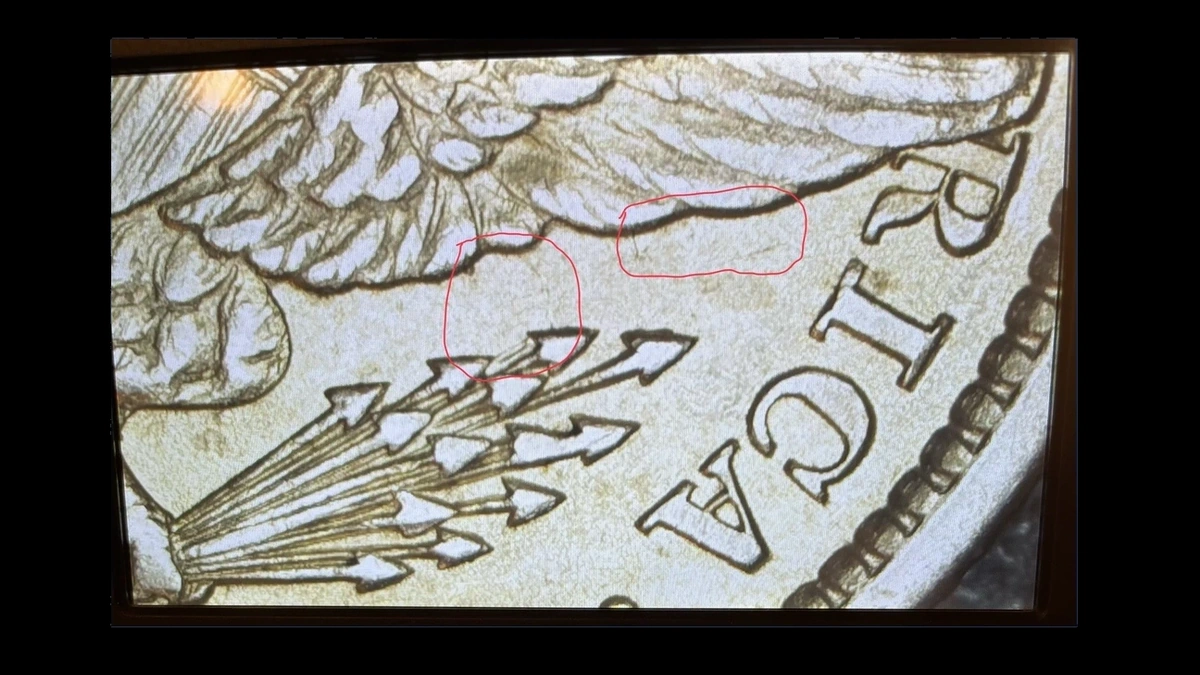
Mint identity matters greatly when assessing 1896 quarter errors: a scarce San Francisco coin can be valuable before its unusual marks are considered. An 1896-S quarter with clash lines inside Liberty’s ear sold for $8,812.50 in January 2013.
The supplied estimates span $40–$25,000, with the highest figure conditional on authentication of a reported later-design combination. Start with the date and mint, then inspect the small design details and the coin’s outline.
| Where to look | Possible identification | Estimated whole-coin value |
|---|---|---|
| Beside date digits | Repunched date L-101 | $40–$1,500 |
| Inside Liberty’s ear | Shield detail from clashed dies | $1,000–$20,000 for the discussed 1896-S examples |
| Ear and reverse wingtip | Reported later design combination | $2,000–$25,000, only if confirmed |
| Missing piece of outline | Reported clipped planchet | $50–$750 for ordinary Philadelphia examples |
| Missing design beside blank space | Reported off-center strike | $300–$5,000 for ordinary Philadelphia examples |
1. 1896 Quarter A Second Stroke Beside the Date: Repunched Date Error
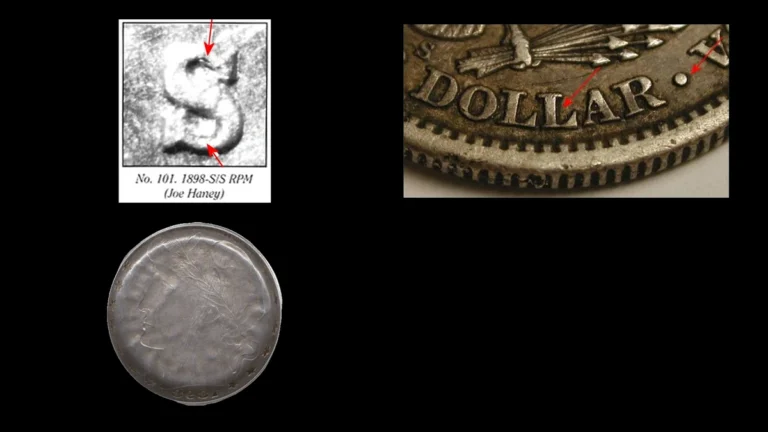
An extra raised curve beside a numeral may be the surviving edge of an earlier date impression. The cataloged Lawrence L-101 variety applies to Philadelphia 1896 quarters.
The date was punched into the die, the steel tool used to strike coins. When impressions of that punch did not align exactly, the die could retain fragments of the earlier position and reproduce them on later coins.
How to Identify
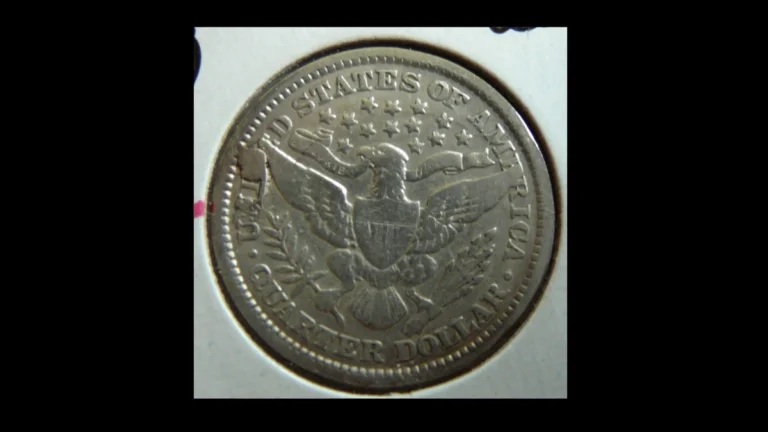
Find the mint area below the eagle and confirm that no mint letter is present before comparing with L-101. The listing does not cover every 1896 quarter that appears to have an irregular numeral.
Enlarge all four date digits together and use a verified L-101 photograph at a similar angle. The shape, position, and spacing of the remnants must agree, rather than simply looking doubled somewhere.
A repunched stroke rises above the surface, while a scratch usually cuts into it. A flat ledge beside a digit may reflect movement during striking and does not establish a date-punch variety.
Keep the full date in any photograph sent for attribution. The supplied evidence names L-101 but does not establish a precise diagnostic direction for each digit.
What It’s Worth
$40–$1,500 is the supplied estimate for confirmed Philadelphia examples ranging from worn to attractive unworn condition. Clear remnants and original surfaces make the variety easier to demonstrate.
Greysheet lists the 1896 Lawrence L-101 attribution. That listing should not be confused with a completed auction result.
A different date-punch variety, a 1908 Philadelphia quarter with a misplaced date in ANACS MS63, sold for $432 in March 2024. This is context from another year and another type of date-punch mistake, not an 1896 L-101 sale.
2. 1896 Quarter Shield Lines Inside the Ear: Clashed Dies Error
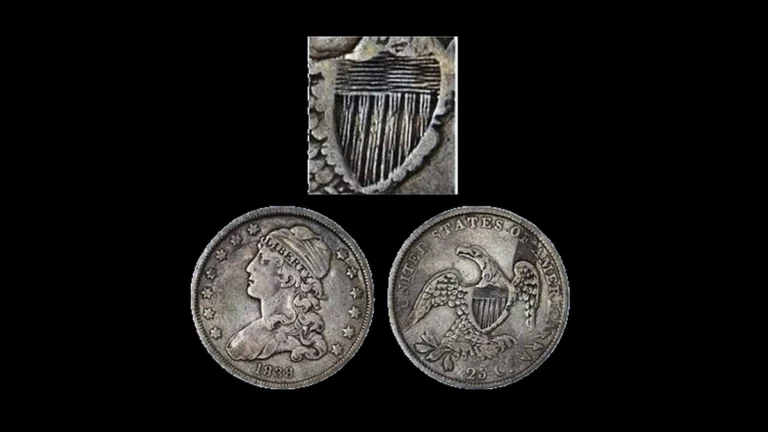
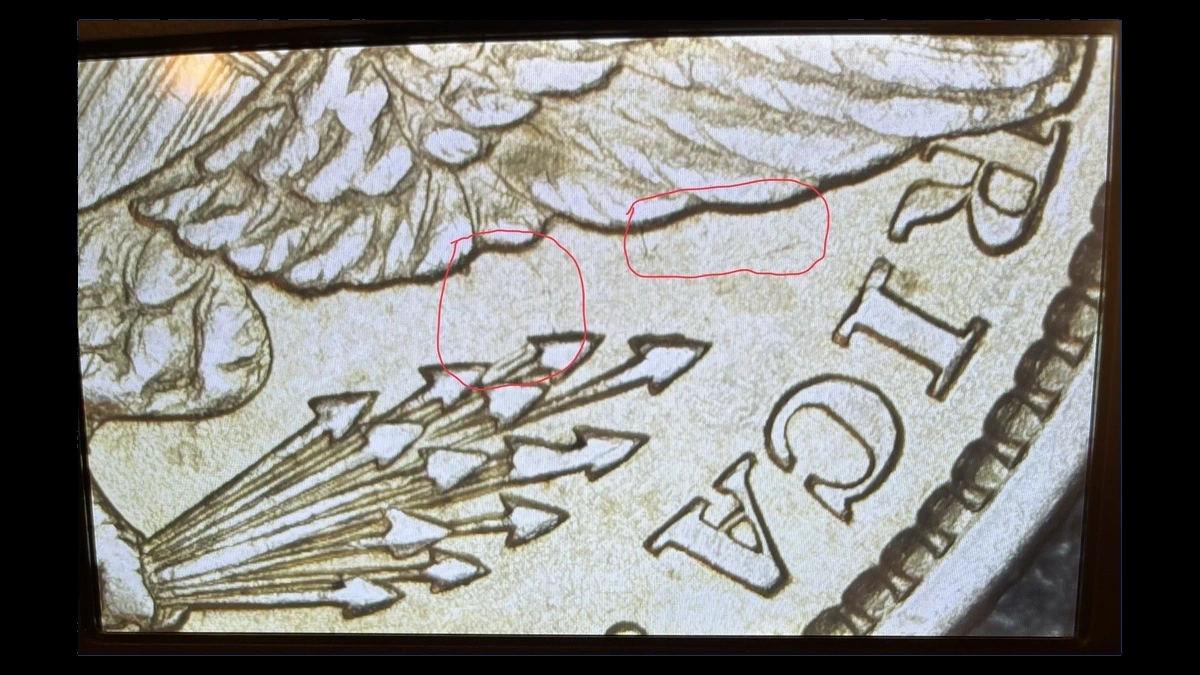
Several fine horizontal lines inside Liberty’s ear can reproduce detail from the eagle’s shield on the opposite face. Such traces occur when dies collide without a blank between them and retain small parts of each other’s designs.
The Barber Coin Collectors’ Society describes this ear feature on both known obverse dies used for 1896-S quarters. Differences in normal date and mintmark positions distinguish those dies but are not additional errors.
How to Identify
Confirm the S below the eagle, between QUARTER and DOLLAR, before relying on the ear detail. An added mintmark can imitate a scarce 1896-S, so compare its shape and placement with an authenticated coin from the appropriate die pair.
Look within the ear for the expected group of horizontal shield lines. Compare the pattern with a documented clash rather than treating every parallel mark as transferred design.
Cleaning scratches may run alongside each other, but they cut into the surface and can extend beyond the expected pattern. Natural ear contours also need to be separated from the added shield detail.
Missing ear lines alone do not prove that a coin is false. Wear and changes in the die’s condition can weaken or obscure them.
What It’s Worth
$1,000–$20,000 is the supplied estimate for genuine circulated examples of the discussed 1896-S issue with visible clash detail. Much of that value comes from the scarce date and mint, together with the coin’s condition.
An example in PCGS AU55 sold for $8,812.50 on January 9, 2013, with shield lines inside the ear noted in its catalog description. AU55 indicates light wear, and the result bought the entire coin rather than establishing an $8,812.50 clash premium.
3. 1896 Quarter A Later Ear and Wingtip Design: Reported Design Combination Error
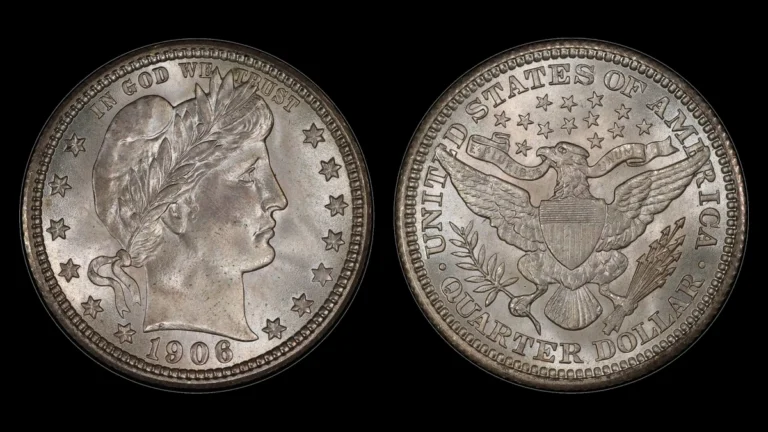
A separate report concerns a Philadelphia 1896 quarter said to combine a Type II front with a Type III back. Those names describe design versions, including distinct inner ear detail and a left wingtip extending past the E in UNITED.
The difficulty is chronological: these later designs are normally associated with 1900 onward. A collector’s report of the pairing does not by itself establish that the coin was genuinely made in 1896.
How to Identify
Examine the date for alteration before concentrating on the proposed design versions. A later quarter with changed numerals could imitate a design appearing four years early.
Compare the ear with labeled Type I and Type II references, checking for distinct inner detail. Poor lighting or wear can blur the difference.
On the reverse, include the left wingtip and E in UNITED in the same enlargement. The proposed Type III feature is a wingtip extending beyond the E, not merely covering part of its middle bar.
Both faces must belong to the same intact coin. Separate pictures without a secure connection cannot prove the combination, and an expert needs to evaluate the date as well as the designs.
What It’s Worth
$2,000–$25,000 is a provisional estimate only if an authentic 1896 example with the claimed later pairing is established. No completed sale for a confirmed example is supplied.
The Barber Coin Collectors’ Society variety survey records the collector’s report and the timing problem. Until the claim is demonstrated, a seller’s description should not replace the coin’s ordinary date-and-condition valuation.
4. 1896 Quarter A Gap in the Silver Disc: Reported Clipped Planchet Error
An incomplete metal blank can enter the press and receive the quarter design despite a missing edge section. A curved clip forms when the blanking punch overlaps an existing hole in the strip; incomplete blanks can also have straighter missing edges.
This remains a reported possibility for 1896 in the supplied material. The order of events must be established: the metal was missing before the strike, rather than cut away from a finished coin.
How to Identify
Look at the two ends of the gap and the nearby letters for signs of the design forming around an incomplete blank. Metal flowing toward the opening may weaken the rim or adjacent detail.
A weak rim directly opposite the gap can offer additional support, although it may not be obvious. Saw marks, scraped surfaces, or a sharp cut through finished letters point toward later removal instead.
A complete Barber quarter normally weighs 6.25 grams, so a substantial clip should reduce its weight. Wear and damage also remove silver, making a low reading insufficient on its own.
Photographs should show both ends of the gap and the opposite rim. A specialist can assess those areas together with the edge itself.
What It’s Worth
$50–$750 is the supplied estimate for a confirmed clip on an ordinary Philadelphia 1896 quarter. It excludes the separate rarity of the 1896-S and exceptional condition grades.
A larger original clip with the date intact may be more appealing than a small gap on a heavily worn coin. No actual 1896 clip sale is supplied to anchor this estimate.
5. 1896 Quarter An Empty Crescent Beside Missing Design: Reported Off-Center Strike Error
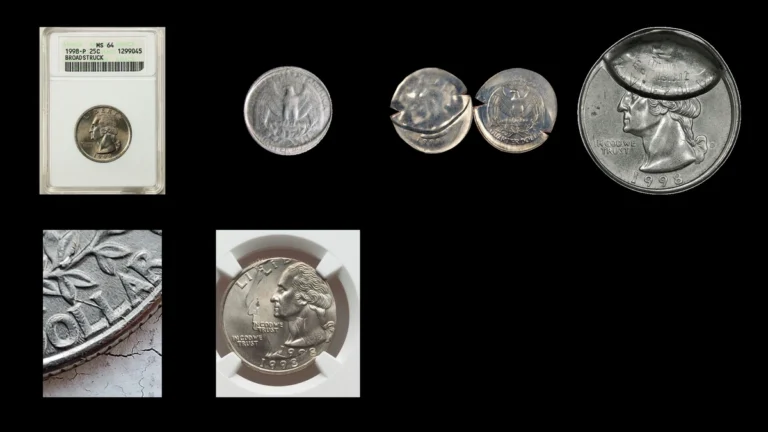
A blank positioned partly outside the striking area can receive only part of Liberty and the eagle, leaving an unstruck crescent. Unlike a clip, an off-center strike does not require part of the original blank to be missing.
The supplied material reports this possibility for 1896 without identifying a documented specimen’s mint or grade. A proposed example needs both faces examined before its issue can be established.
How to Identify
Check for corresponding displacement on the front and back, with design cut off at the edge. If only one face is shifted and the other remains centered, a misaligned die may be the better explanation.
A broad flattened border alone does not prove that the strike was off-center. Look for genuinely missing design and original unstruck space on an intact blank.
Record the date and mint area only to the extent they remain readable. An absent digit or mintmark should not be supplied from a guess about the missing design.
The normal diameter is about 24.3 millimeters. An unusual measurement needs to be interpreted alongside the shape and strike, since cutting or flattening after manufacture can also change the outline.
What It’s Worth
$300–$5,000 is the supplied estimate for a confirmed ordinary Philadelphia example. A bold error retaining its date offers a stronger comparison than a slight displacement on a worn piece, and the range excludes separate 1896-S rarity value.
A moderately worn 1900 Barber quarter struck 15% off-center sold for $920 in September 2002. It is a same-design comparison from another year, not evidence of a documented 1896 transaction.
Conclusion
An 1896 quarter’s mintmark and condition can explain much more of its price than a small unusual line. Establish those basics before comparing date remnants, shield traces in the ear, or a missing section of the outline.
Keep cataloged varieties separate from reported possibilities, particularly the proposed later design pairing. The $8,812.50 clash example illustrates the value of a complete scarce 1896-S coin, not a price that can be assigned to clash marks alone.