Rare 2005 Quarter Errors (List & Pictures)
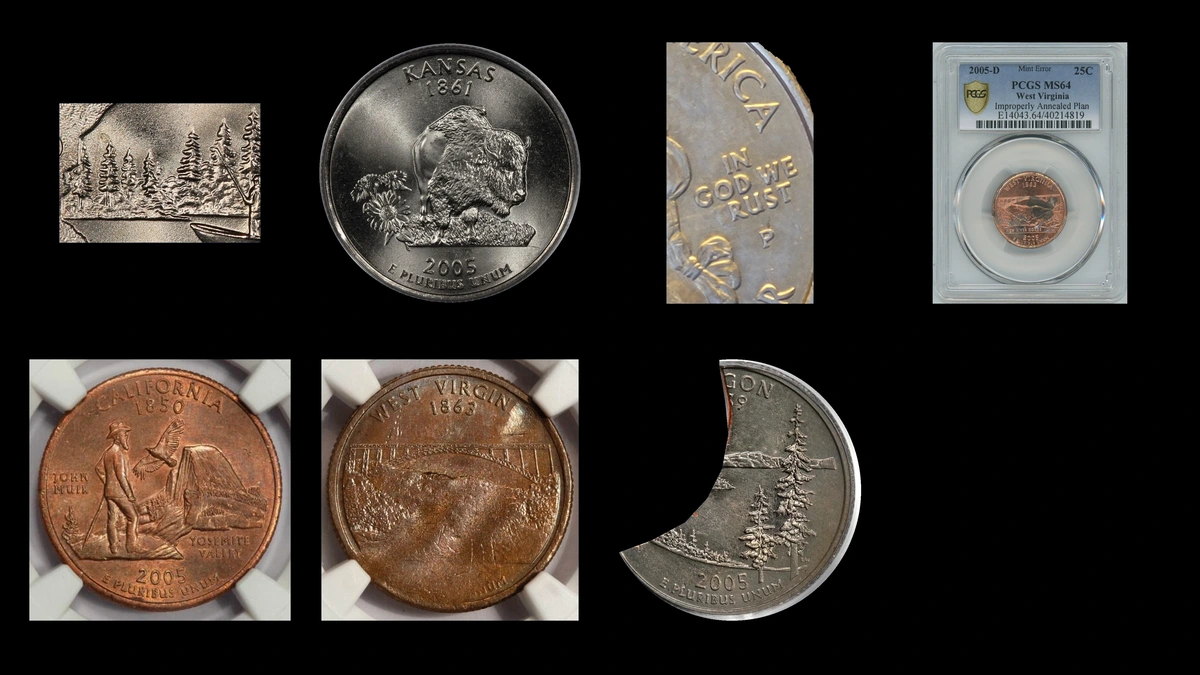
The state scene is the first sorting tool for 2005 quarter errors. Minnesota’s added tree detail, Kansas’s weak T, and California’s exposed copper face have different causes even when sellers group them together.
Estimated values span $2–$5,000. A California missing-layer quarter realized $1,265 on April 29, 2006; identify the state, mint, and finish before moving from small design changes to the coin’s metal and overall shape.
1. 2005 Quarter Added Branches beside the Tree Line: Doubled Dies Error
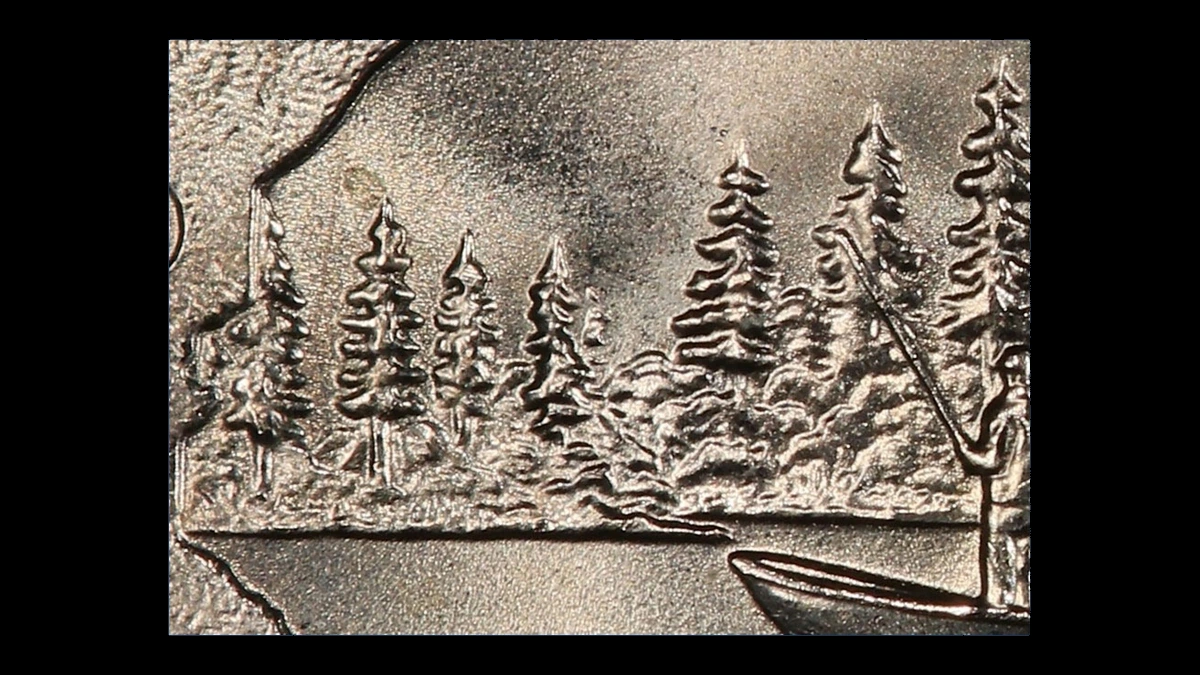
On established Philadelphia Minnesota circulation varieties, repeated branch detail appears among the trees to the right of the state outline. A die containing a duplicated design can make the extra branches resemble another small tree.
Other reports concern Minnesota front lettering or Washington’s portrait, and Denver Oregon lettering and lake detail. Those are separate patterns rather than additional diagnostics required on every extra-tree coin.
How to Identify
Confirm Minnesota, P, and the ordinary finish before matching an extra branch with a known variety photograph. Satin-finish collector coins need references appropriate to their own surfaces and attribution.
Front candidates require comparisons of LIBERTY, IN GOD WE TRUST, and the portrait. For Denver Oregon, examine OREGON, CRATER LAKE, and the affected lake features instead.
Inspect the height and shape of the repeated contours under angled light. A low flat mechanical shelf is different from a raised pattern already duplicated in the tool.
What It’s Worth
$10–$500 is estimated across correctly attributed doubled designs. PCGS lists an MS65 Minnesota Extra Tree at $30 in August 2021, illustrating a modest realized result for an unworn example.
The precise variety and visibility of its branch matter alongside preservation. A vague thick line should not inherit the upper range.
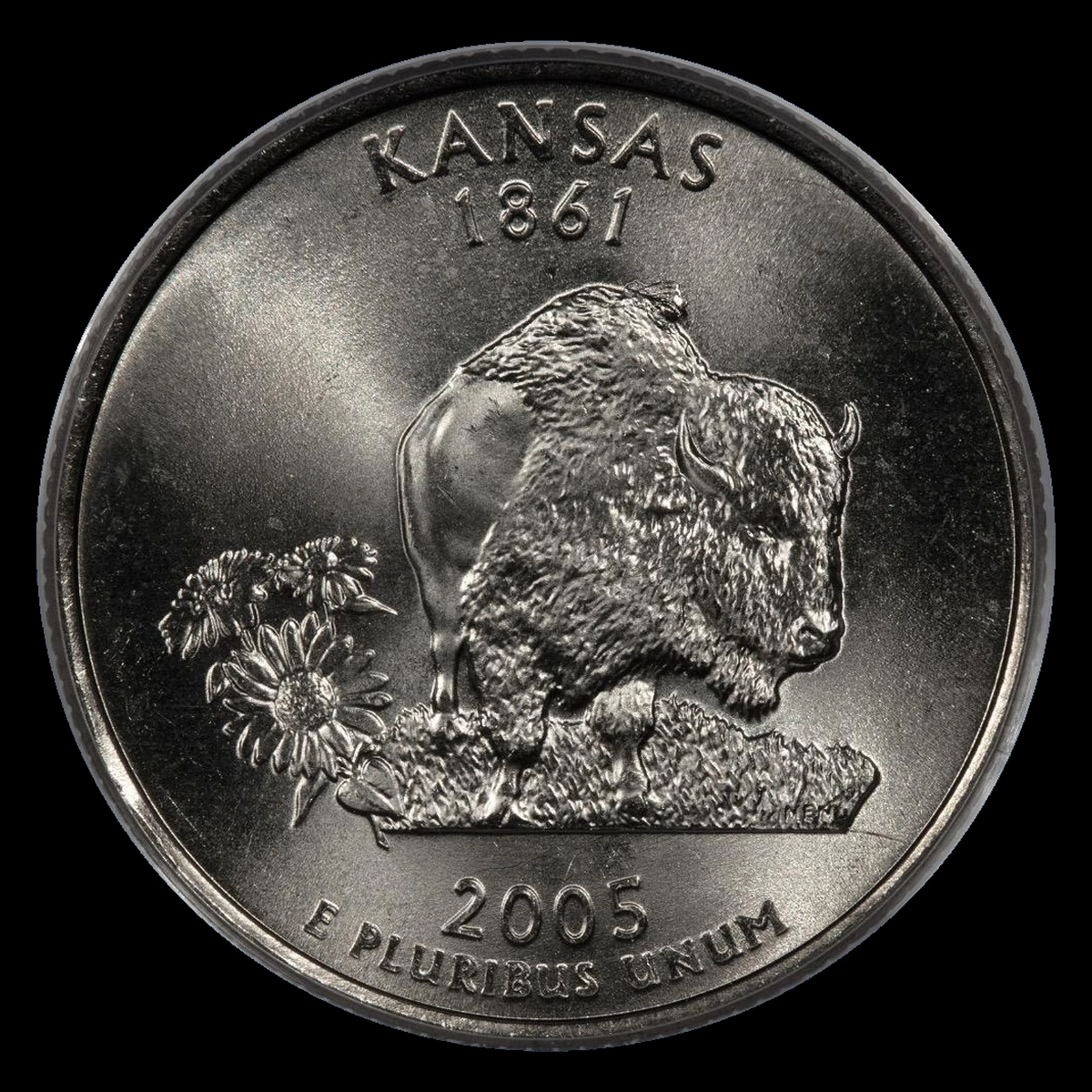
2. 2005 Quarter A Bison Bump or a Raised Rim Mass: Die Chips and Breaks Error
The Philadelphia Kansas report concerns extra metal between the bison’s shoulder and rear. A small piece missing from the die allowed metal to form an interior chip on the animal’s back.
Separate West Virginia reports place rim breaks near 4 or 8 o’clock. A San Francisco silver Proof instead has a fine reverse crack beginning near 4 o’clock and running into the frosted artwork.
How to Identify
Compare the Kansas bison with an ordinary coin to separate the added lump from intended fur. An interior chip is not a cud, the term for a larger break connected to the rim.
For West Virginia cuds, trace that physical connection rather than relying on proximity to the border. The thin Proof crack needs confirmed S silver-Proof identity and must not be equated with an ordinary rim mass at a similar clock position.
A raised ridge should not have the incised center characteristic of a scratch. Inspect the feature from opposite light directions to distinguish its relief.
What It’s Worth
$2–$300 spans the supplied estimates, including $2–$40 for small Kansas chips and $40–$300 for clear West Virginia rim breaks or the identified Proof crack. State, finish, and the actual size of the feature determine the useful comparison.
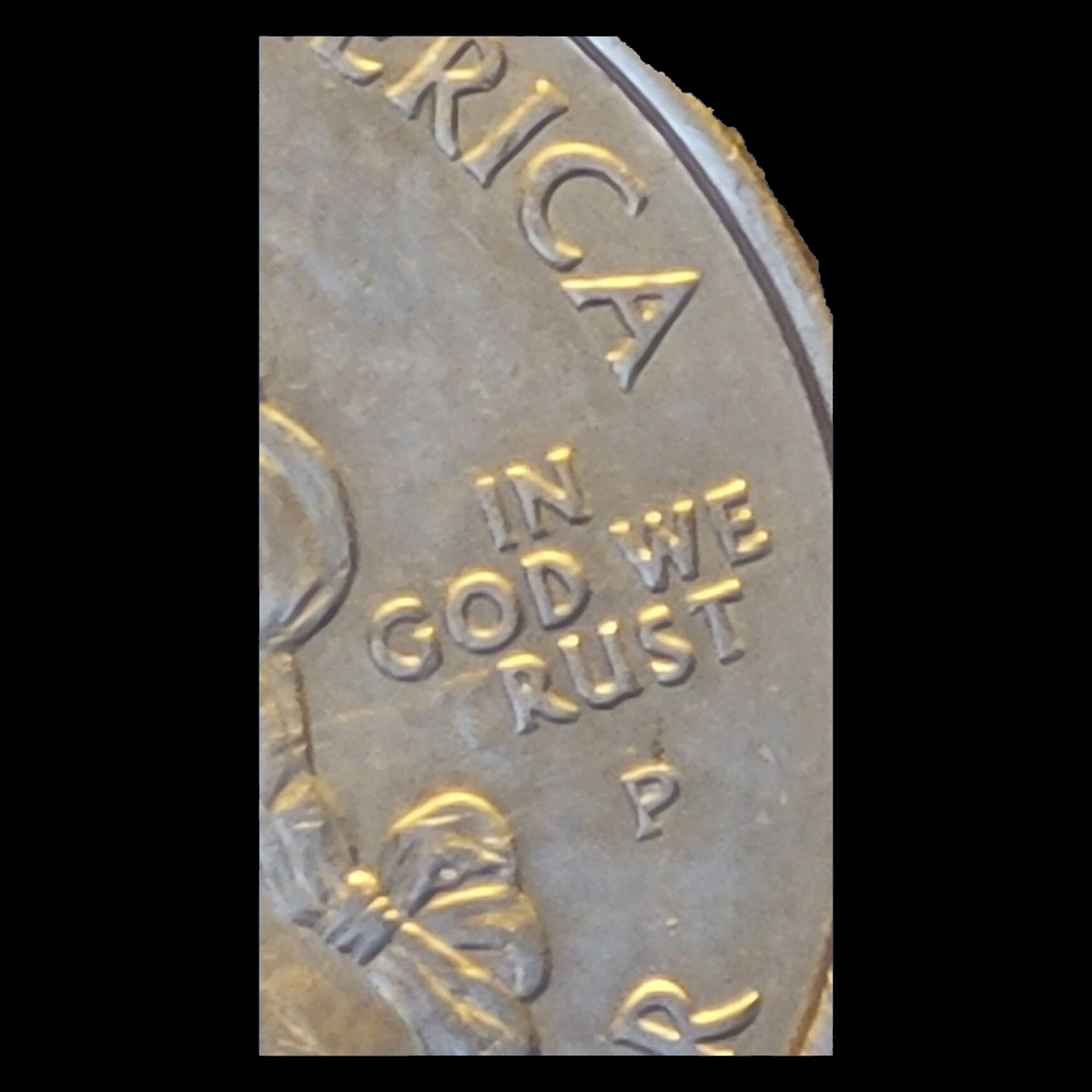
3. 2005 Quarter A Weak T or an Impressed Weave: Strike-Through Error
On Philadelphia Kansas quarters nicknamed “IN GOD WE RUST,” an obstruction can prevent the T in TRUST from forming fully. Compare the weak letter with its neighbors before accepting the nickname as an explanation.
A Philadelphia Oregon satin-finish report concerns a reverse interruption by unspecified material. A separate Philadelphia Minnesota report identifies a cloth impression, which should carry recognizable woven texture.
How to Identify
Check surrounding letters and high points for circulation wear when inspecting the Kansas T. Scraping away an already struck letter can also produce an incomplete word, but disturbs the finished surface.
For Oregon, establish the satin collector finish and examine the interruption’s boundary without inventing an obstructing object. For Minnesota, seek a repeating weave rather than crossed random scratches.
What It’s Worth
$3–$1,500 is the combined estimate: $3–$50 for a convincing blocked Kansas T and $50–$1,500 for stronger impressions such as clear cloth texture. A different-year cloth-struck 1776–1976 quarter brought $881.25 in January 2017.
That comparison does not price every missing letter as a fabric error. The actual texture, area, finish, and state must match the description.
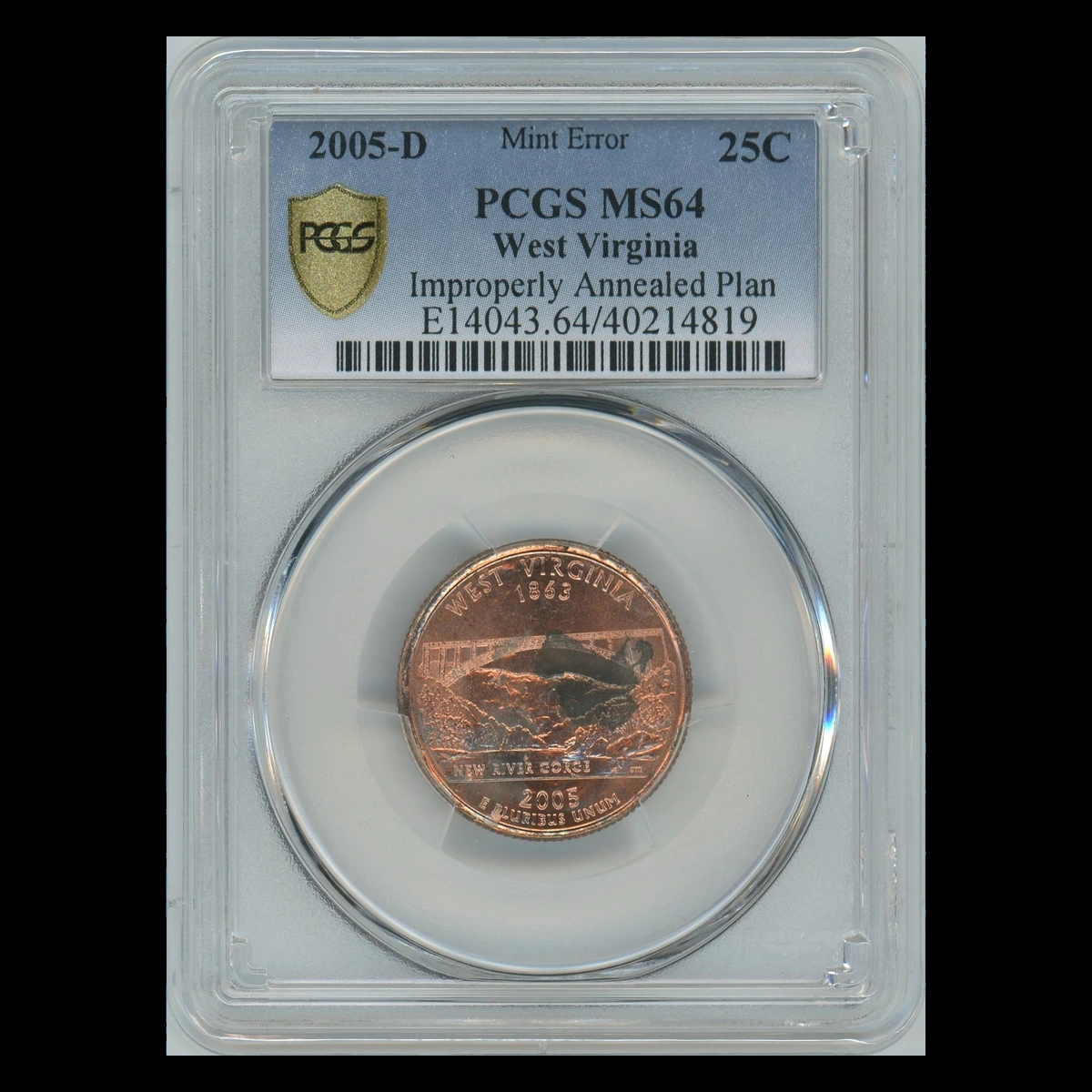
4. 2005 Quarter Pink or Red West Virginia Surfaces: Improper Annealing Error
A Denver West Virginia quarter in PCGS MS65 was documented with an unusual pink or red surface and an improper-annealing attribution. Annealing heats blanks before striking, and problems in that preparation can alter the outer metal’s appearance.
How to Identify
Confirm the bridge design, WEST VIRGINIA, and D, then photograph both faces in neutral light beside a normal clad quarter. Filters or colored reflections can exaggerate an ordinary tone.
Inspect for coatings, residue, pits, and rubbed-through color from later treatment. A specialist should assess the original struck texture because chemicals or post-mint heating can also change the surface.
What It’s Worth
$25–$300 is estimated for a professionally identified West Virginia annealing error. A 2009-P Native American dollar with an annealing error sold for $61 in November 2011, a different denomination and year offered only as broad context.
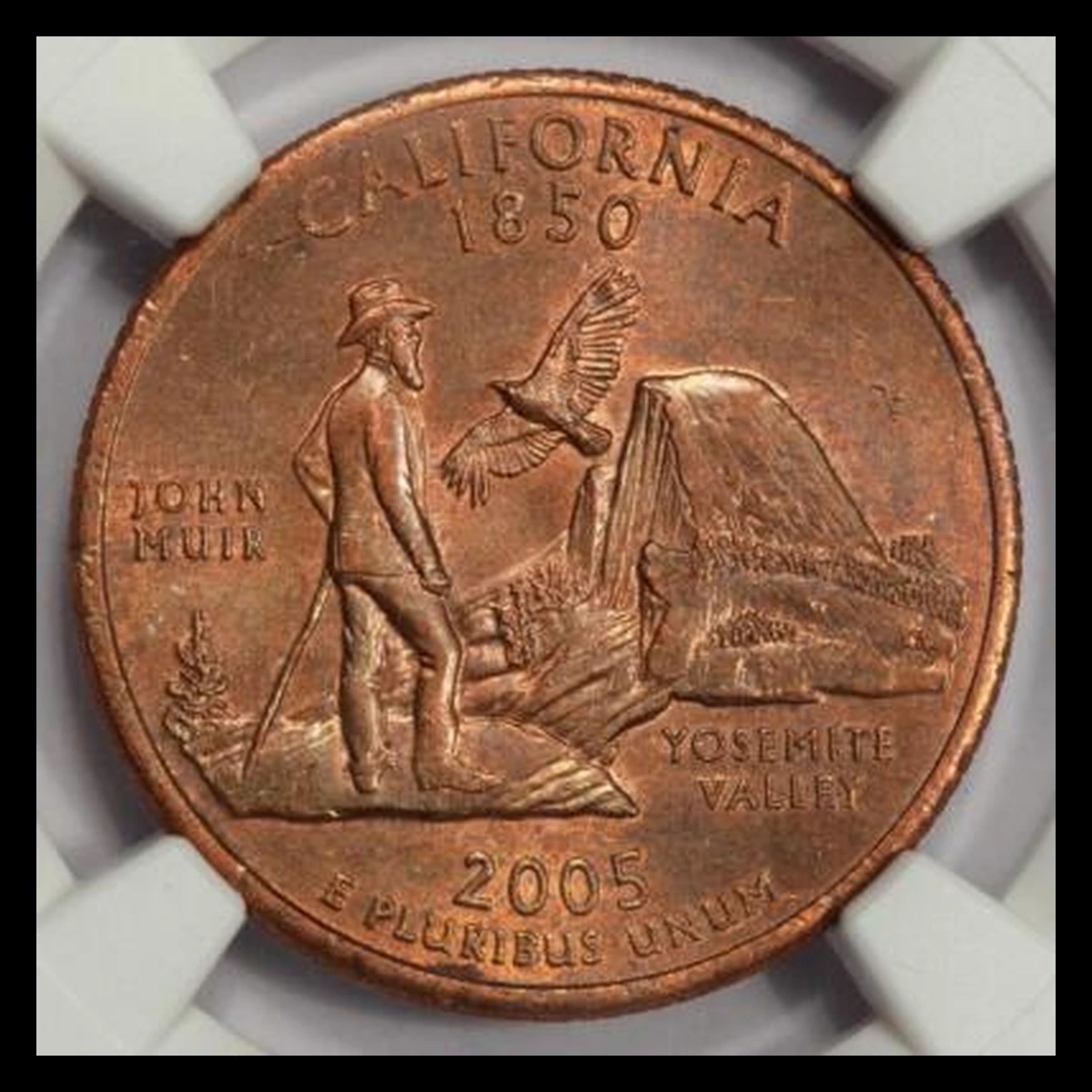
5. 2005 Quarter Copper in Place of a Pale Face: Missing Clad Layer Error
The documented Philadelphia California example lacks its state-side layer and weighs 4.7 grams. Other California reports concern a separate Philadelphia front loss and partial loss on a Denver coin.
Philadelphia Minnesota examples include either face, Oregon has a front-layer report, and a Philadelphia West Virginia coin retains only a small part of its reverse layer. The different faces and amounts of loss belong to separate specimens.
How to Identify
Inspect the edge beside the exposed copper face for a missing outer sheet, then examine the surviving struck design. Brown staining, coatings, sanding, or corrosion need different explanations.
Normal clad references are 5.67 grams and 24.26 millimeters across. Measurements of loose coins should support the visible metal loss, while sealed coins remain in their holders.
On the West Virginia example, the remaining pale patch is part of the specific diagnostic view. Confirm composition first, because a normal silver Proof has no copper core beneath clad sheets.
What It’s Worth
$50–$2,000 is estimated for authenticated partial or complete layer loss. The California reverse-layer example in NGC MS67 brought $1,265 on April 29, 2006.
That high unworn grade and actual missing face belong to the 4.7-gram specimen. The separate front-layer and Denver examples need their own comparisons.
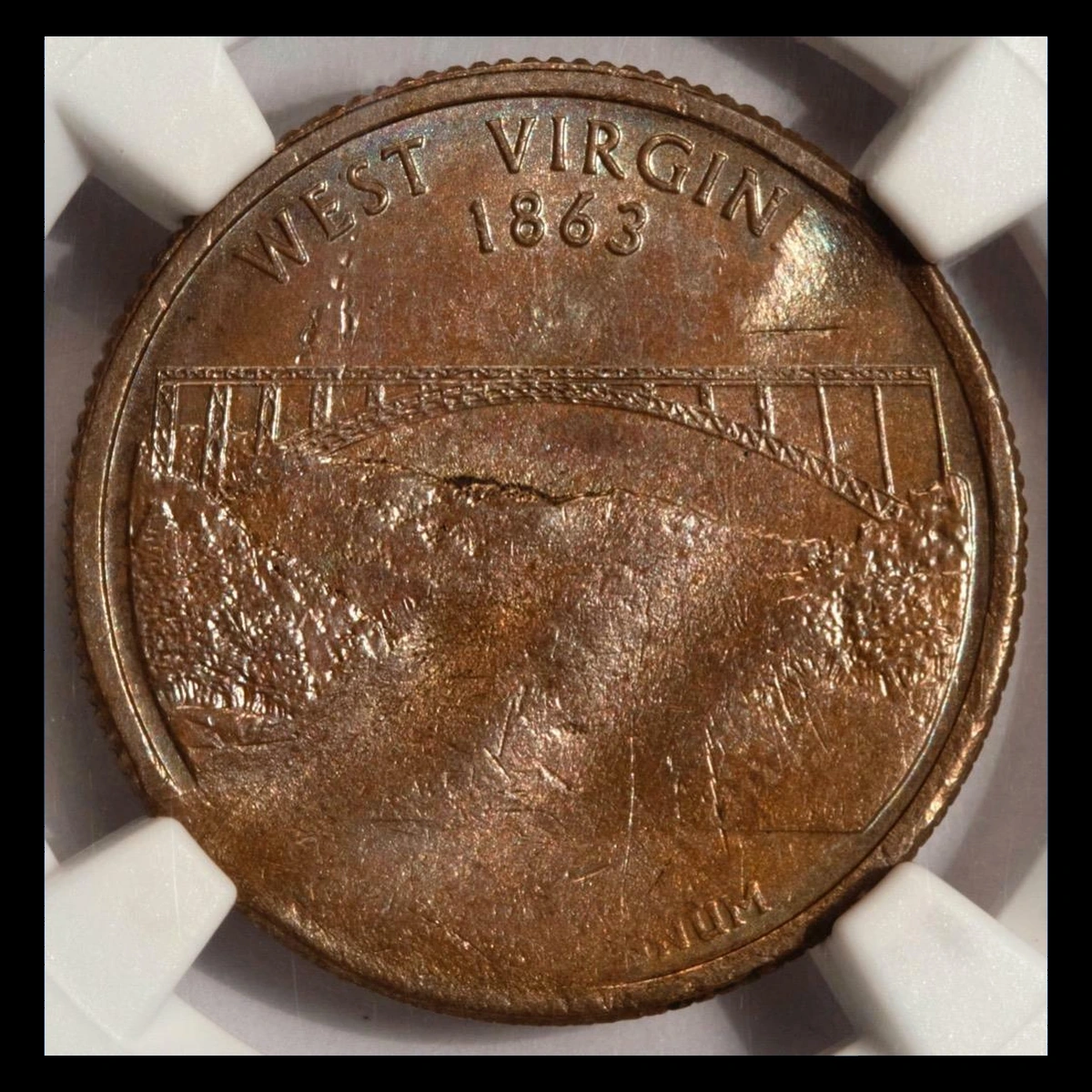
6. 2005 Quarter A Light West Virginia Coin with a Blank Defect: Defective Planchet Error
An NGC MS64 West Virginia quarter was described as a defective planchet and recorded at 4.2 grams. That low weight describes the coin but does not specify exactly how its blank became defective.
How to Identify
Examine edge thickness, rough areas, splits, and any remaining pale outer metal to see what explains the weight. Missing metal, a thin blank, and a wrong-denomination blank are different possibilities requiring physical evidence.
Check for filing and chemical pitting that could have removed material after striking. Do not assign the documented weight or an unsupported cause to another light West Virginia coin.
What It’s Worth
$100–$1,000 is estimated for a verified defect with a comparably clear physical abnormality. If missing cladding explains the same specimen, value that whole appearance once instead of adding a second range.
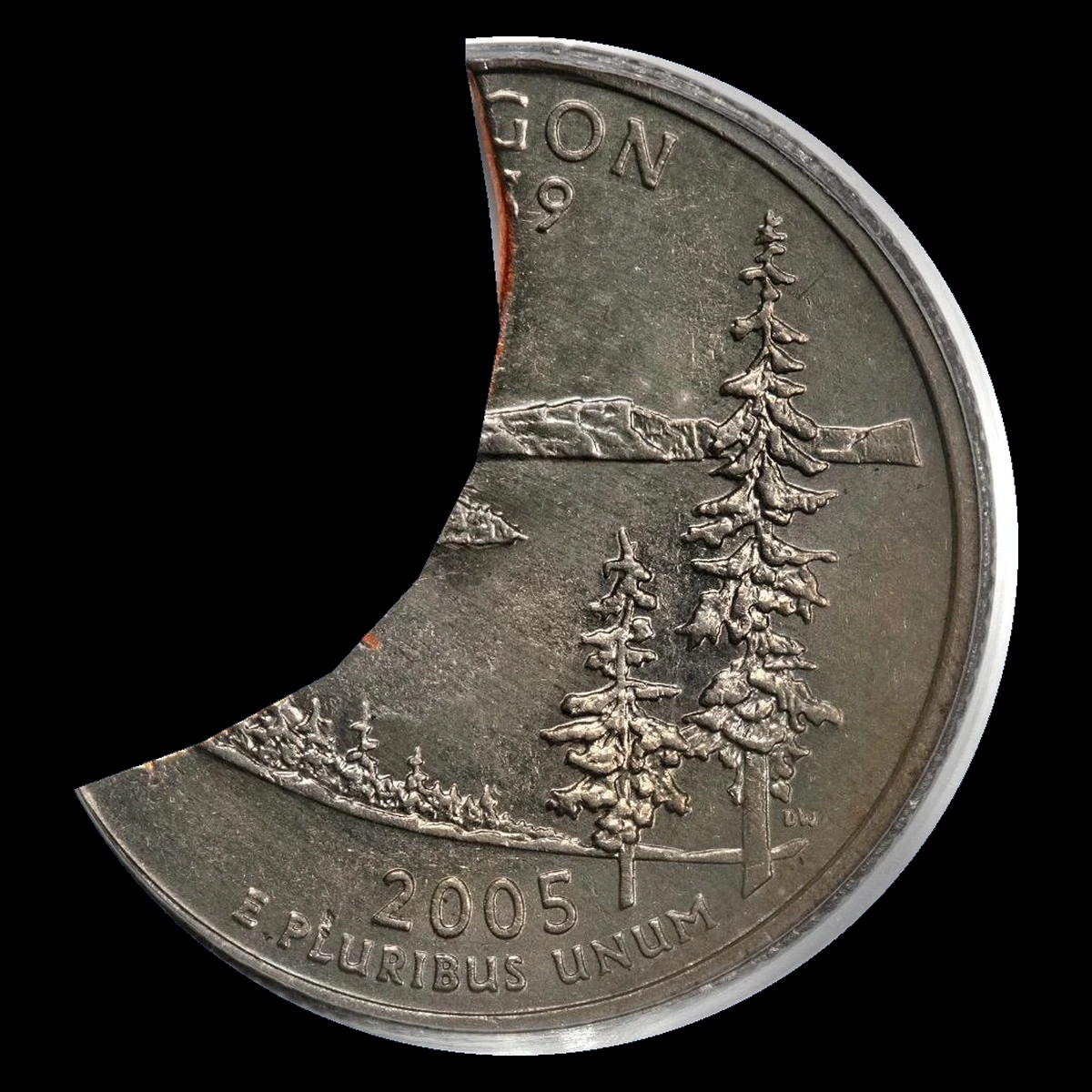
7. 2005 Quarter Curved Gaps or an Oval Outline: Clipped Planchet Error
Philadelphia Oregon reports include a small clip near 9 o’clock, a separate double clip, and another triple-clipped specimen. Kansas reports include a 7% Philadelphia clip, another double clip, and a Denver elliptical clip with an oval outline.
These blanks lacked metal before they were struck. The number and shape of openings vary, so the surrounding rim must be examined on each coin.
How to Identify
Start with the whole outline, particularly on an oval Kansas candidate. Then inspect the endpoints of each opening for original rim formation and naturally weakened nearby detail.
Opposite-rim weakness can occur without being equally visible on all clips. Fresh burrs, tool scratches, or completed lettering sliced afterward suggest later cutting instead.
What It’s Worth
$25–$1,000 covers supplied estimates for small, multiple, and elliptical clips. A different-year 1980-P corner clip in NGC MS65 realized $204 in June 2023.
Compare the complete shape and condition. Several small openings do not automatically justify adding several single-clip prices.
8. 2005 Quarter A Complete Scene inside a Wider Outline: Broadstrike Error
Denver California and Philadelphia Oregon examples include unevenly expanded broadstrikes. A separate West Virginia broadstrike report leaves the mint unspecified.
The collar, a retaining ring around the blank, failed to contain the spreading metal properly. A picture can sit off to one side of the expanded coin while still remaining entirely on it.
How to Identify
Follow all outer lettering and artwork on both faces, whether the reverse shows Muir and the condor, Crater Lake, or the bridge. Complete intended design is essential to this comparison.
Measure an accessible loose coin in several directions and inspect the high points for hammering or crushing. A broad outline alone is insufficient when later flattening could explain it.
What It’s Worth
$75–$600 is estimated for authenticated examples of these states. An older 1984-P broadstrike in PCGS MS65 sold for $169 in December 2025, a comparison rather than a transaction for a 2005 piece.
9. 2005 Quarter Reverse Letters Fall beyond the Metal: Off-Center Strike Error
A Philadelphia Oregon example was described as about 5% off center, with some reverse letters missing. The displaced blank could not receive the entire intended design.
The Philadelphia West Virginia report uses both off-center and broadstrike wording. Its actual design coverage must resolve which description applies.
How to Identify
Locate the missing Oregon letters while keeping the whole lake scene visible, then compare Washington’s side. Both faces should fit the same displaced piece of metal.
For West Virginia, establish whether any intended design actually misses the blank. A full picture within expanded metal fits broadstriking, even if the margin is uneven.
Inspect the unused area for grinding or remains of flattened lettering. A shift confined to one face also needs a different die-alignment explanation.
What It’s Worth
$50–$2,000 is estimated for genuine dated off-center examples. A 1988-P quarter struck 30% off center realized $109 in January 2022, showing that displacement alone does not guarantee a high price.
The West Virginia report belongs in this category only if the actual coin loses design beyond its outline. It should not be priced twice under conflicting labels.
10. 2005 Quarter A Straight Clip plus a Separate Strike Problem: Combination Error
A Denver California quarter in ANACS MS64 combines a 10% straight clip with a strike about 5% off center. A different Philadelphia California in NGC MS63 was broadstruck on a straight-clipped blank.
In each case, incomplete blank preparation came before the striking problem. The two cataloged coins have different combinations, mints, and grades.
How to Identify
Find the straight missing section first, then assess the remaining design independently. A clip alone does not establish that the blank was also misplaced during striking.
On the Denver coin, look for displacement and unstruck metal separate from the clipped edge. On the Philadelphia coin, compare its expanded outline and broadstruck design with the proper specimen photographs.
Inspect all views for trimming burrs, filing, or crushed lettering that could mimic a combination. Both original effects must belong to the same piece.
What It’s Worth
$200–$2,000 is estimated for comparable authenticated California combinations. This is one whole-coin assessment, not the sum of the highest separate clip and striking-error prices.
11. 2005 Quarter California Stands Diagonally after a Flip: Rotated Dies Error
A Denver California report describes about 45 degrees of rotation between the faces. A die turned from its normal orientation, changing the angle of the design without necessarily moving it toward a rim.
How to Identify
Hold Washington upright and flip the coin top to bottom without twisting sideways. The reverse normally finishes upright; repeat beside an ordinary quarter to confirm a consistent diagonal result.
Record the reverse’s angle against a straight reference while preserving the same physical orientation. Independently adjusted photographs or a left-to-right flip can create a misleading impression.
What It’s Worth
$50–$500 is estimated for an authenticated rotation of roughly this size. Condition and a repeatable measured relationship matter more than the angle of a photograph or holder.
12. 2005 Quarter A Second Shifted Picture: Minnesota Double Strike Error
The year listing reports a Philadelphia Minnesota double strike with an MS65 grade, but does not establish the exact displacement. Movement between blows can leave another portrait and shifted lettering across the first image.
How to Identify
Connect multiple repeated landmarks into a coherent second picture on the front, then assess related Minnesota details on the reverse. One extra branch does not demonstrate an additional strike.
Separate the major displaced image from small mechanical shelves, scratches, or contact marks. Normal aligned multiple blows during Proof manufacture do not produce this shifted second picture.
What It’s Worth
$500–$4,000 is estimated for an authenticated Minnesota double strike with recognizable displacement. The reported grade describes an unworn example but supplies neither an exact movement nor a realized transaction.
13. 2005 Quarter A Cup with Stretched Design: Kansas Die Cap Error
A Denver Kansas die cap in MS65 is reported in the year listing. A struck coin stayed attached to a die, and further contact with incoming blanks spread its metal around the tool.
The resulting wall and stretched design can form a cup. Later bending can imitate a bowl shape, so the outline alone cannot establish the minting sequence.
How to Identify
Examine the wall from the side and follow the surviving design into its stretched portions. Check inside the cup for sharp folds, plier marks, and crushed details from later forming.
Find sufficient Kansas design, date, and D to support the identity. A specialist should assess both struck surfaces and the wall together; a mirror-image impression is not required on every cap.
What It’s Worth
$500–$5,000 is estimated for an authenticated 2005-D Kansas die cap. Depth, readable identity, and preservation affect the comparison, but increasing depth alone does not establish either authenticity or value.
Conclusion
The same year contains several state designs, finishes, and distinct error mechanisms. A tree branch, an interrupted word, exposed copper, and an enlarged outline cannot share one diagnostic test.
Match the precise specimen before using its grade, weight, percentage, or sale. Where a report leaves the mechanism unresolved, as with West Virginia’s off-center wording, the surviving physical design must decide the category rather than a seller’s label.