Rare 1818 Quarter Errors (List & Pictures)
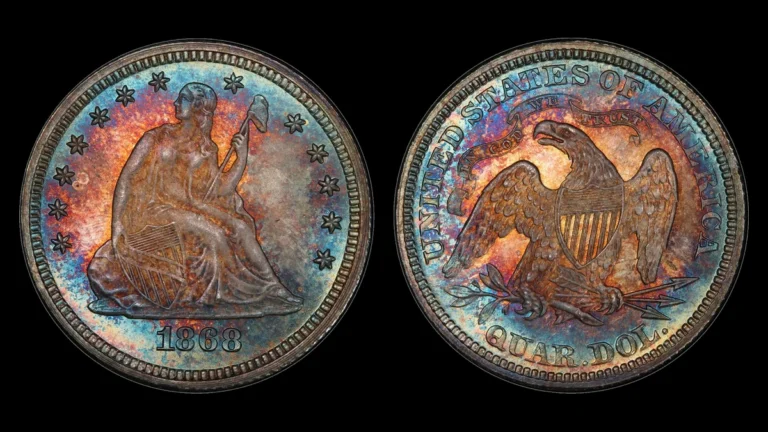
The final date digit is a useful first stop for 1818 quarter errors, but the older 5 beneath an 8 does not explain every extra line on the coin. Other features record cracked tools, clashing dies, flawed blanks, or another strike.
Estimated whole-coin values span $80–$185,000. An exceptional overdate realized $182,125 in August 2014; inspect the date and trace each physical feature before comparing an ordinary worn quarter with that unusually well-preserved specimen.
1. 1818 Quarter An Older Numeral beneath the Last 8: 1818/5 Overdate Error
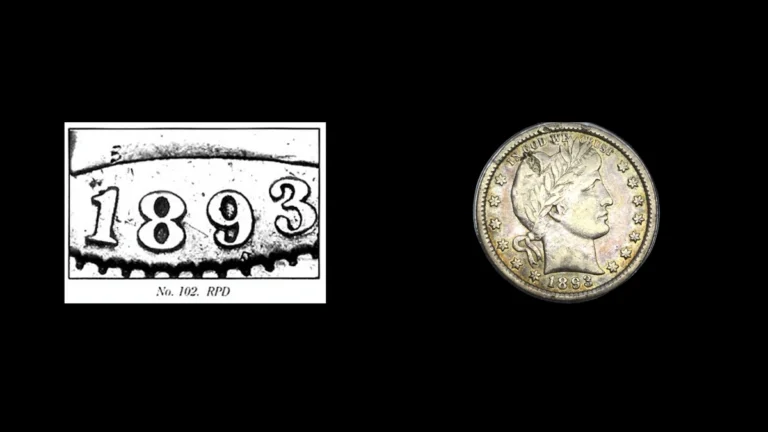
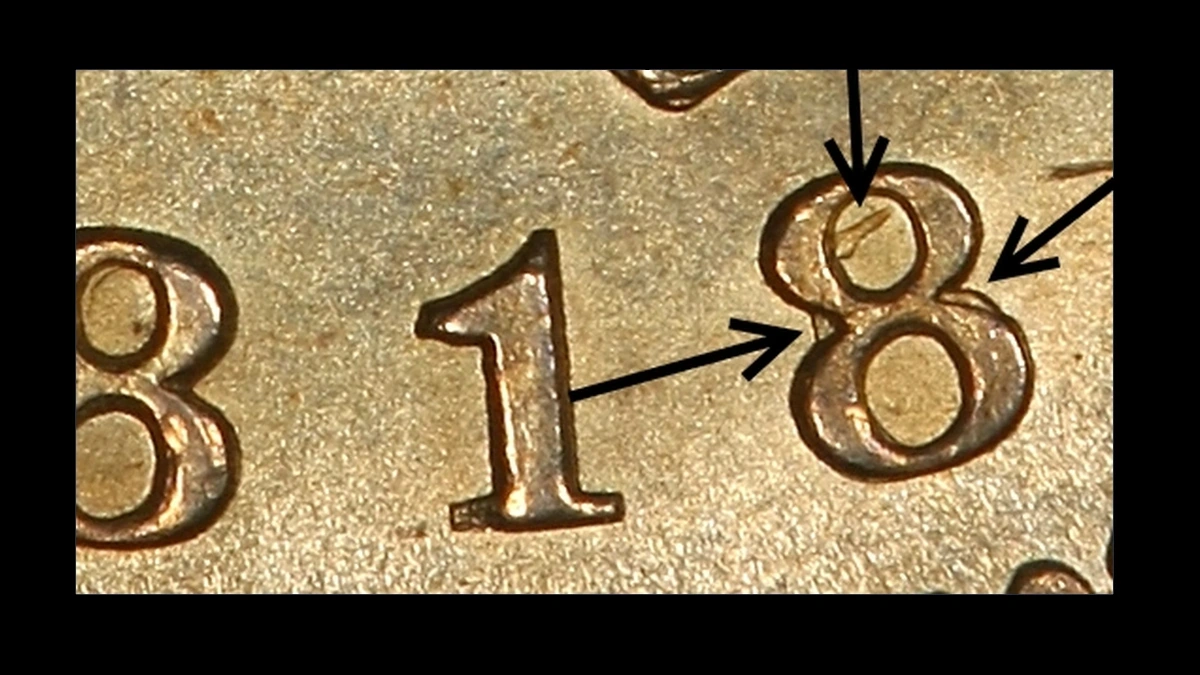
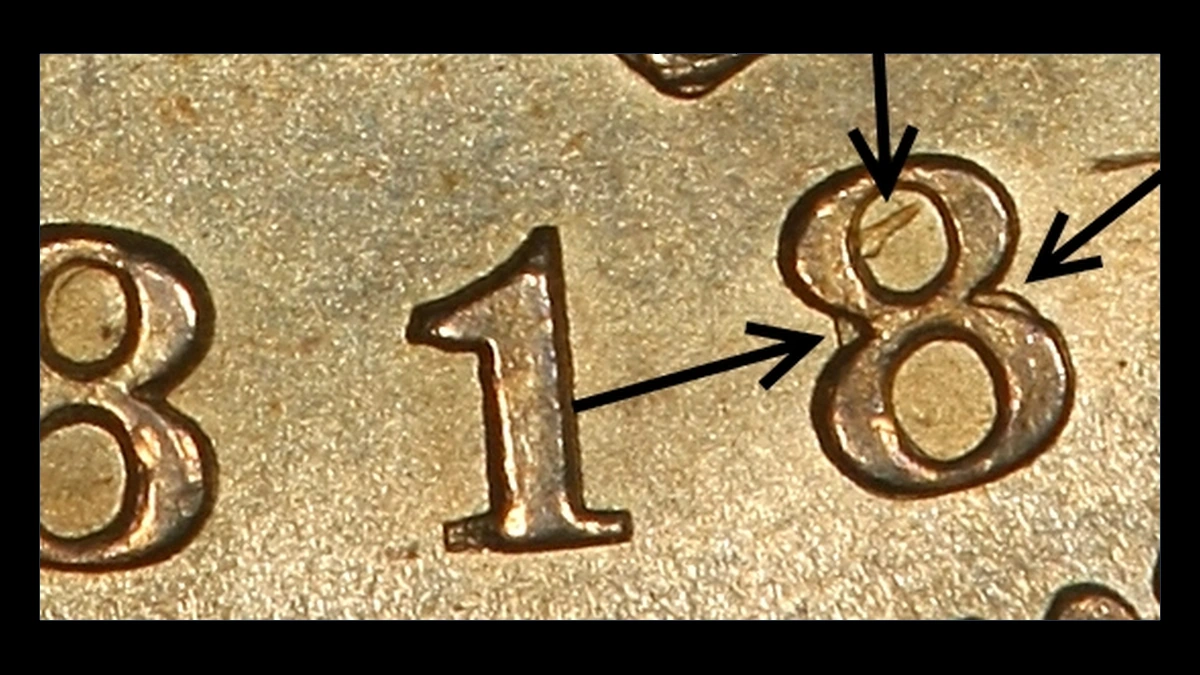
Remnants of 5 appear inside and beside the date’s final 8 on the 1818/5 variety. An unused die dated 1815 was altered to produce 1818 quarters, leaving portions of the original numeral in the tool.
The coin received that combined image during striking. It did not need an earlier strike bearing the complete 1815 date.
How to Identify
Read all four date digits and retain both loops of the final 8 in the close-up. Examine the upper interior and the adjacent extra outline for remnants matching an authenticated 1818/5.
The older digit can be strong or faint because later work on the die reduced its traces. Compare examples at similar wear levels rather than expecting every coin to show the clearest known 5.
Check suspicious strokes for cuts or added lines inconsistent with the surrounding silver. Do not confuse this quarter variety with the 1818/7 overdate on half dollars.
What It’s Worth
$100–$185,000 is the broad supplied estimate for the overdate, with preservation explaining much of the spread. An NGC MS67-star example sold for $182,125 in August 2014.
An NGC VF20 example instead brought $1,265 in January 2009. Its moderate circulation wear puts it in a very different comparison from the exceptionally preserved unworn record coin.
2. 1818 Quarter Ridges Joining Stars and Arrows: Die Cracks Error
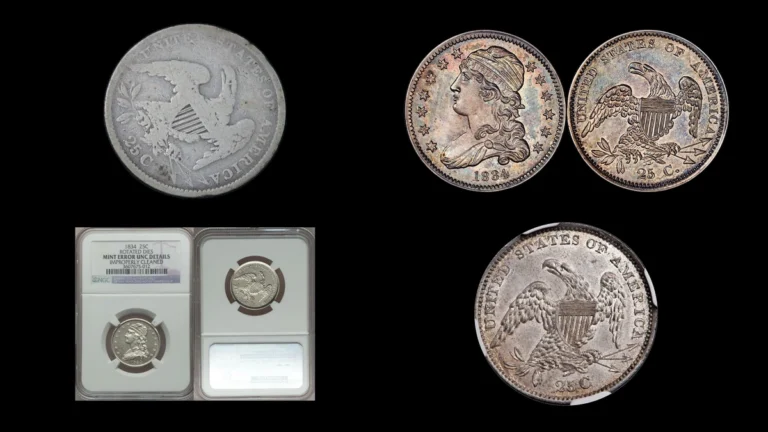
Reported front cracks cross the space above the cap and connect stars on the right side, with a branch that can reach the rim. A later reverse line runs from the lower-right edge through the arrow area.
Silver entered openings in the dies and reproduced them as raised lines. Different lengths and strengths can reflect different stages in the tools’ deterioration.
How to Identify
Count the stars from the lower left around Liberty to locate stars 8, 9, and 10. Trace the added ridge through those points and examine its connection toward the right rim.
On the reverse, follow the lower-right line through the lowest arrowhead and across the upper arrow shafts toward the eagle. Separate the additional ridge from an ordinary shaft belonging to the design.
Side lighting should reveal raised metal rather than an incised scratch. A shorter matching line may record an earlier crack stage, not erased detail.
What It’s Worth
$80–$5,000 is estimated for circulated through modest unworn examples with these cracks. Grade and surface appeal remain major contributors, while a bold connected ridge can interest collectors studying die stages.
3. 1818 Quarter Faint Repeated Shapes under the Ribbon: Die Clash Error
Extra outlines beneath the E PLURIBUS UNUM ribbon are reported on particular 1818 die combinations. Contact between the dies without a blank transferred unwanted design traces into the tools.
Two or three sets can result from repeated die contact. Their number does not count the strikes received by the individual quarter.
How to Identify
Locate the ribbon above the eagle and compare the area beneath it with an ordinary reverse. Identify the intended ribbon and feather lines before marking additional shapes on a photograph.
Compare those shapes with Liberty’s portrait at the same image scale. Connected transferred contours should explain the marks more convincingly than unrelated scratches.
Large displaced border or design impressions require a separate examination for repeated striking. Keep any annotations on the photograph rather than rubbing or tracing the silver.
What It’s Worth
$100–$5,000 is estimated for recognizable clashes from worn through modest unworn examples. Multiple clear traces can attract interest, but distracting damage or corrosion can obscure their usefulness.
4. 1818 Quarter A Narrow Separation above the Branch: Lamination Error
A PCGS MS64 1818/5 has a narrow alloy separation just above the reverse branch. A weakness within the silver allowed a thin portion of metal to separate rather than forming a solid raised die-crack line.
A separate worn ANACS 1818 coin was also listed with lamination. Its reported defect must not inherit the MS64 specimen’s exact location.
How to Identify
For the documented overdate, locate the branch in a full reverse image before enlarging the separation above it. Use angled light to identify an opening or the edge of a thin lifted piece.
Leave any attached metal in place and examine how the design meets the boundary. Tool cuts and corrosion can disturb that boundary in ways different from separation inside the alloy.
What It’s Worth
$100–$12,000 is estimated for worn through comparable unworn examples with small laminations. The MS64 overdate with the branch-area separation sold for $9,000 in February 2022.
That result includes the overdate, attractive color, and unworn preservation. It does not mean the small flaw independently adds $9,000 or that a larger unstable flap deserves a higher price.
5. 1818 Quarter A Small Gap at the Lower Border: Clipped Planchet Error
An early-quarter reference records a mint clip near 6 o’clock on one 1818 example. The blank was already incomplete when the design was struck onto it.
The recorded location does not establish one notch shape for every candidate. The opening itself and the neighboring struck border must show how the missing section arose.
How to Identify
Examine the bottom-edge gap and both points where it meets the rim. Naturally weakened detail near an original opening differs from complete border teeth sliced off afterward.
Look for filing, fresh cuts, or squeezed metal inside the notch. Opposite-rim weakness may help but need not be equally visible on all genuine clips.
The original weight standard was 6.74 grams, useful as a reference for a loose example. Wear and later cutting also reduce weight, so a low reading cannot establish the clip by itself.
What It’s Worth
$150–$7,500 is estimated for a genuine small clip across heavily worn through attractive sharper coins. Readable date detail and an undisturbed notch are more useful than size alone.
6. 1818 Quarter Unequal Design Coverage on Both Faces: Off-Center Strike Error
An NGC MS65 1818/5 was certified as struck 5% off center and pictured by Mint Error News. The blank’s position affected how the designs fit within the outline, separately from the altered date in the front die.
An older catalog described another off-center 1818 with clash marks and a crack through the eagle’s beak. Those accounts should not automatically be treated as the same specimen.
How to Identify
Compare the outer design and unused metal on both faces with the position of the whole blank. A shift restricted to one face may instead reflect movement of an individual die.
The certified example supplies a 5% description but no written direction of displacement. Read that direction from the actual photographs rather than supplying one from the percentage.
Inspect the final date digit separately to establish the overdate. An older 5 beneath the 8 does not prove anything about the blank’s centering.
What It’s Worth
$500–$40,000 is estimated for authentic off-center 1818 quarters across worn through attractive unworn examples. The MS65 overdate represents strong preservation within that wide group.
A 1978 dealer catalog asked $3,200 for an unworn off-center coin with clash marks and a beak-area crack. That historical offer is not a realized auction result.
7. 1818 Quarter Old Border Teeth across the Eagle: Flip-Over Double Strike Error
A collector-described 1818 off-center flip-over double strike shows displaced border impressions across the eagle. The quarter reportedly turned over between blows, placing parts of opposite-face designs on each side.
The owner also noted a strike remnant near the front date and a possible date digit near the reverse rim. Separate crack and clash features occur on that worn coin as well.
How to Identify
Follow the spacing and curve of the old border teeth across the eagle. Their arrangement should fit a displaced struck border rather than unrelated impact marks.
Bring in the front-date remnant to test the proposed flip between strikes. The two faces must explain how front and reverse design elements changed sides.
A possible reverse date digit remains only a partial clue, not a complete readable date. A specialist should assess the overlapping impressions while separating faint clashes and excluding later squeezing or added marks.
What It’s Worth
$1,000–$20,000 is estimated for an authenticated 1818 flip-over double strike. The collector account supplies no sale amount, and its heavily worn piece should not be equated with a much sharper hypothetical example.
Conclusion
The date identifies an altered tool, while a flap or clipped outline concerns the blank itself. Border impressions that change sides require a different explanation from faint clash traces beneath the ribbon.
Several of these features can coexist on one 1818 quarter. Keep each diagnostic tied to the correct specimen, then compare the complete coin and its preservation once instead of stacking the highest estimates for every visible feature.