Rare 2009 Quarter Errors (List & Pictures)
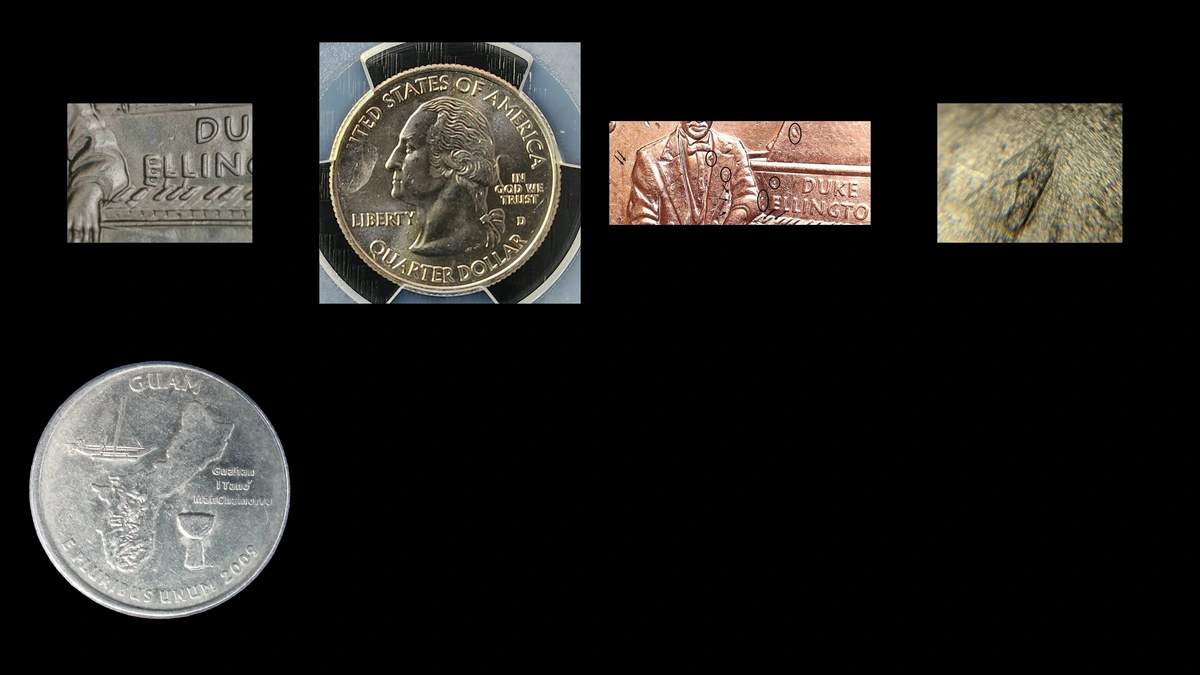
The strongest supplied sale among 2009 quarter errors is $3,099 for a Denver District of Columbia doubled-reverse quarter in August 2023. Its repeated piano details belong to a specific variety, not every quarter with thick lettering.
Estimated values across the groups below span $2–$4,000. Identify the DC or territory scene and mint before examining the design, surface, and outline.
| Inspection clue | Possible group | Estimated value |
|---|---|---|
| Repeated piano or other design | Doubled die | $10–$4,000 |
| Extra raised bump | Die chip | $2–$150 |
| Soft or blocked detail | Weak strike; strike-through | $5–$1,000 across these groups |
| Parallel lines or peeling metal | Reported feeder marks; lamination | $3–$200 |
| One face shifted | Misaligned die | $5–$100 |
| Expanded or incomplete outline | Broadstrike; clip; off-center strike | $20–$1,500 |
| DC design on smaller blank | Reported dime planchet | $500–$2,500 |
1. 2009 Quarter Repeated Piano, Portrait, or Palm Details: Doubled Dies Error
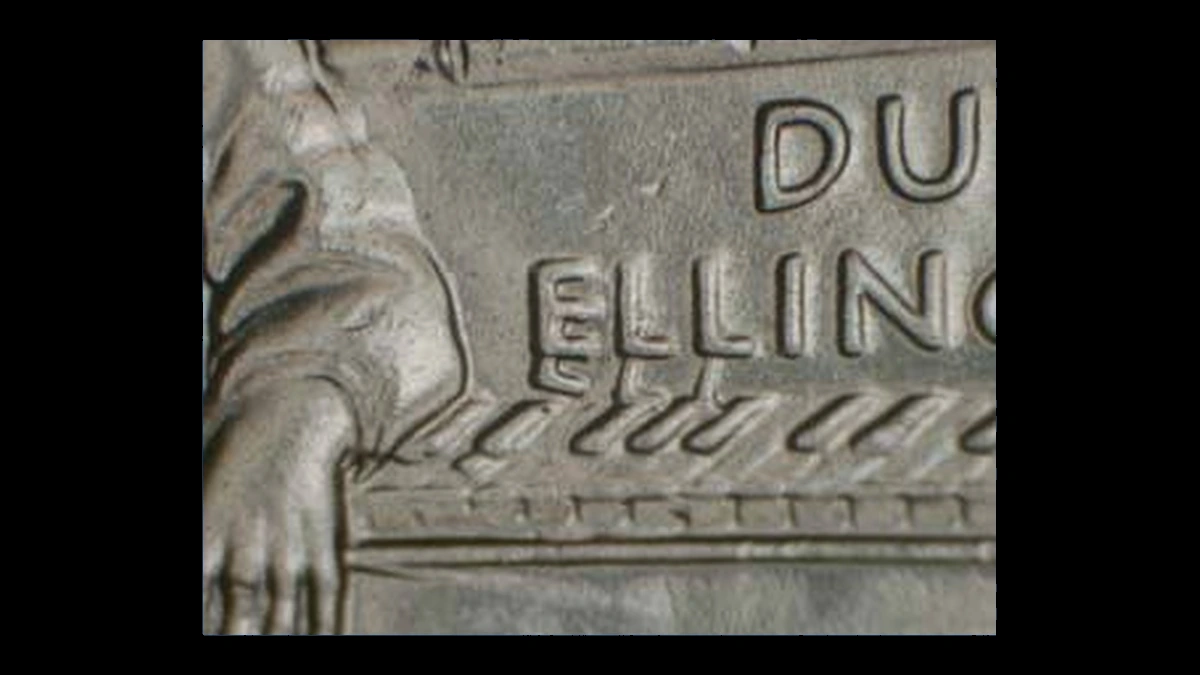
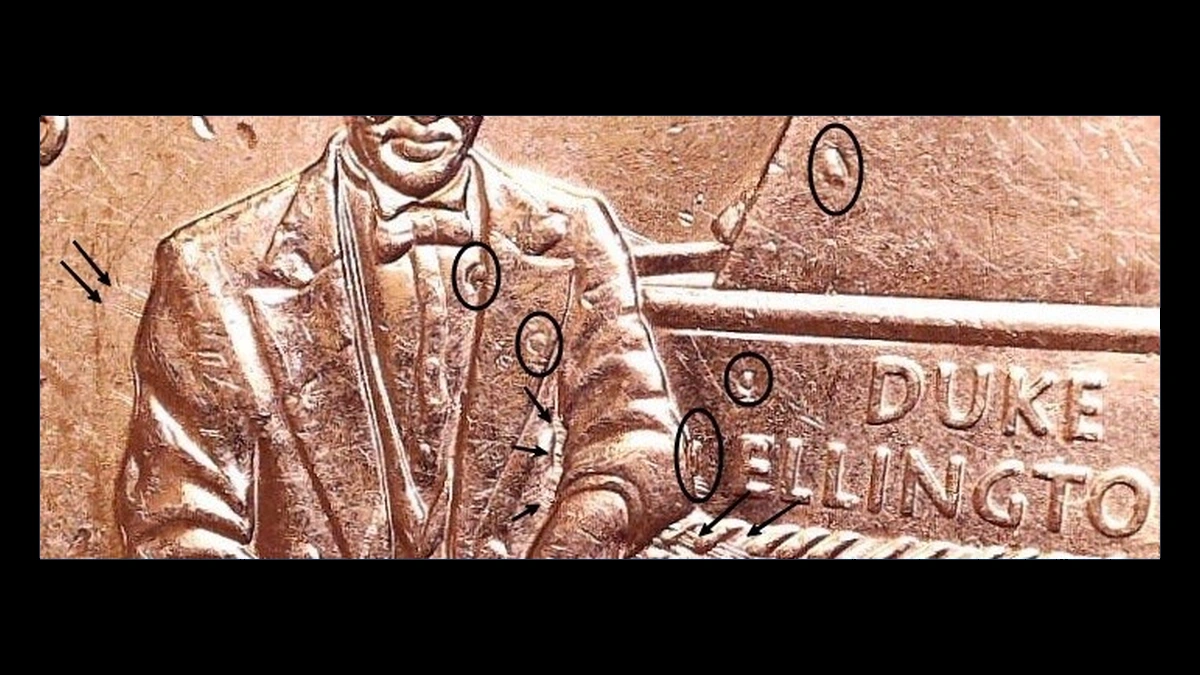
On the Denver DC FS-801 variety, repeated outlines affect ELLINGTON, the piano keys, and Ellington’s hand. The doubling was present in the die before the coin was struck, rather than created by a second whole impression on the coin.
Separate reports concern front portrait and lettering on Denver U.S. Virgin Islands quarters. Philadelphia Northern Mariana Islands examples involve palm fronds or detail beneath Washington’s ear, with the two faces requiring independent matches.
How to Identify
For DC, confirm the D and compare the name, keys, and hand with identified FS-801 close-ups. Several matching shapes provide stronger evidence than one blurred letter.
A low flat shelf caused by movement during striking does not reproduce the same rounded repeated contours. Compare shape and spacing at several locations before selecting the variety name.
Use the Virgin Islands front for that issue’s reported doubling, not the DC piano test. On Northern Mariana Islands quarters, examine palm fronds and the area beneath the ear separately without assembling unrelated coins into one supposed double-sided example.
What It’s Worth
$10–$4,000 is the combined supplied estimate: $200–$4,000 for identified DC FS-801 and $10–$300 for other matched doubled designs. Different scenes and patterns do not share the piano variety’s pricing automatically.
PCGS records an NGC MS67 DC example at $3,099 in August 2023. Another in PCGS MS66 brought $3,055 in July 2014.
Both results concern unworn coins with very few marks. Their preservation is part of the whole-coin price, alongside the strength of the named doubled reverse.
2. 2009 Quarter A Lump at the Boat or Elsewhere in the Scene: Die Chips Error
A small piece breaking from a die leaves a hollow that coin metal can fill during striking. The resulting extra metal appears as a raised chip rather than a repeated design line.
Northern Mariana Islands reports include a chip at the boat’s bow and Philadelphia examples with chips on both faces. American Samoa has a separate chip report without an established location.
How to Identify
Compare a normal reverse of the same design before labeling an unfamiliar shape as extra metal. On Northern Mariana Islands, inspect the boat’s front end and the adjoining surface.
Check Washington’s face independently if evaluating a reported two-sided Philadelphia example. A bow chip alone does not establish a chip on the other side.
For American Samoa, include enough of the bowl, whisk, or staff scene to locate the actual lump. Tilting the coin can reveal a scraped center or metal displaced by a dent, which would suggest damage instead.
What It’s Worth
$2–$150 spans the supplied estimates, with $2–$40 for small genuine chips and $40–$150 for larger clear examples. A recognizable change to a boat or another design feature is easier to show than a tiny speck.
These are whole-coin estimates without a supplied completed sale. Several bumps contribute to one appearance and should not multiply the range.
3. 2009 Quarter Soft Detail with Original Texture: Northern Mariana Islands Weak Strike Error
A weak strike leaves design incompletely formed instead of removing it after manufacture. Northern Mariana Islands reports establish neither one mint nor one weak spot that identifies every example.
Fine palm fronds offer a useful comparison area, but softness alone does not explain its cause. Circulation can smooth those same small details.
How to Identify
Assess Washington’s high points and the reverse for rubbed patches before focusing on the weakest feature. Smooth flattened areas across both faces may be ordinary wear.
Compare a normal Northern Mariana Islands quarter with the same finish, since collector surfaces can differ. Under slanting light, look for original texture continuing through a soft area where detail did not fully form.
The contrast between weakly formed and sharper surrounding detail helps the examination. No individual faint palm frond is enough to establish an error by itself.
What It’s Worth
$5–$75 is the supplied estimate for a clearly identified unusual weak strike. Pronounced missing formation on an otherwise unworn coin is more informative than mild softness on a circulated one.
A normal worn quarter may remain worth face value. The supplied report provides no specific sale to turn every weak-looking design into a premium coin.
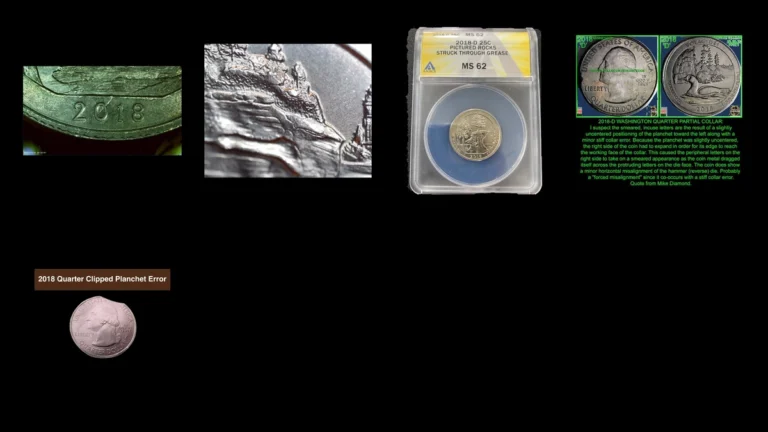
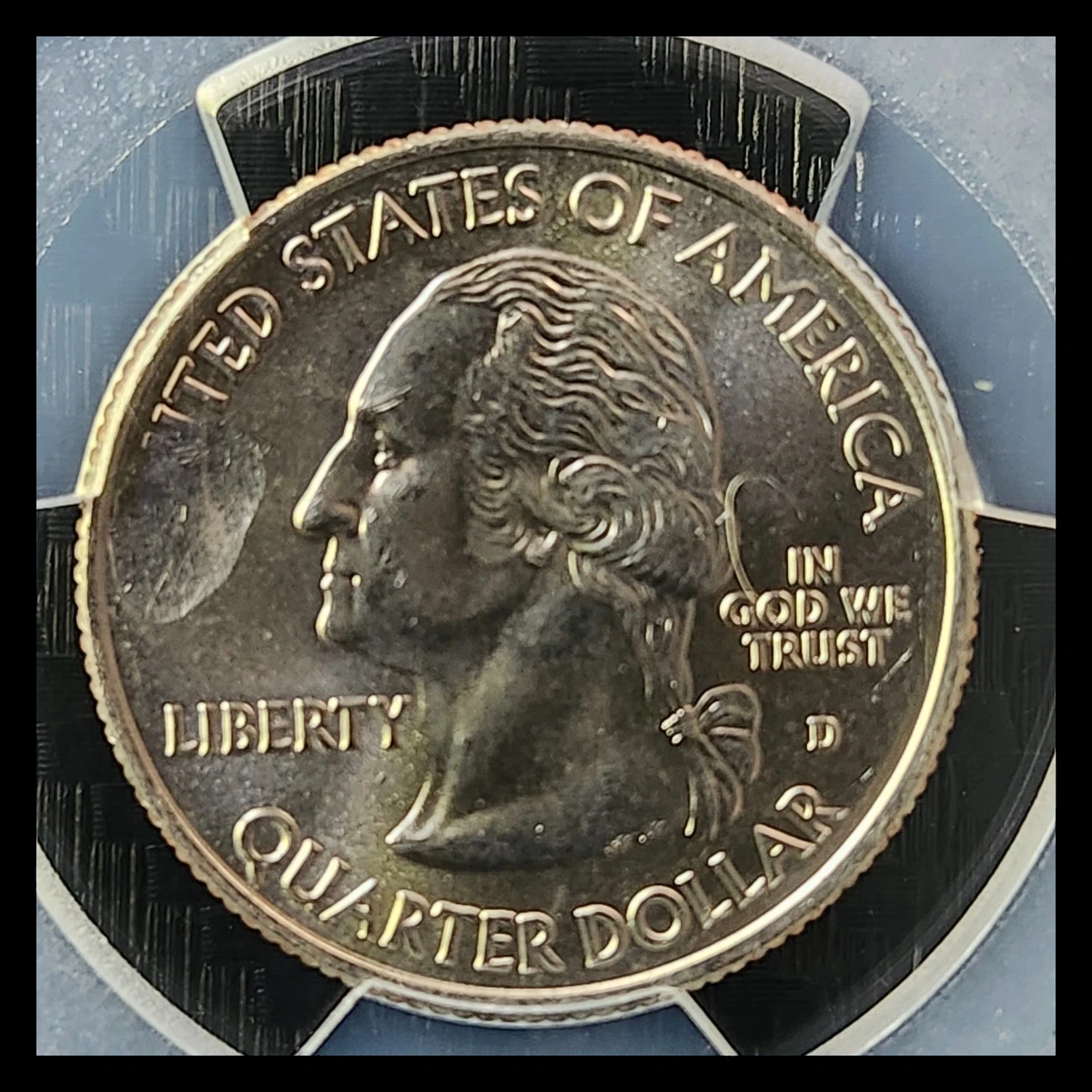
4. 2009 Quarter A Local Area Where the Design Stops: Struck-Through Impressions Error
Something between the blank and die can prevent a local part of the picture from forming. Grease may block small detail, while a firmer object can leave a more defined impression.
The type is reported for 2009 quarters without one material or design identifying all examples. A smooth depression therefore does not name the obstruction on its own.
How to Identify
Compare the same reverse scene in similar condition and locate where the candidate’s detail stops. Inspect the boundary for sharp neighboring design that may help demonstrate localized blocking.
Scratches, pushed-up metal, or flattened high points can instead indicate later impact, scraping, or wear. A woven or strand-like texture needs its own examination before being attributed to cloth or another specific object.
Leave retained material attached and photograph its contact with the coin. Removing it would disturb evidence about whether it was present during the strike.
What It’s Worth
$10–$1,000 is the combined supplied estimate: $10–$100 for clear minor blocked detail and $100–$1,000 for a substantial authenticated impression. Recognizable texture and intact surrounding design strengthen a comparison.
A 1776–1976 quarter struck through cloth sold for $881.25 in January 2017. Its woven pattern is a different-year comparison and does not establish cloth as the cause of an unexplained 2009 patch.
5. 2009 Quarter Parallel Lines Near the Portrait or Across the Back: Reported Feeder Marks Error
Philadelphia DC quarters have reported parallel lines described as feeder-finger marks. The feeder moves blanks into the press, but lines can arise either from damage to a tool or direct contact with a coin.
A pattern inherited from a damaged die needs a different explanation from grooves cut into already formed detail. The supplied report requires the marks’ relief to be established before their cause is settled.
How to Identify
Include the P and Ellington scene with the close-ups so their Philadelphia DC identity remains clear. Move a small light between opposite sides to determine whether each line is raised or incuse.
Trace the lines where they meet Washington or lettering. A groove cutting through the finished design may be a later scratch rather than a feature transferred during striking.
For a damaged-die explanation, compare another Philadelphia DC quarter with several lines in exactly the same positions. Parallel direction alone does not establish a shared manufacturing origin.
What It’s Worth
$3–$50 is the supplied estimate for convincing minor Mint-made feeder marks. Clear repeatable lines on original attractive surfaces offer stronger evidence than faint streaks among heavy scratches.
No completed sale is supplied for the reported DC pattern. The feeder-finger name alone cannot add an error premium to later damage.
6. 2009 Quarter A Split or Peeling Sheet of Metal: American Samoa Lamination Error
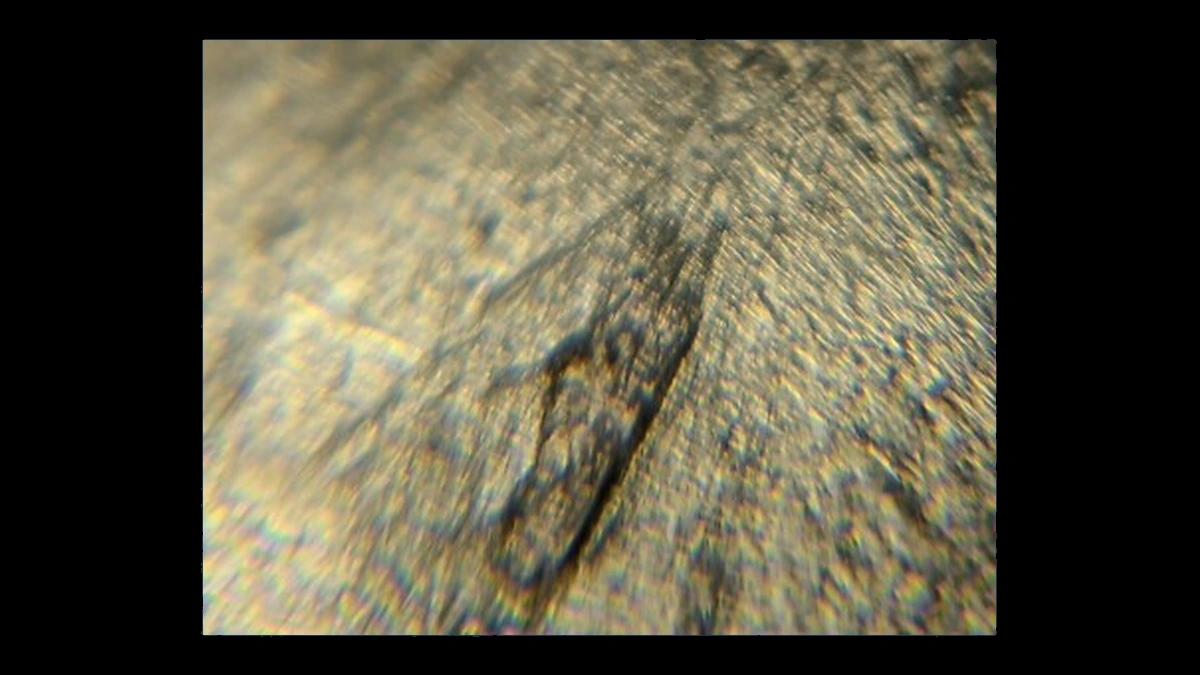
A defective blank can develop a thin surface separation that remains as a flap or leaves a shallow peeled area. This lamination type is reported on a Denver American Samoa quarter.
The reverse shows the ceremonial bowl, whisk, and staff, while the actual affected face and split path must be checked on the coin. A brown patch without separated metal is insufficient.
How to Identify
Confirm AMERICAN SAMOA and D, then photograph the split from low angles. Follow the thin opening where nearby lettering or artwork approaches it.
Leave any flap attached instead of bending it to see beneath the surface. A cut through finished detail, corrosion, or foreign material can create a different kind of rough patch.
These quarters use bonded metal layers, so inspect the edge as well. Complete loss of an outer face requires a different layer-loss assessment from a small local peel.
What It’s Worth
$15–$200 is the supplied estimate for an authenticated 2009-D American Samoa lamination. A clear split with original surrounding design is easier to interpret than a tiny corroded patch.
The estimate does not cover staining or scraped metal, and no completed sale is provided. An undisturbed attached flap can preserve useful evidence but should not be manipulated to improve its appearance.
7. 2009 Quarter Different Centering Between the Faces: Denver DC Misaligned Die Error
A shifted die can move one design toward the rim while leaving the opposite face centered. This differs from a blank misplaced between both dies.
The reported example concerns Denver DC quarters. Its unequal border widths need to be assessed in relation to the full designs on both sides.
How to Identify
Photograph each face square to the camera with its complete rim visible. Compare top and bottom spacing, then left and right, using Washington and the outer words as landmarks.
Repeat around the Ellington scene to establish the difference between the faces. Local rim damage cannot explain a genuine displacement of all the design landmarks.
If both faces lose design beyond the same part of the blank, investigate an off-center strike instead. A tilted or rotated photograph does not establish either error.
What It’s Worth
$5–$100 is the supplied estimate for clear minor misalignment on a 2009-D DC quarter. Very small shifts often attract little extra interest.
Undamaged rims and a readily visible face-to-face difference make the feature easier to demonstrate. A minor one-sided shift should not be compared with the price of a dramatic off-center blank.
8. 2009 Quarter A Wider Coin with All Its Words Present: Broadstrike Error
If the collar fails to restrain a blank, metal can spread outward while retaining the intended designs. This is a broadstrike, and the resulting margin may be uneven.
Reports concern Philadelphia DC and American Samoa quarters. The American Samoa report leaves the mint unspecified, so it must be established from the actual specimen.
How to Identify
Check the complete outer words on both faces before relying on a wide margin. For DC, follow the piano scene and ELLINGTON; for American Samoa, inspect its bowl, whisk, staff, and surrounding lettering.
A loose coin can be measured in several directions against the normal 24.26-millimeter diameter. Full designs on expanded metal support broadstriking even when the picture is closer to one edge.
Flattened tops of letters and pressure marks may reveal later hammering. Missing design beyond the blank requires an off-center comparison instead.
What It’s Worth
$50–$500 is the supplied estimate for authenticated broadstrikes on either reported design. Degree of expansion and the preservation of complete designs influence the comparison.
A 1984-P broadstruck quarter in PCGS MS65 sold for $169 in December 2025. That earlier-year record provides context without identifying the mint of a reported American Samoa coin.
9. 2009 Quarter A Curved or Straight Missing Edge: Clipped Blank Error
A punch crossing an earlier hole or the edge of the metal strip can produce an incomplete blank. When struck, the disc carries a gap beside otherwise formed design.
Curved and straight clips are both reported for 2009 quarters. The supplied year report does not assign each shape to a particular design or mint.
How to Identify
Examine the two places where the gap joins the normal rim. Nearby lettering or rim formation may weaken around a section that was already absent during striking.
For a curved gap, opposite-rim weakness can provide additional support without being equally obvious in every case. Saw lines, burrs, or filed surfaces indicate possible later removal.
A normal loose clad quarter weighs 5.67 grams, but cutting and corrosion also reduce weight. Retain date, mintmark, and scene identity in full photographs before judging the edge close-up.
What It’s Worth
$20–$300 is the supplied estimate for an authenticated 2009 clip. Gap size, original edge detail, remaining identity, and condition all contribute.
A 1980-P corner clip in NGC MS65 sold for $204 in June 2023. Its different year and particular shape limit comparison with an unspecified curved or straight 2009 report.
10. 2009 Quarter A Blank Crescent Opposite Lost Artwork: Off-Center Strike Error
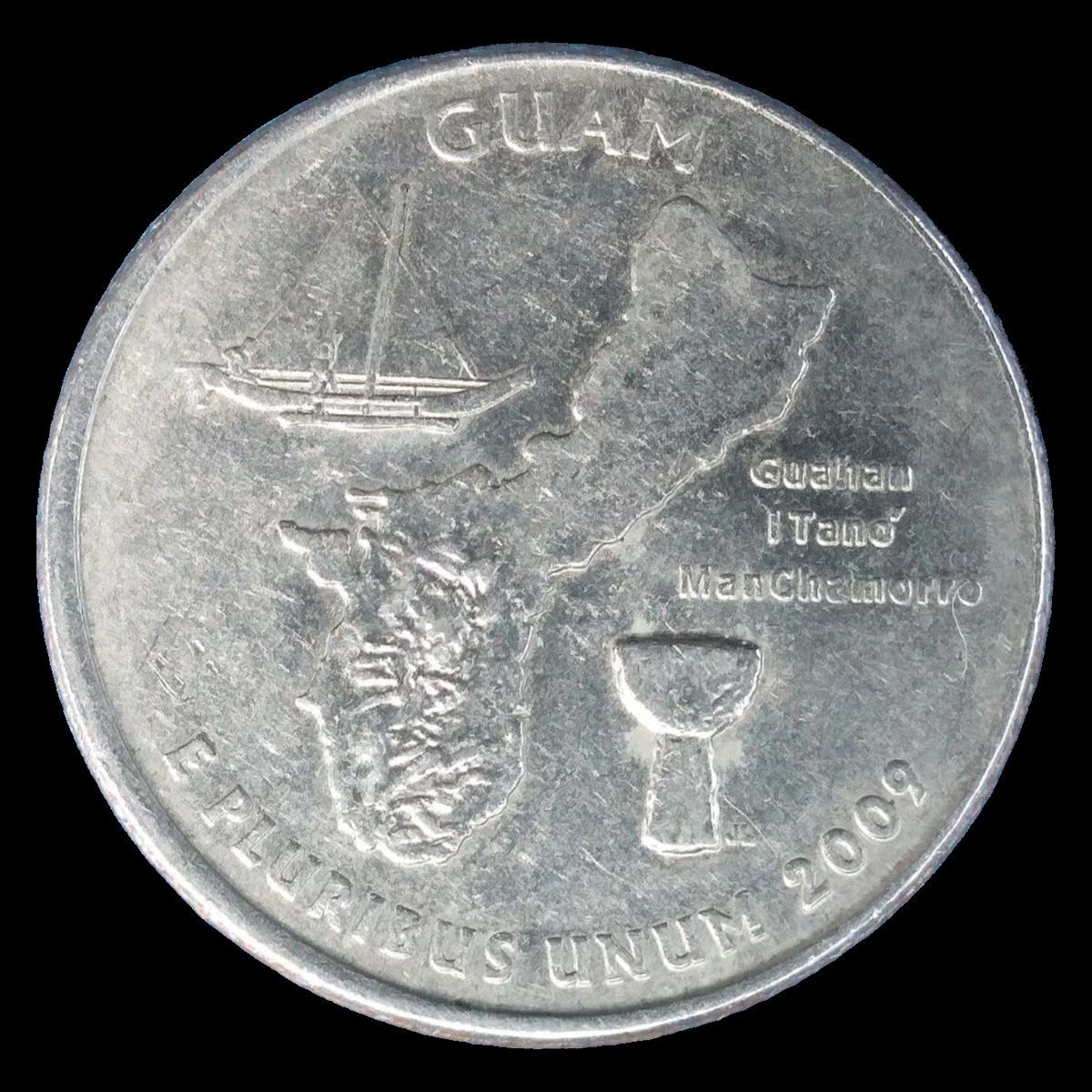
The Denver Guam report describes a quarter about 30% off-center. American Samoa and Northern Mariana Islands have separate reports whose mint and displacement must be established individually.
The original blank sat partly outside the striking area, leaving some metal untouched while part of the intended design missed it. A one-sided die shift does not produce the same relationship on both faces.
How to Identify
Find the remaining date and scene before measuring the blank area. Guam’s island outline, canoe, and latte stone can help identify it; the stone has a narrow support and wider rounded cap.
Read the D directly where the mintmark area survives on a proposed Denver Guam example. Do not supply a missing mint or territory name from the seller’s claim alone.
Follow artwork to where it runs beyond the metal, then compare the front for the corresponding displacement. Grinding lines or faint removed lettering in the apparently blank section suggest later alteration.
What It’s Worth
$30–$1,500 is the supplied estimate for authenticated 2009 off-center quarters with enough identity remaining. A dramatic shift with a readable date is a different comparison from an anonymous fragment of design.
A 1988-P quarter struck 30% off-center in ANACS MS63 sold for $109 in January 2022. Neither that price nor the shared percentage establishes a value for the reported Denver Guam coin.
11. 2009 Quarter The Ellington Scene on a Smaller Disc: Reported Dime Blank Error
A dime blank cannot accommodate the complete outer design of a quarter even when struck near its center. A Philadelphia DC quarter on such a blank is reported in the supplied material.
The proposed identity requires the actual metal, weight, and original edge to agree. A trimmed finished quarter can imitate a small diameter without having started as a dime blank.
How to Identify
A modern dime blank normally starts near 2.27 grams and 17.91 millimeters. Those are reference specifications, not measured results for the reported DC candidate.
Striking can spread the metal, so final diameter is only part of the examination. Inspect the edge for filing and cuts through letters that had already formed.
The surviving DC scene and any readable P must support the claimed identity. A specialist can assess metal and original boundaries to distinguish a wrong blank from an off-center normal quarter or a cut-down piece.
What It’s Worth
$500–$2,500 is the supplied estimate for an authenticated 2009 DC quarter on a dime blank. A recognizable scene, readable date, and convincing original edge improve the comparison.
A 1988-P quarter on a nickel blank in NGC MS66 sold for $852 in October 2021 and weighed 5.0 grams. This involves another year and another substitute denomination, not a completed sale or measurement of the DC dime-blank report.
Conclusion
A correct scene and mint match makes the 2009 quarter reports much easier to assess. DC piano doubling, a Northern Mariana Islands bow chip, and an American Samoa metal split each require their own location and physical evidence.
Use both faces and the original edge when the outline changes, and preserve attached material during surface checks. The strongest price comparisons match the actual mechanism and condition instead of borrowing a famous variety’s result.