Rare 1897 Quarter Errors (List & Pictures)
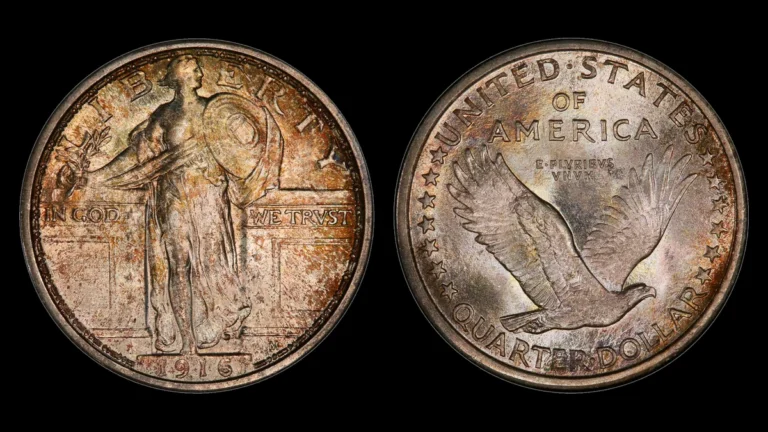
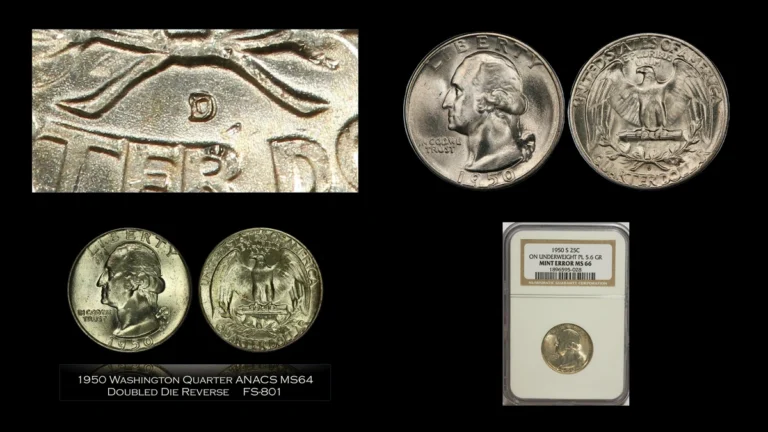
A 1916-D Barber quarter with a repunched mintmark sold for $149 in December 2021. That different-year comparison does not establish a sale price for the reported 1897 quarter errors below.
Conditional estimates for authenticated worn examples span $50–$3,000. Examine repeated contours in the date and headband, then compare the mintmark’s shape separately from its location.
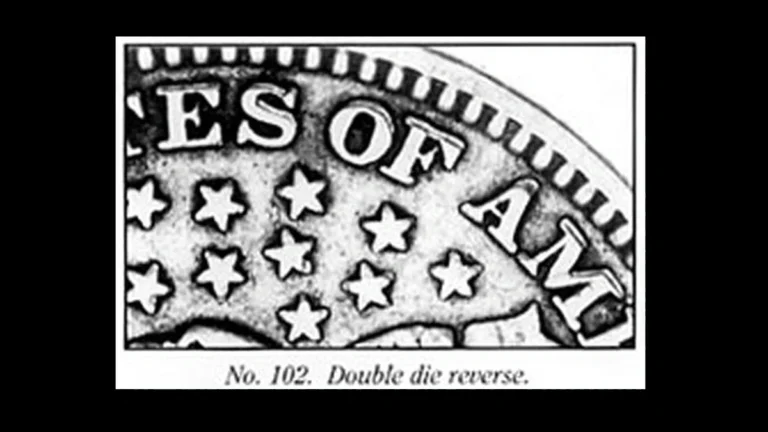
1897 Quarter Extra contours in the date and headband: reported doubled die Error
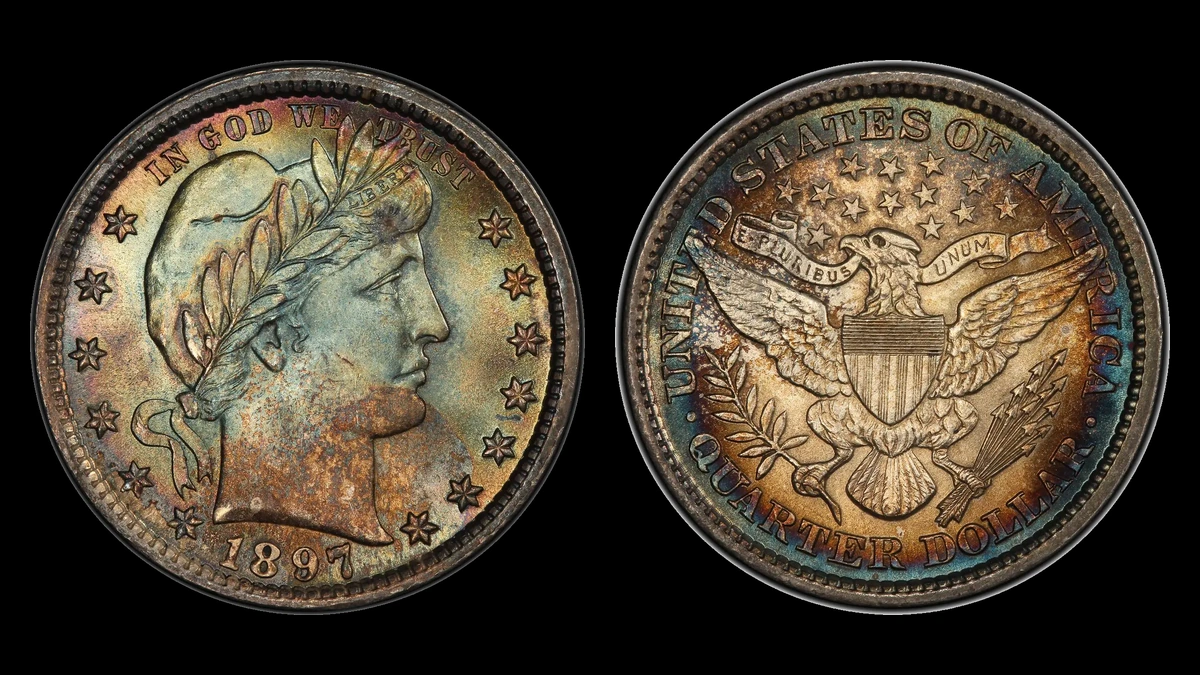
LIBERTY inside the headband and the date below the portrait are the locations named in a report of front doubling. A true doubled die carries repeated design detail before it strikes any coins.
The supplied report does not establish a particular mint or a professional variety number. It is therefore a candidate description that needs a precise match, rather than a complete attribution.
How to Identify
Photograph the headband and date with light from more than one direction. A reflection that shifts across the surface should not be counted as a fixed extra outline.
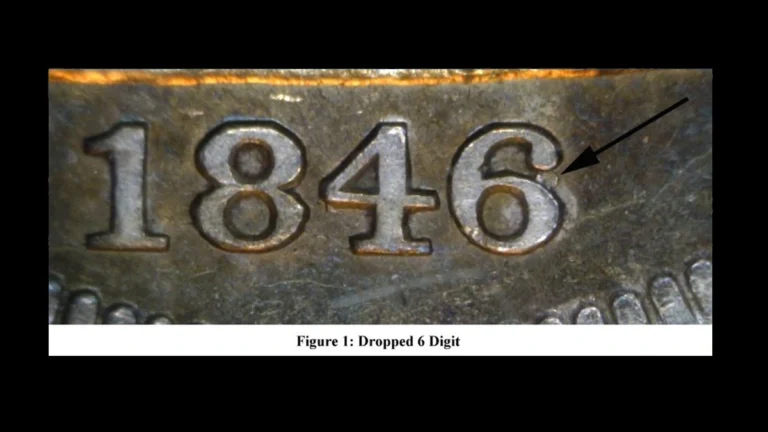
Inspect letter and digit endings for separated rounded contours or small splits that agree across several details. A low flat shelf beside the main shape may instead result from movement during the strike.
Record the mintmark and the coin’s finish before choosing a reference. Ordinary circulation coins and specially made Proof coins should not be combined in an attribution merely because their dates agree.
On a worn quarter, thick or blurred letters may lack enough surviving detail to answer the question. A specialist needs the actual repeated shapes, not just a general claim that the lettering looks doubled.
What It’s Worth
The conditional whole-coin estimate is $50–$2,500 for a worn 1897 quarter with professionally confirmed front doubling. It is an editorial guide range, not a set of documented auction results for a named variety.
Philadelphia, New Orleans, and San Francisco coins have different underlying values. Identify the mint and compare similar wear and surface problems before estimating what a confirmed feature contributes.
No completed 1897 doubled-die sale in the supplied evidence establishes a specific premium. A doubtful outline should not be priced as an authenticated variety.
1897 Quarter A second outline beside S or O: reported repunched mintmark Error
Look beneath the eagle and above QUARTER DOLLAR for the mintmark. Reports concern separate S/S and O/O candidates, without establishing an exact overlap direction.
During this period a worker added the mintmark to the die with a letter punch. Another application slightly out of alignment could leave part of the first letter beside the second.
Mintmark placement can also vary without repunching. A centered S is a position variety to evaluate separately; its location alone does not prove that two S impressions exist.
How to Identify
Include the complete letter and surrounding space in a close photograph. For O, compare both the inner opening and the outer curve with a normal mintmark.
For S, inspect the curved ends and narrow middle. Any proposed earlier impression should make sense as part of a letter, rather than a random lump.
Do not assume that the extra trace belongs above, below, or on a particular side of the main letter. The report does not supply that diagnostic information.
Attached dirt, corrosion, and a cut with displaced metal can imitate doubled edges. An attributed matching example is needed to distinguish the reported repunching from these lookalikes.
What It’s Worth
Allow a conditional $75–$3,000 for authenticated worn O/O or S/S examples with ordinary mintmark placement. Scarce centered-S coins need their own comparison rather than receiving this range solely for the S position.
An ANACS AU50 1916-D repunched-mintmark quarter brought $149 in December 2021. AU50 means lightly worn, and the coin is from a different year and mint than either reported 1897 candidate.
The result shows one modest same-series transaction. It does not supply a guaranteed premium or an exact sale comparison for the 1897 reports.
Conclusion
For an 1897 quarter, keep the observation separate from the attribution: a thick date, extra curve, or centered S each starts a different investigation. Clear photographs should show the feature and its surrounding design.
The estimates here depend on confirmed varieties and comparable worn condition. Without an exact match, preserve the report as a possibility and avoid turning an unusual mintmark location into evidence of repunching.