Rare 1827 Quarter Errors (List & Pictures)
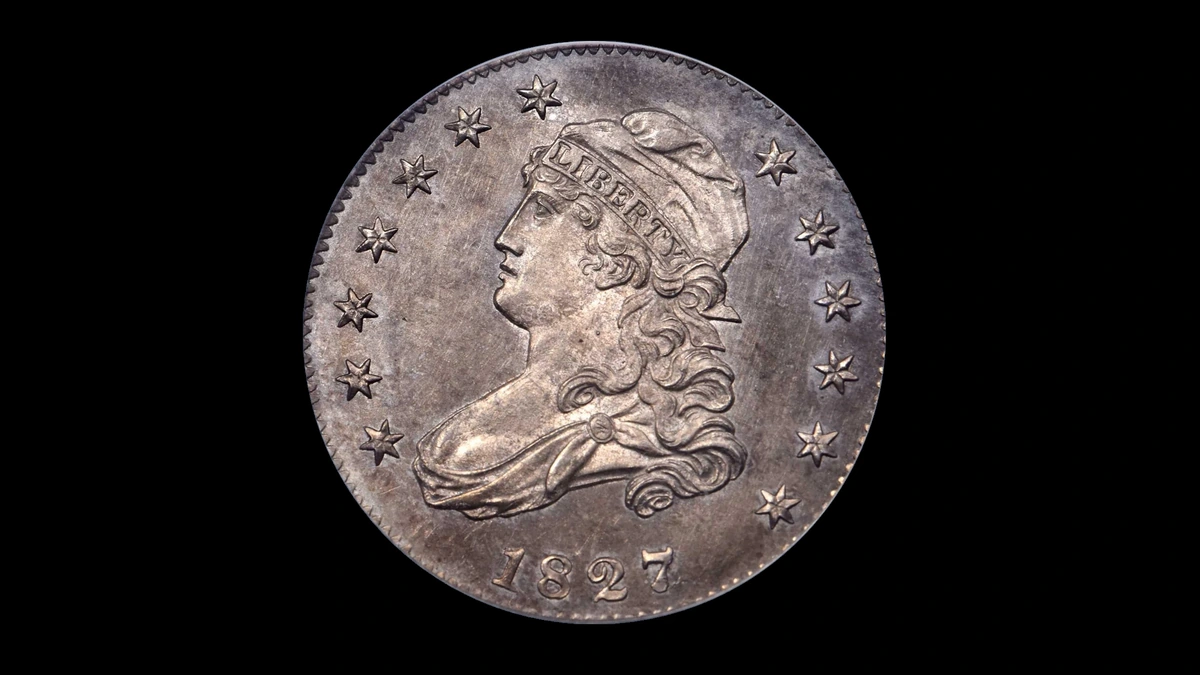
With 1827 quarter errors, the first question is which version of this rare coin you have. Original coins and later restrikes can share the altered date, yet belong to different collecting groups.
Estimated whole-coin values run from $50,000–$750,000. An exceptional original brought $705,000 in May 2015, a price for the complete rarity rather than its date feature alone.
Start with the last date digit, then inspect the back lettering and the position of both designs.
1. 1827 Quarter Older Curves beneath the Final 7: The 1827/3/2 Overdate Error
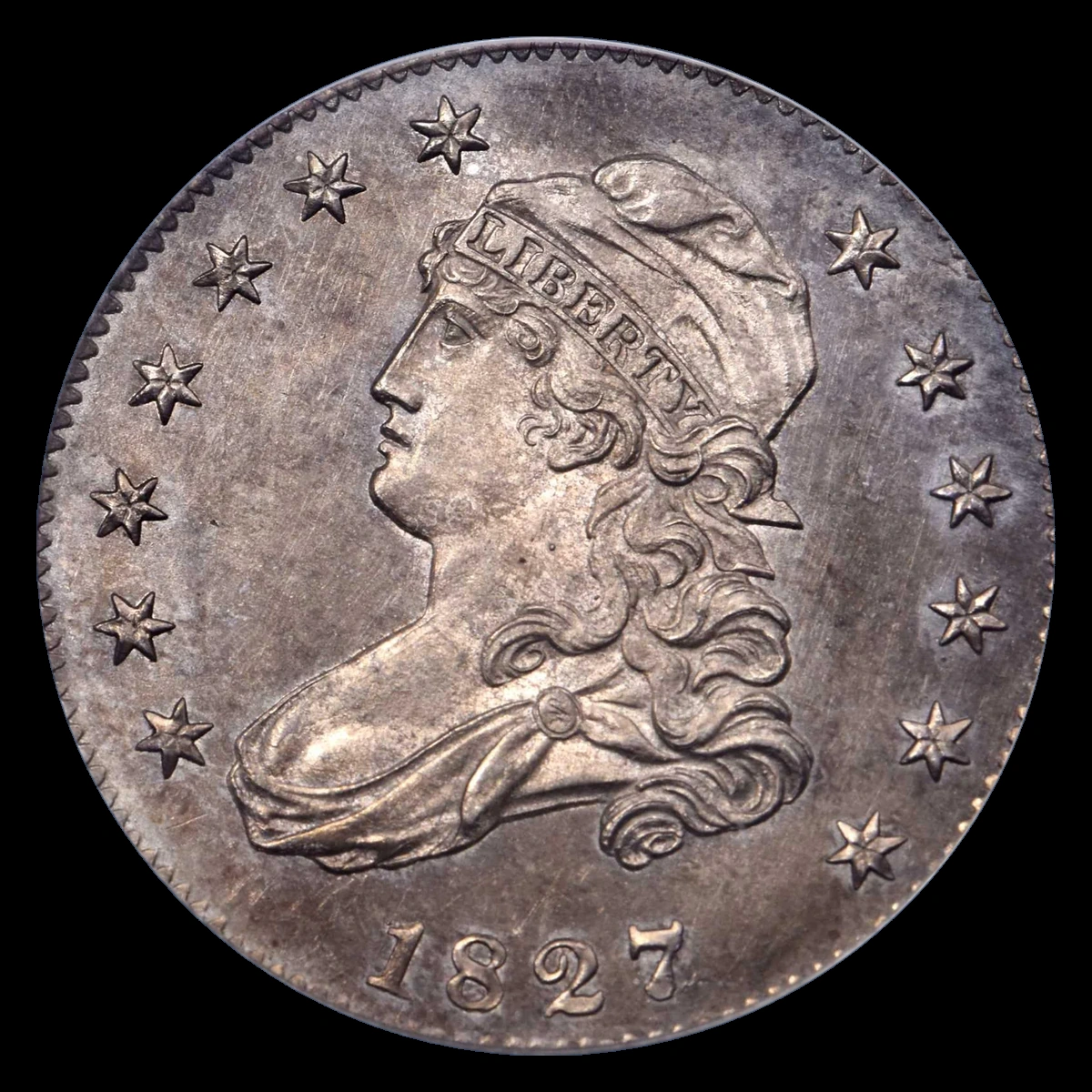
The last digit contains traces of an earlier date. The die began with 1822, received a 3 over the final 2, and later received a 7 over that 3.
A die is the steel tool that stamps a coin. Changing its date left overlapping shapes that appeared on the quarters made with it.
The neighboring digits were punched again too. This work happened on the tool; it does not mean each finished coin was struck three times.
How to Identify
Enlarge the entire date, keeping the space around the final 7 visible. Compare the underlying curves with a known genuine 1827/3/2 example rather than searching for a complete second digit.
Next look at the 2 in 25 C on the back. Originals have a curled base, while the other main reverse design has a square base.
The square-base group includes unusual early experimental pieces as well as later restrikes. A restrike is a coin made later using an earlier date, so the visible year cannot settle its production history.
For this rarity, the letters, surfaces, and edge should also agree with an authenticated example. One small curve under the 7 cannot rule out an altered date.
What It’s Worth
$50,000–$750,000 is the estimated span across the silver versions. Later restrikes generally fit $50,000–$250,000, while originals have a working range of $100,000–$750,000.
The Pogue original sold for $705,000 in May 2015. Another original brought $588,000 in August 2021.
These are whole-coin prices affected by rarity, condition, and ownership history. A worn or damaged example should be compared with its own version, not given a top price just because the older digits show.
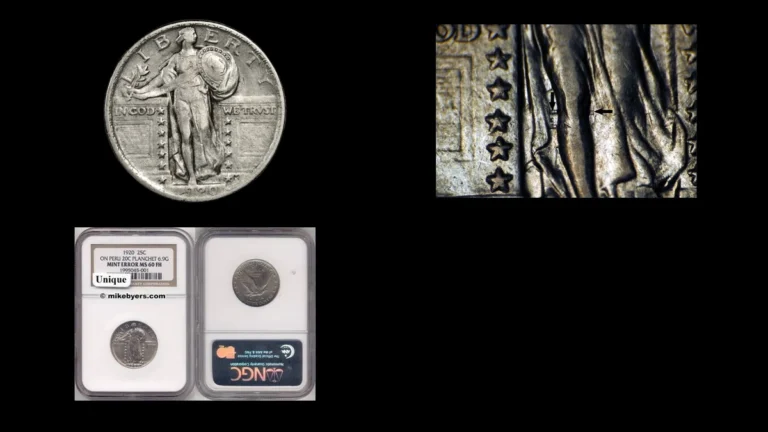
2. 1827 Quarter A Raised Line through the Back Letters: Die Crack Error
Original 1827 quarters have a crack across the upper reverse lettering. Silver flowed into a split in the die and formed a raised ridge on the coin.
The path runs through ED in UNITED, above the motto ribbon, and beneath F in OF. It continues through the base of A and across ME in AMERICA.
How to Identify
Locate ED first, then follow the route one letter at a time under angled light. The line should stand above the silver rather than cut through it like a scratch.
Check the curled base of the 2 in 25 C as part of the same comparison. The crack belongs to this original reverse, not every silver coin carrying an 1827 date.
A fine section may disappear under one light angle and reappear under another. Fixed points beside the letters are more useful than judging the line’s thickness in one photograph.
This reverse was later used for 1828 coins and developed further damage. Do not require that later broken-die patch on an 1827 original.
What It’s Worth
$100,000–$750,000 is the estimated whole-coin range for originals with this identifying crack. It is not an extra amount to add to the overdate value.
A PCGS Proof 65 Cameo original brought $588,000 in August 2021. Proof describes special production, while Cameo refers to contrast between the design and background.
The crack helps establish what the coin is. The quality and history of that complete coin explain much of its market value.
3. 1827 Quarter A Blank Area beside Incomplete Designs: Off-Center Candidate Error
A genuine off-center strike would show a blank that missed part of the dies. Some portrait and eagle details would fall beyond the metal, leaving an unstruck area beside them.
The supplied 1827 claim still needs an authenticated specimen. Known experimental pieces struck over older quarters are a separate subject and do not establish an off-center example.
How to Identify
Keep a suspected rarity in its holder and photograph both faces. Compare where the designs end with the same unstruck part of the metal.
An uneven rim, a shifted front die, or remnants of an older design are not enough by themselves. Also check whether grinding or an altered edge has removed finished details.
A loose normal silver quarter of this type has a standard weight of about 6.74 grams and diameter of about 27.5 millimeters. Experimental pieces made from reduced older coins require a separate specialist comparison.
The full date must remain part of the evidence. Do not open a holder or clean the coin merely to test this possibility.
What It’s Worth
$100,000–$750,000 is a provisional whole-coin estimate only if a genuine 1827 off-center piece is established. It reflects the rare date’s market, not a recorded off-center sale.
The $588,000 original sold in August 2021 is a rarity comparison and was not cataloged as off-center. A verified candidate would still need its version, condition, and displacement assessed separately.
Conclusion
An original 1827 quarter can show both the altered date and the reverse crack, but it is still one coin with one overall value. Begin with the date and the shape of the reverse 2 before assigning a version.
The off-center entry has a different evidence level and should remain a candidate until an actual specimen is established. Clear photographs and an authenticated comparison are especially important for a date this rare.