Rare 1853 Quarter Errors (List & Pictures)
All four features in this guide concern Arrows and Rays quarters, with arrows beside the date and rays behind the eagle. Among these 1853 quarter errors, an extra date bar, a filled O, and a sideways underletter need different close-ups.
Estimated whole-coin values span $120–$40,000. A high-grade 1853/4 realized $37,200 in May 2025; examine the date first, compare the two New Orleans mintmark appearances, and then assess the displaced strike on both faces.
1. 1853 Quarter A Bar beneath the Final 3: 1853/4 Overdate Error
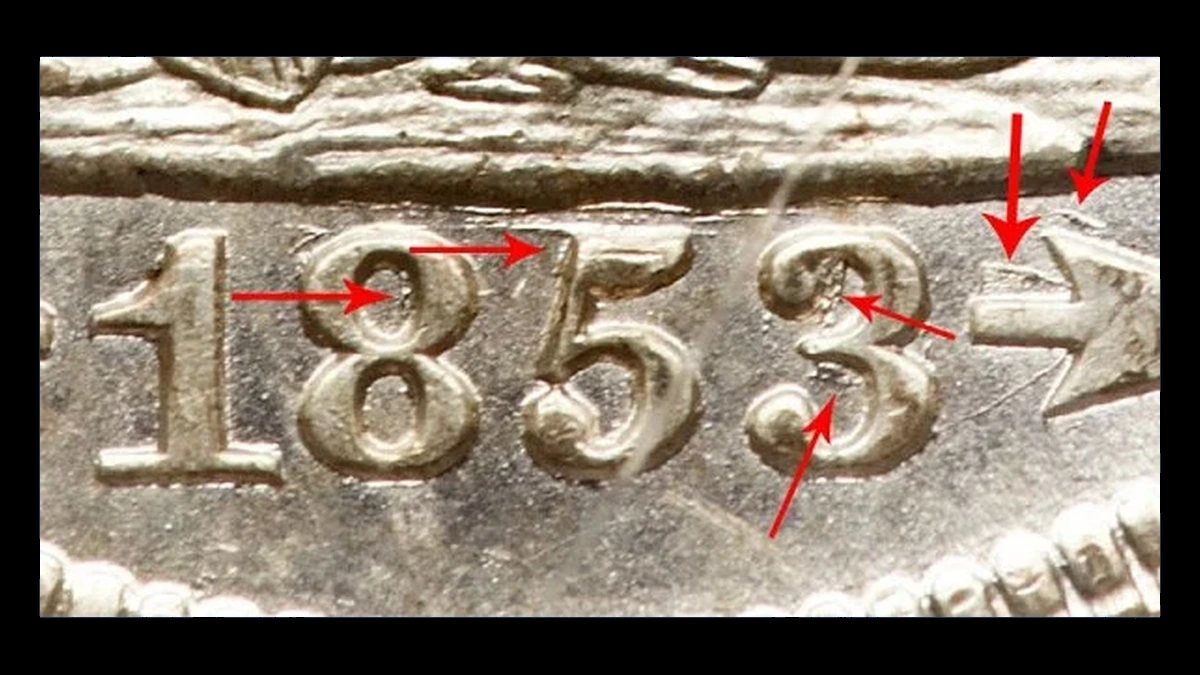
The Philadelphia variety called 1853/4 has an extra bar below the date’s final 3. Specialist references describe the underlying shape as a portion of 4.
The right arrow also carries a repeated impression. These tool-preparation features identify FS-301, also known as Briggs 1-A, while the finished date still reads 1853.
How to Identify
Compare the bottom of the final 3 with an ordinary Arrows and Rays quarter. Follow the added bar under angled light to distinguish its raised contour from a cut or unrelated scratch.
Keep the right arrow beside the date in the same image and inspect its repeated outline. Matching both features is more useful than accepting any isolated mark beneath a numeral.
Confirm the reverse rays and Philadelphia’s normal absence of a mintmark. The variety name describes remnants in a die, not a finished 1854 coin struck again with an 1853 image.
What It’s Worth
$130–$40,000 is the supplied estimate across dramatically different conditions. PCGS records an MS65 result of $37,200 in May 2025, while its database lists a cleaned VF Details example at $222 in October 2020.
MS65 describes an unworn coin with relatively few marks, whereas VF Details includes circulation wear and a stated cleaning problem. The shared date variety does not erase that preservation gap.
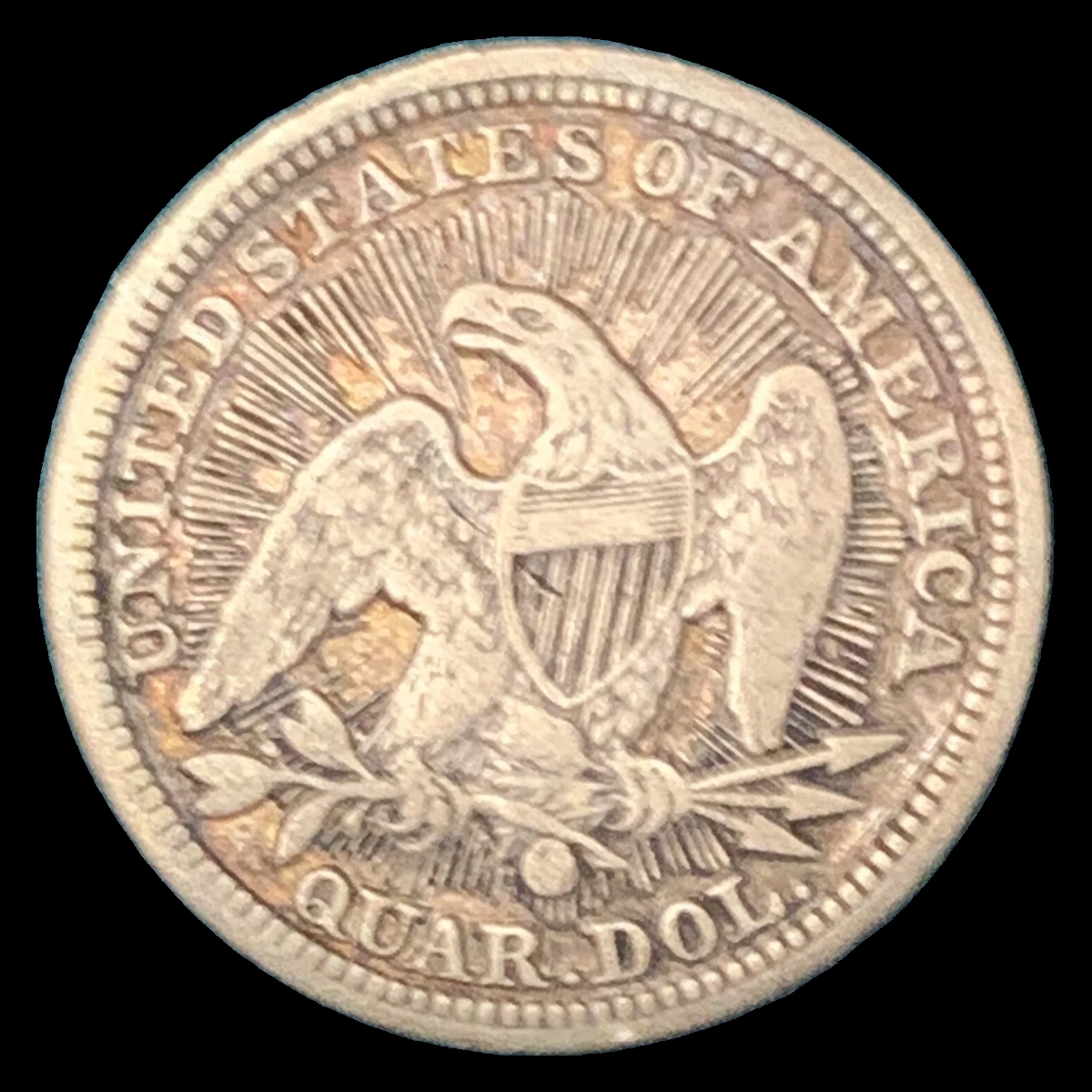
2. 1853 Quarter A Raised Center inside the O: Filled Mintmark Error
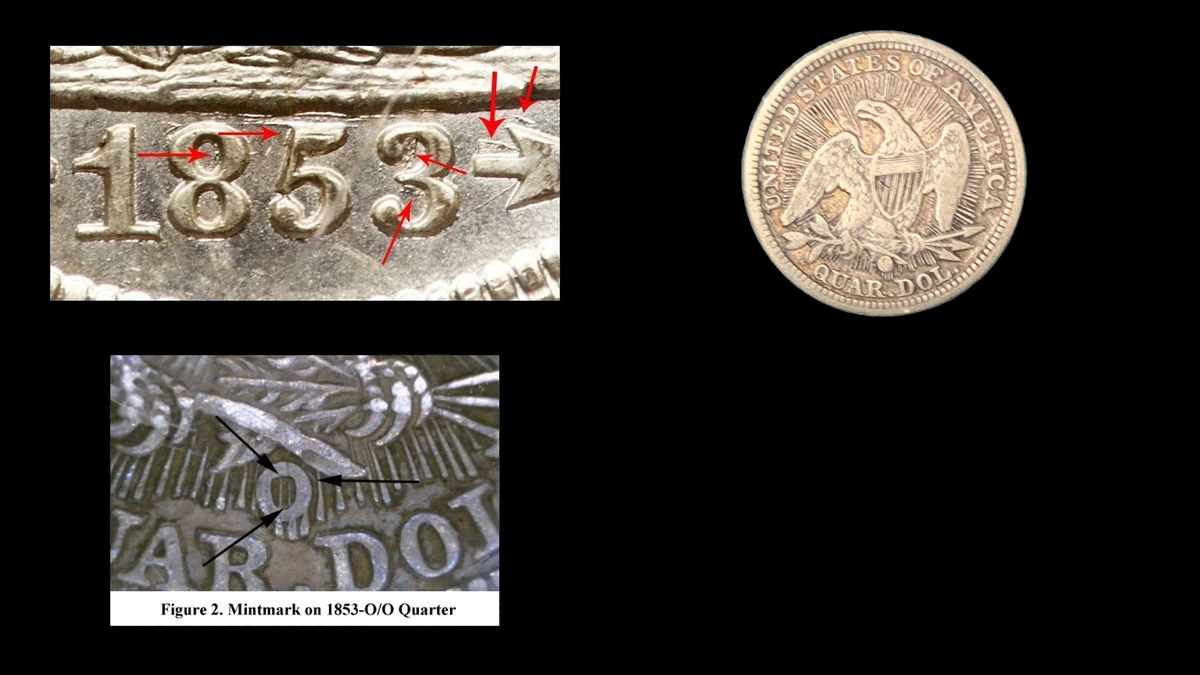
On Briggs 3-E, the New Orleans O can have a partly or completely filled center. Deterioration of the small die area that formed the opening allowed additional silver to rise there during striking.
Several stages show different degrees of filling. This change in the tool is separate from repunching a sideways O, discussed next.
How to Identify
Use side lighting to establish whether the center is physically raised as part of the coin’s metal. Dirt inside an ordinary mintmark can look dark and solid without representing any change to the die.
Compare the filling and outer O contour with a documented Briggs 3-E at a similar stage. Wear that flattens the entire letter may obscure its opening for a different reason.
Do not scrape the center to test it. Keep a full reverse photograph with the arrowed date view so the mintmark remains attached to the proper issue.
What It’s Worth
$120–$3,000 is estimated for worn through lightly worn filled-O examples. The supplied Top 25 guide gives $500 at VF20, $1,000 at EF40, and $2,400 at AU50.
Those are whole-coin guide values rather than realized transactions. A bold filled center does not override heavy wear, damage, or uncertain attribution.
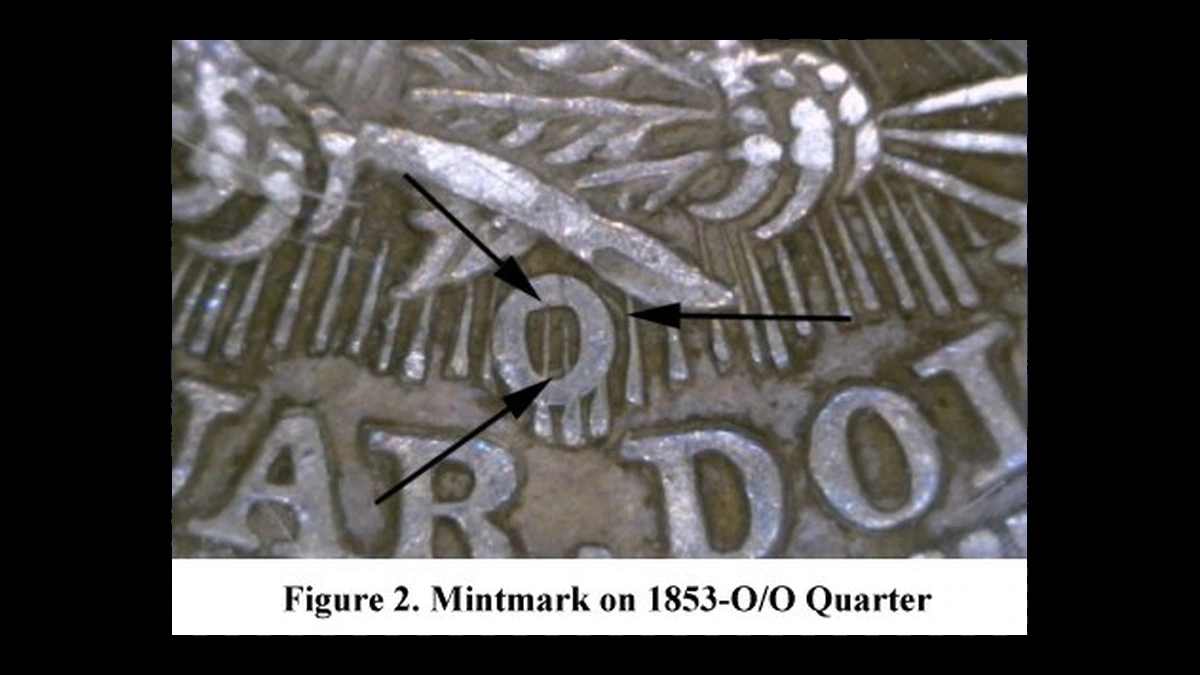
3. 1853 Quarter Inner Curves from a Sideways Letter: O over Horizontal O Error
FS-501 preserves portions of an earlier horizontal O within the upper and lower curves of the corrected upright mintmark. The second punch did not remove all of the first impression in the die.
A raised lump on Liberty’s rock provides another identifying feature when enough detail survives. This variety is different from a center that has simply filled as the tool deteriorated.
How to Identify
Inspect the inside top and bottom of the upright O for two curved remnants. Their arrangement should fit portions of one sideways oval, rather than one shapeless mass closing the opening.
Compare the rock-area lump with the specialist horizontal-O study. This second location is useful when wear has not erased the supporting detail.
Thick lettering or mintmark placement alone is insufficient on a worn coin. If dirt obscures the inner curves, preserve it and seek a better photographic or specialist comparison instead of probing the letter.
What It’s Worth
$120–$3,500 is estimated for heavily worn through lightly worn examples. Related Top 25 guide figures include $400 at VF20 and $2,400 at AU50, not completed auction sales.
The study notes the difficulty of finding better-preserved pieces. Wear can hide the small internal remnants that make a confident identification possible.
4. 1853 Quarter A Blank Crescent beside Lost Design: Off-Center Strike Error
An NGC-described 1853-O Arrows and Rays quarter was struck 10% off center and graded VG8. Its heavy circulation wear does not erase the relationship between the displaced design and original blank.
The normal arrows and rays marked adoption of a lighter silver standard. They are intended design elements rather than part of the striking mistake.
How to Identify
Find the O beneath the eagle and arrows flanking the date, then compare both complete faces. Missing design and the unstruck crescent should fit the same misplaced disk.
Look for original detail ending at the edge rather than a border cut away later. A shift confined to one face may instead indicate die misalignment.
The normal Arrows and Rays reference is 6.22 grams at approximately 24.3 millimeters. The earlier No Arrows standard was 6.68 grams, so identify the design before interpreting a loose coin’s measurements.
What It’s Worth
$1,500–$8,000 is estimated for identifiable 1853-O off-center quarters from heavily worn through better-preserved circulated examples. NGC records the 10% off-center VG8 at $3,120 through Heritage in February 2022.
The sale belongs to that worn New Orleans specimen. A different shift or surface condition needs its own comparison, with a readable date and mint remaining valuable evidence.
Conclusion
Keep the intended arrows and rays in view while interpreting these small features. A repeated arrow and date bar identify one variety, while raised filling and curved underletter remnants distinguish the two O mintmarks.
Off-center identification moves beyond close-ups to the full blank and both designs. Across all four categories, guide figures and historical sales describe complete coins whose preservation can matter as much as the unusual detail.