Rare 1914 Quarter Errors (List & Pictures)
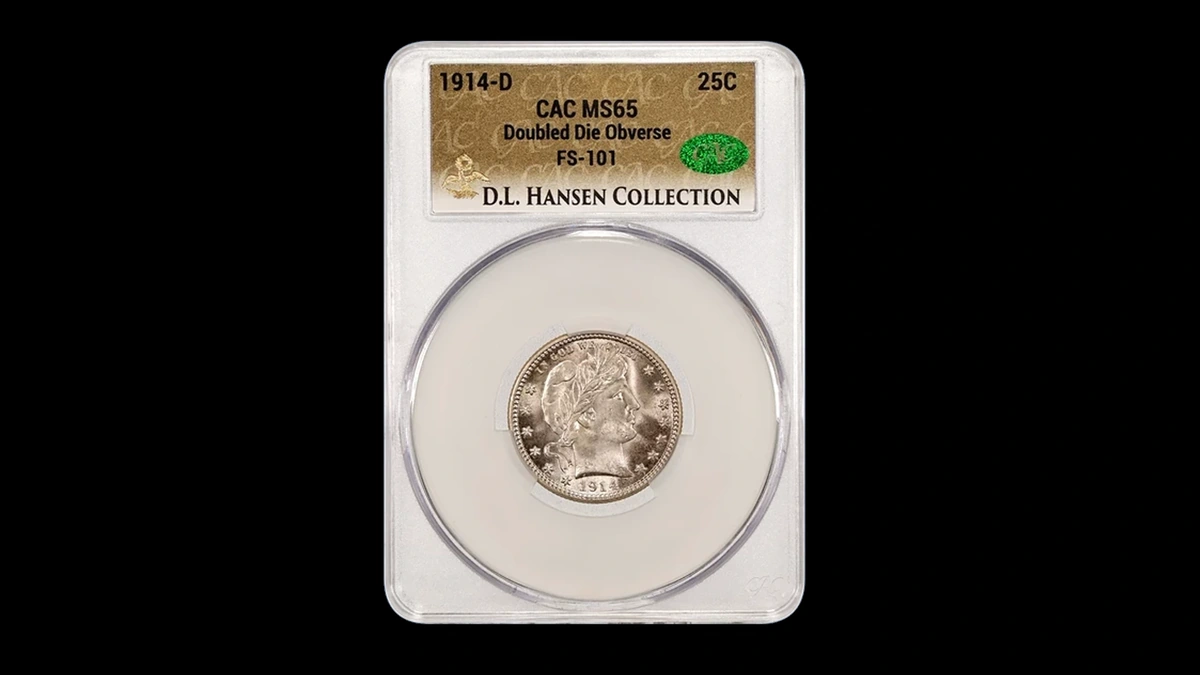
The best-documented doubling on a 1914 Barber quarter is spread across several front details, not just the date. A Denver example in MS65 brought $4,750 in January 2023.
These three groups of 1914 quarter errors have estimated values of $40–$5,000. Check the front pattern, the small D, or the boundary of a missing edge segment according to what you see.
1. 1914 Quarter Repeated Motto, Stars, and Ribbon Ends: Doubled Die Error
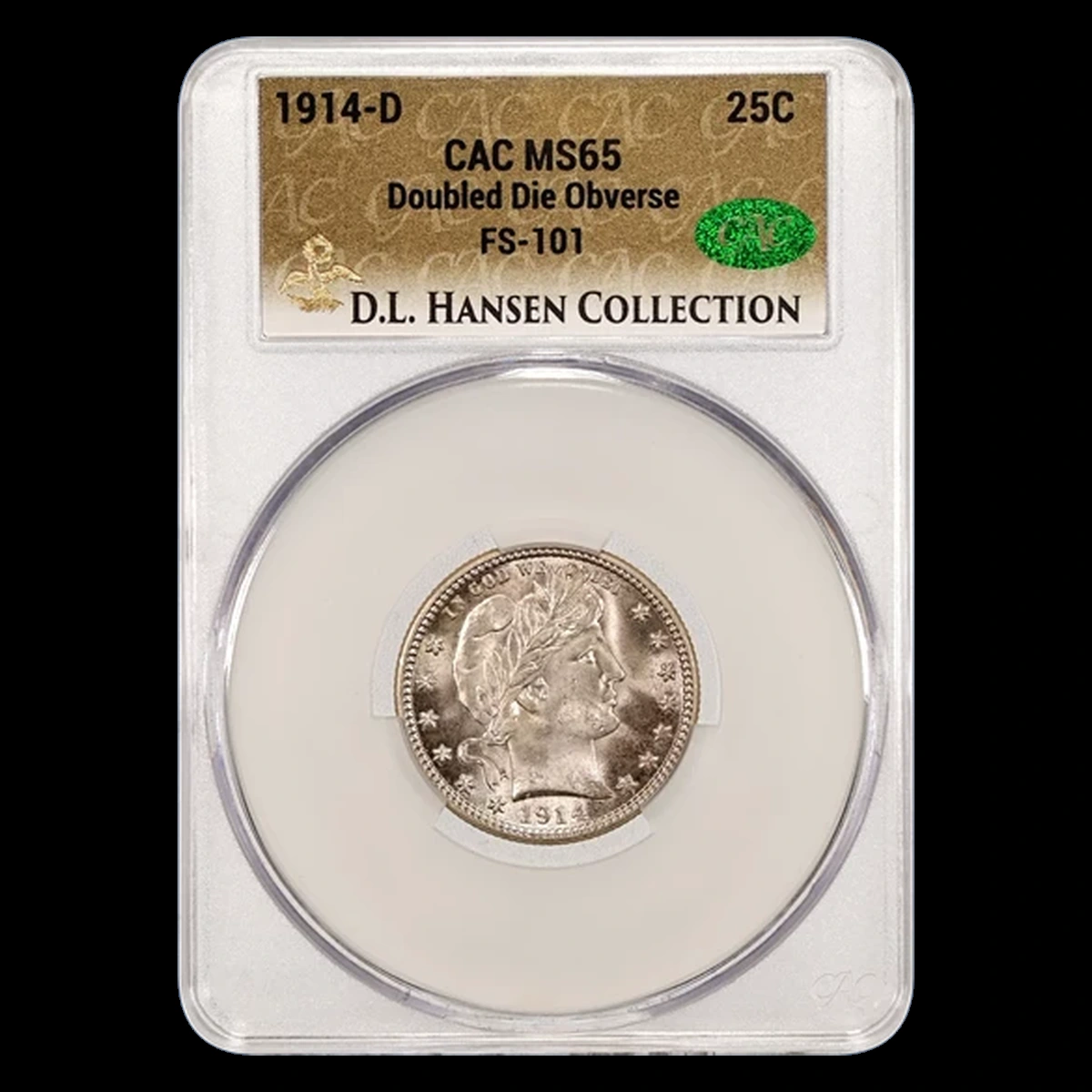
On the known 1914-D doubled front, extra outlines appear in IN GOD WE TRUST, the stars, and ribbon ends. FS-101 and VP-001 are two names for that same variety.
A separate San Francisco claim concerns an extra outline beside the final 4. That appearance needs its own explanation and should not be treated as the Denver variety.
How to Identify
For a Denver coin, compare several motto letters before moving to the stars and ribbons. The same pattern should remain visible as you change the lighting.
Rounded separation or matching split corners offers better evidence than simple thickness. A flat shelf beside a letter can form from movement during the strike instead.
For the San Francisco date claim, examine the neighboring digits as well as the last 4. By 1914, dates were transferred through the die-making process, so an extra line alone does not prove hand repunching.
What It’s Worth
$100–$5,000 is the working range for matching Denver doubled-front examples. PCGS records $4,750 for an MS65 FS-101 in January 2023.
A San Francisco coin with confirmed collectible die doubling at the date has a separate comparison range of $100–$2,000. That estimate does not apply to wear, a scratch, or an ordinary strike shelf.
An unexplained “1914/4” label does not carry the Denver auction record with it. The cause and full pattern come first.
2. 1914 Quarter Extra Notches around the D: Repunched Mintmark Error
Reported notches at the top and bottom ends of the Denver mintmark may preserve an earlier punch impression. Workers applied the D to the die by hand, and a changed position could leave overlapping shapes.
How to Identify
Find the D below the eagle’s tail and compare its whole outline with a normal mintmark. Follow any extra curve beyond the isolated notch.
A higher or lower D is only a position difference unless a second punch shape survives. Wear, a contact hit, or a small lump can change the outline without creating a repunched mintmark.
What It’s Worth
$40–$750 is the estimate for a verified repeated-D pattern. Clear extra detail and attractive original surfaces support the stronger end.
The supplied report needs an actual matching coin, rather than identification from one notch. Heavy wear or damage can obscure the feature and weaken the price comparison.
3. 1914 Quarter A Gap in the Edge: Clipped Planchet Error
A missing segment can begin when the Mint cuts an incomplete blank from a strip of metal. The design is then struck on a disc that already lacks part of its edge.
A dealer offered a 1914-S quarter described as a clip in VG, meaning heavily worn condition. That listing does not provide independent grading-service confirmation of the error.
How to Identify
Confirm the date and S, then examine both ends of the gap. Rim metal and nearby design may taper toward an original clip instead of ending at a sharp later cut.
A weak rim opposite the gap can support the identification. Check for tool marks as well, because weight loss alone cannot separate a Mint-made clip from a sawed or ground edge.
A complete unworn Barber quarter weighs 6.25 grams. Use that figure as supporting information while keeping the original boundary intact.
What It’s Worth
$100–$1,500 is the estimated whole-coin range for a genuine comparable clip. The worn 1914-S dealer example was offered at $99, which is an asking price rather than a completed sale.
The San Francisco date already has collector value. Its entire price should not be described as a premium for the missing segment.
Conclusion
A repeated pattern across the motto, stars, and ribbons provides a firmer match than an isolated thick digit. The reported D notches and San Francisco clip need their own close examination.
Keep the documented Denver sale separate from the dealer’s clip asking price. Matching the mint, feature, and condition makes each comparison more useful than a broad error label alone.