Rare 1860 Dollar Errors (List & Pictures)
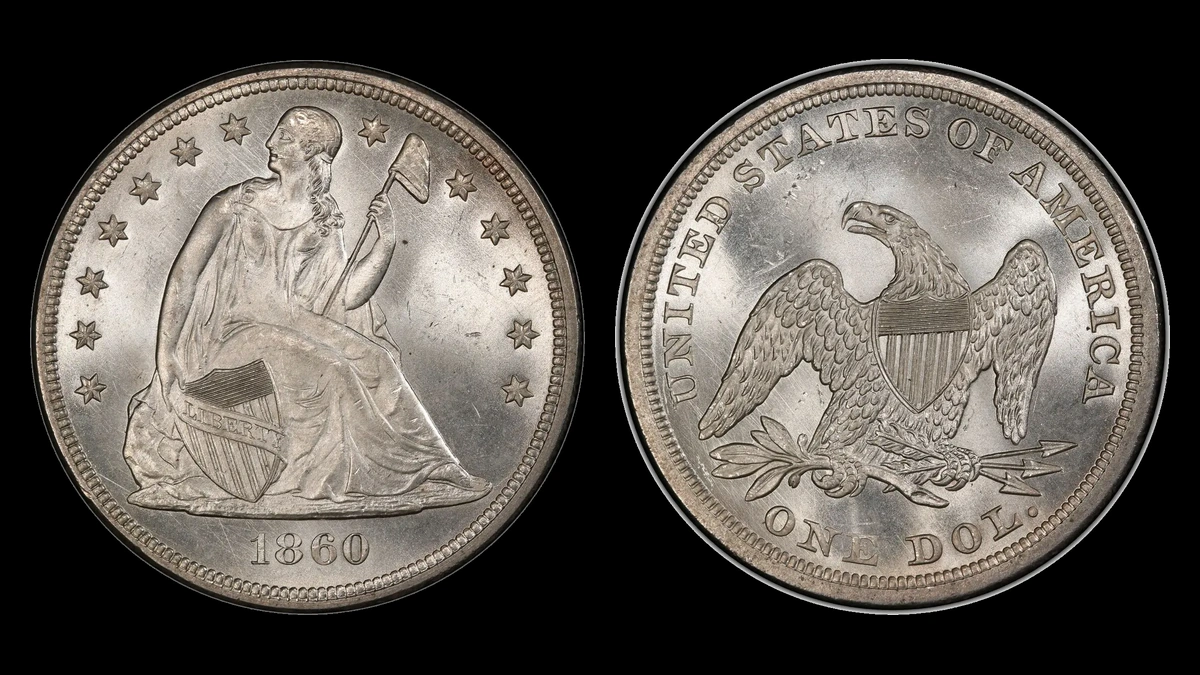
A faint repeated date and a fine reverse crack can appear together on an 1860-O dollar. They have different causes but belong to one coin with one overall value.
The 1860 Liberty Seated dollar errors here have estimated whole-coin values of $400–$10,000. A repunched-date example graded PCGS MS61 sold for $2,280 in April 2024.
Confirm the New Orleans O first, then compare the front date and the first T in STATES.
1860 Dollar Faint Extra Digit Outlines: Repunched Date Error
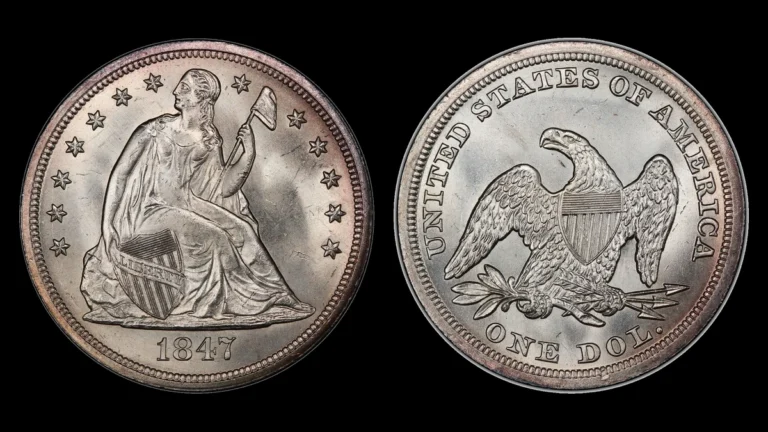
The date on the New Orleans OC-2 variety retains traces of an earlier punch position. A worker entered the date into the die more than once before the tool struck any coins.
The remnants can be slight rather than a bold second date. OC-2 names the particular pairing of front and reverse dies.
A small circular tool line within Liberty’s clothing helps identify the front. These details need an 1860-O comparison, not an ordinary Philadelphia dollar.
How to Identify
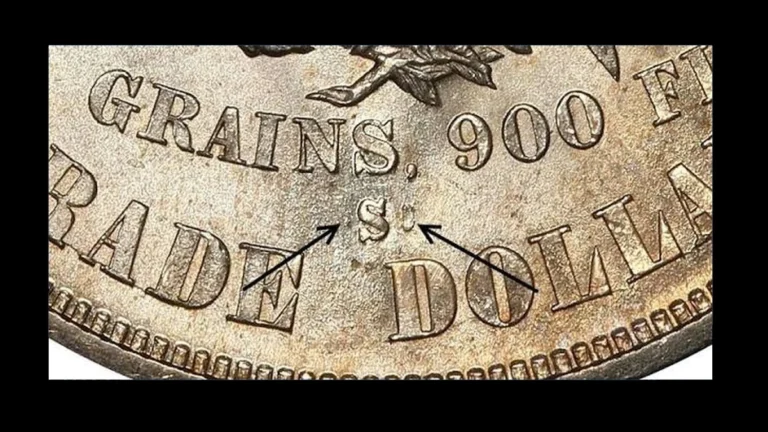
Find the O beneath the eagle to establish New Orleans. Then compare the front with an identified OC-2 photograph.
Locate the small circular line on Liberty’s abdomen below the upper clothing folds. Use it as supporting evidence while examining the finer date outlines.
Move the lamp around the date and look for parts of recognizable earlier digits. A reflection, a flat shelf from striking movement, or a scratch can sit beside a number without being another punch impression.
Match the actual remnants rather than guessing a doubling direction from one bright photograph. Keep the complete date and surrounding design in the image.
What It’s Worth
$400–$10,000 is the estimated whole-coin span from worn pieces to attractive unworn examples. Preservation accounts for much of the difference.
A PCGS MS61 example brought $2,280 at Stack’s Bowers in April 2024. MS61 describes an unworn dollar with noticeable marks.
That sale is not a fixed premium for faint repunching. Wear, cleaning, or damage may put another example in a much lower comparison.
1860 Dollar A Line Descending beside STATES: Reverse Die Crack Error
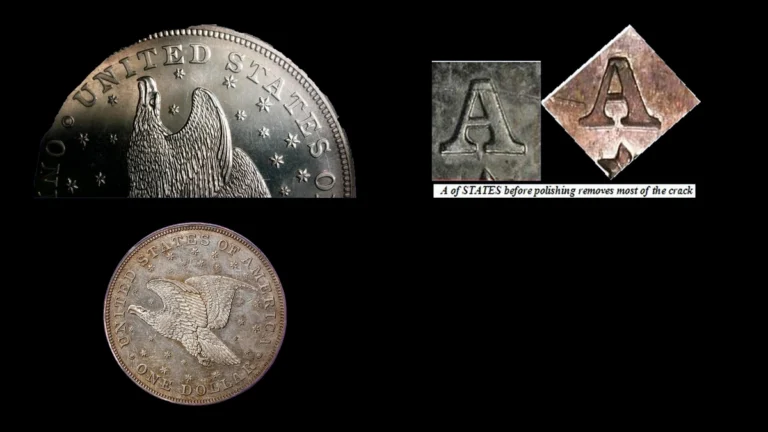
A fine raised line runs down beside the right side of the first T in STATES. Silver entered a split in the reverse die and copied its shape onto the dollar.
The coin itself is not cut through along that line. A crack in the tool leaves raised metal, whereas a scratch removes or displaces finished surface metal.
An NGC MS64+ OC-2 example shows this reverse feature alongside faint date repunching. The later die crack and the earlier date preparation are different parts of its history.
How to Identify
Hold STATES upright and locate its first T rather than the last one. Follow the line downward from beside the first T’s right side.
Change the light to check that the thread rises above the silver. A scratch may have bright pushed edges while retaining a narrow trench in the middle.
Compare the line’s starting point, junction with the letter, and full route with an identified OC-2 photograph. Dark toning or dirt can exaggerate a short mark.
A thin line elsewhere in STATES is not enough to assign the same crack. The particular position and path must agree.
What It’s Worth
$400–$10,000 is the whole-coin estimate for examples with the matching reverse crack across worn through attractive unworn condition. Visibility helps identification but does not replace grading.
The $2,280 repunched-date sale provides a same-year OC-2 comparison. It is not a separate realized price for the MS64+ crack specimen.
If both date remnants and the crack occur on one dollar, assess that dollar once. Cleaner surfaces and less wear can matter more than the number of named features.
Conclusion
Start with the O, then use the front’s small circular line and date remnants to check the OC-2 match. On the reverse, the crack must descend beside the correct T rather than simply appear somewhere near STATES.
These features tell different parts of one die pair’s history. Their estimated range values the complete silver dollar, so two marks on the same specimen do not double its price.