Rare 1981 Dollar Errors (List & Pictures)
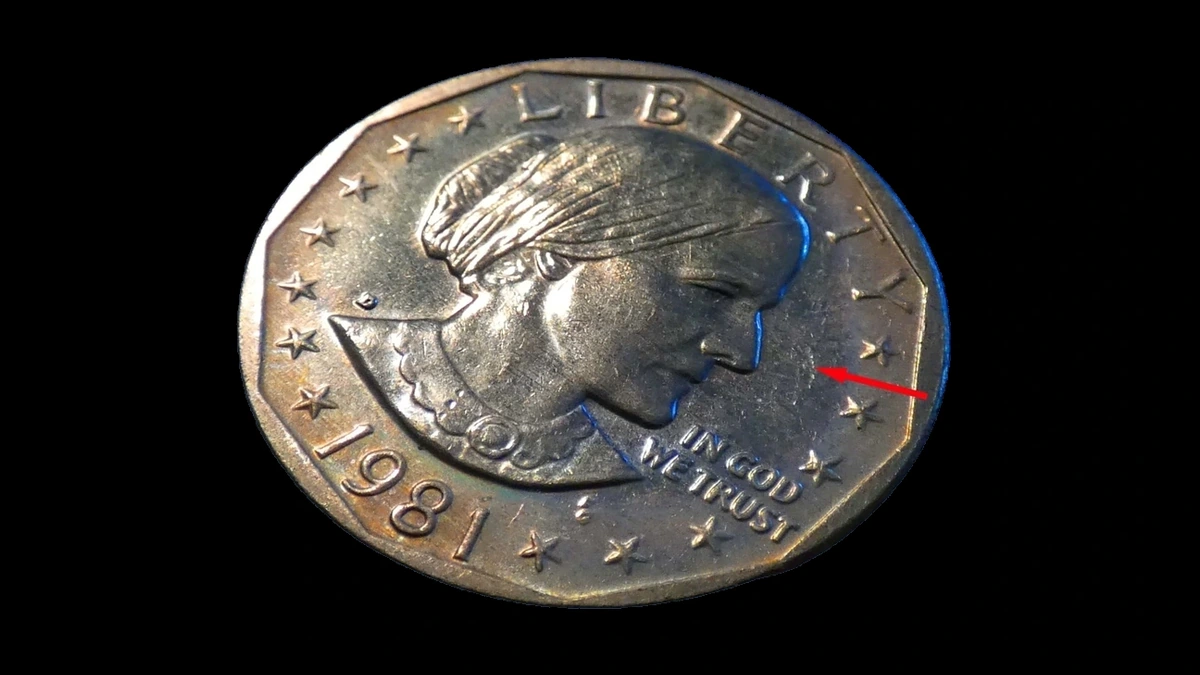
A documented grease-blocked 1981-S ordinary strike sold for $149 in June 2025. The estimated range for 1981 Susan B. Anthony dollar errors extends from $20–$10,000, including conditional values for major types without a confirmed same-year specimen.
Check small design details first, then the coin’s outline and any extra impressions. An S means San Francisco; it does not by itself distinguish an ordinary strike from a collector Proof.
1. 1981 Dollar Repeated Points on Five Stars: Doubled Die Error
On the cataloged 1981-S Type 1 Proof, the third through seventh stars between the date and LIBERTY show extra outlines. The repeated shapes were part of the die, so one impression could transfer them to the coin.
Type 1 and Type 2 name normal Proof mintmark styles. Neither style alone establishes the doubled-star variety.
How to Identify
Orient the portrait with Wexler’s star photographs and count from the date toward LIBERTY. Compare the points and edges of all five affected stars on the correct Type 1 Proof.
A single thick star point is less convincing than several matching outlines. Change the light angle to separate a fixed feature in the metal from a reflection.
What It’s Worth
$50–$500 is an estimate for a matched example of the star variety. The supplied evidence gives no specific auction result for it.
Clear doubling and well-preserved Proof surfaces improve the comparison. A normal Type 1 Proof without the pattern belongs in ordinary-coin pricing.
2. 1981 Dollar Detail Missing Within a Normal Design: Grease Strike-Through Error
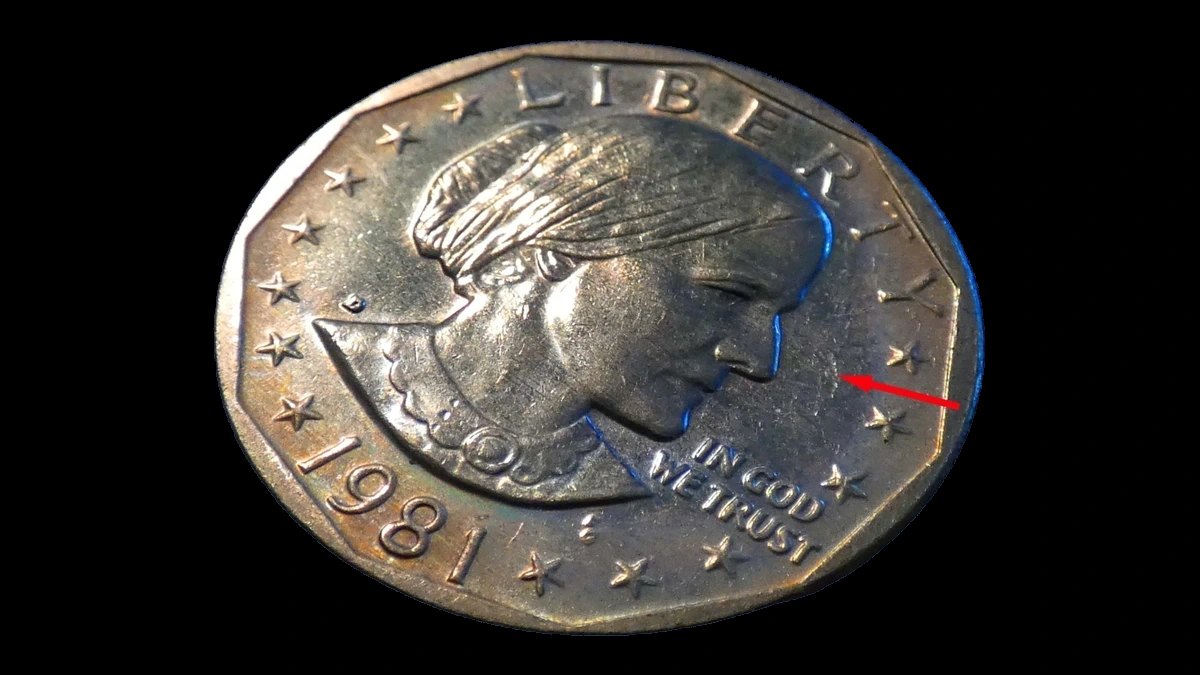
Grease in a die’s recesses can stop metal from forming part of a letter or image. The affected patch may remain weak while adjacent details appear normally struck.
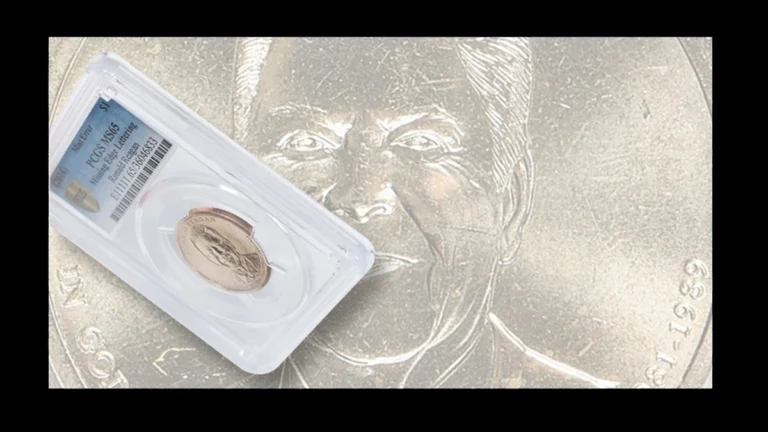
A 1981-S with this error was certified PCGS MS63. It is an unworn ordinary strike with visible marks, not a Type 2 Proof or a silver issue.
How to Identify
Compare the weak area with complete nearby letters and portrait details. Inspect for scratches, rubbed surfaces, and flattened high points that might instead explain the loss through later wear.
Confirm the finish independently of the S mintmark. The normal metal is copper-nickel layers surrounding a copper core, and brightness alone cannot prove a Proof finish.
What It’s Worth
$20–$500 is the estimated range for comparable authenticated grease-blocked dollars. The PCGS MS63 1981-S example brought $149 in June 2025.
A conspicuous interrupted design can attract more attention than one faint letter. The price still depends on the complete coin’s preservation.
3. 1981 Dollar A Curved or Straight Missing Section: Clipped Blank Error
A curved clip can form when the blank cutter overlaps an earlier hole in the strip. A straight missing edge can come from the end of that strip instead.
A collector reported a clipped 1981-D, and the supplied guide discusses both shapes. It does not establish a universal size or clock position for these errors.
How to Identify
Inspect the gap from the edge and follow the struck rim into both ends. Natural weakened or stretched detail supports a blank that was incomplete before striking; saw grooves and filing marks suggest later removal.
Weakness opposite the gap can be helpful but is not mandatory on every visible example. The normal dollar weighs about 8.1 g, although either a clip or a later cut can lower that weight.
What It’s Worth
$30–$750 is the estimated range for authenticated 1981 clips. A different-year 1979-S with a curved clip and rim clip, graded ANACS MS63, sold for $72 in March 2023.
That older sale does not value the reported 1981-D coin. The amount missing, surviving identification, and undisturbed surfaces should guide a closer comparison.
4. 1981 Dollar The Whole Design Inside an Expanded Border: Broadstrike Error
If the collar ring fails to contain the blank, the metal can spread outward while receiving a complete design. This is a broadstrike, even when the picture sits unevenly within the wider border.
The guide reports a 1981-P example graded MS64, without an exact diameter. Missing collar support can also interrupt the fine grooves normally formed on the edge.
How to Identify
Trace all the intended outer lettering on both faces before checking the width. A broadstrike retains the complete design, whereas a true off-center strike loses part beyond the metal.
A loose normal dollar measures about 26.5 mm across and weighs about 8.1 g. Expansion redistributes its metal, so inspect a wider candidate for an original strike rather than crushed details or edge dents from hammering.
What It’s Worth
$100–$1,000 is the estimated range for an authenticated 1981 broadstrike. A 1979-P graded CACG MS64 sold for $119 in June 2026 as a different-year comparison.
A normal wide-rim design variety is not this collar error. Neither its name nor a broad border on a damaged coin establishes a broadstrike premium.
5. 1981 Dollar An Incomplete Picture and Blank Crescent: Off-Center Strike Error
A misplaced blank can sit partly beyond both dies when they come together. The result combines unstruck metal on one side with design that runs off the opposite edge.
Reported 1981 examples fall roughly between 5% and 20% off center. These are guide reports, not measurements tied to one certified specimen in the supplied evidence.
How to Identify
Connect the unstruck crescent to missing outer detail on both faces. If every intended element fits on the coin, return to the broadstrike comparison.
Keep the date visible in a full-coin photograph and preserve orientation when turning it over. A shift on only one face may involve a misaligned die, and an unreadable year cannot be supplied from a seller’s title.
What It’s Worth
$100–$1,500 is the estimate for authenticated 1981 off-center dollars. A 1979-P struck 15% off center and graded NGC MS66 brought $439.20 in March 2026.
The 1979 sale illustrates the mechanism and condition of another coin. It is not evidence that a 1981 example sold for that amount.
6. 1981 Dollar Overlapping Dates or Portraits: Multiple Strikes Error
When a coin moves before another blow, parts of a second design can overlap the first. Another displaced blow may add a third consistent group of details.
Multiple strikes are reported for 1981, but the supplied evidence fixes no particular mint, angle, or strike count on a certified coin. Routine repeated blows during Proof production remain normal when the design stays aligned.
How to Identify
Pair repeated date digits with nearby letters and portrait fragments. They should describe the same movement rather than several unrelated thick edges.
Follow those impressions across both faces, keeping their orientation fixed. A backward, sunken copy can result from later squeezing between finished coins, so it does not automatically prove an extra Mint strike.
What It’s Worth
$300–$4,000 is an estimated range if the displaced strikes are authenticated. The guide does not provide a 1981 sale for a particular example.
Recognizable successive images and readable dates make the sequence easier to understand. Only count additional blows when a consistent extra group of design elements supports them.
7. 1981 Dollar A Backward Design Below the Surface: Possible Brockage Error
A struck coin caught between a die and fresh blank can press a reversed, sunken copy into the new coin. This impression is called a brockage.
The 1981 category remains a possibility requiring a confirmed specimen. Examples dated 1979 or 1999 cannot establish the discovery of a 1981 brockage.
How to Identify
Check that lettering is both backward and recessed into the metal. Compare the copied image with the surviving normal face to understand how another coin could have contacted the blank.
Inspect the edge and rim for crushing associated with later squeezing. A mirror image without a readable connection to 1981 is insufficient to assign this date.
What It’s Worth
$500–$6,000 is a conditional estimate for an authenticated, date-identifiable 1981 brockage. No same-year transaction is supplied.
A large readable impression can display better than a small indistinct one. Its Mint origin must be resolved before applying this range.
8. 1981 Dollar Metal Curled Around a Central Design: Possible Die Cap Error
A coin stuck to a die may remain there through further blows and spread around the tool. Its raised wall can produce a cup-like shape known as a die cap.
The cap is the stuck coin itself, distinct from another blank receiving an impression from it. No confirmed 1981 example is established in the supplied account.
How to Identify
Examine the side profile, base design, and transition into the wall together. Stretched letters following the expanded metal can support continued striking; sharp folds or plier marks may indicate later bending.
Preserve surviving date and mint details without flattening the cup. The opposite surface need not retain a sharp mirror image, and cup shape by itself does not establish a cap.
What It’s Worth
$1,000–$8,000 is a conditional estimate for a genuine 1981 die cap whose date can be identified. It is not a recorded sale for this year.
Wall development, intact surfaces, and recognizable details would influence value. An unlocated coin that might have received the cap’s impression is not part of that valuation.
9. 1981 Dollar The Dollar Design on Different Metal: Possible Wrong Planchet Error
A planchet is the prepared blank that enters the press. A disc intended for another denomination can leave the dollar design on the wrong amount or composition of metal.
This 1981 category remains hypothetical in the supplied guide. Other-date illustrations, including later golden-dollar metal, do not establish a particular 1981 blank or mint.
How to Identify
Verify a readable 1981 date within the Anthony design. A 1981 Lincoln cent struck over an older Anthony dollar is a cent error and does not change the underlying dollar’s year.
Use weight, dimensions, alloy, and surviving design together. For comparison, a quarter blank normally weighs 5.67 g and a copper-rich 1981 cent blank 3.11 g; neither figure is a measurement of a confirmed 1981 dollar error here.
Look for grinding around missing lettering and coatings that alter color. Professional alloy testing should support the proposed blank rather than relying on appearance alone.
What It’s Worth
$1,000–$10,000 is a conditional estimate for an authenticated 1981 wrong-planchet dollar. Different blanks and the amount of readable design would require different comparisons.
A 1979-S on a cent blank graded PCGS MS64 sold for $6,300 in April 2021. This unworn older coin demonstrates one recognized combination without proving a 1981 discovery.
Conclusion
The strongest 1981 identifications connect a visible feature with the right production explanation: fixed star doubling, locally blocked detail, incomplete blank metal, or a displaced impression. Finish and readable date remain important throughout.
The $149 grease-strike sale is a documented same-year result. Larger estimates within the $20–$10,000 span include unconfirmed types, so preserve their conditional status until an actual 1981 specimen is authenticated.