Rare 1897 Dollar Errors (List & Pictures)
Not every unusual Morgan dollar feature is on Liberty’s face. Among 1897 dollar errors, a stepped edge, peeling silver, or raised grainy patch can be the useful clue, with estimated whole-coin values of $50–$4,000.
A different-year 1882-CC partial-collar dollar sold for $480 in September 2025, providing context for a documented 1897-S example. Start by deciding whether your feature adds height, removes detail, or changes the edge.
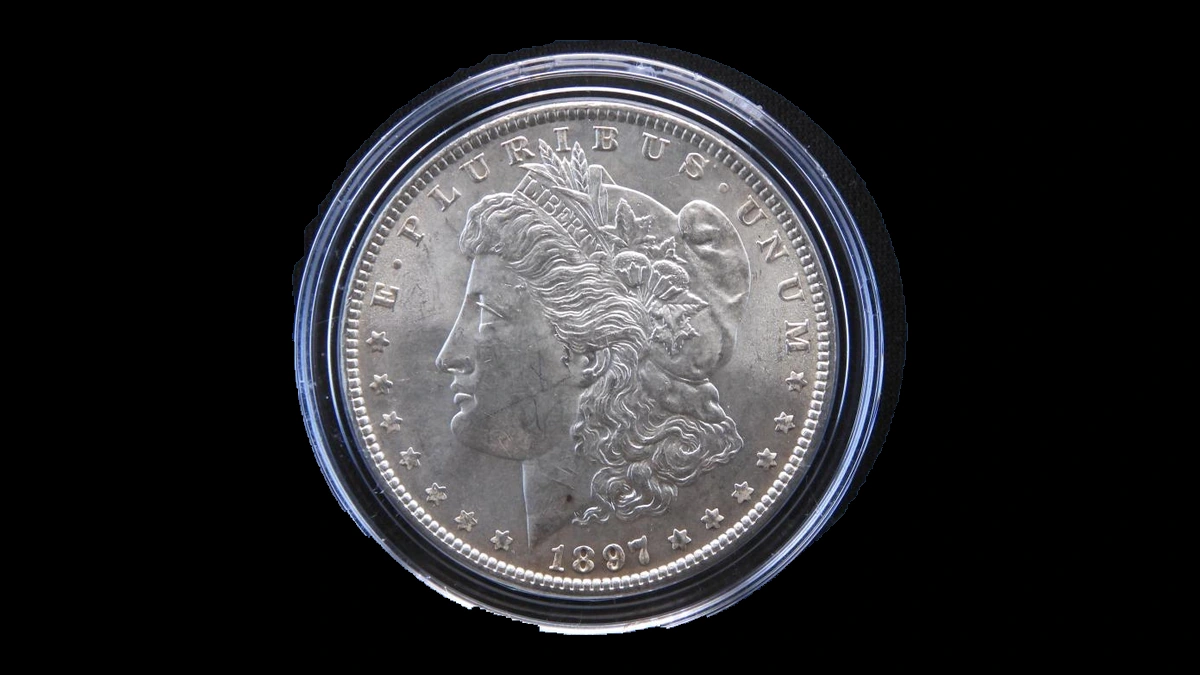
1. 1897 Dollar Raised Threads across the Design: Die Cracks Error
Thin raised lines have been reported near the date, eagle’s wings, and outer border. A crack in the die, the steel striking tool, fills with silver and leaves a ridge on the coin.
The year reports describe several locations without assigning every line to one mint. There is no single route that all 1897 die cracks must follow.
How to Identify
Trace the line through the design and inspect it under side lighting. It should rise above nearby silver rather than cut down through finished letters or feathers.
A scratch can have raised metal beside its cut, so examine the center of the mark too. A continuous ridge without an underlying groove better fits a die crack.
What It’s Worth
$50–$250 is the estimate for fine cracks on ordinary worn through modestly unworn examples. Much of that amount can be the dollar’s underlying collector value.
A long visible line is easier to display than a tiny trace. It still should not be priced like a major lump caused by a large missing piece of die.
2. 1897 Dollar Tiny Raised Grains below the Tail: Pitted Die Error
A rough patch can come from small holes in the die rather than corrosion on the dollar. Silver enters those holes during striking and creates tiny raised bumps.
The supplied Calkins listing places this feature below the tail feathers and in the lower-left wreath on Philadelphia VAM-6A.
How to Identify
Use changing light to separate bumps above the surface from holes eaten into it. Match both the grainy texture and its position around the wreath.
Confirm that the coin has no mintmark beneath the wreath before comparing VAM-6A. Leave dark crust or residue untouched rather than scraping to discover what lies underneath.
What It’s Worth
$50–$300 covers common circulated or modestly unworn examples with the matching die texture. Clear raised grains and attractive surrounding surfaces help show the feature.
A stain or corroded patch does not receive that allowance simply because it looks rough. Its height and repeated pattern are the important differences.
3. 1897 Dollar A Narrow Line through the Silver: Reported Streak Error
A reported 1897-S streak may involve the original metal or material that blocked part of the strike. Those are different causes, even if both produce a long narrow feature.
An uneven mixture or impurity can affect the blank, while grease or debris between blank and die can weaken a path of design. A later scratch or stain can resemble either.
How to Identify
Follow the line across letters and picture details. Complete design under a color change suggests a different explanation from detail that failed to form along a shallow channel.
A cut through already finished detail points toward a scratch. Note any raised, recessed, or lifting portions without applying solvent or probing the surface.
What It’s Worth
$50–$350 is the estimate for a confirmed original-metal streak or modest struck-through streak on an 1897-S dollar. It does not automatically apply to a line of unknown origin.
A clear design interruption can be more interesting than faint discoloration. The San Francisco coin’s normal value and condition also contribute to the total.
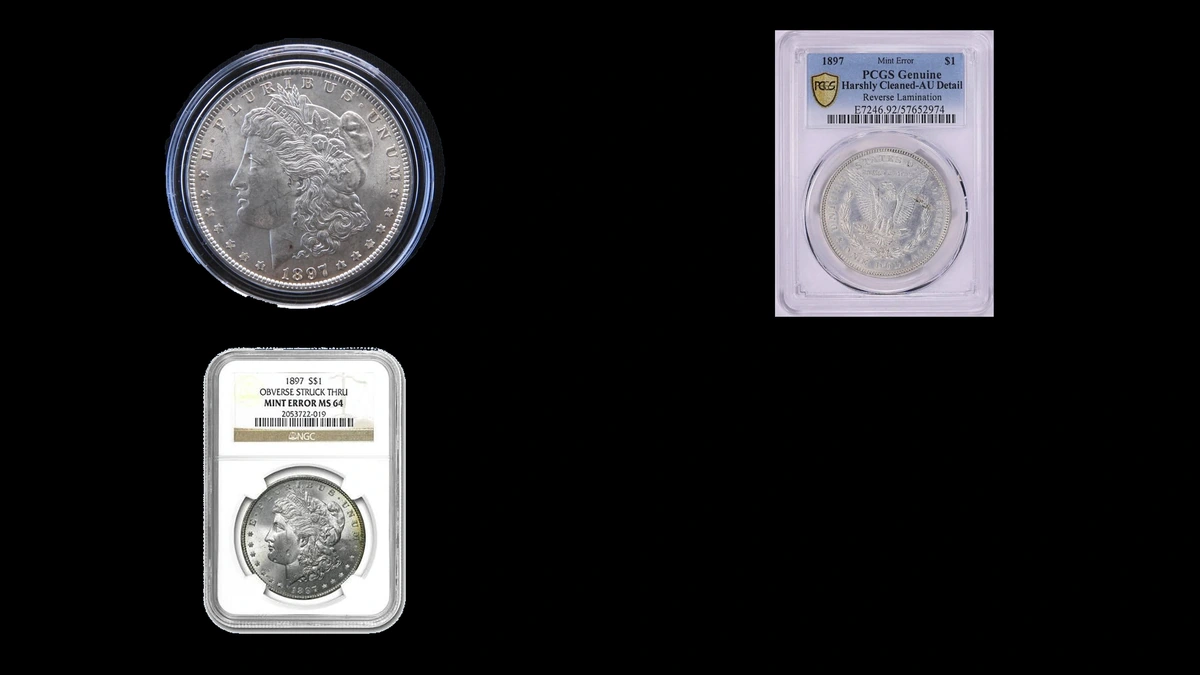
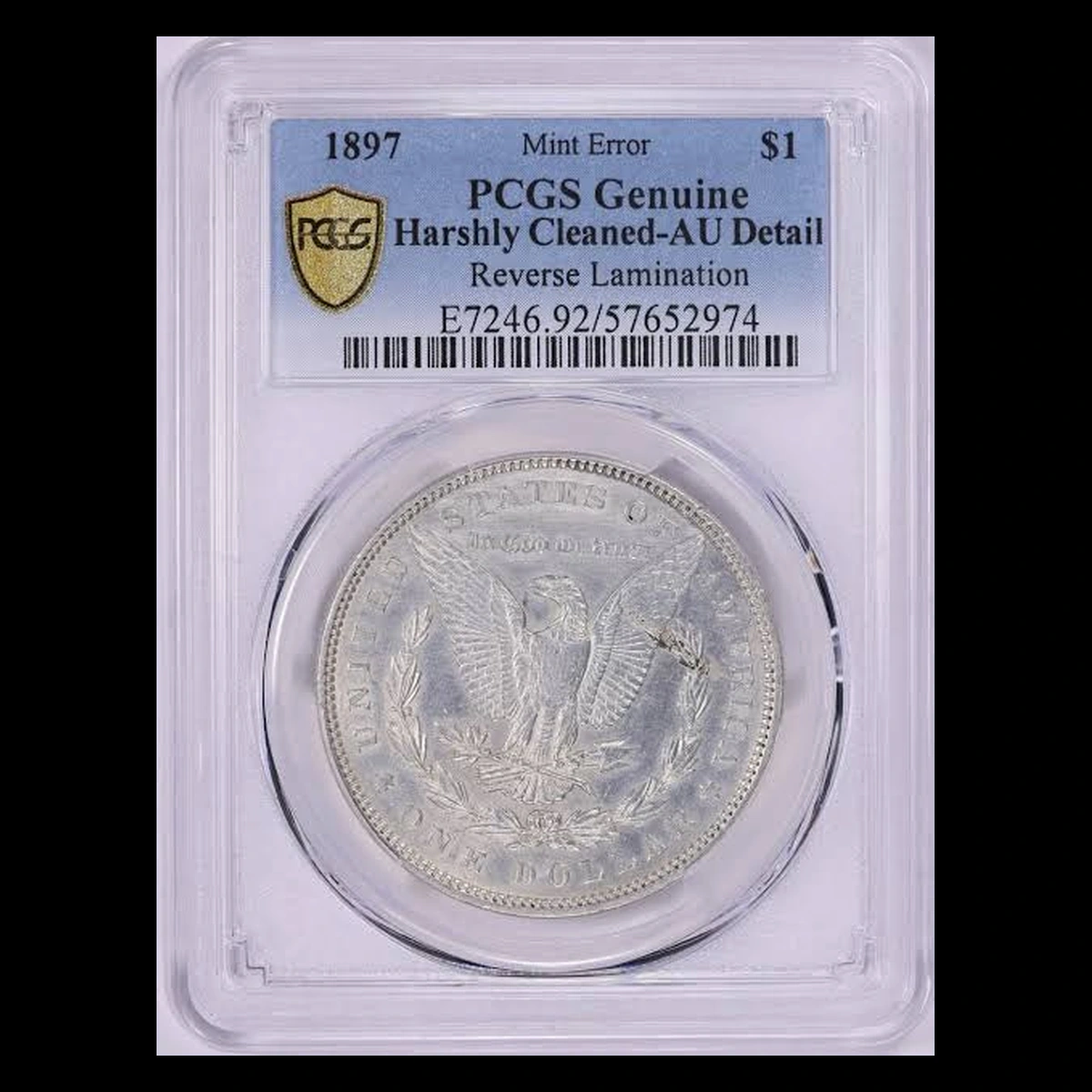
4. 1897 Dollar A Surface Layer Missing or Lifting: Lamination Error
A weak seam in the blank can allow a thin layer to peel away. Some coins keep a small flap, while others show the shallow area left by detached metal.
Stack’s Bowers included an 1897 detached lamination graded ANACS MS60 Details in a nine-dollar error lot in 2014. That particular coin was described as cleaned.
How to Identify
Look for a thin ledge and a natural layered boundary, with any surviving design connected to it. Parallel cuts or a scooped-out hollow suggest later tool damage.
A small peel may barely change the normal 26.73-gram weight. Do not pull an attached piece away to make the separation easier to see.
What It’s Worth
$75–$600 is the comparison range for 1897 laminations. Visibility, preservation, and an intact attached piece all affect appeal.
The 2014 coin’s group lot cannot supply an individual realized price. Its cleaning also limits comparison with an undamaged dollar that has similar remaining detail.
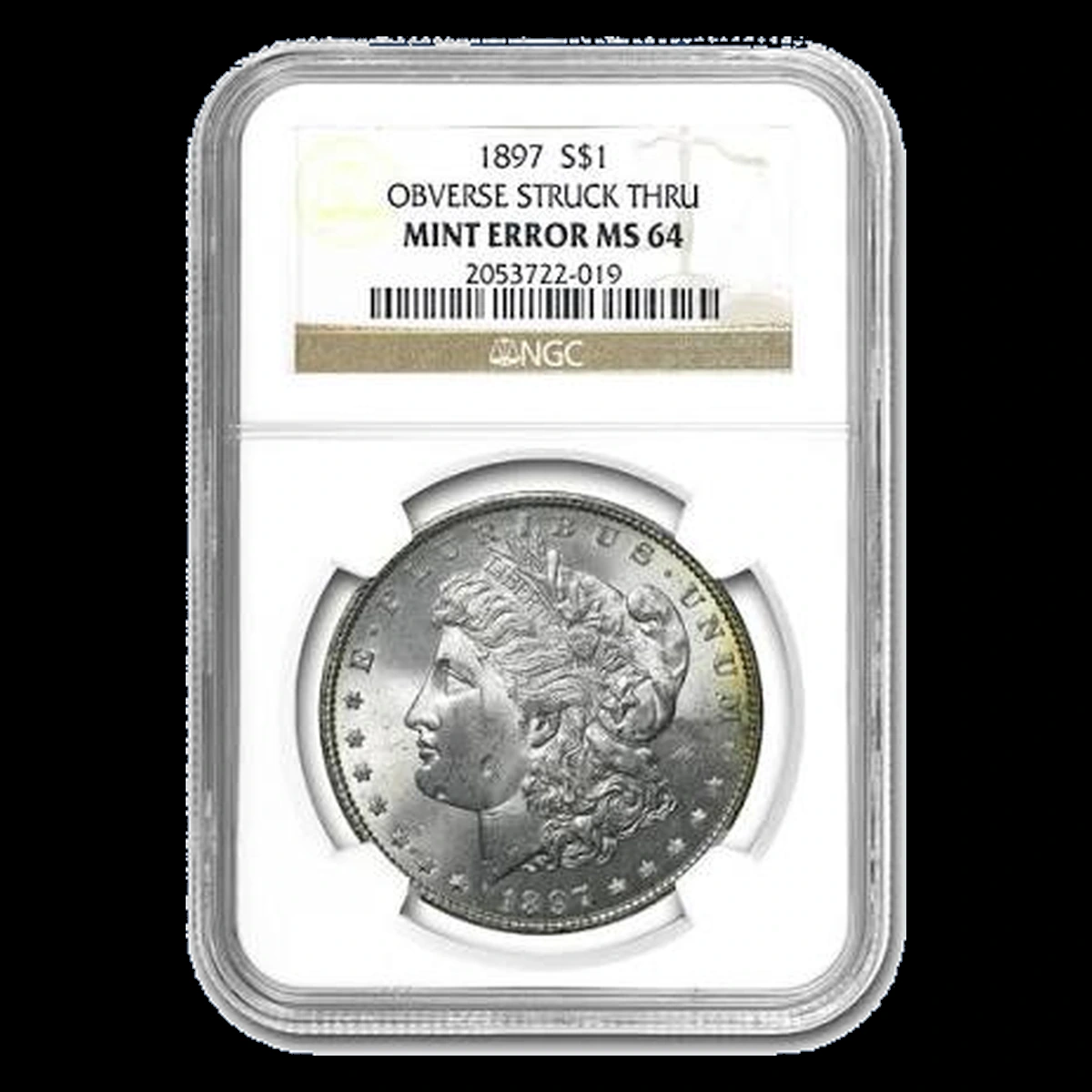
5. 1897 Dollar Two Small Hollows on the Cheek: Struck Through Error
An APMEX-listed Philadelphia dollar graded NGC MS64 has two small depressions on Liberty’s cheek. The dealer identifies them as struck-through marks, formed when material blocked contact with the die.
The material itself is not identified. Two craterlike shapes do not establish what object was present.
How to Identify
Compare the whole cheek before enlarging the hollows. This exposed area often receives ordinary contact marks during storage.
Inspect each boundary for scraping, crushed detail, or a pushed-up impact rim. Matching positions alone cannot prove that another coin’s hollows formed during striking.
What It’s Worth
$100–$750 is the estimate for genuine examples of this type. The NGC MS64 dealer example supports the physical description without supplying a disclosed auction result.
Clearly defined impressions on an attractive unworn cheek make a better display than faint marks among heavy damage. The value concerns the complete coin, not two separate prices for its hollows.
6. 1897 Dollar A Step beside the Edge Grooves: Partial Collar Error
The edge can have two levels when only part of the blank sits inside the collar during the strike. The collar forms the grooves and limits sideways expansion, while metal outside it can spread.
A September 2013 Stack’s Bowers catalog records an 1897-S partial-collar dollar graded NGC MS61. The clearest evidence is visible from the side.
How to Identify
Follow the boundary between the grooved band and the expanded section around the edge. One crushed spot from an impact is not the same continuous strike feature.
For a loose coin, compare the spread with the usual 38.1-millimeter diameter without pressing tools into the metal. Keep certified coins inside their holders and use edge photographs.
What It’s Worth
$150–$1,000 is the estimate for 1897-S partial-collar dollars. A different-year 1882-CC example graded MS65 sold for $480 in September 2025.
Its mint, date, and grade differ from the documented 1897-S MS61. Use the visibility of the actual edge step and overall condition to make a closer comparison.
7. 1897 Dollar Broad Shallow Detail on Both Faces: Weak Strike Error
A dollar can show faint designs when the dies do not press the blank firmly enough. An NGC-certified 1897 example appeared at GreatCollections with a “Die Adjustment Strike” label.
The label identifies the recognized weak-strike appearance but does not prove why the press produced it. Broad weakness is different from an off-center design or one locally blocked letter.
How to Identify
Compare the entire front and back for shallow detail on otherwise original surfaces. Ordinary wear tends to smooth exposed high points, while sanding can leave directional scratches.
Enough design must remain to establish the coin’s identity. Normal weight and width can help screen the blank, but those measurements alone do not prove weak striking pressure.
What It’s Worth
$500–$4,000 is the estimate for a certified example of this kind. Dramatic weakness with recognizable date and design can attract strong interest.
The GreatCollections coin sold in June 2021, but its public page hides the realized amount. The estimate is not a substitute figure for that transaction.
Conclusion
Raised grains, peeling layers, and recessed impressions tell different stories, even on the same date. For a partial collar, the edge may reveal more than either flat face.
Match the feature before applying its price range, and include the dollar’s normal collector value and condition. A reported streak needs its cause established, while a hidden sale amount should remain separate from an estimated value.