Rare 1859 Dollar Errors (List & Pictures)
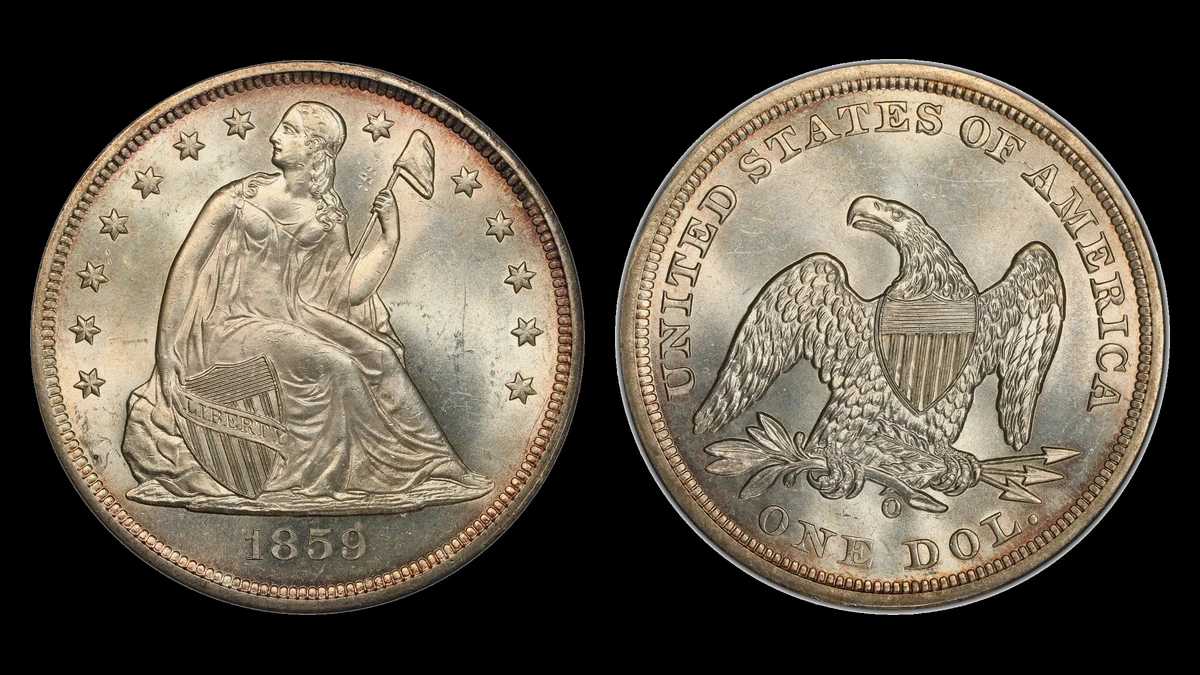
A San Francisco dollar with repunched date details sold for $13,500 in August 2025. Estimated whole-coin values for the 1859 Liberty Seated dollar errors below range from $700–$60,000.
Begin beneath the date digits, using the correct mint and finish for comparison, then check the eagle’s alignment with a controlled flip. Extra date strokes and a tilted reverse arise from different stages of die work.
1859 Dollar Extra Strokes beneath the Date: Repunched Digits Error
On the documented San Francisco variety, remnants of an earlier punch position remain below the bases of 1 and 8. The coin reproduced those details from a die that already carried both impressions.
The feature does not indicate that someone stamped a new year onto a finished dollar. Tool wear can weaken the surviving traces, making the exact lower edges important.
A separate Philadelphia Proof comparison has repeated detail beneath the first 1. Its specially prepared collector finish and absence of S distinguish the appropriate reference from the San Francisco circulation variety.
How to Identify
Keep the complete date in view while enlarging the lower edges of 1 and 8. Look for persistent raised strokes rather than a reflection along a broad digit.
Confirm the S below the eagle before using the San Francisco pattern. On a confirmed Philadelphia Proof, compare the first 1 with a matching Proof photograph instead of borrowing the S-mint diagnostics.
An unmarked reverse alone does not prove Proof manufacture. Change the lamp angle to separate fixed extra metal from glare, then assess finish independently.
What It’s Worth
$700–$60,000 is the estimated whole-coin range for matching San Francisco examples, from worn to exceptional unworn preservation. The PCGS MS63 1859-S example brought $13,500 at Heritage in August 2025.
MS63 means unworn with noticeable marks. Separately identified Philadelphia Proofs have an estimated $2,500–$30,000 range, which that San Francisco sale does not directly price.
1859 Dollar The Eagle Leans to the Right: Rotated Reverse Error
An observation recorded by PCGS found an 1859-S reverse tilted about 20 degrees to the right. It was one of five coins examined, a small observation that does not establish frequency across the issue.
The entire reverse is turned relative to the portrait because the two dies were not in their normal alignment. A single crooked letter or independently tilted photograph is a different matter.
How to Identify
Hold Liberty upright against a vertical reference with the date level. Turn the coin or its whole holder top to bottom without twisting sideways.
The eagle should normally finish upright after that motion. Repeat the flip with the same starting position, then measure a consistent tilt rather than assuming the reported 20 degrees applies.
Keep a fixed orientation marker on the holder or photographic background, never on the coin itself. Confirm the reverse S to connect the candidate with the San Francisco observation.
What It’s Worth
$700–$30,000 is an estimated range for a confirmed rotation near the reported angle across varying 1859-S grades. The scarce date and mint contribute substantially.
The PCGS discussion records an observed rotation rather than a sale of that exact specimen. Original surfaces, condition, and a repeatable angle are needed for a useful price comparison.
Conclusion
The lower date strokes and the eagle’s tilt require different evidence on an 1859 dollar. Match San Francisco digits or Philadelphia Proof detail to the appropriate reference, then preserve the relationship between faces when testing rotation.
The $700–$60,000 estimates concern complete coins. The $13,500 sale prices one San Francisco date-variety example, while the rotation observation supplies neither a sale amount nor a frequency for the entire issue.