Rare 1878 Quarter Errors (List & Pictures)
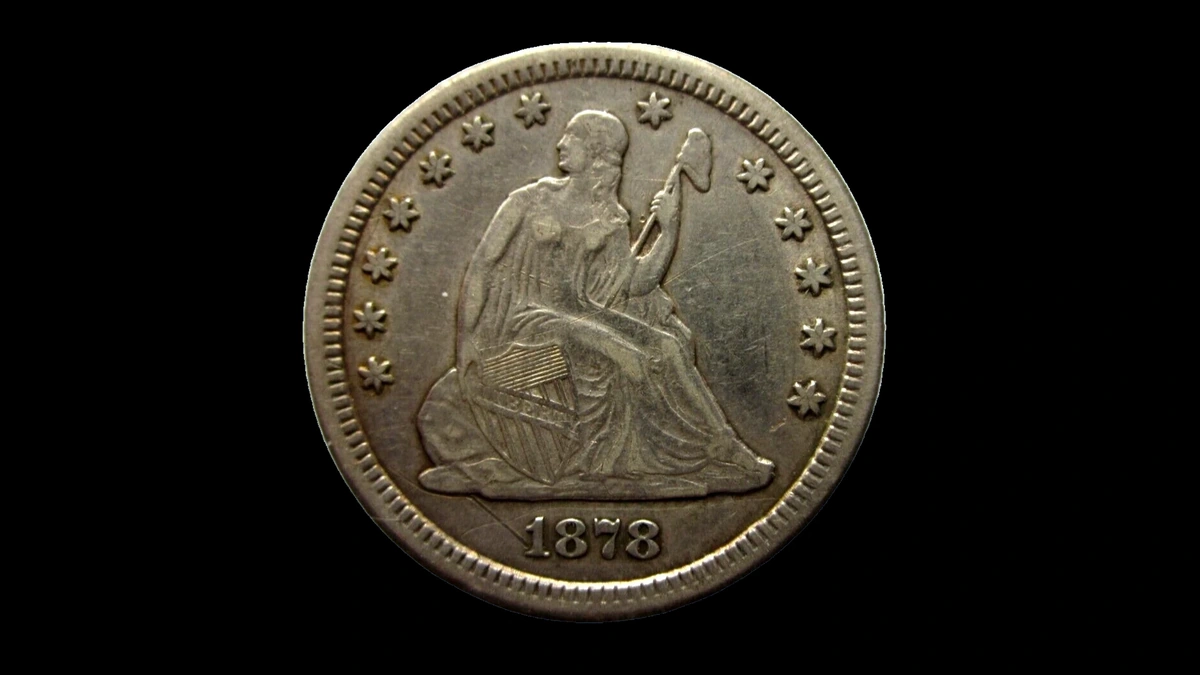
An exceptional Carson City Briggs 1-B quarter brought $19,200 on October 5, 2025. The estimated whole-coin range for 1878 Liberty Seated quarter errors here is $100–$22,000.
Compare the long raised mark across Liberty with the much smaller crack between stars on a separate Philadelphia Proof. The mint, finish, and preservation determine which example offers a useful comparison.
1878 Quarter A Raised Diagonal across Liberty: Cancelled Die Variety Error
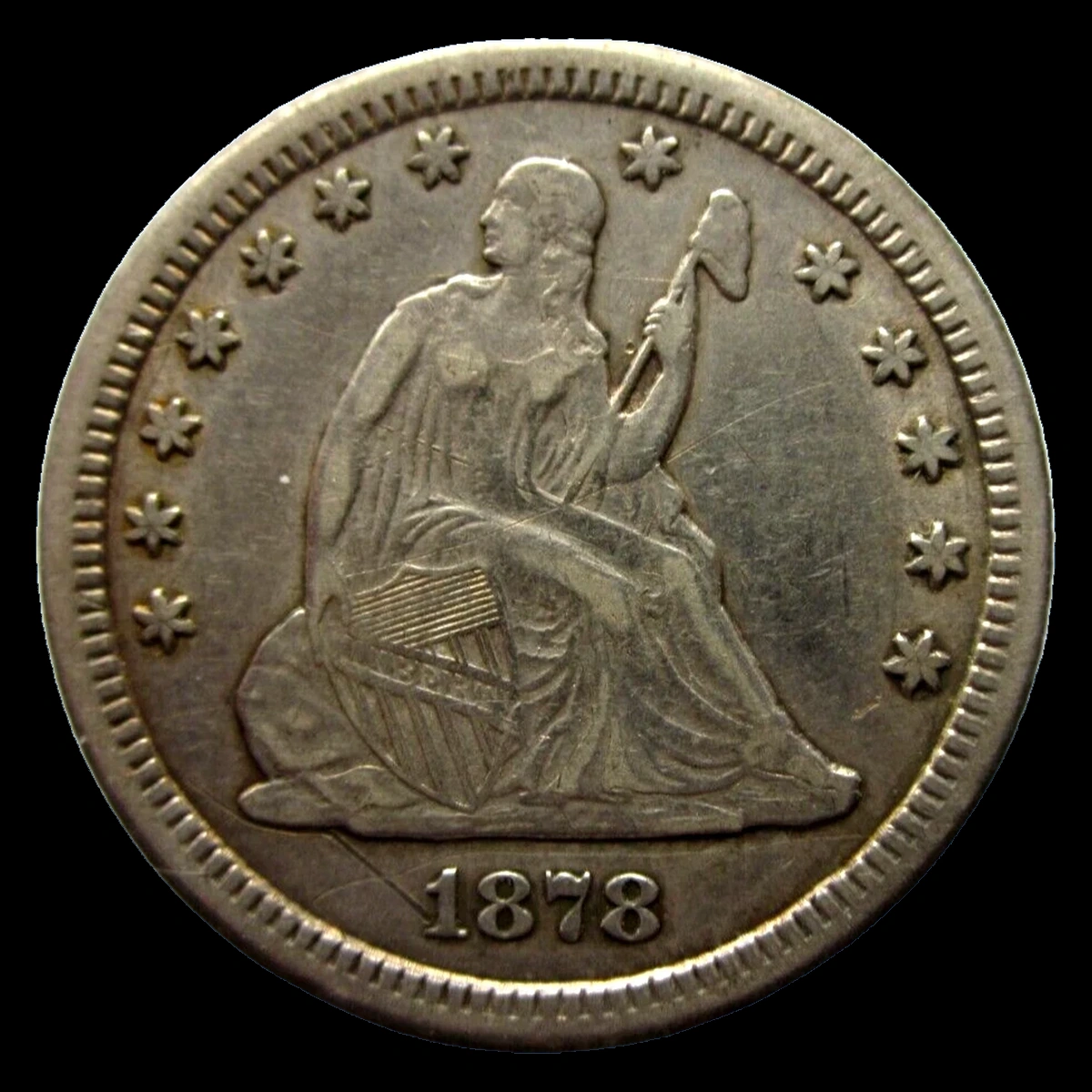
The conspicuous slash runs from the viewer-right knee through Liberty’s abdomen toward and above the viewer-left elbow. It is raised silver copied from a mark cut into the die, rather than a scratch cut into the finished quarter.
Collectors traditionally call this Carson City feature the Cancelled Die variety. The nickname does not establish why the tool was marked.
Briggs 1-A and 1-B identify this front die paired with different reverse dies. Their shared slash is one recognizable tool feature seen on multiple coins.
How to Identify
Keep Liberty upright and follow the entire diagonal route across her body. A full design view is more useful at first than an isolated enlarged bump.
Check for CC beneath the eagle, then use side lighting to confirm that the slash stands above the surface. A later scratch may have a central groove with displaced edges rather than the continuous raised pattern.
Compare the mark and its surrounding design with an attributed Briggs 1-A or 1-B photograph. Keep viewer-left and viewer-right consistent so a rotated image does not obscure the route.
What It’s Worth
$100–$22,000 is the estimated whole-coin range from worn to exceptional examples. The Carson City issue and surface preservation account for much of that span.
A PCGS MS67 Briggs 1-B sold for $19,200 at Heritage on October 5, 2025. MS67 describes an exceptionally well-preserved unworn quarter, not a larger version of the die mark.
1878 Quarter A Fine Connection between Stars: Proof Die Crack Error
The separate Philadelphia Proof example has a faint raised line between the third and fourth front stars. Silver filled a narrow crack in the die and reproduced that line during striking.
The coin is attributed to Briggs 4-D. Its specially prepared collector finish must be established independently, since neither a shiny surface nor the crack alone proves Proof manufacture.
How to Identify
Use an upright reference photograph to locate stars three and four. Magnify the intervening space and compare the exact narrow connection with an attributed Briggs 4-D Proof.
Move the lamp to distinguish a raised ridge from a scratch or unrelated polish line. Do not substitute any mark near a star for the specified route.
What It’s Worth
$800–$5,000 is an estimated range for comparable genuine Proofs with varying preservation. Most of the amount values the Proof itself rather than the tiny crack.
NGC records the PR66+ example at $1,762.50 in January 2017. Hairlines, cleaning, or reduced reflectivity can influence another Proof’s price more strongly than this small feature.
Conclusion
The long Carson City slash and the small Philadelphia Proof crack both reproduce damaged dies, but they belong to different coins and need different photographs. The Cancelled Die nickname does not prove intent, and the star crack does not establish Proof finish.
Within the $100–$22,000 estimates, compare the whole quarter’s mint, surface quality, and wear. The $19,200 sale reflects exceptional preservation alongside a recognized tool variety.