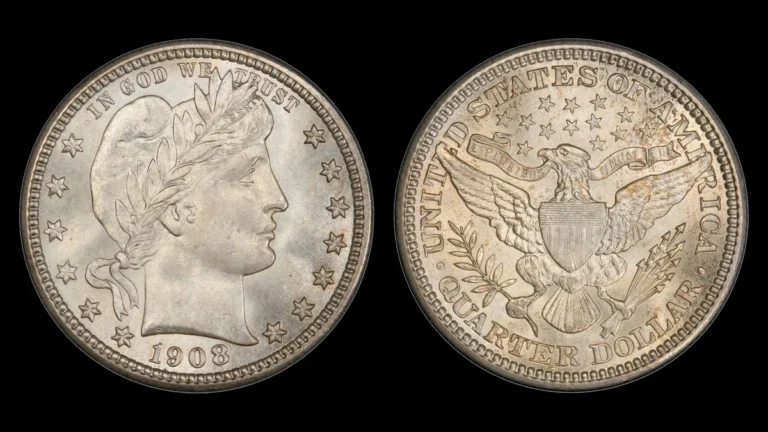
Rare 1900 Quarter Errors (List & Pictures)
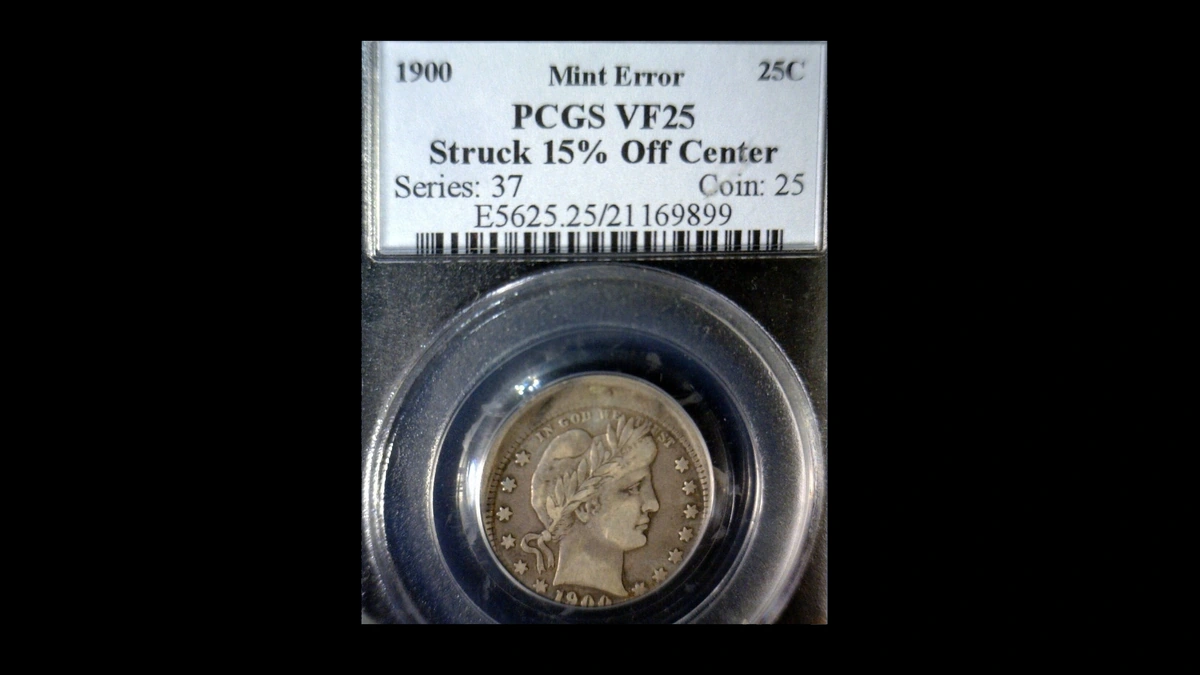
A dated Barber quarter struck fifteen percent off center sold for $920 in September 2002. Estimated values for 1900 quarter errors range from $25–$8,000 across minor features and major authenticated striking mistakes.
This guide explains the different evidence for weak design, missing metal, repeated punches, and displaced or overlapping strikes.
| Category | Estimated value |
|---|---|
| Blocked design or strike-through | $25–$300 |
| Die cracks and cuds | $25–$600 |
| Curved clip | $50–$750 |
| Repunched date | $40–$1,000 |
| Repunched S | $100–$1,500 |
| Off-center strike | $300–$5,000 |
| Reported double strike | $1,500–$8,000 |
1. 1900 Quarter Struck Through Grease or Debris Error
The reports mention weak hair, date, or motto areas, rather than one coin necessarily missing all three. Material blocking part of a die can prevent local detail from forming even when adjacent features remain sharp.
Grease-related weakness is one possible explanation within the struck-through category. Ordinary wear, weak striking, and deliberate rubbing can also reduce detail.
How to Identify
Compare the affected area with nearby features of similar height and the exposed high points on both faces. General wear differs from a localized interruption surrounded by clear design.
Photograph the transition without cleaning or removing anything from a depression. Grease usually does not remain as an identifiable object, so describe the visible effect before assigning the material.
What It’s Worth
Circulated examples with a clearly identified blocked-design error have estimated values of $25–$300. A faint missing stroke may add little to an already worn coin.
Mint and preservation remain part of the whole-coin value. Exceptional high-grade pieces require different comparisons from this ordinary circulated range.
2. 1900 Quarter Die Cracks and Cuds Error
Silver entering a crack in a die can form a thin raised ridge on the finished quarter. Many coins from the same tool may repeat that path.
A larger break at the die’s edge can leave a raised rim-connected patch called a cud. It differs from a cut in the silver or a layer peeling from the coin itself.
How to Identify
Use side lighting to trace the line or patch through its complete boundary. A scratch can cut finished detail and push up a narrow lip, so inspect both the raised and recessed areas.
Include the rim in a cud photograph to show the connection. A large internal bump does not become a cud merely because it is conspicuous.
What It’s Worth
Circulated quarters with identified cracks or rim breaks have estimated values of $25–$600. Clearer, larger original breaks can attract more interest than tiny worn ridges.
Compare Philadelphia, New Orleans, and San Francisco within their own normal price levels. A scarce mint’s underlying value should not be credited entirely to the defect.
3. 1900 Quarter Curved Clipped Blanks Error
A curved gap can originate when a blank-cutting punch overlaps a previous hole in the strip. The incomplete disc then receives its design with that metal already absent.
The 1900 reports do not establish a universal percentage or clock position. A clip’s missing metal differs from the solid unstruck crescent of an off-center coin.
How to Identify
Inspect both ends of the gap and the way the rim or nearby lettering formed beside it. Saw marks, filing, or sharply cut finished details suggest later removal.
A normal silver quarter weighs 6.25 grams. A lower reading and possible weakness opposite the gap can support inspection, but do not establish when metal disappeared.
What It’s Worth
Genuine curved clips have estimated values of $50–$750 in circulated through modestly unworn condition. Readable identity and an original boundary matter alongside gap size.
Cleaning or heavy scratches can outweigh the appeal of a small clip. A crescent cut into a finished quarter is damage, not the error covered by this estimate.
4. 1900 Quarter Repunched Dates Error
Philadelphia reports include an extra stroke at the first digit and separate patterns involving more of the date. Some earlier impressions lie below or to the right of the final numbers.
The marks originated when a date punch entered the die more than once. The 1-only description does not establish a direction and should not inherit one from the whole-date reports.
How to Identify
Photograph the complete date and compare each extra stroke with the number beside it. A raised remnant should fit a repeated digit rather than an isolated lump or shallow scratch.
Confirm the Philadelphia issue from the full coin before applying these patterns. O and S coins need their own evidence rather than the same attribution by year alone.
What It’s Worth
Identified Philadelphia repunched dates have estimated values of $40–$1,000. Clear remnants and original surfaces support stronger comparisons.
A related 1908 Philadelphia misplaced-date quarter graded ANACS MS63 sold for $432 in March 2024. Its digits were placed too low, making it a different date-punch feature rather than a sale of the 1900 variety.
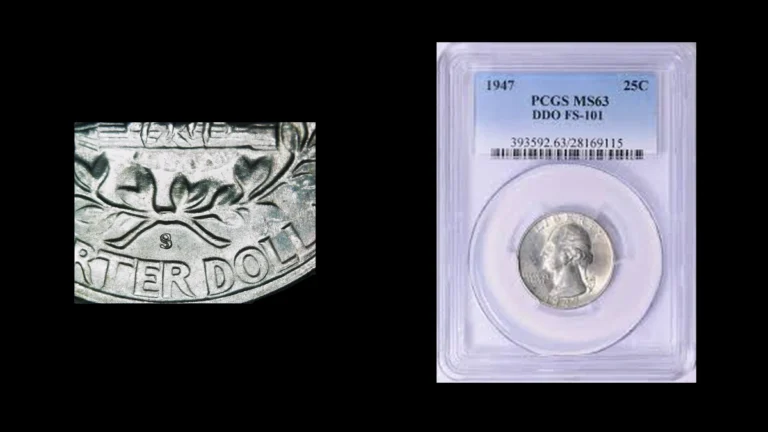
5. 1900 Quarter Repunched S Mintmark Error
The Barber Coin Collectors’ Society survey lists an earlier S to the left of the main mintmark. “West” describes that position with the reverse upright.
The repeated letter came from separate punch positions in the die. It does not mean the whole coin moved left during striking, and the report does not establish a New Orleans O/O variety.
How to Identify
Locate S beneath the eagle and inspect its left side for parts of an earlier letter. Keep enough surrounding design in the photograph to preserve orientation.
Compare the secondary curve with the main S under changing light. Dents can push metal beside a letter, while shadows may imitate an outline that is not actually present.
What It’s Worth
Identified repunched-S quarters have estimated whole-coin values of $100–$1,500 in circulated through modestly unworn grades. San Francisco’s ordinary collector value can contribute substantially.
A worn coin with only a doubtful shadow should not receive an established-variety premium. Exceptional preservation requires a separate comparison beyond this ordinary-grade range.
6. 1900 Quarter Off-Center Strikes Error
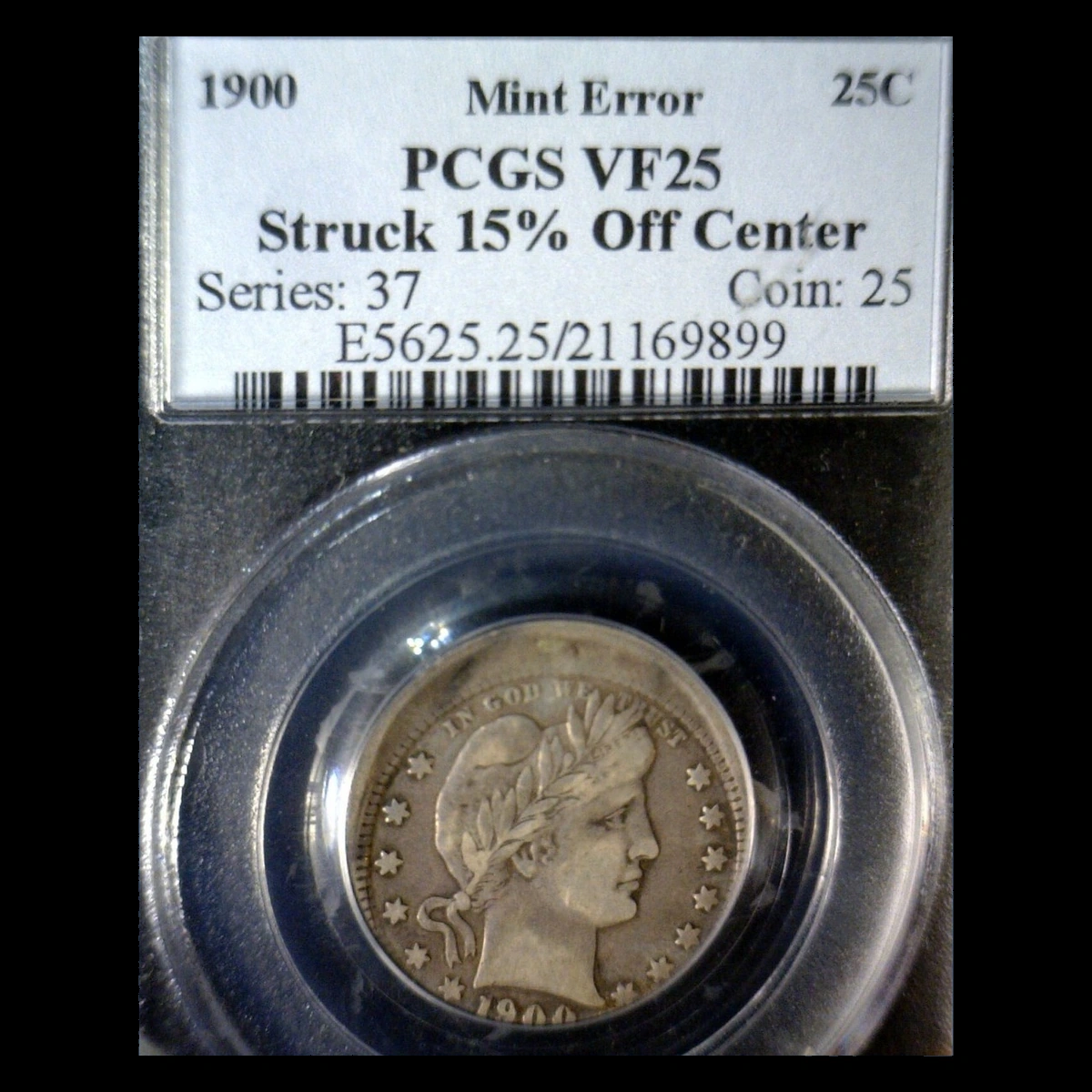
The PCGS VF25 example is fifteen percent off center toward the bottom, with its date still readable. A separate dealer coin is ten percent off center and graded NGC AU Details for improper cleaning.
An older catalog describes another example twenty percent off center toward about five o’clock. These are different coins, with different displacement and condition evidence.
How to Identify
Compare both faces for a natural boundary between struck design and original blank metal. An uneven rim limited to one side can have a different cause, such as a shifted die.
Keep the fifteen-percent coin’s downward movement separate from the ten-percent example’s unspecified direction. The twenty-percent catalog description supplies its own five-o’clock direction.
What It’s Worth
Genuine dated off-center examples have estimated values of $300–$5,000. The fifteen-percent PCGS VF25 quarter sold for $920 on September 28, 2002.
The ten-percent NGC AU Details dealer listing gave its price only on request. That supplies neither another dollar amount nor a completed-sale record.
7. 1900 Quarter Reported Double Strikes Error
A double strike can repeat connected parts of Liberty, lettering, and the border after the coin shifts or turns. It is much broader evidence than an extra stroke on one date digit.
The 1900 report does not establish a specific certified specimen’s mint, grade, or displacement. An offered candidate must supply those details from its own images and examination.
How to Identify
Connect the extra portrait with repeated letters or border elements that fit one common movement. Inspect the overlap to see how the later image affects the earlier one.
A sunken mirror image can result from contact with another coin and does not alone establish two ordinary mint strikes. Include both faces and the edge when assessing possible later squeezing or alteration.
What It’s Worth
A genuine 1900 quarter with two distinct strikes has a conditional estimated range of $1,500–$8,000. No documented 1900 double-strike auction result is supplied here.
Readable identity and understandable overlapping images support the comparison. The $920 single off-center sale is a different mechanism and cannot serve as the candidate’s own history.
Conclusion
Missing design, missing metal, and repeated images are different observations on a 1900 quarter. Follow the actual feature into the original surface before deciding which manufacturing process fits.
Keep mint, condition, and specimen-specific details attached to each price comparison. The dated off-center sale provides a concrete historical reference, while the reported double-strike category remains conditional on identifying a genuine coin with two coherent impressions.