Rare 1898 Dollar Errors (List & Pictures)
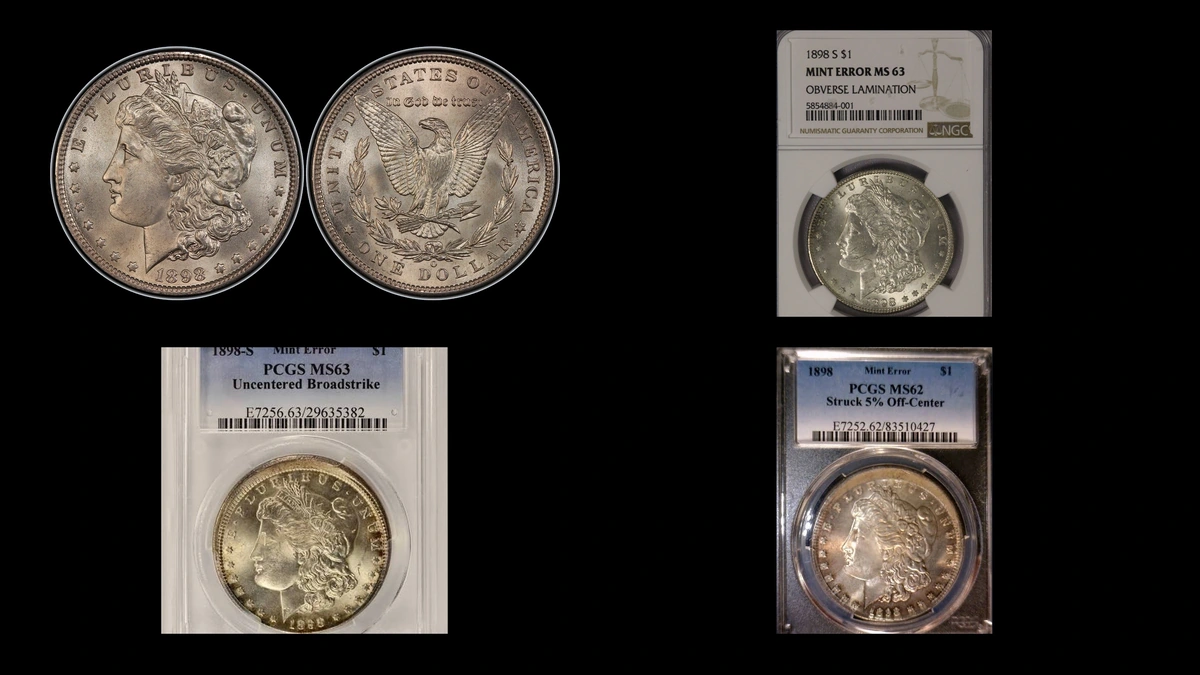
A different-year Morgan double strike brought $8,050 in July 2002; that comparison is a 1921 coin. The 1898 Morgan dollar errors below span estimated values of $150–$20,000, including a documented 1898-O dollar-and-flake pair sold for $6,710.
Inspect date strokes and surface defects before comparing weak, expanded, displaced, or repeated strikes.
| Observation | Category | Estimated range |
|---|---|---|
| Extra date-punch traces on O issue | Repunched date | $200–$3,000 |
| Roller lines with weak outer detail | Adjusted blank | $150–$1,000 |
| Rectangular reverse interruption | Strike-through | $150–$1,500 |
| Front flake preserved with coin | Lamination pair | $3,000–$12,000 |
| Extremely uneven design strength | Adjustment strike | $3,000–$9,000 |
| Complete design on expanded metal | Conditional broadstrike | $600–$6,000 |
| Design partly misses the blank | Off-center strike | $1,000–$10,000 |
| Two coherent design positions | Conditional double strike | $5,000–$20,000 |
1. 1898 Dollar Earlier strokes follow the date digits: repunched date Error
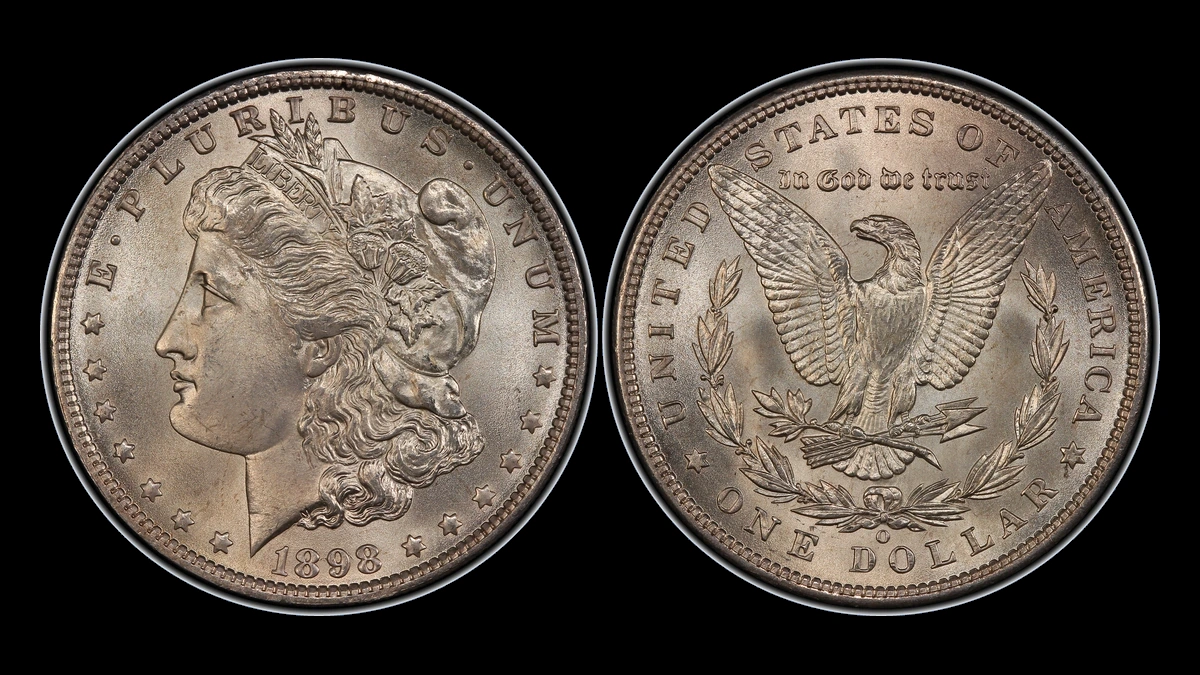
New Orleans FS-301, also called VAM-20, preserves traces from an earlier date-punch position. The die received the date again and retained small remnants that later coins copied.
These catalog numbers identify the Morgan dollar pattern. A similar FS number for an 1898 nickel does not describe this coin.
How to Identify
Confirm O below the wreath before examining all four date digits. Compare the complete pattern with PCGS’s identified examples.
Extra strokes should retain recognizable numeral shapes. Flat shelves, scratches, or a low date alone cannot establish the attribution or a precise repunch direction.
What It’s Worth
Identified examples are estimated at $200–$3,000 from worn through attractive unworn condition.
PCGS records a VF25 at $1,550 through David Lawrence in February 2022. That circulated specimen’s actual pattern matters more than brightness or an unsupported higher grade.
2. 1898 Dollar Roller lines cross weak outer areas: adjusted planchet Error
An NGC AU50 1898-S was cataloged as struck on a heavily adjusted blank with extensive roller marks. The upper, lower, and left outer areas did not form completely.
The date remains readable and the main reverse design is clear despite light wear. The lines belong to blank preparation rather than necessarily to later cleaning.
How to Identify
Compare the roller marks with the weakly formed areas together. Follow their relationship to stronger detail and the compression of the original metal.
Later filing can cut through finished relief and disturb the surrounding surface. Keep the date, S, and clear reverse features in the photograph set so general wear is not confused with selective weakness.
What It’s Worth
Authenticated comparable examples have an estimated range of $150–$1,000.
The NGC AU50 sold for $172.50 at Heritage in September 2002. That older recorded result is distinct from a current asking price or an unexplained scratched dollar.
3. 1898 Dollar A rectangular strip interrupts the reverse: strike-through Error
The Philadelphia NGC AU58 example has an affected strip beginning near IT in UNITED. It crosses the motto, wreath, part of the eagle’s left-facing wing, eye, and beak.
An obstruction blocked the die from forming those details normally. The consignor suggested a slender wood chip, but the material was not established.
How to Identify
Trace the entire strip from UNITED toward the eye and beak. Compare details just inside and outside its boundary to see whether one obstruction explains the interruption.
Use side light to inspect for gouging or metal pushed along a later scrape. A rectangular outline alone cannot identify wood, and the empty impression does not mean an object remains attached.
What It’s Worth
Authenticated impressions of comparable or stronger visibility are estimated at $150–$1,500.
The illustrated AU58 sold for $228 at Heritage in June 2023. Its slight wear and broad interruption belong to that specimen, while the proposed material adds no separately established value.
4. 1898 Dollar A detached front flake survives with the dollar: lamination Error
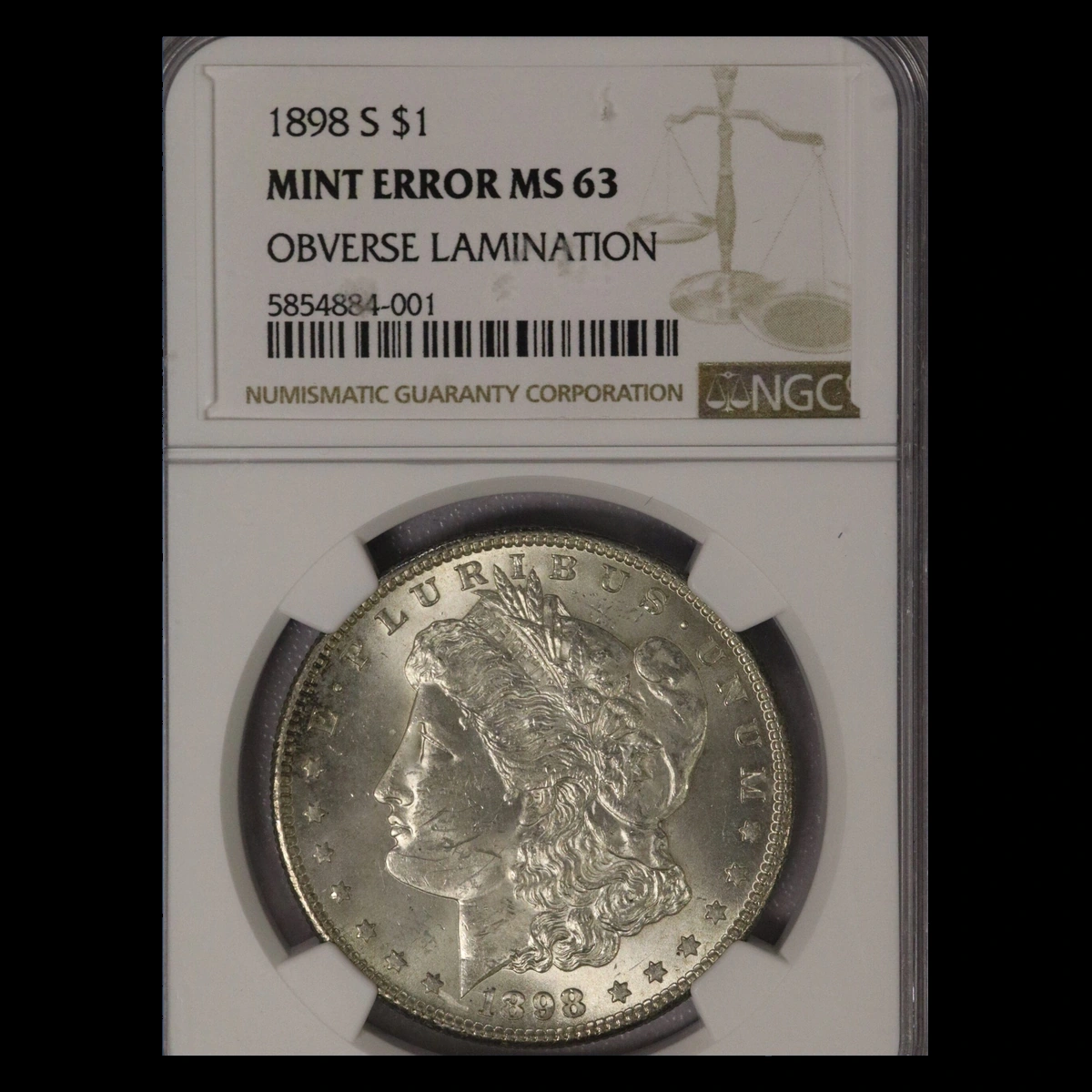
A boomerang-shaped flake separated from an 1898-O after striking and was preserved with it. The dollar and fragment occupy separate PCGS holders with consecutive certification numbers, both labeled MS63.
A weak layer within the alloy allowed the separation. The pair is neither two complete dollars nor a coin divided into equal halves.
How to Identify
Compare photographs at the same scale and match the flake’s outline to the missing front area. Any surviving design on the fragment should fit the adjacent design on the dollar.
Keep both pieces in their holders rather than pressing them together. The original connection can be studied through existing photographs without risking the fragile fragment.
What It’s Worth
A comparable authenticated dollar-and-fragment pair has an estimated range of $3,000–$12,000.
The two-piece lot sold for $6,710 in January 2026. That amount covers the dollar and its flake together.
A small lamination without its detached piece needs a much lower comparison. Preserving the matching fragment is central to this example’s interest.
5. 1898 Dollar Much of the design barely forms: adjustment strike Error
A Philadelphia PCGS AU50 was described as made while die spacing was being adjusted. The tools were also slightly out of parallel, creating uneven contact across the coin.
The date and left stars remain visible, while S UNUM is nearly absent. On the reverse, ONE and UNITED STATES O can still be read.
How to Identify
Map the surviving design on both faces before judging wear. The readable and almost missing areas must fit the same uneven striking event.
Inspect weak areas for remaining original surface rather than abrasion or corrosion that erased detail. A single grease-filled letter does not explain the whole pattern.
Compare the complete documented specimen and seek specialist assessment. A largely blank-looking face alone cannot prove press adjustment.
What It’s Worth
A comparable authenticated adjustment strike is estimated at $3,000–$9,000.
The PCGS AU50 sold for $5,750 at Heritage in April 2010. Its circulation wear is separate from the severe weakness created during striking.
6. 1898 Dollar The whole design survives on a wide disc: broadstrike candidate Error
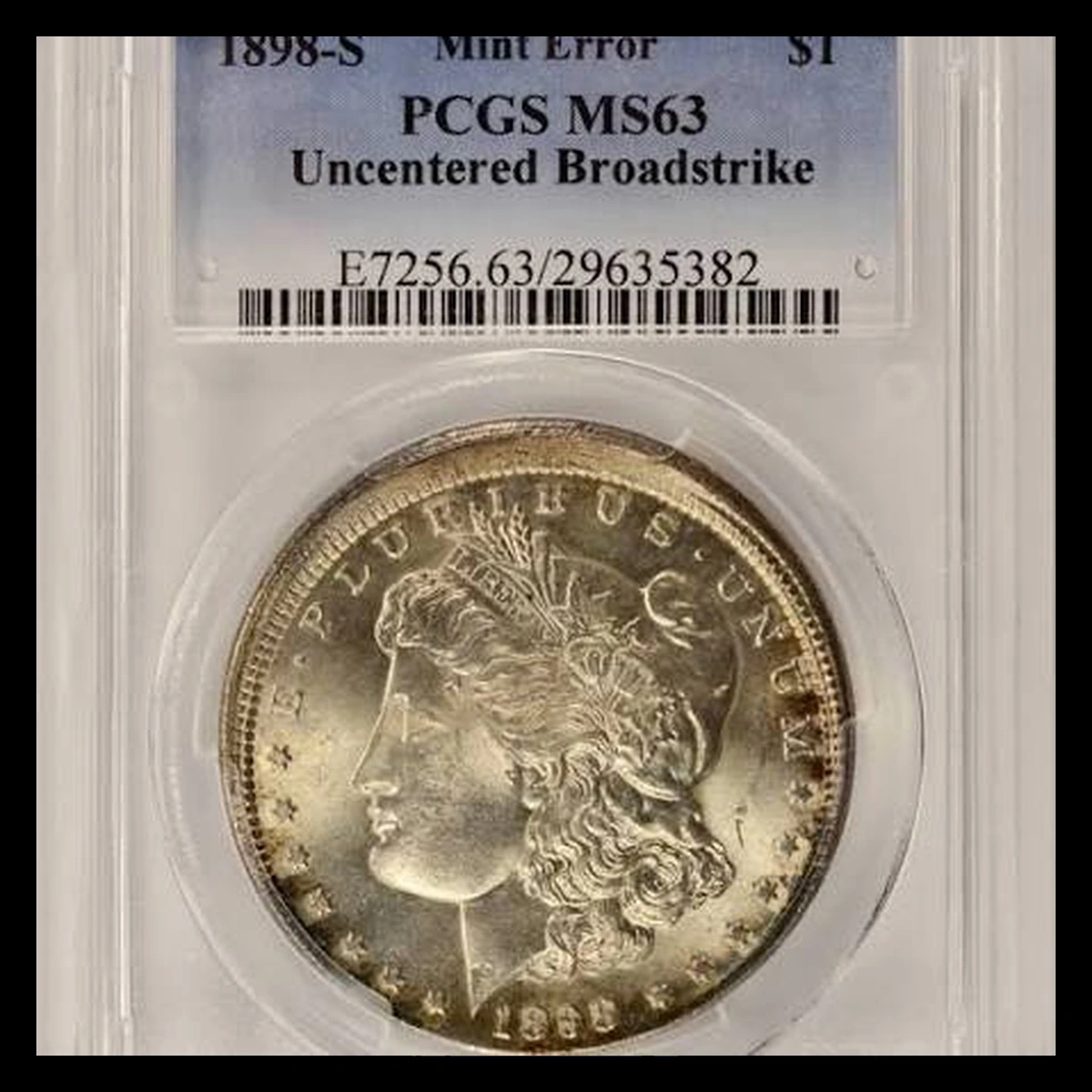
Year guides mention 1898 broadstrikes without identifying a definite specimen or mint in the supplied evidence. A candidate would need to show original expansion caused by absent collar restraint.
The full intended design should remain within the metal. A wide-looking rim alone does not establish the event.
How to Identify
Normal Morgan references are 38.1 millimeters and 26.73 grams. Measure a loose candidate in several directions and inspect the relationship between its edge grooves and outward spread.
Check every outer letter and design element on both faces. Filing can remove grooves or weight without producing original broadstrike metal flow.
What It’s Worth
The conditional estimate for an authenticated ordinary-strike example is $600–$6,000.
A 1921 Philadelphia Morgan broadstrike graded MS64+ sold for $1,020 in July 2021. That different-year mechanism comparison does not confirm an 1898 specimen or transaction.
7. 1898 Dollar Some intended design misses the disc: off-center strike Error
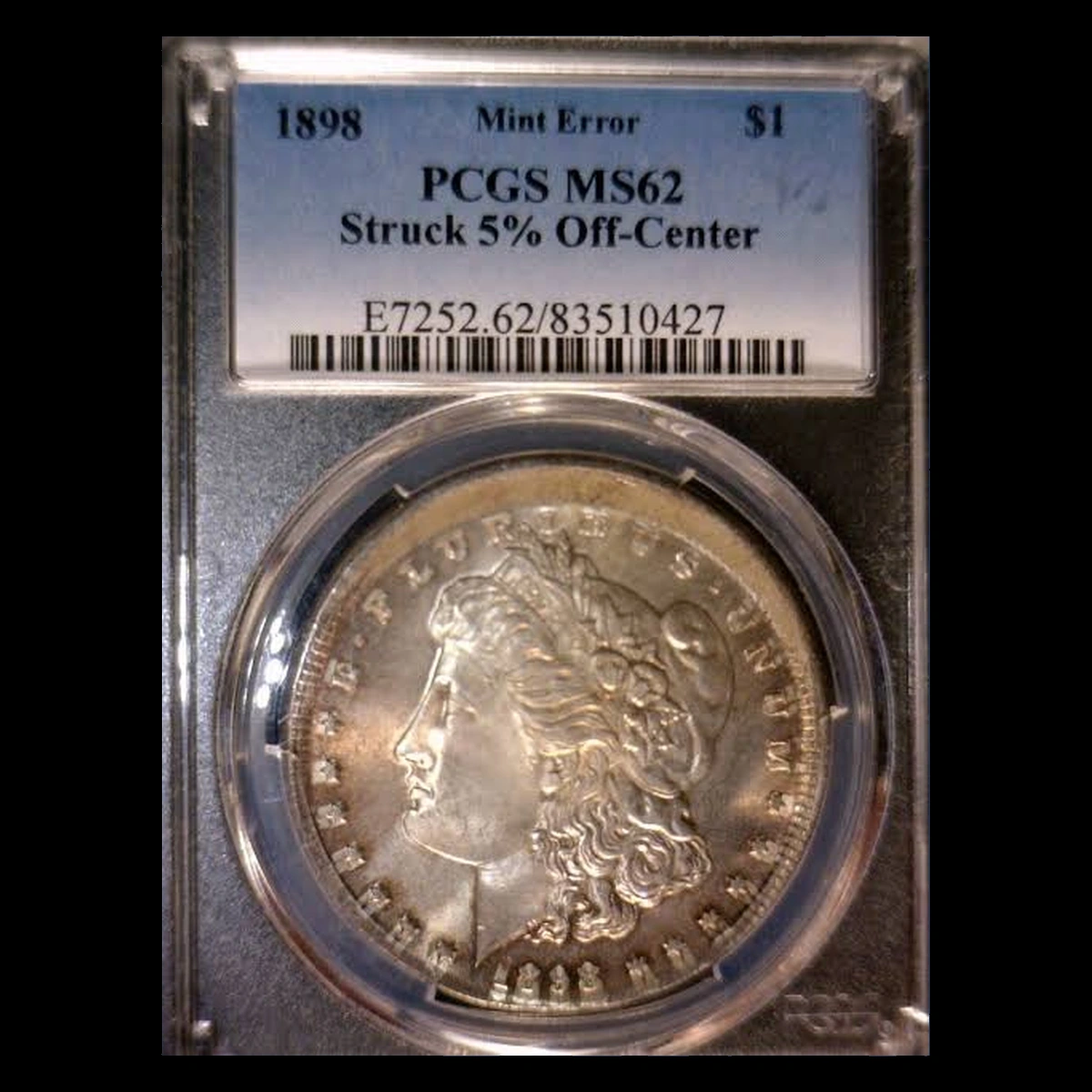
Heritage recorded a Philadelphia 1898 dollar in PCGS MS64 struck about seven percent off center. The blank’s displaced position left unstruck metal while part of the design fell beyond its edge.
The percentage supplies no clock direction. That must be read from the actual coin.
How to Identify
Follow the transition between struck and unstruck metal on both faces. Track the same physical margin so their displacement can be compared.
A centered opposite face suggests a misaligned die, while a complete design on expanded metal suggests broadstriking. Keep the date visible and inspect the edge for later cutting.
What It’s Worth
Authenticated 1898 off-center dollars have an estimated range of $1,000–$10,000.
A 1921-D Morgan struck five percent off center sold for $2,760 in March 2024. That is a different date and mint, not the selling price of the documented 1898 MS64.
8. 1898 Dollar Two design positions overlap: double-strike candidate Error
A second strike can repeat the portrait, date, or border after a coin shifts or returns to the press. The supplied older year page lists the category without identifying a definite 1898 Morgan specimen.
The possibility therefore remains conditional. Small doubled details built into a die and marks made by squeezing finished coins together have different causes.
How to Identify
Track widely separated repeated features and test whether one movement explains their positions. A second date and portrait should not require conflicting shifts.
Inspect the reverse too, allowing for earlier detail flattened by the later blow. Sunken reversed copies can indicate contact with another finished coin rather than a genuine second strike.
Document both faces and the edge for specialist review. One familiar doubled letter cannot establish a new authenticated 1898 example.
What It’s Worth
The conditional estimate for a substantial authenticated double strike is $5,000–$20,000.
A 1921 in-collar double strike graded ANACS MS64 sold for $8,050 in July 2002. That is a mechanism comparison from another year.
Conclusion
Weak outer detail, blocked design, separating silver, and repeated impressions each require different evidence. The saved flake on the 1898-O belongs with its original dollar, and their $6,710 sale is one paired-lot result.
Keep the broadstrike and double-strike categories conditional where a definite 1898 specimen is missing. The 1921 sales provide context without becoming discoveries or transactions for the year covered here.