Rare 1835 Quarter Errors (List & Pictures)
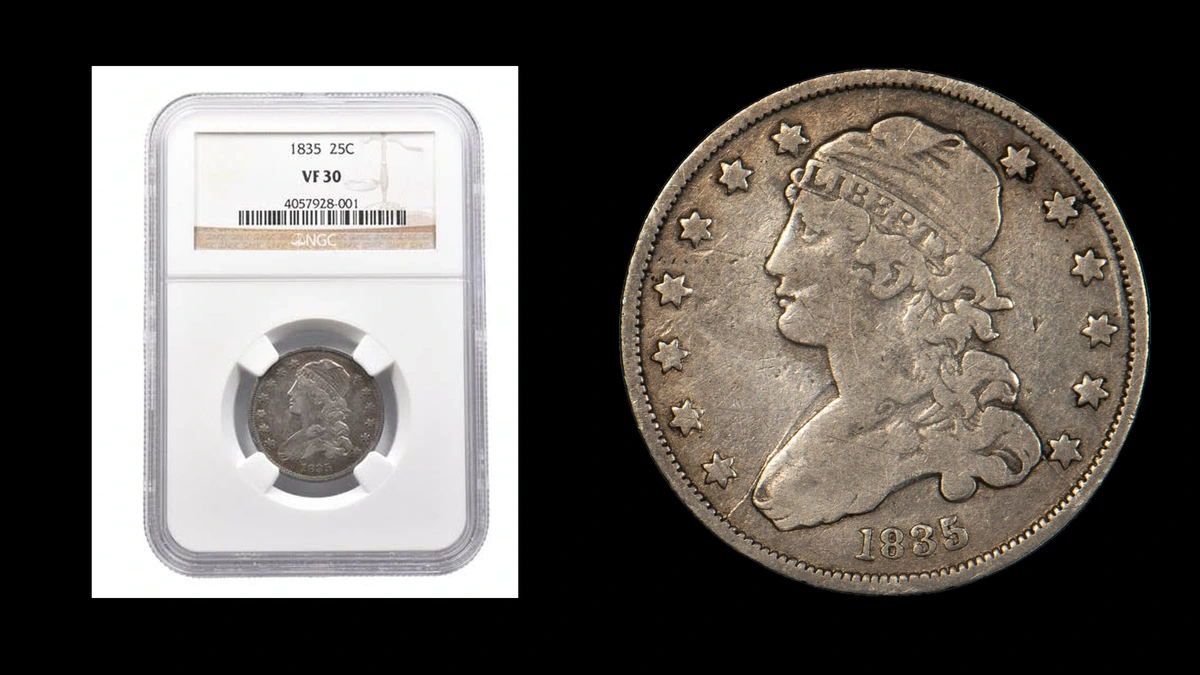
The shape beneath Liberty’s ear can tell a different story from a line above her eyebrow. These three groups of 1835 quarter errors cover transferred design, raised die cracks, and a clipped blank, with estimated whole-coin values of $50–$5,000.
An unworn quarter with a long reverse crack sold for $1,762.50 in June 2015. Use the feature and the coin’s condition together when deciding how closely that record fits another example.
1. 1835 Quarter A Shield Trace below the Ear: Die Clash Error
The B-2 variety has a faint shield outline below Liberty’s ear and transferred marks on the reverse. The dies met without a blank, acquired traces of each other’s designs, and passed them to later coins.
The coin did not need a second strike to receive those marks. Usually only fragments of the opposite picture appear.
How to Identify
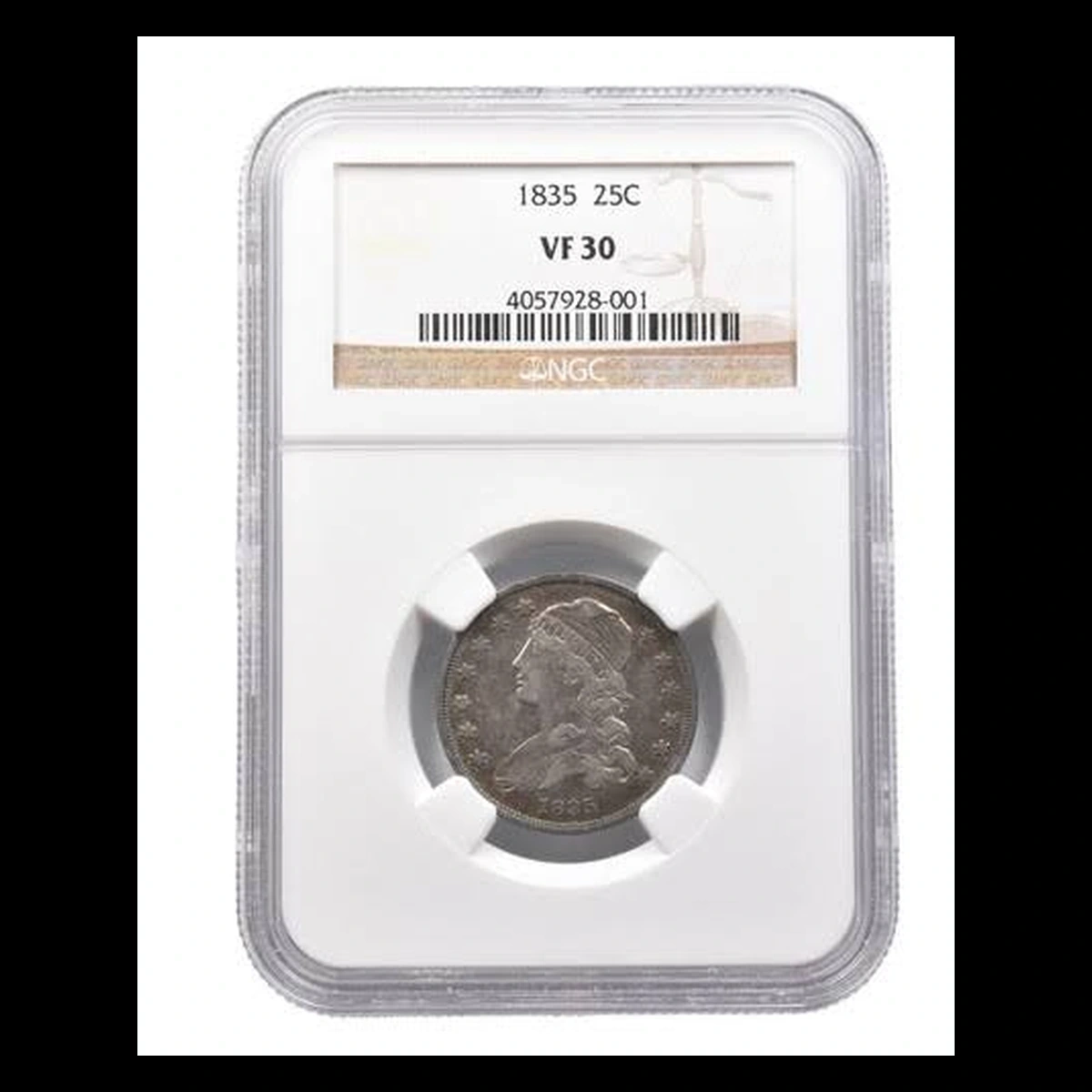
Look at the shield on the eagle’s chest, then compare its shape with the extra outline below the ear. Separate that outline from normal hair and clothing.
The published B-2 description also records reverse traces. Match several features on both faces instead of joining unrelated scratches into a shield shape.
What It’s Worth
$75–$2,000 is the estimate for circulated examples with recognizable clashes. Much of the amount comes from the underlying early quarter.
Visible transferred detail adds interest, but cleaning or heavy wear can reduce appeal. A faint fragment does not guarantee a large premium.
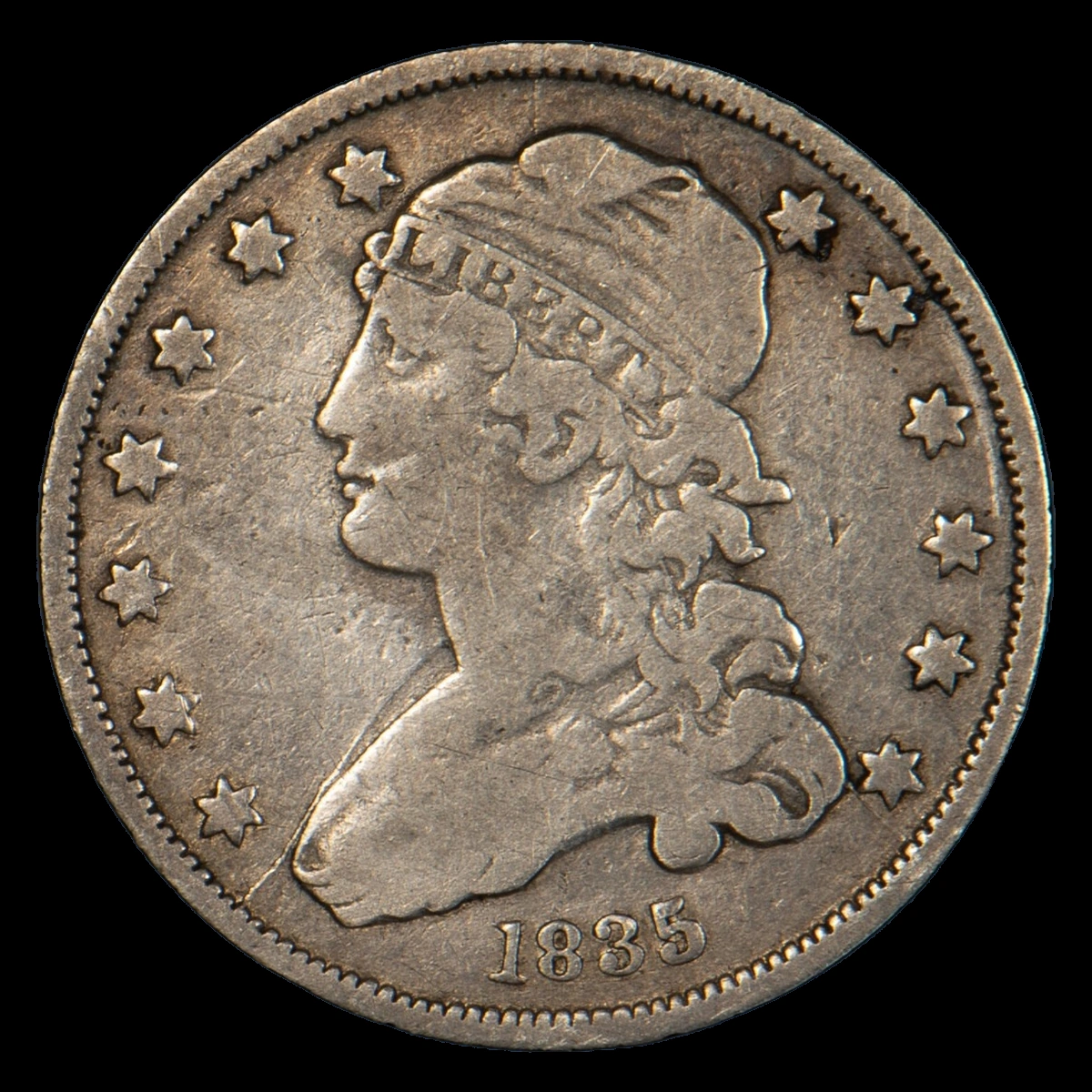
2. 1835 Quarter Raised Lines through the Date or Portrait: Die Cracks Error
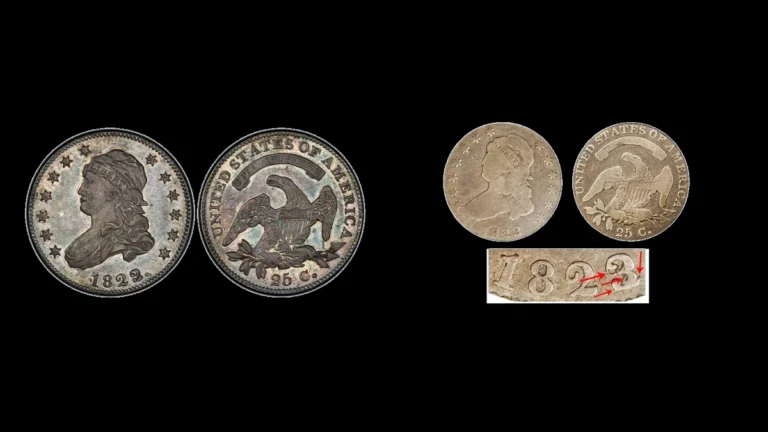
Silver entering a crack in a die forms a raised ridge on the coin. Different 1835 patterns run from the base of 5, through the bottoms of 3 and 5, or across the forehead area.
The long front pattern connects stars on opposite sides above Liberty’s eyebrow. These paths belong to different dies and should not be combined into one required pattern.
How to Identify
Choose the route visible on the coin and follow the ridge under side lighting. For the forehead pattern, the recorded line connects stars six and ten when counted from the lower left.
A scratch cuts into the surface instead of adding a continuous ridge. A narrow crack also is not automatically a cud, the larger rim lump left by missing die metal.
What It’s Worth
$50–$4,000 covers worn through attractive unworn examples. An NGC MS62 with a long upper-reverse crack sold for $1,762.50 on June 4, 2015, at Heritage.
That price belongs to the complete unworn quarter, not the line alone. A small date crack may have little effect on a much more worn coin’s value.
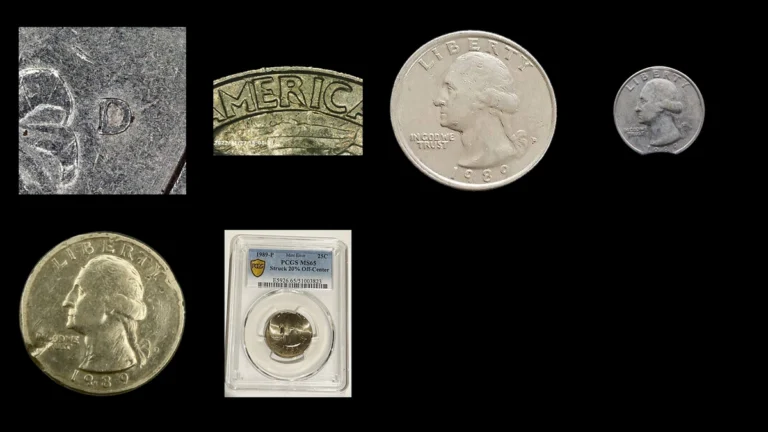
3. 1835 Quarter A Section Missing before Striking: Clipped Planchet Error
A clipped quarter starts with an incomplete metal disc. The missing portion was absent before the design was struck, unlike an edge cut away later.
A report lists an ANACS VF25 Details example with a rim clip. The label indicates moderate wear and a condition problem, but the supplied description does not specify that problem’s cause.
How to Identify
View the gap from the side and inspect both junctions with the normal rim. Original striking can soften nearby detail, while sawing or filing may leave parallel marks and an abrupt cut.
Weakness opposite the missing area can support the clip identification. A normal unworn 1835 quarter weighs about 6.74 grams, but low weight alone cannot separate a clip from later cutting.
What It’s Worth
$250–$5,000 is the estimate for genuine circulated clips. Size, readable design, and surface condition affect the comparison.
The reported VF25 Details coin needs its condition problem considered alongside the error. The range applies to the complete quarter, not a guarantee attached to any missing edge.
Conclusion
A transferred shield, a raised crack, and a natural clipped boundary each require different evidence. Compare the complete feature in its proper location rather than giving every odd line the same explanation.
The documented $1,762.50 sale concerns an unworn cracked-die example. Worn or impaired coins need comparisons that account for their condition as well as the original minting feature.