Rare 1857 Dollar Errors (List & Pictures)
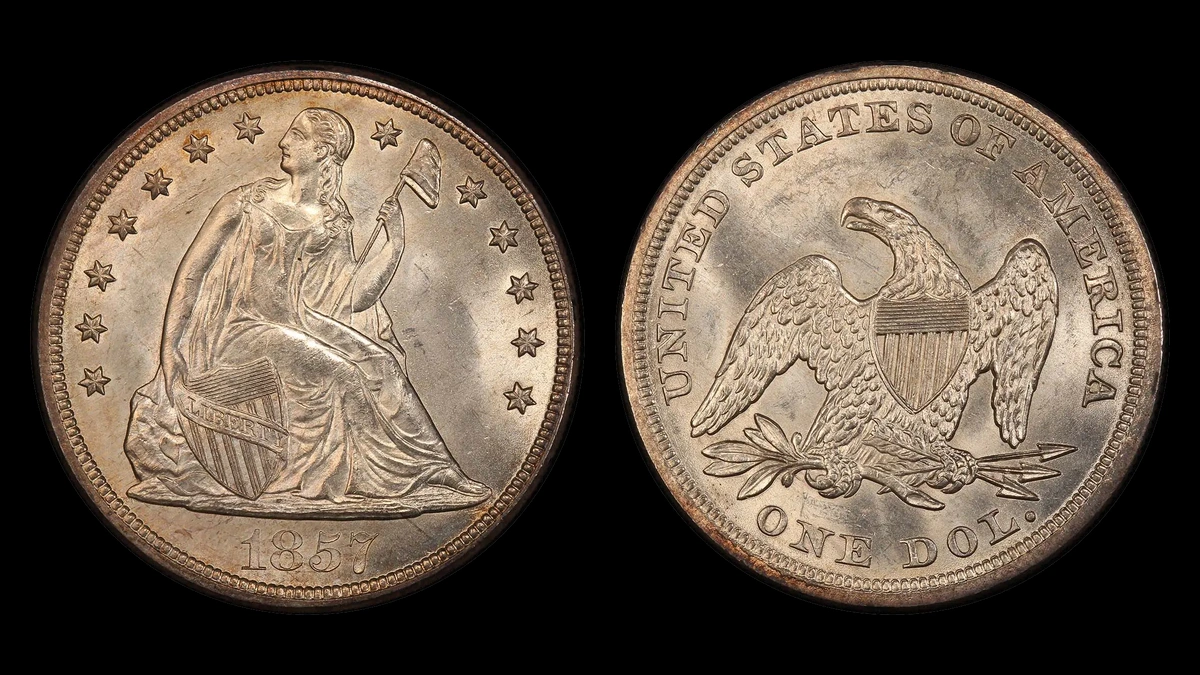
A soft-looking head on an 1857 dollar may reflect a weak strike rather than years of wear. This 1857 dollar errors guide also covers reported rough patches near Liberty’s base, with estimated whole-coin values of $1,000–$100,000.
An ordinary MS66 dollar brought $99,875 in January 2014 as a condition comparison. That result is not a stated premium for weak detail or an identified sale of either feature below.
1857 Dollar Soft Upper Detail beside Sharper Lower Detail: Uneven Strike Error
Liberty’s head and the upper stars can remain shallow on an unworn dollar. Some examples also have a weak upper eagle, while others show a better-formed reverse.
The published explanation suggests that the die faces were not parallel, giving different areas an uneven squeeze. That is a proposed cause for the observed pattern, not a diagnosis established by one flat head.
How to Identify
Compare the upper portrait and stars with the lower front design before turning to the eagle. The difference between strong and weak areas matters more than softness alone.
Inspect exposed high points for smooth rubbing from circulation. A weakly struck area may retain original surface texture where detail never formed fully.
Equal weakness on both faces is not required by the reported examples. Record each face separately rather than assuming a sharper reverse rules out the described pattern.
Bright surfaces do not establish a proof, which is a specially prepared collector coin. If wear and weak striking remain hard to separate, the original surface needs an experienced grader’s examination.
What It’s Worth
$1,000–$100,000 spans ordinary 1857 dollars from worn through exceptional unworn condition. Most coins fall far below the highest-preservation end.
PCGS records $99,875 for an MS66 in January 2014. This is a general condition comparison, not an identified alignment-error transaction.
Weak striking does not automatically increase value. Collectors may prefer stronger detail, so a flat head should not receive a fixed added premium.
1857 Dollar Texture beside Liberty’s Lower Base: Reported Die Roughness Error
An MS63 dollar in the May 1992 Somerset sale was described with rough areas near the lower-left base and a similar patch on the right. The areas sit between Liberty’s base and the border teeth.
The account calls them die roughness without establishing rust or a broken die piece as the cause. It also describes weak front detail and a well-formed reverse on the same coin.
How to Identify
Use clear close-ups of both spaces beside the base. A grainy photograph can create a rough appearance that is not present on the silver.
Study the texture with low lighting and compare its outline with the documented locations. Similar-looking damage elsewhere on a dollar is not the same pattern.
Check neighboring areas for widespread corrosion or cleaning scratches. Matching patches on other coins from the same die would help distinguish a repeated tool feature from damage to one coin.
What It’s Worth
$1,000–$20,000 is the estimate for ordinary dollars with matching original roughness, from worn through moderately marked unworn condition. Scarcity and preservation account for much of the value.
The Somerset description shows that rough texture and weak detail can coexist on an unworn coin. Neither observation alone promises an error premium.
Conclusion
Separate missing detail from added texture when examining an 1857 dollar. Compare stronger and weaker areas first, then study the two reported patches beside the base.
The highest prices reflect exceptional preservation of the complete scarce-date coin. They do not turn every soft head or rough area into a valuable minting mistake, and they do not establish the exact cause of either feature.