Rare 1824 Quarter Errors (List & Pictures)
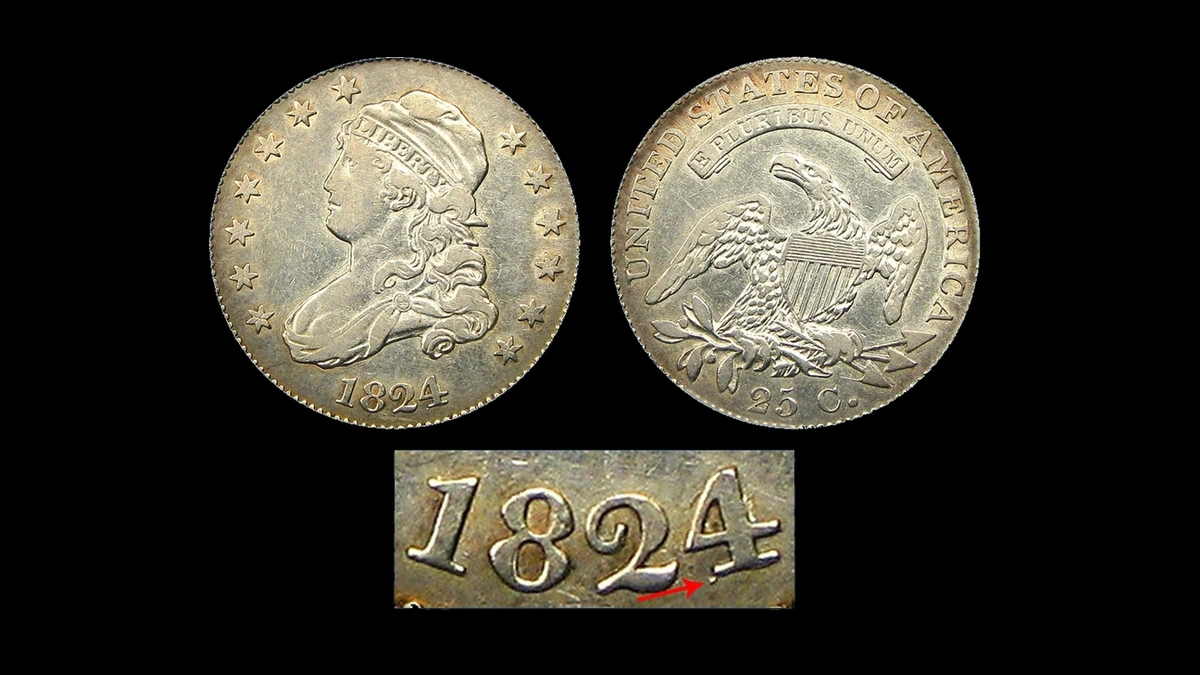
An exceptional 1824/2 quarter graded MS64 sold for $141,000 in May 2015. This 1824 Capped Bust quarter errors guide explains the overdate within an estimated whole-coin range of $1,500–$150,000.
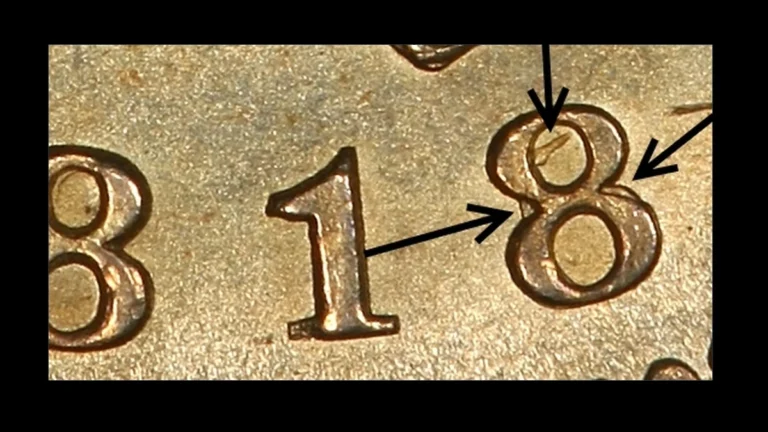
Compare the faint strokes beneath and toward the lower left of the final 4, remembering that the overdate belongs to every known 1824 quarter.
1824 Quarter A faint earlier 2 remains under 4: 1824/2 overdate Error
The notation 1824/2 describes a date changed in the die, the steel tool that stamped the coin. An earlier 2 lies partly beneath the final 4.
An unused die dated 1822 was altered to read 1824. It was paired with the reverse die used for the previous year’s quarters.
Every known 1824 quarter came from that die pair. The overdate is therefore part of the issue’s normal identity rather than an optional feature found on only a few examples.
The earlier numeral is often weak, even on coins with little wear. It should not be expected to appear as a complete, easily readable second 2.
This process also differs from striking an already finished 1822 quarter again. The date was changed in the tool before the known 1824 coins received their designs.
How to Identify
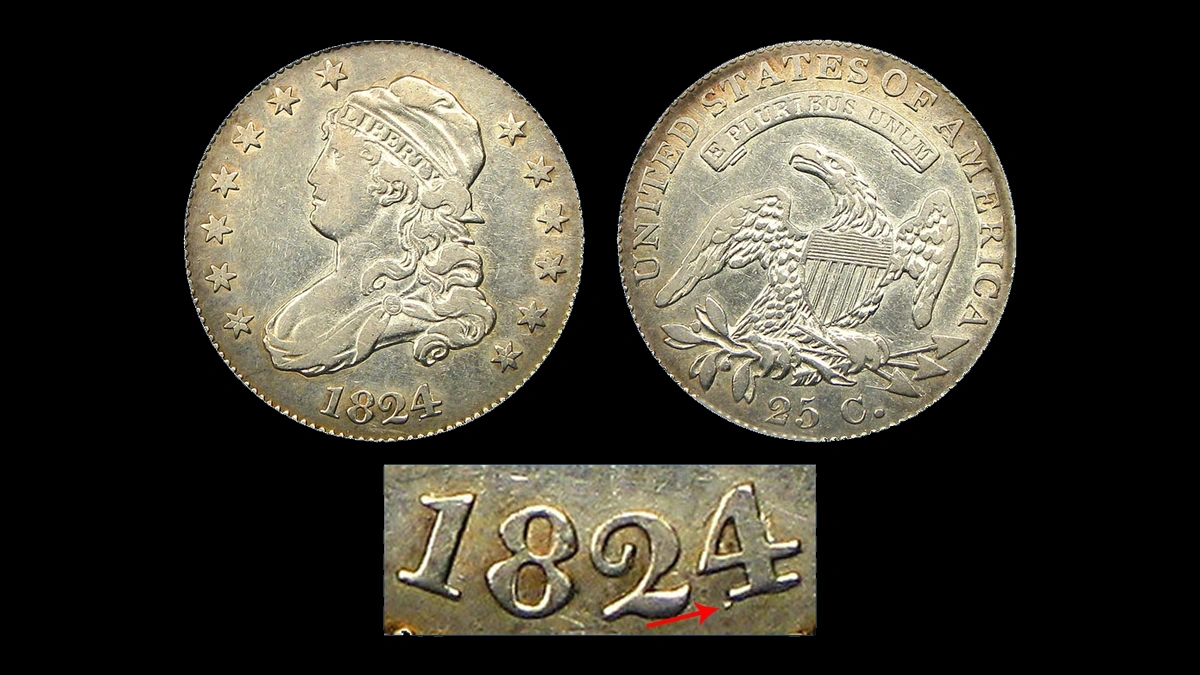
Place a clear identified 1824/2 photograph beside the candidate, with the full date visible in both. Begin with the final 4 and the area just beneath it.
Under magnification, inspect toward the lower left of 4 as well. Compare the surviving small contours with the reference instead of trying to reconstruct an entire hidden numeral.
Move a lamp slowly across the date while keeping the coin still. A faint remnant may become visible at one angle and disappear in a brighter reflection.
Examine the nearby surface for scratches, dents, or corrosion that could create unrelated shapes. A mark’s general location is less useful than agreement with the actual overdate contours.
Wear can hide the underdigit, and weak remnants also occur on unworn examples. A faint 2 therefore does not independently establish a low grade.
Keep a wider photograph showing the other digits and surrounding design. That context helps an examiner compare the complete issue rather than one ambiguous enlarged stroke.
Leave the date surface untouched during inspection. The useful evidence is the original faint contour, not a mark made more visible by rubbing or scraping.
What It’s Worth
Genuine 1824/2 quarters have an estimated whole-coin range of $1,500–$150,000 from heavily worn through exceptional unworn examples.
PCGS records $141,000 on May 19, 2015 for an MS64 sold by Stack’s Bowers. MS64 describes an attractive unworn coin with some marks.
The scarce date and exceptional preservation account for much of that result. The price does not represent a separate reward for finding the earlier 2.
Because every known 1824 quarter has the overdate, its value is already included in ordinary pricing for the issue. Adding another full error amount would count the same feature twice.
Conclusion
The earlier 2 is usually a faint remnant, not a complete second digit. Use an identified date photograph and several lighting angles to compare the small strokes below and toward the lower left of 4.
The overdate belongs to all known 1824 quarters. Value the entire scarce coin by its preservation and surfaces, keeping the exceptional $141,000 MS64 result separate from expectations for a worn example.