Rare 1815 Quarter Errors (List & Pictures)
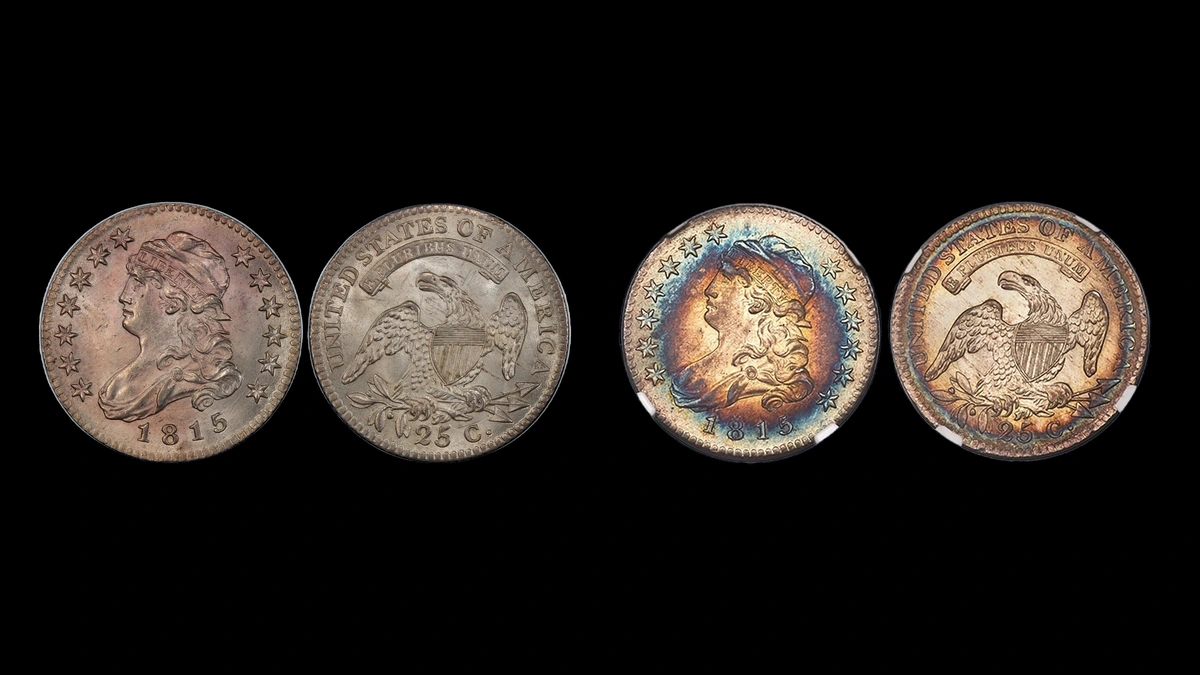
The same basic tool pair made the 1815 quarter, yet its coins can preserve different stages of tool use and changes in the original metal. These 1815 quarter errors and related features have estimated whole-coin values of $200–$35,000.
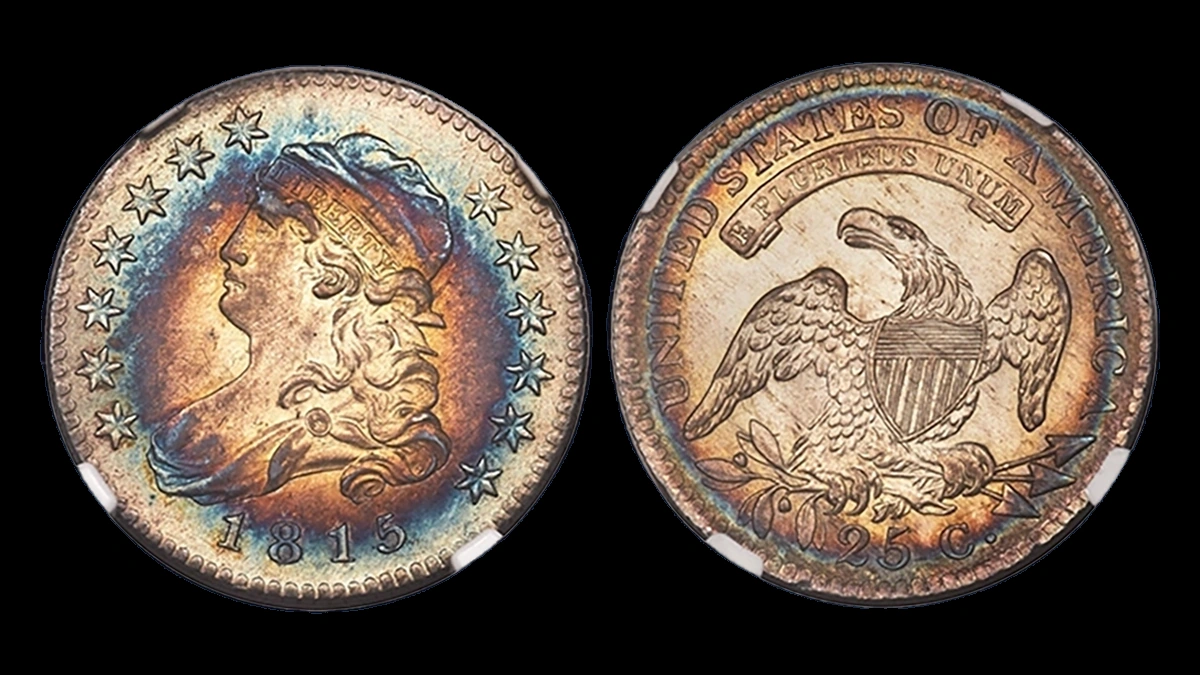
A clashed NGC MS66 Star example sold for $28,800 in August 2025. Its exceptional preservation matters greatly; examine the transferred shapes, second T, and surface streaks separately.
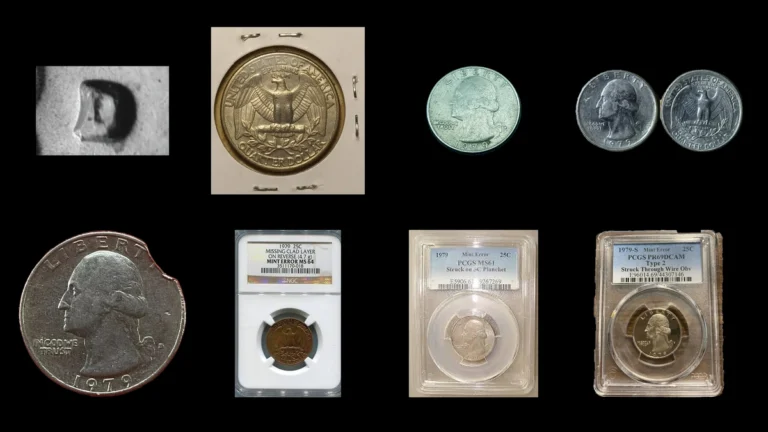
1. 1815 Quarter Faint Traces of the Opposite Picture: Die Clash Error
The dies are the tools that stamp the two faces. When they meet without a blank between them, parts of their designs can mark each other.
Later coins can receive those transferred traces along with the normal picture. Clashing occurred during use of B-1, the year’s single tool pairing.
The faint borrowed outlines are different from separately stamped E or L letters found on some coins. A strong added letter is not a clash marker.
How to Identify
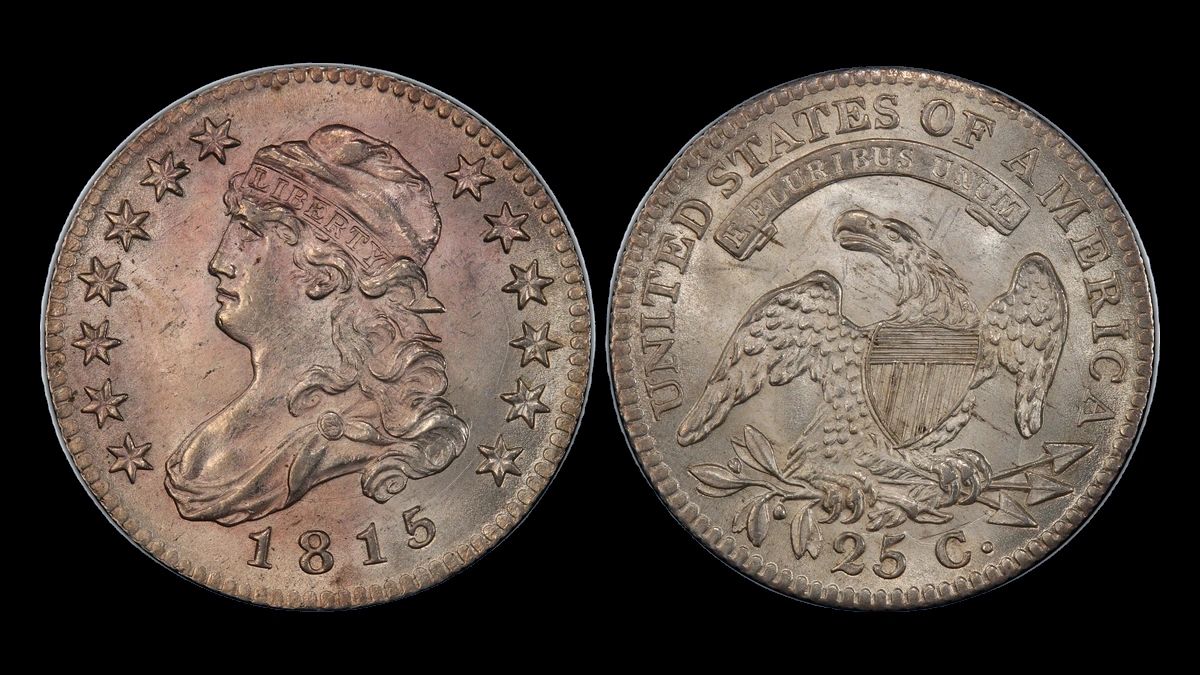
Find a recognizable part of the opposite design in an unexpected area. Compare complete front and back photographs at the same size.
Turn or mirror the reference image as needed to test how the opposing designs line up. More than one matching outline gives better evidence than a lone straight mark.
A scratch or line from tool polishing can look unusual without copying another design. Use several light angles and an identified clashed example to check the shape and placement.
Leave the surface untouched. Rubbing to brighten a faint trace can damage the detail being compared.
What It’s Worth
$250–$35,000 is the estimated whole-coin range from circulated examples to exceptionally preserved coins. The clash is only part of the condition and variety comparison.
Heritage’s NGC MS66 Star example sold for $28,800 in August 2025. Star recognizes attractive appearance rather than measuring clash strength.
A faint clash on a worn coin does not make it comparable to that exceptional sale.
2. 1815 Quarter A Changed Second T in STATES: Reworked Letter Error
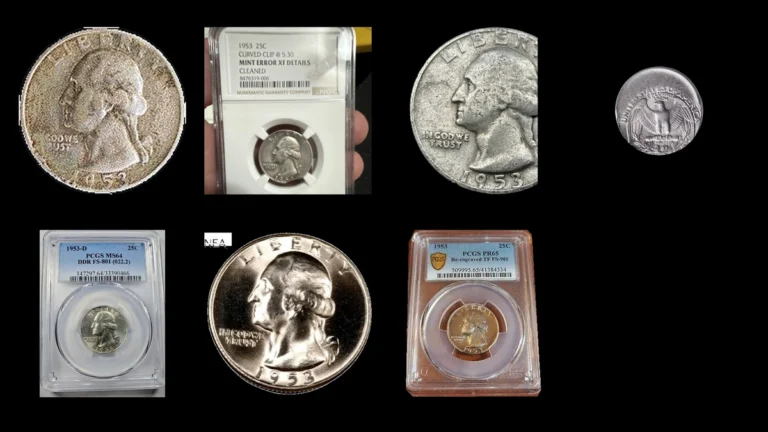
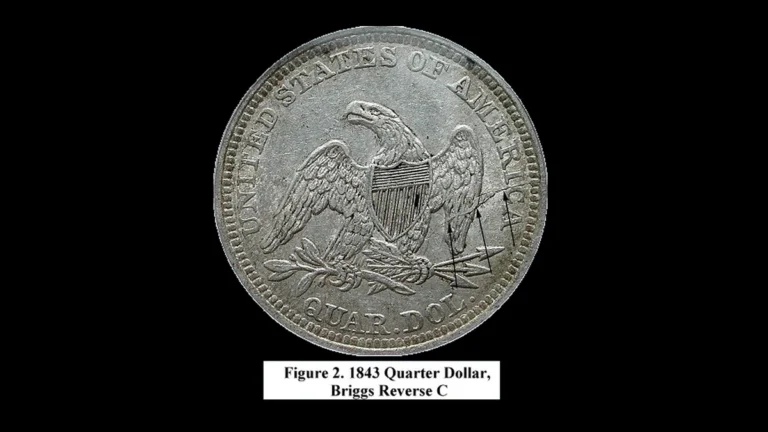
Find the second T in STATES, the letter immediately after A. Its outline can differ on later examples of the 1815 quarter.
PCGS describes repunching associated with a later tool stage, after polishing following a clash. Polishing removes some steel and can change small details.
A repunched letter refers to work on the tool, not another T stamped onto every finished coin. Nor does this one letter establish doubling across the entire reverse.
How to Identify
Compare the second T with identified early and late examples at equal image size. Keep the nearby letters in view.
Move the light before treating a bright edge as another stroke. Wear and scratches can change the apparent outline.
The match should fit the surrounding tool details as well as the T itself. A worn isolated letter may need a specialist’s comparison before assigning the later stage.
What It’s Worth
$200–$5,000 is the estimated whole-coin range for convincing matches in circulated through modestly unworn condition. The small letter feature does not have an independent price.
Original surfaces, remaining letter detail, and the overall grade guide the comparison. The MS66 clash result cannot simply be assigned to a worn coin with an unusual T.
3. 1815 Quarter Streaks above and ahead of Liberty: Original Blank Features Error
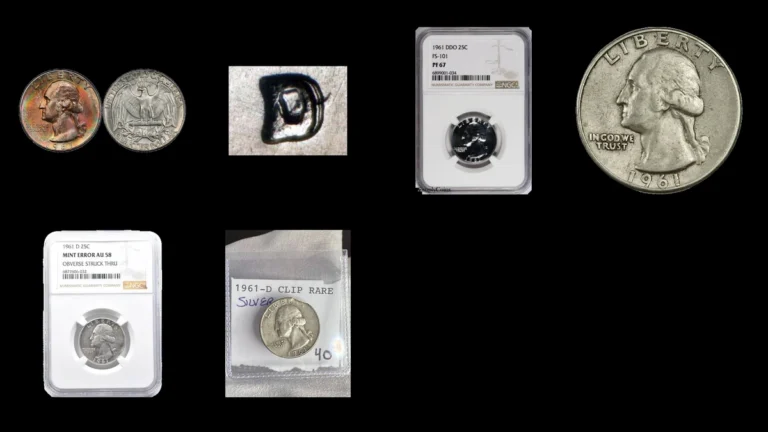
The recorded coin has faint streaks above and in front of Liberty’s portrait. Its auction description identifies them as original features of the blank, the metal disk before striking.
They were not described as a peeling layer. The same coin also has an L stamp above the head with an unresolved history.
How to Identify
Tilt the coin and photograph the streaks from several angles. Check whether they involve surface texture or mainly a band of color.
Compare with the actual auction images rather than naming every faint line a metal split. Parallel scratches crossing finished detail or a groove with pushed-up metal may indicate later treatment.
Keep the L stamp separate from the streak assessment. Its presence does not prove a metal defect or establish when nearby marks formed.
What It’s Worth
$300–$15,000 is the estimated range across circulated through well-preserved comparable coins, including similar letter-stamped examples. It is not a streak-only premium.
The PCGS MS63 example sold for $10,200 in March 2023. Its preservation and collectible L stamp contribute to that whole-coin result.
A faint streak on an ordinary worn quarter may add little value.
Conclusion
Transferred design, a reworked letter, and original metal streaks explain different observations. The visible feature should lead to the matching reference, rather than a large sale price leading the identification.
Assess the complete quarter, including wear, surfaces, and any separate letter stamp. Those factors can account for far more of its value than a small crack-like line or subtle change in one letter.