Rare 1807 Penny Errors (List & Pictures)
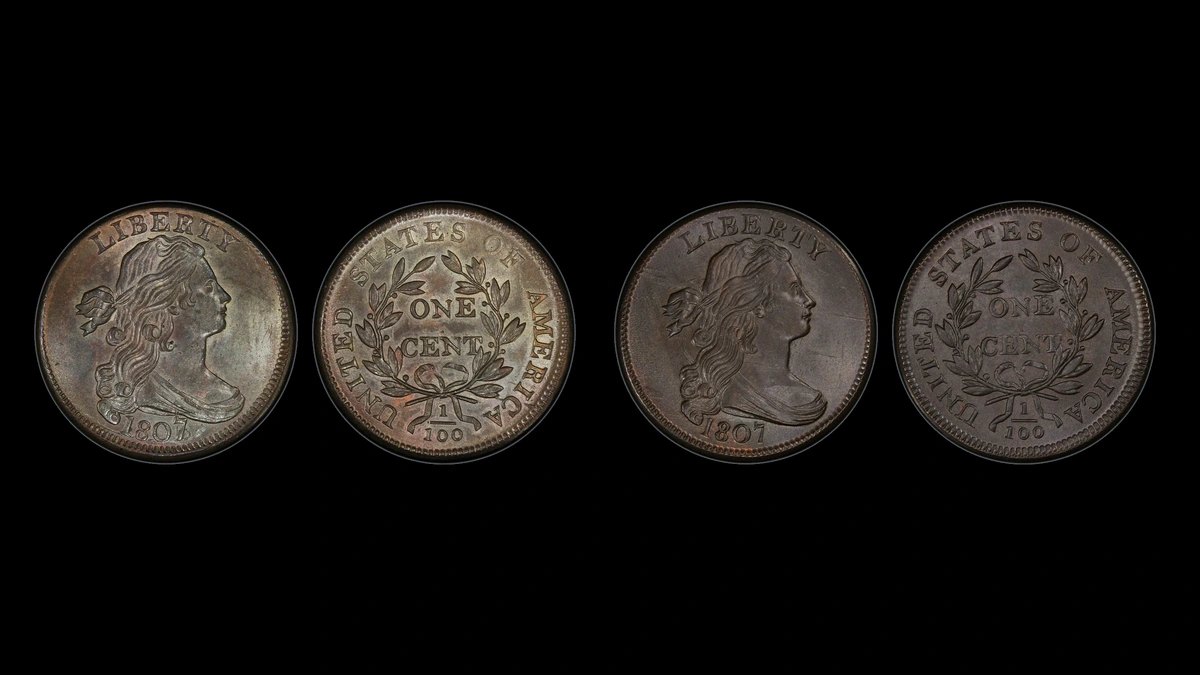
A red 1807/6 Large 7 cent sold for $470,000 in August 2015. That exceptional overdate sits near the top of the estimated $40–$500,000 whole-coin range for 1807 penny errors.
Start with the last date digit, then distinguish raised die marks from missing metal and misplaced or reversed designs.
| Visible clue | Category | Estimated value |
|---|---|---|
| Part of 6 beneath 7 | Overdate | $150–$500,000 |
| Raised streak or transferred outlines | Die damage or clash | $50–$35,000 on normal dates |
| Missing segment or peeling layer | Clip or lamination | $40–$3,000 on normal dates |
| Displaced design | Off-center strike | $150–$6,000 on normal dates |
| Sunken backward portrait | Brockage | $1,000–$15,000 |
A standard Draped Bust cent weighs 10.89 g and measures roughly 28–29 mm, with a plain edge. Preserve fragile copper surfaces and leave certified coins sealed during examination.
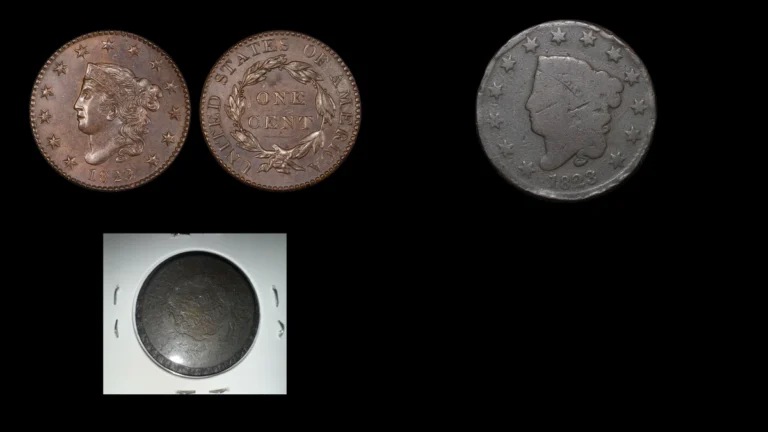
1. 1807 Penny A Curved 6 beneath the Last Digit: 1807/6 Overdate Error
An earlier 6 can remain beneath the final 7. The Mint changed the date in a die, rather than striking an 1807 design onto an already finished 1806 cent.
The recognized Large 7 and Small 7 versions need separate comparisons. The underlying curve establishes the overdate; the final digit’s size helps distinguish the varieties.
How to Identify
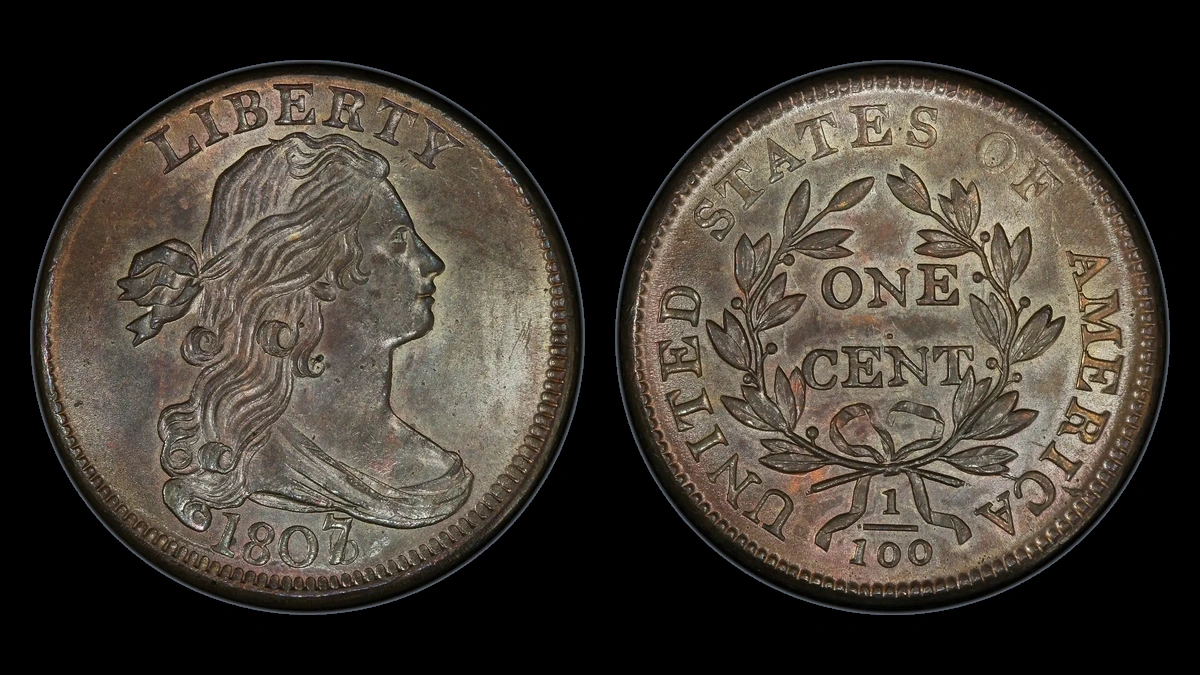
Trace the raised remains of 6 under magnification alongside a photograph of the correct version. Corrosion bumps and newly cut lines can imitate part of a numeral.
The exceptional red Large 7 example also has faint portrait-area clashes and a reverse rim cud. Those features support its individual die comparison but cannot replace a date match on every candidate.
What It’s Worth
Estimated whole-coin values range from $150–$500,000 across worn examples and exceptional survivors. Variety, preservation, and copper color drive the enormous spread.
The Large 7 graded PCGS MS66 Red brought $470,000 in August 2015. A separate Small 7 graded AU53 sold for $172,500 in September 2008.
2. 1807 Penny A Raised Streak behind the Head: Comet Flaw and Other Die Breaks Error
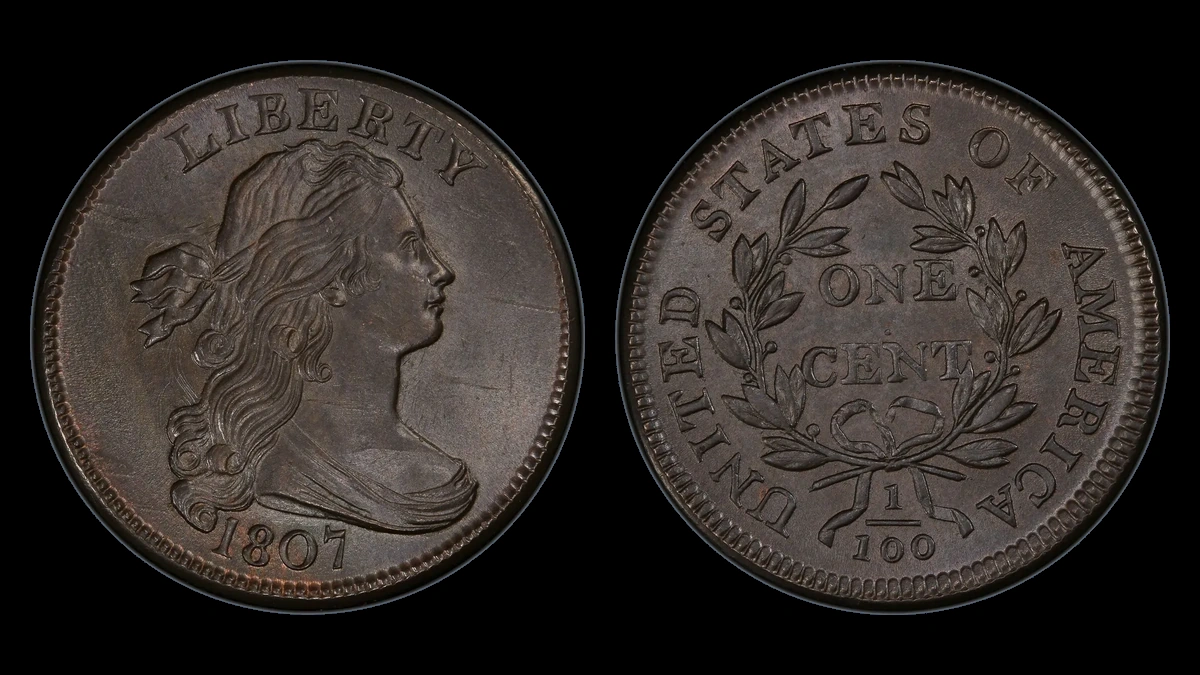
The Comet nickname comes from a raised streak behind Liberty’s head, above the ribbon ends. Weak die steel broke down, creating a space into which copper could flow.
A crack may also cross the neck toward the hair. The flaw changed as the dies wore, so not every coin made from the Comet tools shows the streak.
How to Identify
Compare the interior streak and neck crack with the appropriate Comet photograph. A separating layer of coin metal is a different defect from these raised marks copied from steel.
A separate 1807/6 example has a cud at the upper-left reverse rim. That rim-connected break should not be confused with the interior Comet flaw or expected on the same normal-date coin.
What It’s Worth
For normal-date 1807 cents with these die defects, the estimated range is $50–$35,000. The upper end includes outstanding Comet coins rather than an automatic premium for a small crack.
The PCGS MS64 Brown Comet cent sold for $31,200 in August 2020. That one coin combines preservation, the Comet flaw, a neck crack, and clash marks.
3. 1807 Penny Extra Outlines around Liberty: Die Clash Error
Opposite-side design traces can appear when the dies hit each other without a blank between them. Later coins inherit those marks during otherwise ordinary strikes.
How to Identify
On the documented Comet cent, inspect the ribbon ends and the area before the chin and throat. Several groups of traces should make sense as parts of the opposite design.
A narrow wandering ridge may instead be a die crack. An 1807/6 coin also has portrait-area clashes, but its date variety requires its own valuation.
What It’s Worth
Normal-date cents with identifiable clashes have an estimated whole-coin range of $75–$35,000. Most worn pieces belong toward the lower end.
The $31,200 Comet result is the same August 2020 coin described above. Its multiple die features do not create several full prices to add together.
4. 1807 Penny A Missing Piece of the Outline: Clipped Planchet Error
A genuine clip begins with missing copper before the designs are struck. A curved gap can result when the blank-cutting punch overlaps an earlier hole, while other cutting errors can leave straighter boundaries.
How to Identify
Inspect the exposed boundary and the design beside it together. Saw marks, filed surfaces, or a sharp cut through finished detail can reveal later alteration.
Weakness beside a genuine clip, or opposite a curved gap, can support the identification. Those clues are not required on every coin and should not replace examination of the full edge.
What It’s Worth
An authenticated clip on a normal-date 1807 cent has an estimated value of $40–$2,500. This range excludes a rare overdate carrying an additional clip.
An unworn 1852 clipped large cent sold for $384 in June 2024. Its later Braided Hair design makes it a different-date comparison rather than a recorded 1807 transaction.
5. 1807 Penny A Thin Copper Flap or Shallow Patch: Lamination Error
A weak layer within the copper can lift from the surface or fall away. This separation, called lamination, leaves a different boundary from a cut across solid metal.
How to Identify
Use low-angle lighting to inspect the side of a flap or the step around a missing layer. No particular facial mark or portrait location is required for this category.
Leave loose copper in place. Corrosion may coexist with a lamination, so scattered pits need assessment separately from the continuous layer boundary.
What It’s Worth
For a confirmed lamination on a normal-date 1807 cent, estimate $50–$3,000. Preservation and unrelated surface damage can matter more than the size of a small peel.
A lightly worn 1839 cent with two laminations brought $600 before the buyer’s fee in January 2026. That later-design comparison does not price an 1807/6 overdate with a similar flaw.
6. 1807 Penny The Date Falls beyond the Metal: Off-Center Strike Error
A documented 1807 Large Fraction cent has no visible date because that part of the design missed the blank. Specialists identified its year from the remaining design and dies.
The front is 20% off-center toward seven to eight o’clock, while the reverse displacement lies toward twelve o’clock. The dies were rotated relative to each other.
How to Identify
Compare the surviving design with the specialist attribution rather than guessing the year. The documented example was graded NGC VG10.
Record a top-to-bottom flip without twisting sideways to preserve the relationship between faces. The supplied description gives no exact rotation angle, and independently straightened photographs cannot establish one.
Inspect the boundary of the struck area for original blank surface. Grinding or trimming would require a different explanation for the missing design.
What It’s Worth
Estimated values are $150–$6,000 for comparable normal-date 1807 off-center cents. Reliable date attribution is especially important when the numerals are absent.
The NGC VG10 coin sold for $1,150 at Stack’s Bowers in March 2011. That price includes both its displaced strike and rotated reverse.
7. 1807 Penny A Backward Portrait Pressed into One Face: Brockage Error
A struck coin trapped against a fresh blank can act as a temporary stamping surface. Its raised portrait leaves a sunken mirror image in the new copper, producing a brockage.
Walter Breen’s early-cent reference records a full 1807 brockage. This is more extensive than a few faint clash lines.
How to Identify
Compare the normal raised design with the recessed, backward portrait and letters. A coherent reversed design is more persuasive than one isolated curved mark.
Pressing two coins together later can also transfer design. The complete surfaces and edge therefore need examination for flattened original details and other pressure damage before the impression is accepted as mint-made.
What It’s Worth
A genuine 1807 brockage has an estimated whole-coin range of $1,000–$15,000. The depth and completeness of the reversed design influence the comparison.
Two 1811 brockages in the Jack Beymer auction brought $1,440 and $4,080 including fees. The lower-priced coin had deeply engraved initials despite stronger surviving detail; neither result is a sale of the 1807 example.
Conclusion
Early copper can preserve several mint-made features on one coin. Match the overdate first when present, then separate die marks from faults in the blank and unusual strike placement.
The $470,000 result concerns an exceptional red Large 7 overdate. Ordinary worn examples need much closer condition comparisons, and the Comet coin’s cracks, clashes, and raised streak remain parts of one whole-coin price.