Rare 1823 Penny Errors (List & Pictures)
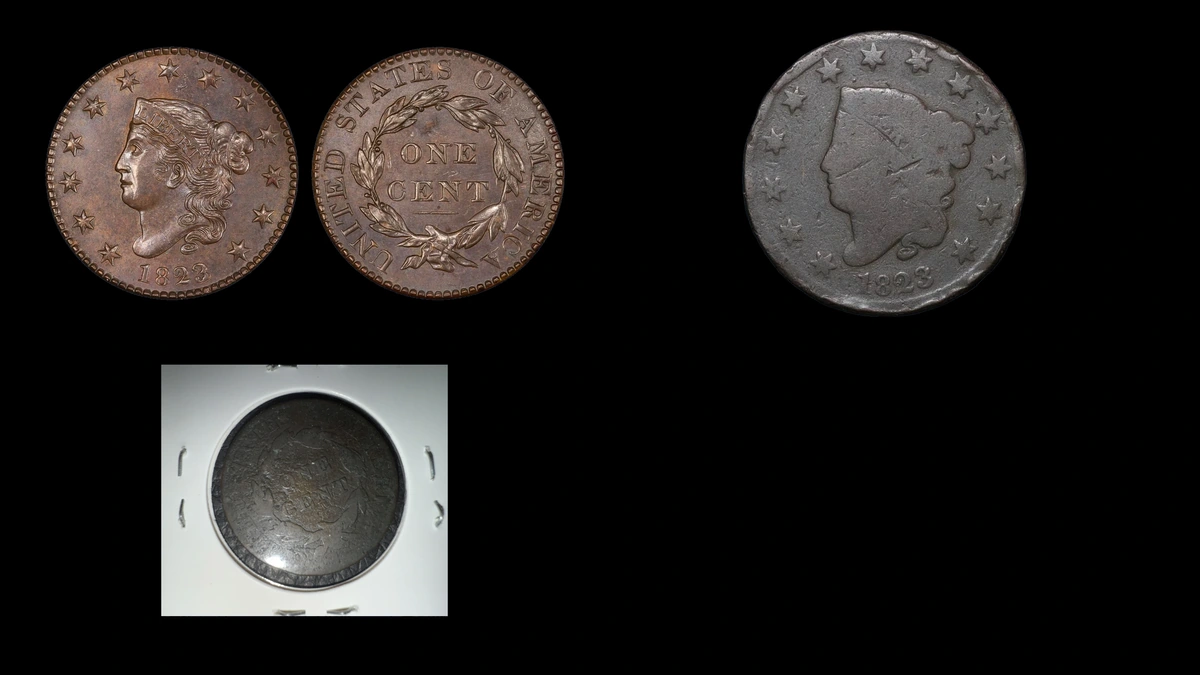
An exceptionally preserved original 1823 cent sold for $299,000 in February 2009. Its small rim break, rotated reverse, and very slight off-center strike are three features of the same coin.
Estimated whole-coin values for 1823 Coronet Head cent errors span $100–$350,000. Establish that the coin is an original Mint issue before comparing the date, rim, and alignment; later private copies have separate die patterns.
| Feature | What it identifies | Estimated whole-coin value |
|---|---|---|
| Underlying 2 at the final 3 | 1823/2 N-1 overdate | $150–$25,000 circulated |
| Small original rim breaks | N-2 die damage | $100–$10,000 for ordinary circulated originals |
| Noticeable reverse rotation | Angular die alignment | $150–$10,000 for ordinary circulated originals |
| Very slight displaced strike | Small placement error | $150–$10,000 for ordinary circulated originals |
| Elite original preservation | Condition tier of the exceptional N-2 | $200,000–$350,000 |
The normal large cent weighs 10.89 grams and measures roughly 28 millimeters across, with a plain edge. These measurements help assess an accessible coin, but do not establish originality or a particular die variety by themselves.
1. 1823 Penny An Older 2 Remains around the 3: 1823/2 Overdate Error
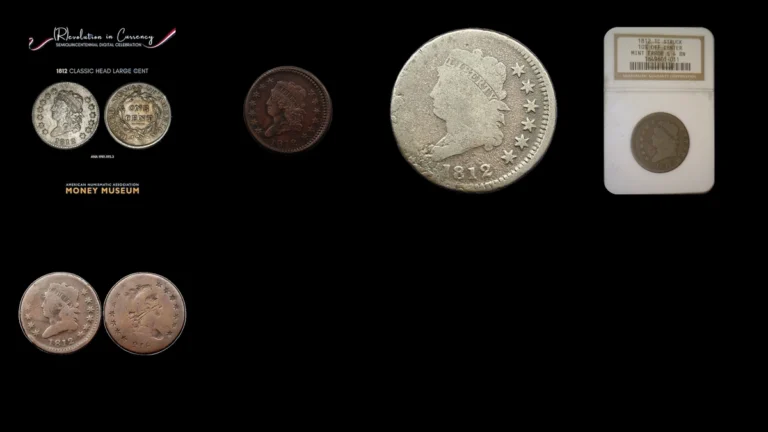
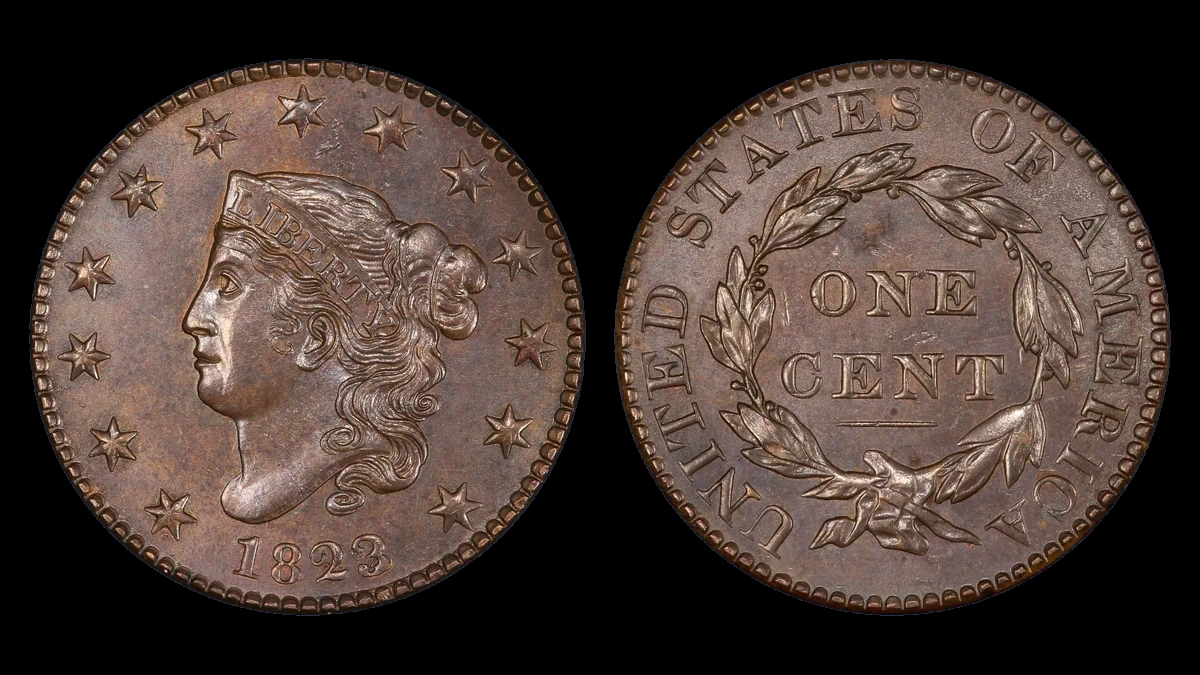
The N-1 overdate preserves parts of 2 beneath the final 3. The die’s earlier date was changed, leaving some of the previous last digit visible after the new punch.
How to Identify
Inspect the top and bottom of 3 in a full-date close-up and compare the older curves and lower stroke with an attributed N-1. Any stray extra line is insufficient.
Scratches, engraving, or the worn shape of an ordinary 3 can imitate remnants. The normal-date N-2 is a separate variety and should not be given an overdate identity from damage.
What It’s Worth
Genuine circulated 1823/2 cents are estimated at $150–$25,000. Surface quality and the amount of wear account for substantial differences within that range.
PCGS records an AU55 Brown example at $15,600 in April 2025. That result concerns the cent overdate, not the similarly dated dime or quarter.
2. 1823 Penny Small Raised Breaks Reach the Star-Side Rim: Original Die Damage Error
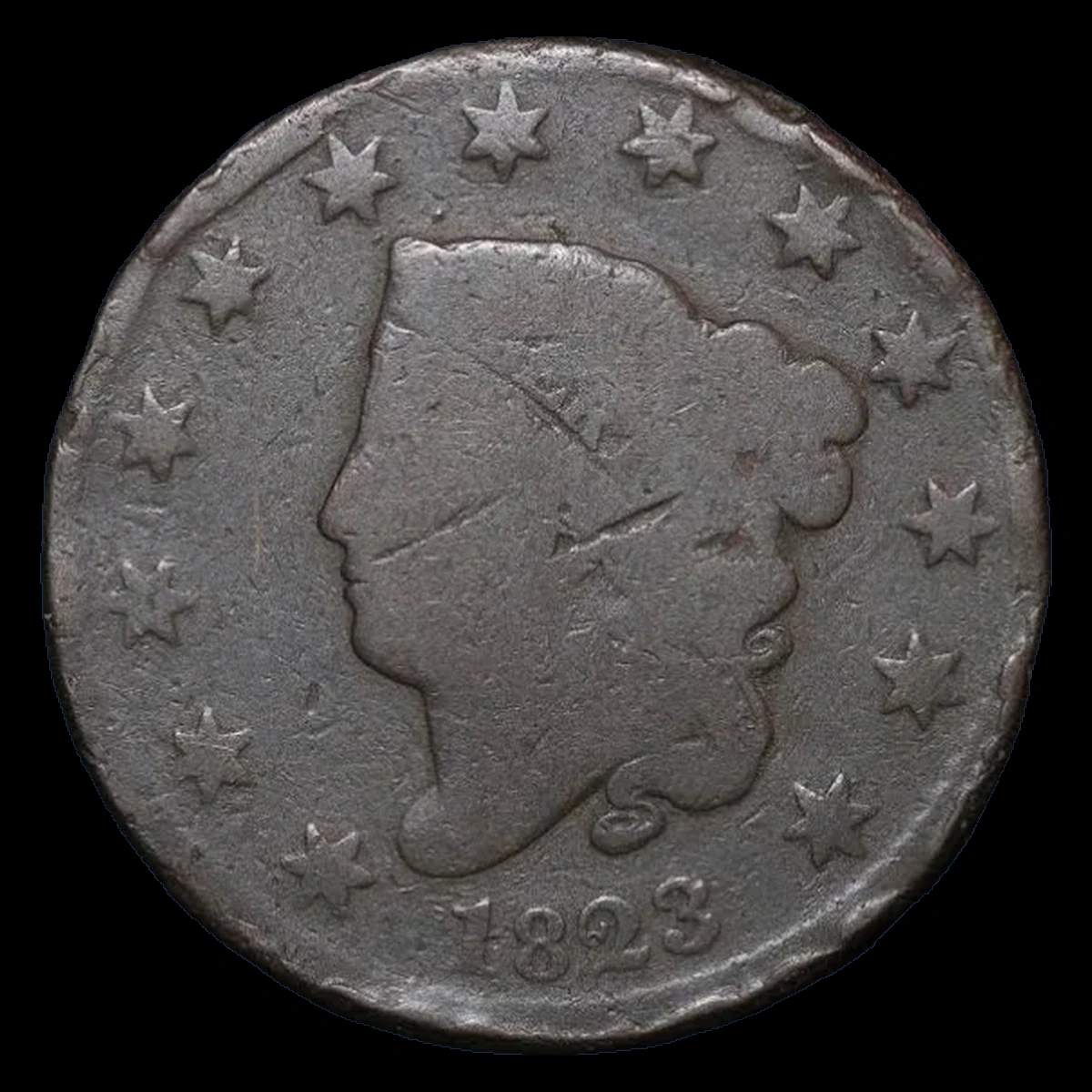
Original N-2 cents can show small front rim breaks near stars four through six. One documented break starts at star five and extends about halfway toward star four; another description includes a separate break above star six.
How to Identify
Confirm original-issue identity before comparing the raised feature. Large crossing cracks on later private copies are not reference patterns for an official original 1823 cent.
Inspect the rim boundary for original raised copper rather than added metal or a folded edge. Any proposed original fine crack needs its own documented same-year match.
What It’s Worth
Ordinary circulated originals with small rim breaks are estimated at $100–$10,000, while comparable elite originals occupy a separate $200,000–$350,000 tier. Date scarcity and preservation dominate these whole-coin figures.
The PCGS MS66 Brown N-2 sold for $299,000 in February 2009. That exceptional result does not measure the premium of its tiny rim break.
3. 1823 Penny The Reverse Tilts after a Controlled Flip: Rotated Dies Error
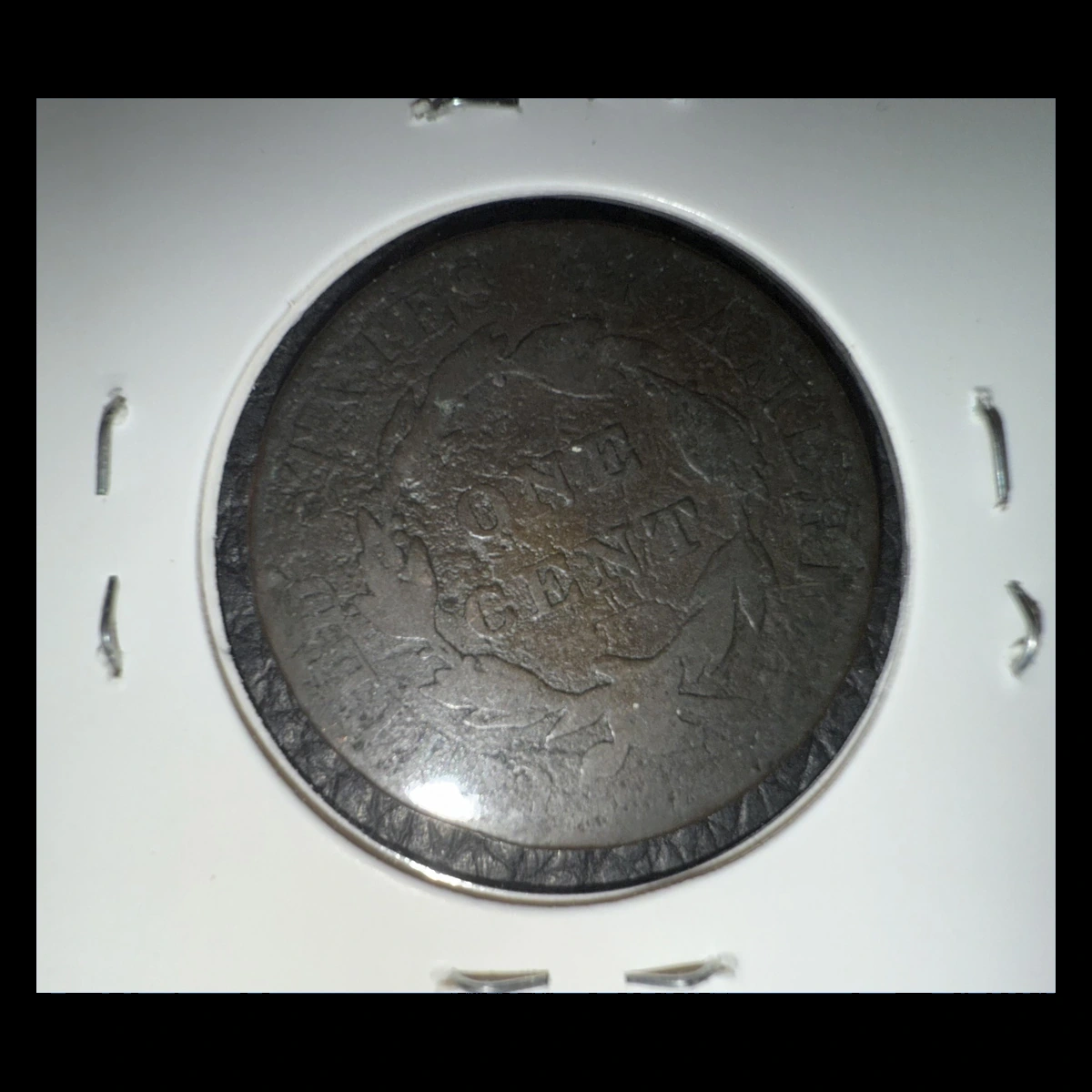
The exceptional N-2 has approximately forty degrees of counterclockwise reverse rotation. This changes the angle between the two designs rather than their sideways placement.
How to Identify
Hold the date upright and flip top to bottom around a fixed axis without twisting. Repeat against a vertical guide to test whether the same tilt returns.
A separate 1823/2 N-1 appeared in an ANACS VG8 Details holder with rotation noted but no angle supplied. It must not inherit the N-2’s forty-degree measurement.
What It’s Worth
Ordinary circulated originals with noticeable rotation are estimated at $150–$10,000, depending on variety and surfaces. Comparable elite preservation is a separate $200,000–$350,000 whole-coin tier.
The N-2 rotation belongs to the same $299,000 coin already discussed, not another auction transaction. A Details-qualified worn overdate needs its own condition allowance rather than that exceptional comparison.
4. 1823 Penny The Design Sits Very Slightly toward Ten O’clock: Off-Center Strike Error
The N-2 auction catalog describes a very slight off-center strike toward ten o’clock without assigning a percentage. The movement is small and accompanies the reverse rotation and rim break.
How to Identify
Use complete straight-on photographs of both faces, including every part of the original edge. Compare the ten-o’clock border with the opposite side and inspect for filing that could create false unevenness.
Do not invent a percentage from a worn rim or tight crop. Uneven spacing confined to one face can instead reflect a single shifted die, so the whole coin must support the cataloged placement description.
What It’s Worth
Circulated originals with a small genuine placement error are estimated at $150–$10,000; roughly $200,000–$350,000 is reserved for comparable elite originals. A tiny shift alone cannot move a worn coin into that preservation tier.
The documented N-2 is the same specimen behind the February 2009 $299,000 sale. Its off-center description does not create a separate price to add for a third feature.
Conclusion
For 1823, original-issue identity comes before interpreting dramatic cracks or date marks. Match the underlying 2 for N-1 and the actual small rim features for N-2, using both faces for alignment.
The $100–$350,000 estimates mainly reflect very different varieties and preservation. The famous N-2 remains one coin with several features, and its extraordinary condition must stay attached to every use of its auction result.