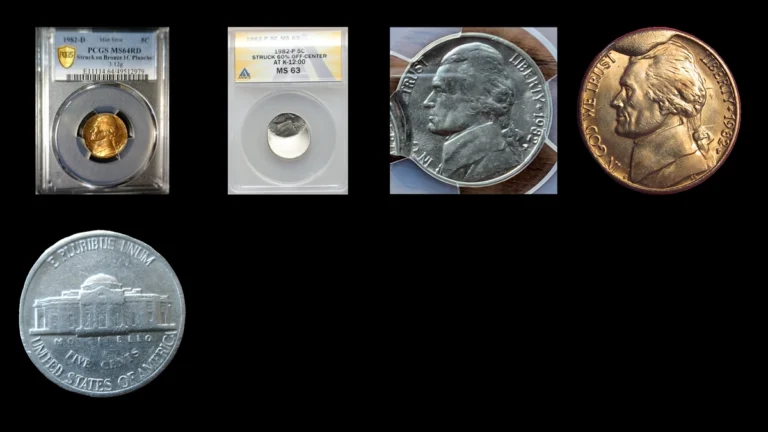
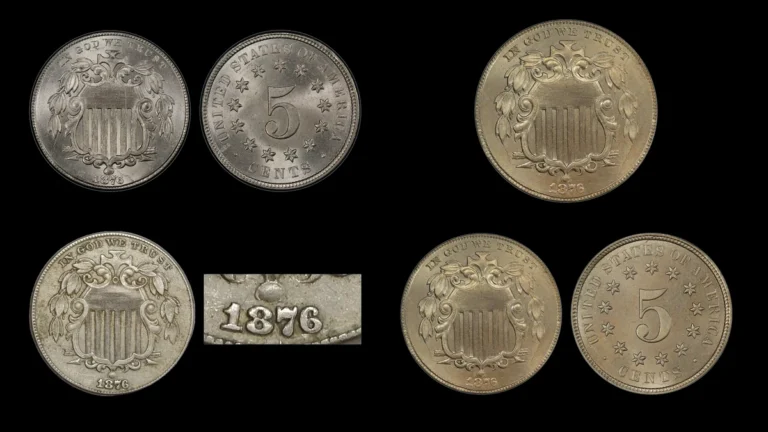
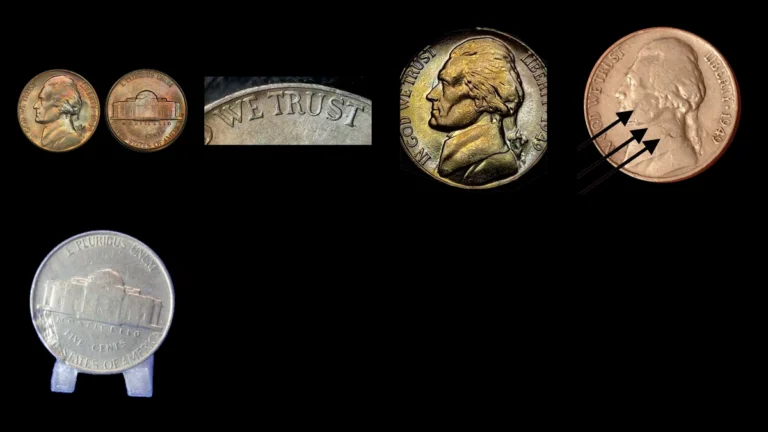
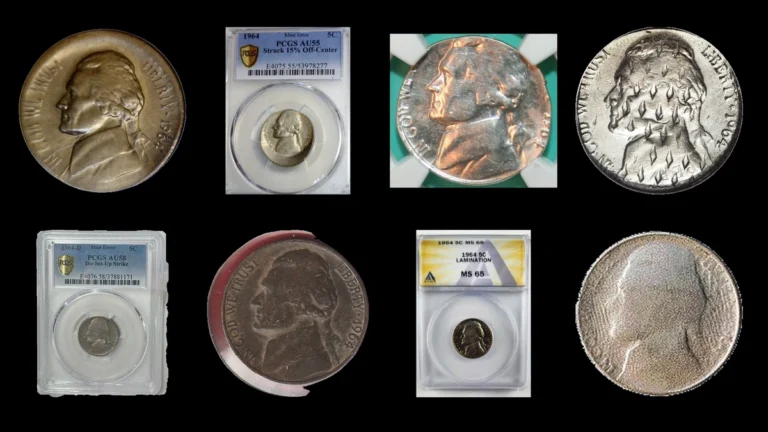
Rare 1869 Nickel Errors (List & Pictures)
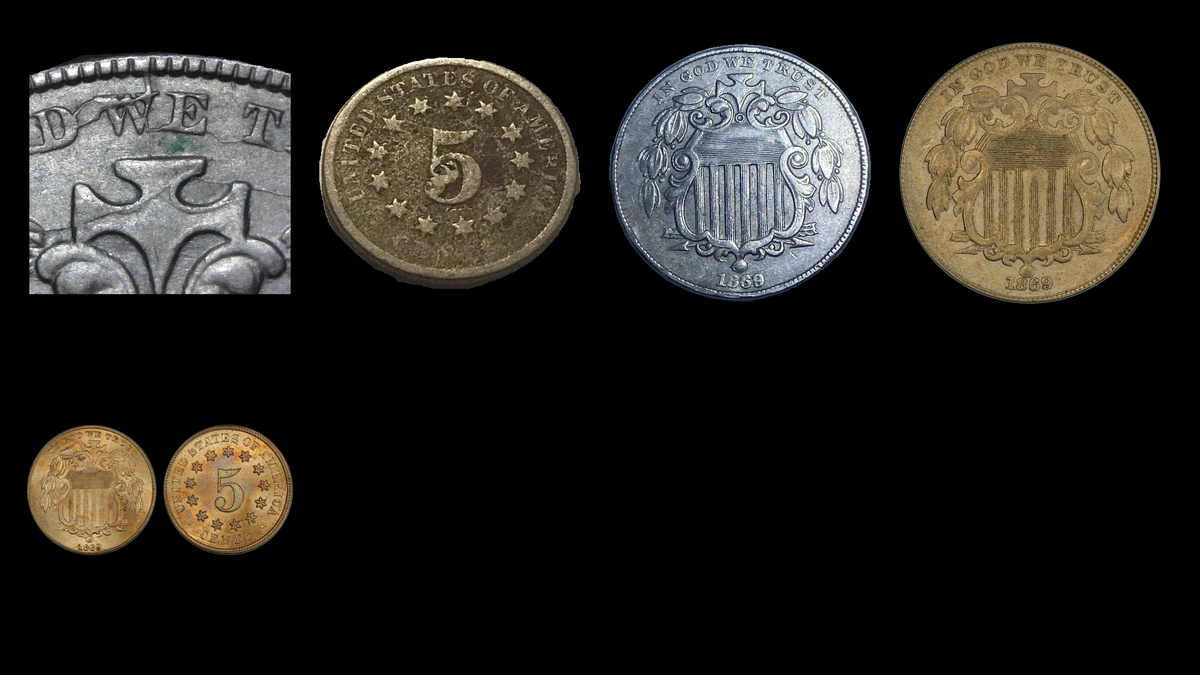
A missing leaf can be more meaningful than a rough surface on an old Shield nickel. Among 1869 nickel errors, estimated whole-coin values run from $20–$20,000, while a cap-shaped specimen brought $15,600 at auction.
Work around the edge first, then examine the leaves, shield, and date before testing how the two faces line up.
| Visible clue | Where to check | Estimated value |
|---|---|---|
| Incomplete edge | Missing metal and adjoining design | $75–$750 for clips |
| Three leaves instead of four | Second cluster right of shield | $40–$700 |
| Extra shield outlines | Shield and motto | $75–$2,500 |
| Raised cup wall | Both faces and edge | $10,000–$20,000 for a comparable cap |
The normal coin weighs 5.00 grams and measures 20.5 millimeters across. Its copper-nickel alloy has no separate plated outer skin, so metal separations need to be understood within the alloy itself.
1. 1869 Nickel A Piece Missing from the Edge: Clipped Planchet Error
Start with the boundary of the missing metal. A genuine clip was already present in the blank when the designs were struck.
An ANACS XF45 example appeared in the Rippere collection. Its description does not establish a curved shape, a clock position, or a percentage missing.
How to Identify
Inspect where the design approaches the incomplete edge for evidence of striking around that opening. A filed boundary or saw marks can reveal a piece removed later.
Record a loose coin’s weight and remaining full width once. A weight shortage supports missing metal but cannot show when it disappeared.
What It’s Worth
Allow roughly $75–$750 for authenticated rim clips, depending on condition and the size and clarity of the missing portion.
The Rippere collection listing identifies the XF45 coin in the August 11, 2024 auction. No public sale total is supplied for that example.
2. 1869 Nickel Design Lost Beside a Blank Area: Off-Center Strike Error
A broad untouched area beside a shifted design points to a blank that was not centered under the dies. These are the steel tools that stamp the coin.
A dealer-described 1869 example in VG condition was about 20% off center toward eight o’clock. Its date is only partly visible, so the year depends on that catalog identification.
How to Identify
Find the surviving date digits and photograph them before assigning a year. Compare both faces for a corresponding unstruck area and missing portions of the design.
An uneven border with every design element still present needs a different explanation. Also exclude grinding that erased design after the coin was made.
What It’s Worth
An estimated $500–$2,000 covers genuine pieces broadly comparable in displacement and condition. A readable date strengthens the comparison.
The dealer’s $899 and $698 figures were minimum bids in separate catalogs. They do not document either amount being paid.
3. 1869 Nickel A Raised Line or Rim Lump: Die Cracks and Cuds Error
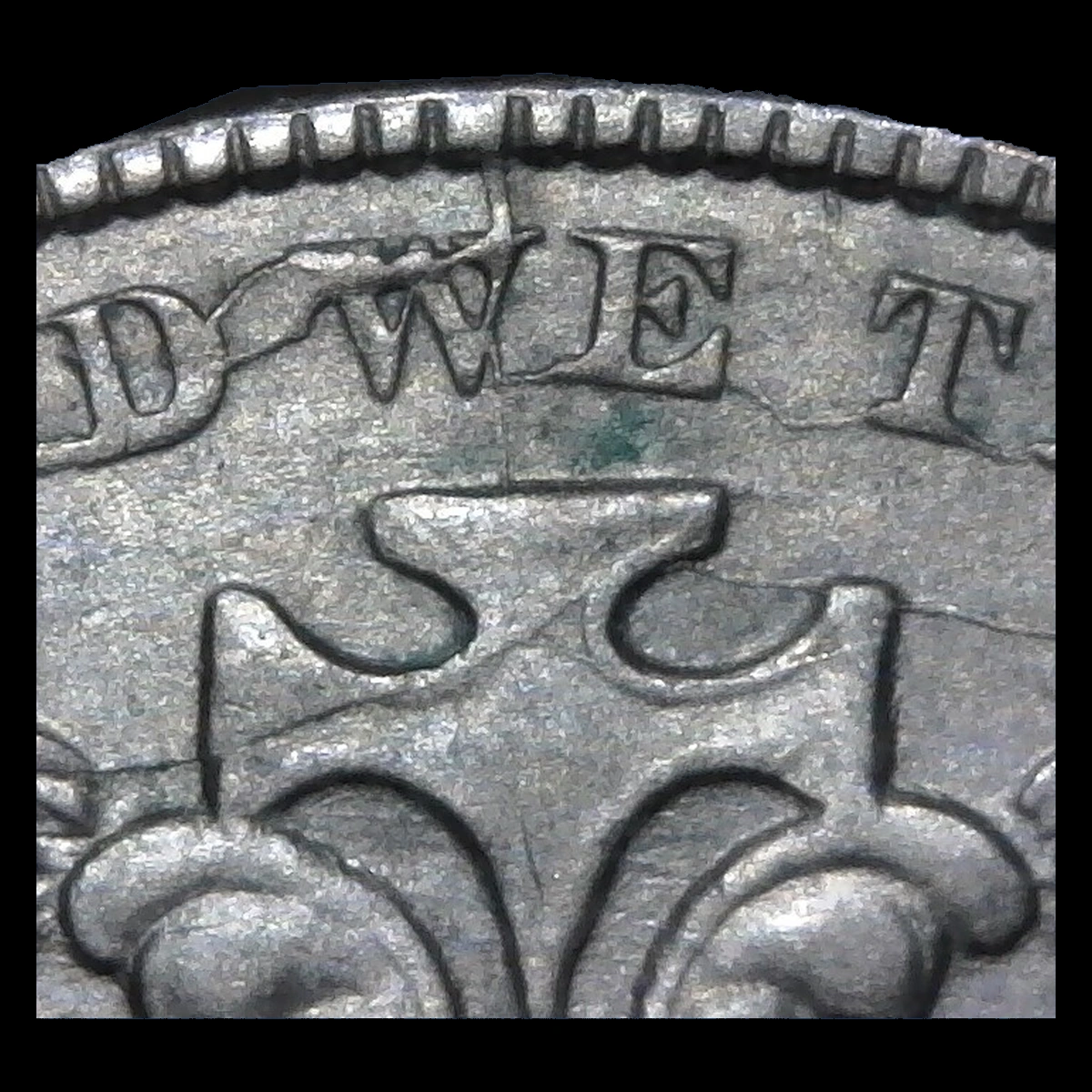
Look for raised lines around the cross, leaves, date, and motto, or above STATES OF on the reverse. These are reported locations on different coins, not a checklist that every example must satisfy.
Metal entering a cracked die produces a raised line. A piece breaking away at the die’s edge can instead leave a broad rim-connected lump, called a cud.
How to Identify
The cataloged cud lies between two and four o’clock on the shield side. Check that its raised metal joins the rim and replaces normal detail.
Use light from the side to distinguish a raised crack from an incuse scratch. A rim dent moves existing coin metal and does not reproduce the same feature as a broken die.
What It’s Worth
Ordinary cracks suggest about $20–$300; clear cuds may reach $40–$600. Much of a small-crack coin’s value can still come from its overall preservation.
A heavily worn 1869 cud carried a $24 minimum bid in a Jim’s Coins catalog. That opening threshold is not a completed-sale result.
4. 1869 Nickel Metal Lifting on the Reverse: Lamination Error
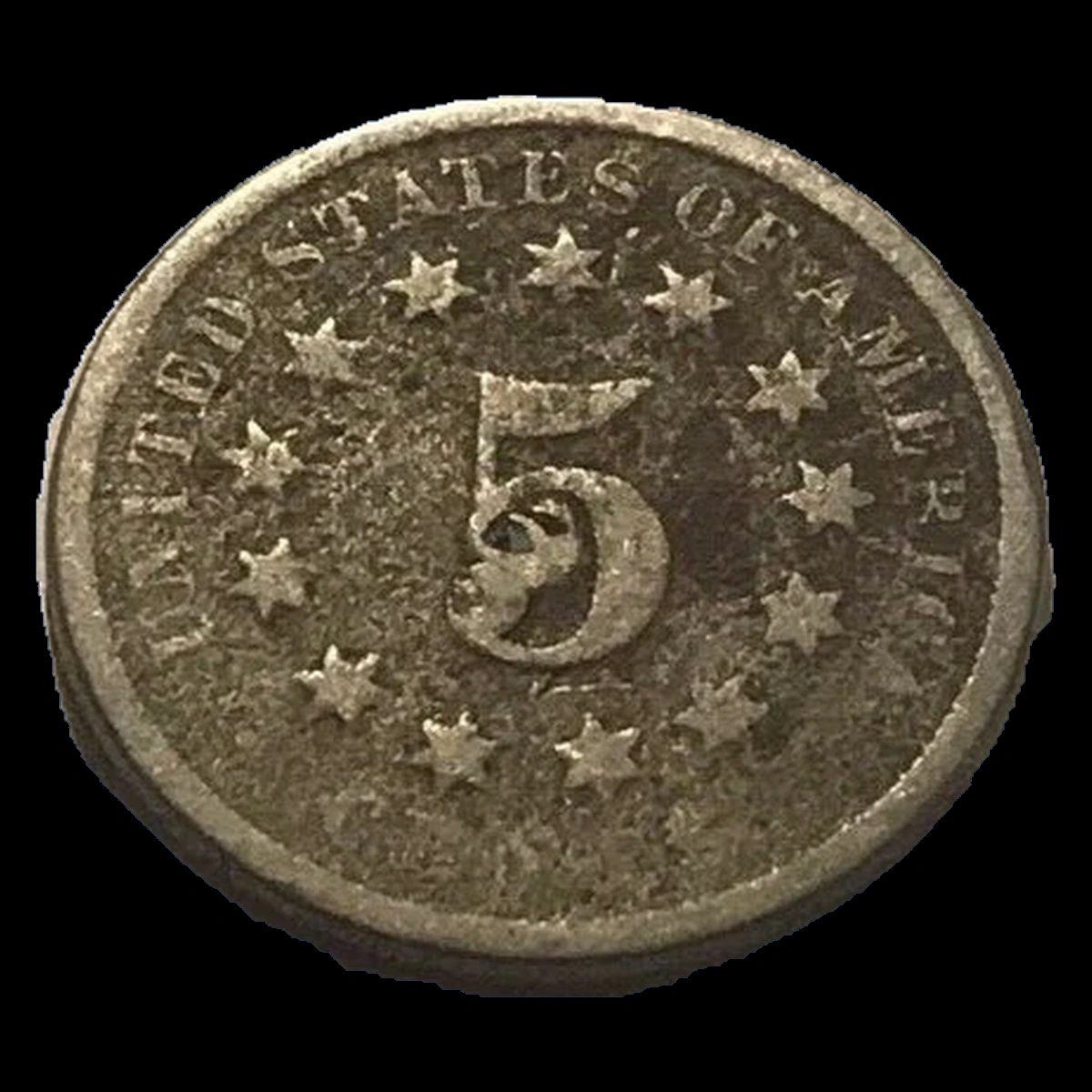
A thin flap or a rough shallow opening can expose a seam in poorly bonded metal. This surface separation is called a lamination.
An ungraded 1869 reverse-lamination listing supplies an example but no precise location for its defect. The seller’s question about date doubling does not establish another variety.
How to Identify
Follow the separation edge with a magnifier and changing light. Surviving original design on a lifted area can help show how the surface came apart.
Do not lift the flap to investigate underneath. A scrape, corrosion pit, or rough patch without a separation boundary needs more evidence.
What It’s Worth
A practical estimate is $25–$250 for genuine surface laminations. Large visible defects on well-preserved coins generally attract more attention.
The supplied ungraded reverse example was offered for $75 with offers accepted. That asking price does not prove a sale or the suggested date variety.
5. 1869 Nickel One Nickel in Two Thin Pieces: Split After Striking Error
A deeper weak seam can divide the coin through its thickness. If the separation happens after striking, the two pieces retain the original front and back on their outside surfaces.
A seller offered an ANACS G4 pair described as split after striking. The grade indicates heavy wear, while the two matching pieces preserve evidence of the original whole coin.
How to Identify
Document both outer faces and both exposed inner surfaces. Matching outlines alone are insufficient if the interiors do not belong together.
Look for a natural separation texture rather than cutting or grinding marks. Keep certified pieces sealed and avoid forcing loose fragments into contact.
What It’s Worth
About $300–$1,200 is a working range for a genuine matching pair in comparable worn condition. A lone fragment is a different purchase.
The ANACS G4 pair listing asks $995 or best offer for both pieces together. It is neither an auction realization nor a price for each half.
6. 1869 Nickel Three Leaves in a Four-Leaf Cluster: Missing Leaf Error
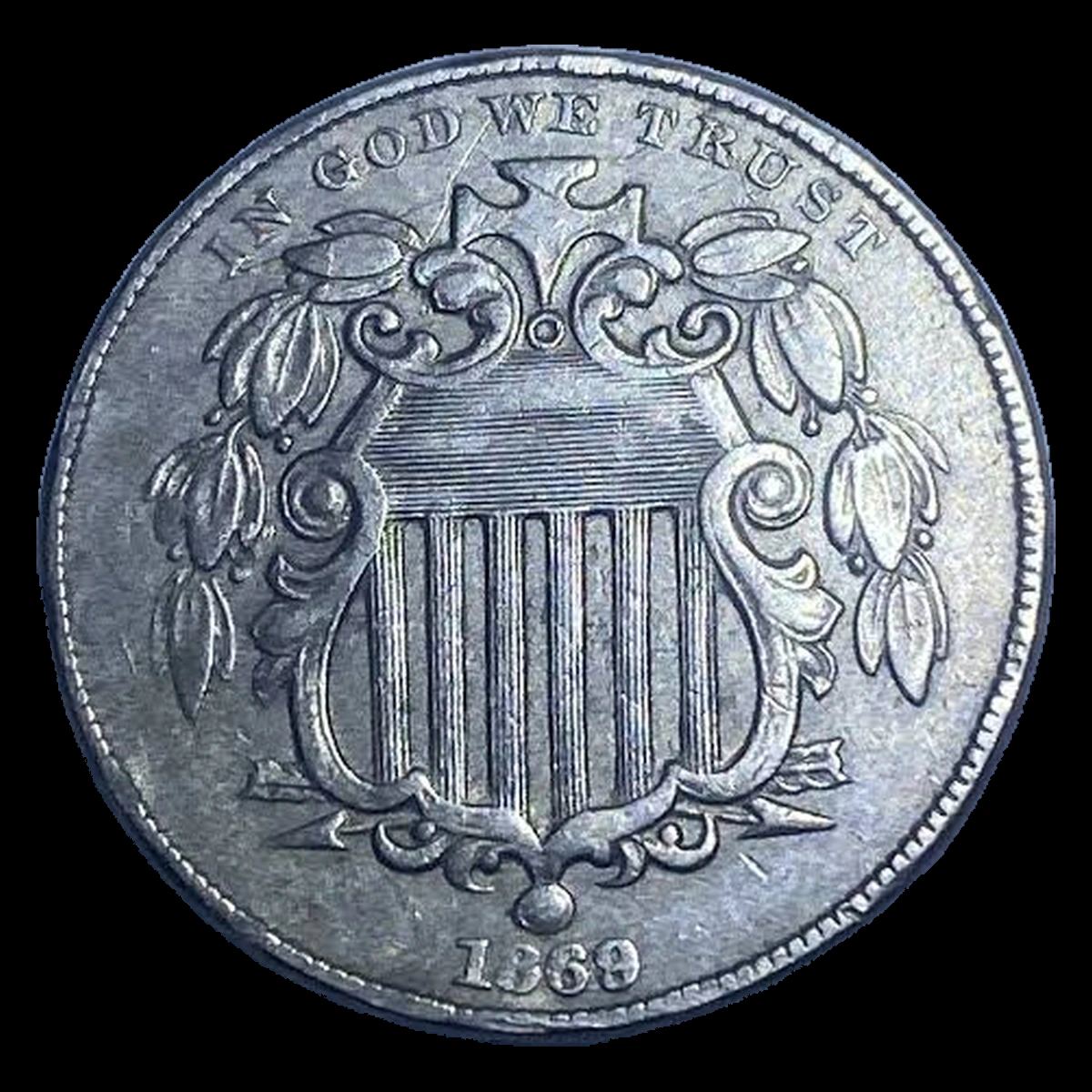
On the right of the shield, examine the second leaf cluster. This variety lacks the outermost leaf, leaving three instead of four.
The older master design omitted that leaf, which workers needed to add to individual dies. A die left without the addition repeated the omission on its coins.
How to Identify
The reported 1869 variety combines the older front design with a wide date. Count the remaining leaves and check whether their clear outlines surround a genuinely absent fourth position.
The specialist explanation of the missing leaf illustrates the arrangement on earlier dates. Use an identified 1869 example for the final match, particularly if wear weakens nearby leaves.
What It’s Worth
Identifiable examples fall around $40–$700 across worn and attractive unworn grades. This is an estimate rather than a supplied auction record.
A clear three-leaf arrangement is more persuasive than a worn area where several leaf tips have vanished. The coin’s other surfaces and remaining detail still matter.
7. 1869 Nickel Doubled Lines in the Shield: Doubled Die Error
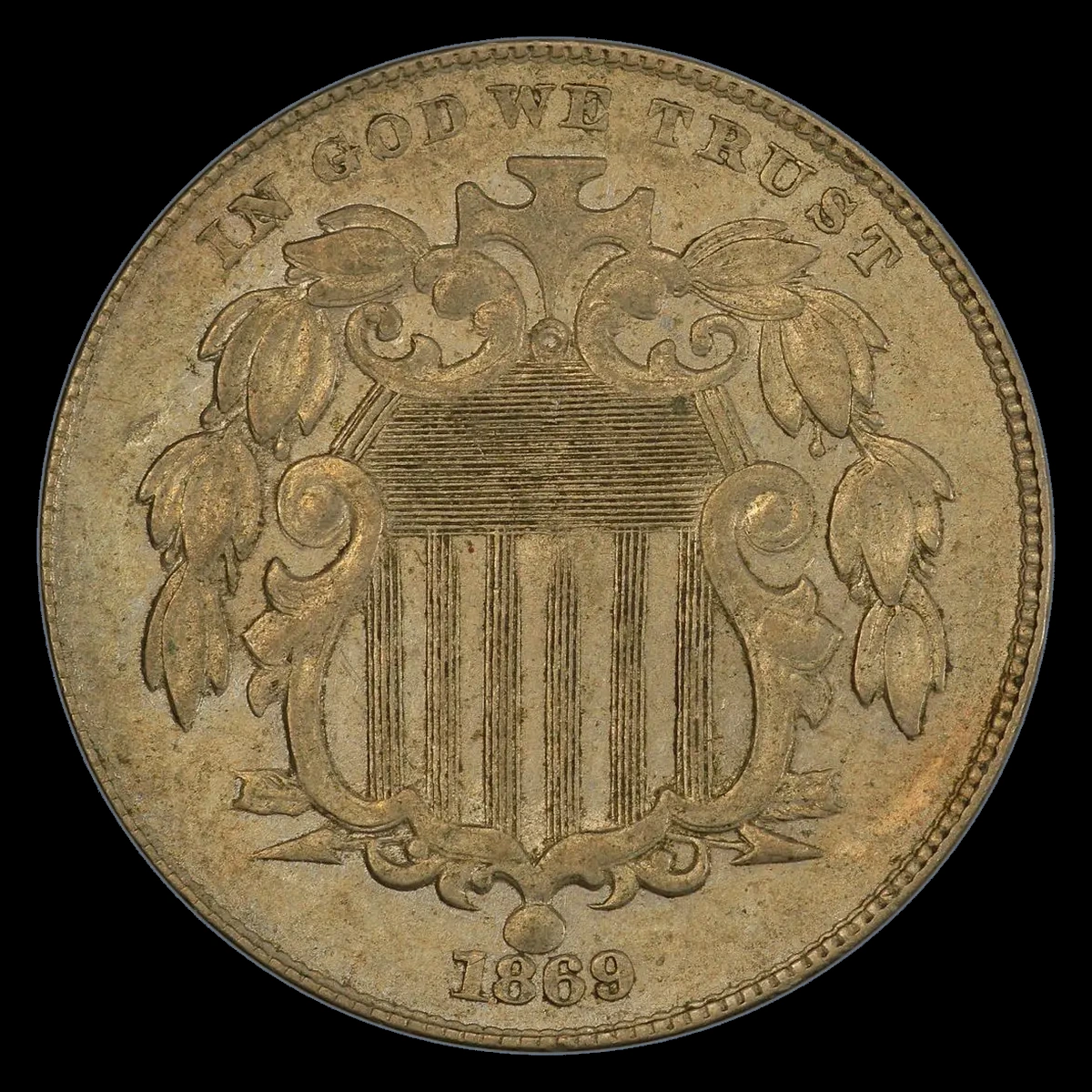
Some wide-date 1869 nickels show extra shield contours, sometimes accompanied by doubling in the motto. The repeated design was made in the die before the nickel was struck.
Several patterns exist with different strengths and directions. Repunched digits and cracks may accompany them, but those features form by different processes.
How to Identify
Choose a reference with the same shield pattern, then inspect IN GOD WE TRUST for the doubling expected on that variety. Do not require every listed example to repeat every letter.
Rounded duplicate contours are more useful than a flat shelf beside a design edge. A thick date alone does not establish a doubled shield.
What It’s Worth
Expect an estimated $75–$2,500 for matched examples. Strong separation and attractive surfaces can push a coin above a subtle, worn specimen.
Any accompanying date repunching belongs in the description of that same coin. It does not create a separate value to add to the upper end of this range.
8. 1869 Nickel Extra Strokes Beside the Date: Repunched Date Error
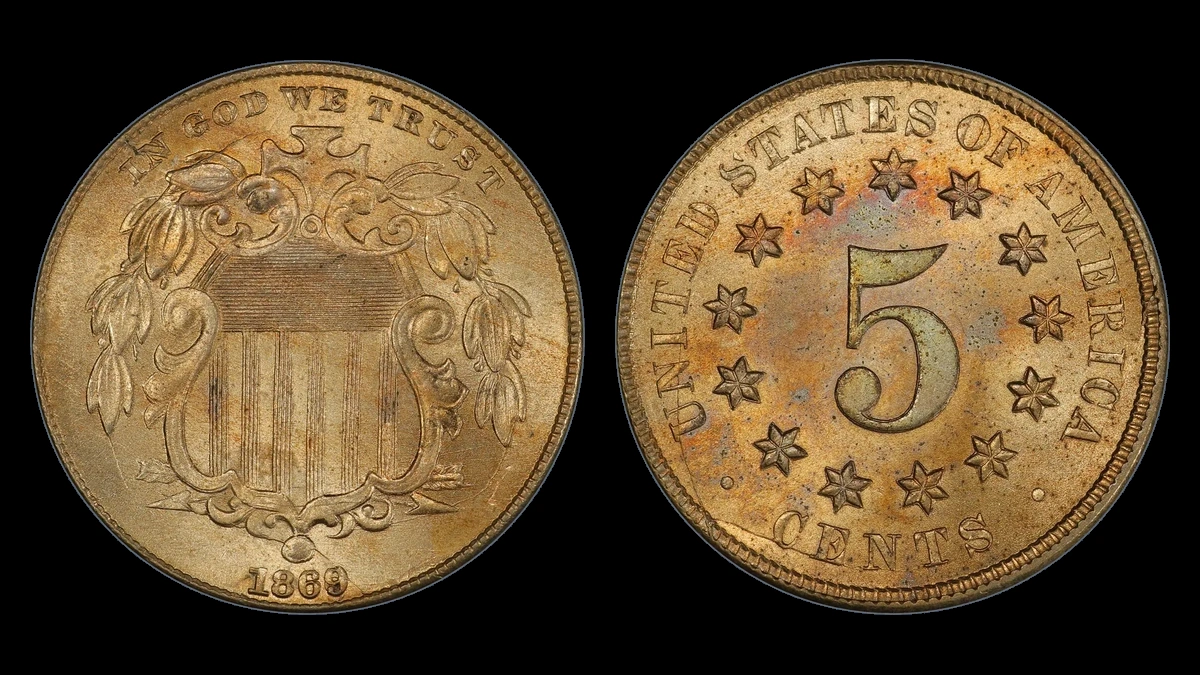
The date was entered into the die with a punch, and another entry in a shifted position could leave earlier strokes visible. Narrow-date and wide-date coins have different reported patterns.
One narrow-date variety has an earlier 1 below the final digit. Other examples repeat parts of 18, 69, or the whole wide date above or below the finished numerals.
How to Identify
Establish the date spacing before tracing extra curves around individual digits. Wide or narrow spacing by itself is normal and does not prove repunching.
The older 1869/8 interpretation is disputed, and the specialist catalog flags some dramatic 869 patterns as counterfeit. Match the full date and surrounding design rather than treating one extra curve as an underlying 8.
What It’s Worth
Roughly $40–$1,500 is a broad estimate for genuine, identified repunched dates. Visibility, variety, and preservation account for the large span.
A bold-looking date on a questionable coin cannot be valued from this range alone. The estimate assumes both the coin and the date pattern are genuine.
9. 1869 Nickel A Date Digit Outside the Date: Misplaced Date Error
An extra numeral away from the date can record a punch entered in the wrong place on a die. PCGS recognizes an 1869 misplaced-date variety as FS-1307.
Other catalog descriptions tentatively mention marks near the lower shield or its ball. Those suggestions do not establish the locations of FS-1307’s diagnostics.
How to Identify
Use the FS-1307 entry as the named attribution to investigate. Compare actual photographs of a matched specimen before assigning a small stray mark to it.
The mark should preserve recognizable numeral shape in the correct location. A jagged crack or shapeless bump does not become a misplaced digit because it sits near the shield.
What It’s Worth
A matched example may fall around $75–$1,000 as a whole-coin estimate. Clear diagnostics and strong preservation support the higher figures.
The supplied PCGS entry provides no auction record for this article. Tentative marks should not be priced as confirmed FS-1307 coins.
10. 1869 Nickel Stray Outlines from the Other Face: Die Clash Error
Occasionally the dies met with no blank between them and transferred portions of their designs to each other. Later nickels could then carry faint traces of the opposite face.
A specialist description records clash marks on both sides of an 1869 nickel. Its separate question about a possible misplaced digit remains unconfirmed.
How to Identify
Find a stray outline that can be matched to a feature on the opposite design. Repeat that comparison on the other face if claiming a two-sided clash.
An isolated scratch with no recognizable design relationship is poor evidence. Clashing also differs from another coin directly pressing a mirror image into the nickel.
What It’s Worth
Estimate $30–$400 for collectible examples with recognizable clashes. Faint traces on a heavily worn coin may add little.
No specific auction sale is supplied for the cataloged coin. Its value should reflect the demonstrated clash, without an extra premium for the questioned digit.
11. 1869 Nickel Reverse Turned After a Normal Flip: Rotated Dies Error
Both faces can look complete and ordinary until the coin is turned over. A die set at the wrong angle changes the relationship between front and back.
The specialist catalog describes an 1869 example as strongly rotated. It does not state a measured angle.
How to Identify
Hold the shield upright and flip the coin from top to bottom without twisting it sideways. The reverse should finish upright under normal alignment.
Record a continuous view so the turn can be repeated and checked. Two separate upright photographs cannot establish the angle between the faces.
What It’s Worth
A large, demonstrable rotation suggests about $60–$800, depending on condition and the actual angle. A slight lean should not receive the same comparison.
The reported specimen has no exact angle or realized price in the supplied description. Measure the coin under consideration instead of assigning a full half-turn by assumption.
12. 1869 Nickel A Cup with a Mirror Impression: Die Cap and Brockage Error
The most dramatic supplied 1869 example is an NGC MS64 reverse die cap with brockage. A coin sticking to a die can spread into a wall as further blanks are struck against it.
Brockage is a recessed, reversed design transferred through contact with another coin. On this specimen, the cap and brockage are features of one object.
How to Identify
Examine the wall, surviving designs, and recessed mirror impression separately. Bending a flat coin into a cup does not recreate that combination.
Compare both faces and the edge with the illustrated certified specimen. Do not infer the precise transferred design solely from the words reverse die cap.
What It’s Worth
A comparable genuine cap-and-brockage specimen suggests roughly $10,000–$20,000. Less distinct design or damage can substantially weaken the comparison.
Mint Error News’s auction report records $15,600 for the MS64 example at Heritage in July 2022. That result covers the entire coin once.
Conclusion
Several small features on an 1869 nickel can come from the same die, while a split pair or cap preserves evidence of a very different minting event. Describe what is physically present before selecting a price comparison.
Keep the date readable in photographs and preserve fragile metal as found. Exact variety matches, documented condition, and completed sales provide firmer comparisons than unexplained bumps or dealer opening bids.