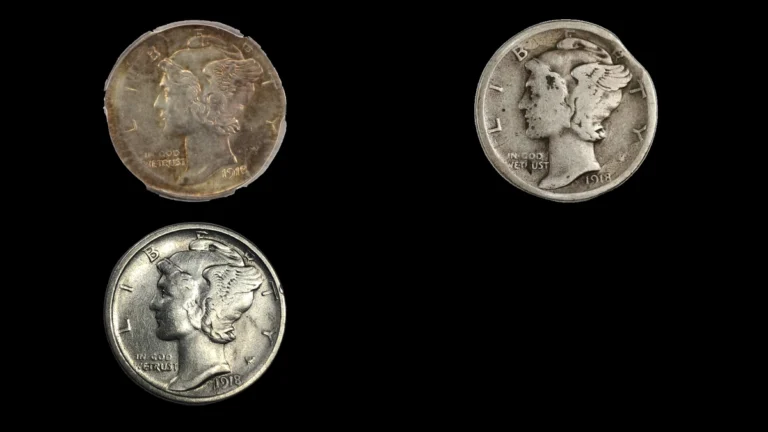
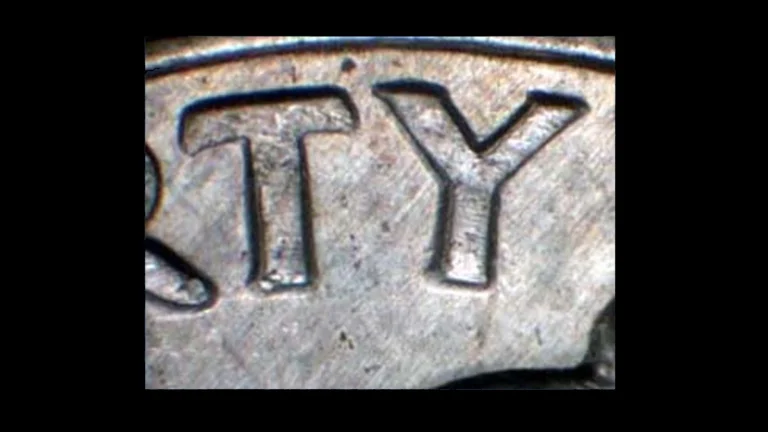
Rare 1919 Dime Errors (List & Pictures)
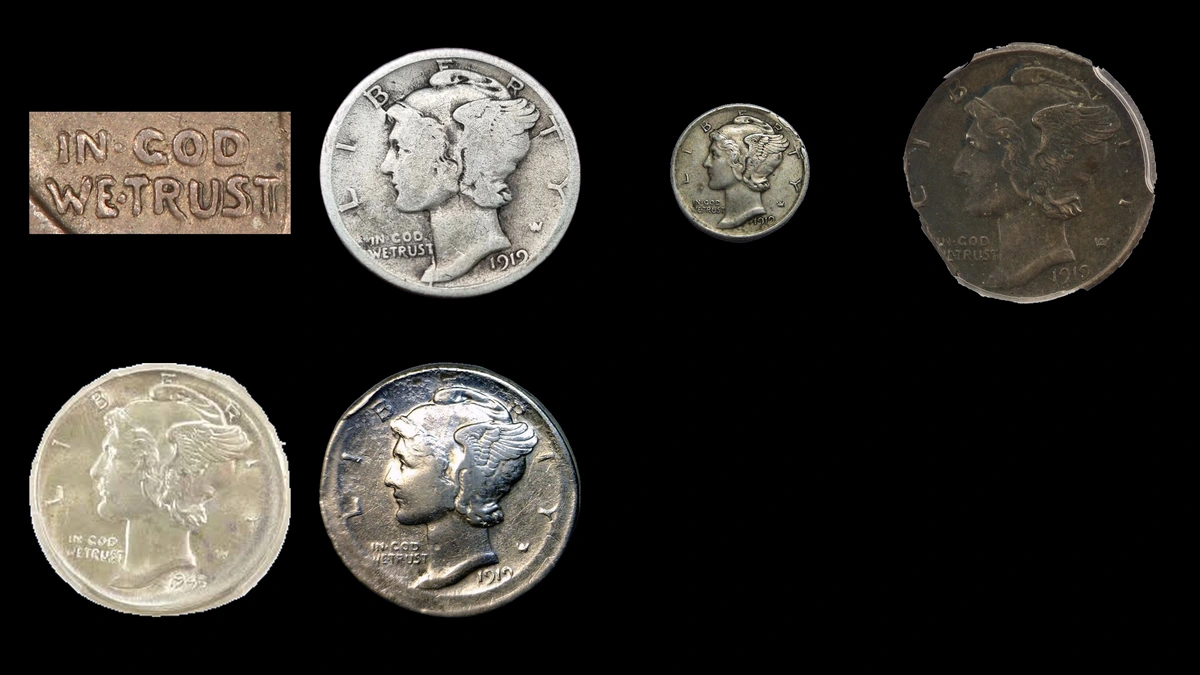
A Philadelphia 1919 dime with a doubled motto sold for $7,800 at auction in 2018. The 1919 dime errors below span estimated whole-coin values of $20–$10,000.
Read IN GOD WE TRUST first, then inspect the portrait surface and full outline. A normal Mercury dime weighs 2.50 grams and measures 17.9 millimeters.
| Where to start | Feature | Estimated whole-coin range |
|---|---|---|
| IN GOD WE TRUST | FS-101 doubled die | $1,000–$10,000 circulated |
| Upper portrait | Reported Spiked Head crack | $20–$150 |
| Peeling front surface | Reported lamination | $25–$350 |
| Interrupted design patch | Struck through debris | $40–$500 |
| Straight missing edge | Clipped planchet | $100–$500 ordinary; $700–$1,200 combination |
| Expanded outline | Broadstrike | $250–$1,500 |
| Shifted design and plain crescent | Off-center strike | $200–$2,000 |
1. 1919 Dime The motto repeats while the date looks normal: doubled die obverse Error
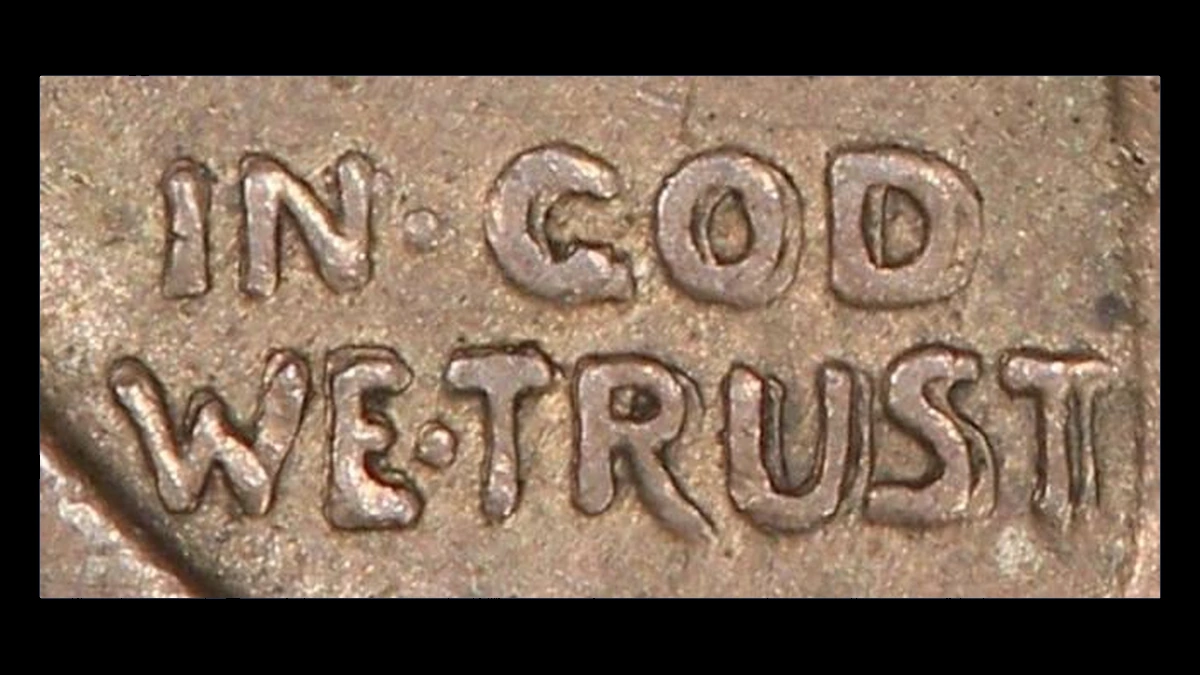
FS-101 rewards looking away from the date. Its important doubled details occur in GOD and UST, portions of N and R, and the dot between IN and GOD.
A partial design impression followed by another misaligned impression created repetition while the die was being made. Much of the surrounding design can appear normal, and the coin itself did not need a second strike.
How to Identify
Begin with GOD and UST, then expand to the smaller affected parts shown in the discovery report. Matching several details guards against treating a reflected edge as the whole variety.
Look for rounded additional contours rather than flat shelf-like edges. A normal-looking date does not rule out this particular doubled die.
Confirm Philadelphia from the intact reverse mintmark area. The motto can remain identifiable after circulation wear, so inspect the actual surviving detail rather than dismissing a worn coin automatically.
What It’s Worth
Identified worn through better circulated examples have an estimated whole-coin range of $1,000–$10,000. Clear motto doubling, original surfaces, and preservation influence the comparison.
PCGS records an XF40 at $7,800 in August 2018 and reports a separate XF45 private sale for $10,000 in 2017. The private-sale figure is distinct from the auction result.
These historical transactions are not guaranteed current offers. Cleaning, heavy wear, and weak attribution can substantially change the usefulness of either benchmark.
2. 1919 Dime A ridge near the upper portrait: reported Spiked Head die crack Error
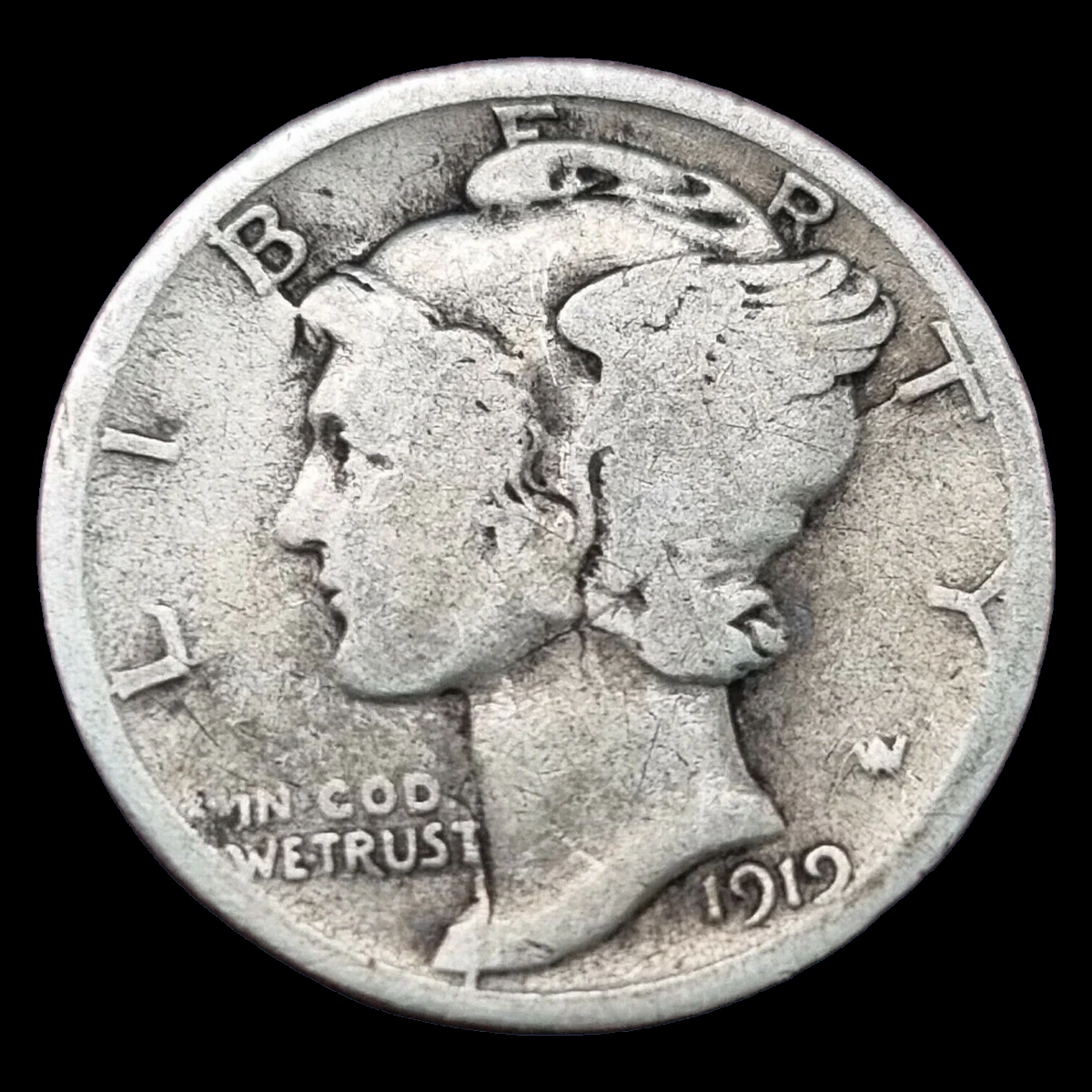
The name Spiked Head describes a raised line near the top of Liberty’s head on a reported Philadelphia example. The supplied account gives no exact route.
A crack in the die can fill with metal during striking, leaving a ridge beside the normal portrait. A scratch instead cuts into the completed surface.
How to Identify
Inspect the upper head area under light from the side. Follow an actual raised line rather than a loose hair, dirt, or a groove with displaced metal along its edges.
Keep the portrait and nearby open area visible together. Another year’s Spiked Head photograph cannot establish the route on this reported 1919 example.
Check the full date and absence of a reverse mintmark. The descriptive nickname is a starting location, not a substitute for evidence that the line came from a cracked die.
What It’s Worth
A genuine example is estimated at $20–$150 from worn through little-or-no-wear condition. No recorded sale of this reported Spiked Head specimen is supplied.
Clarity may add collector interest, but very high preservation can explain a higher whole-coin price independently. A faint ridge should not inherit the value of a much finer dime.
3. 1919 Dime A layer separates from the front: reported lamination Error
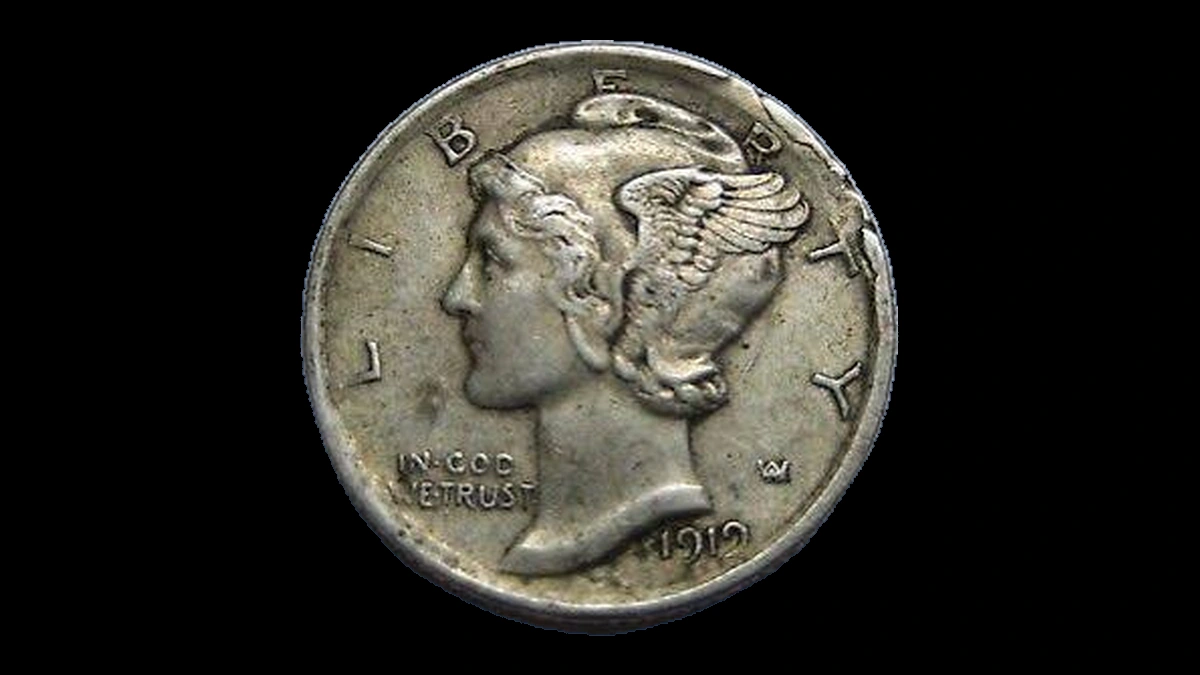
A seller reported front-side peeling on a Philadelphia 1919 dime without a certified grade or exact location. The claimed feature is a thin separation within the metal.
A layer may remain as a flap or break away, leaving a shallow rough area. The silver-copper alloy has no modern clad outer layer, and a local peel does not mean the entire disc split in half.
How to Identify
Follow the edge of the affected area and look for a thin layer continuing beneath intact metal. Side lighting can reveal the boundary without disturbing it.
Leave any flap in place. Scraping, corrosion, dirt, or a different color alone does not demonstrate lamination.
Inspect both faces and any seam reaching the edge. The actual extent of the peel matters more than the seller’s descriptive label.
What It’s Worth
The estimated whole-coin range is $25–$350. A small peel on a worn dime generally belongs lower than an obvious separation on cleaner surfaces.
A dealer asked $115 for a different-year 1937 MS66 Full Bands lamination dime. It is a retail offer with strong preservation and clear reverse-band detail, not a completed 1919 sale.
4. 1919 Dime Debris interrupts part of the picture: struck-through Error
A Philadelphia 1919 dime in an ANACS F12 holder was listed as struck through debris. Material between the die and blank blocked normal contact and affected the struck surface.
The supplied description does not identify the debris itself. Wire, fabric, grease, or a retained object should not be assumed from that general term.
How to Identify
Compare the complete coin and holder with the ANACS F12 listing. Its location should come from that specimen, not from another dime with a similar label.
Examine the transition from intact design into the affected patch. Sharp burrs, corrosion, and a later gouge can also remove detail but require different explanations.
A dent alone cannot establish interference during striking. Look at the surrounding surfaces from several lighting angles before attributing the interruption.
What It’s Worth
Comparable genuine errors are estimated at $40–$500 for the whole coin. Smaller affected areas on worn coins usually need lower comparisons than dramatic features on better-preserved examples.
The documented F12 listing establishes a specific example, but no final price is supplied here. Guessing the material does not create an additional premium.
5. 1919 Dime A straight gap combined with spreading: clipped planchet Error
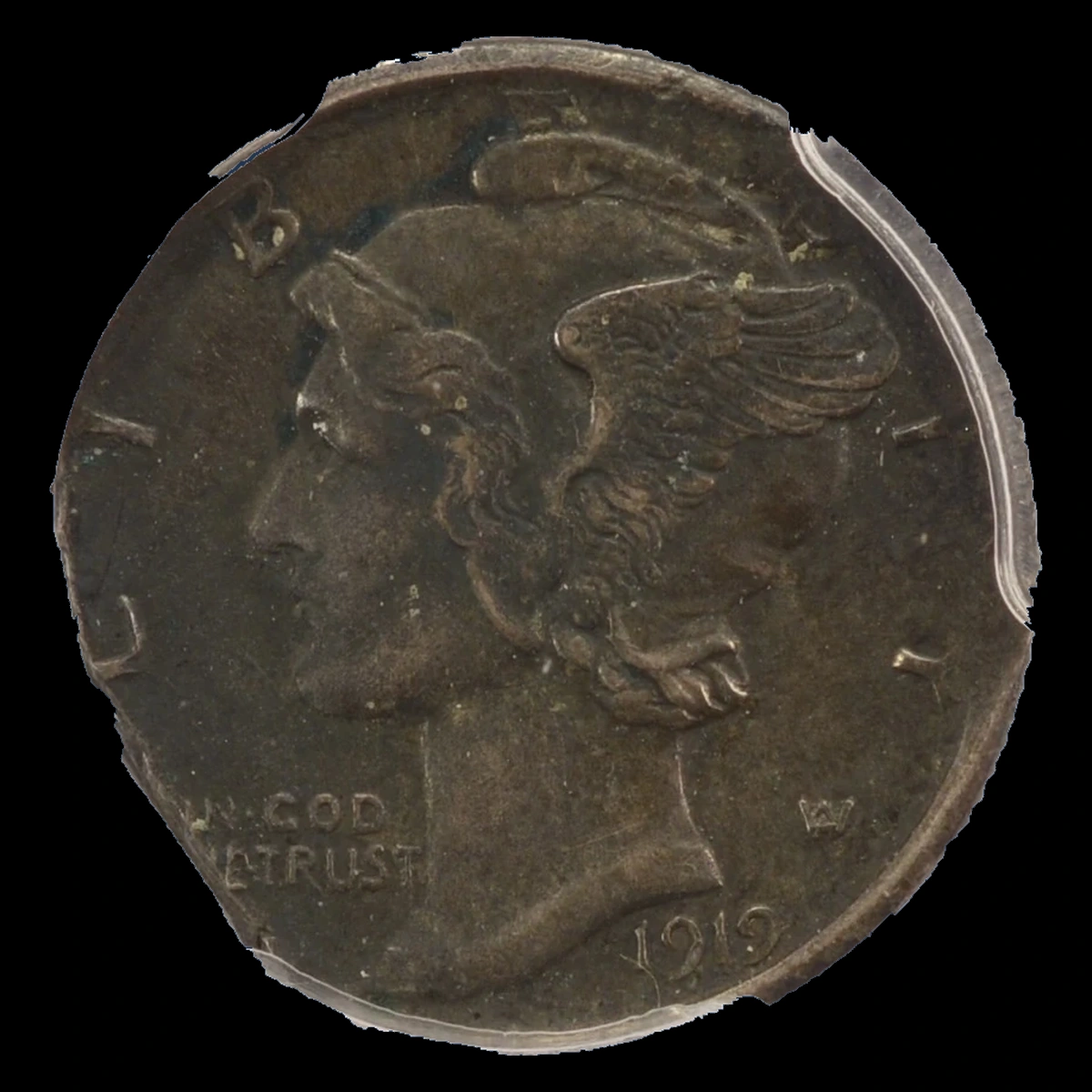
The Philadelphia PCGS MS63 combination coin has a twelve-percent straight clip and also shows broadstriking. The missing section existed before the incomplete blank received its design.
A straight clip can originate where the blanking punch crosses the metal strip’s edge. The later spreading is a separate event on that same object.
How to Identify
Inspect the two endpoints of the straight boundary. The adjacent rim and design should show how the strike formed around missing metal.
File marks cutting through finished reeding suggest later alteration instead. Possible weakness opposite the clip can support the diagnosis, while low weight alone cannot settle it.
Account for the broadstrike when examining the outline. The twelve-percent figure concerns missing metal on this specimen, not its amount of expansion or every 1919 clip.
What It’s Worth
Ordinary genuine clips are estimated at $100–$500, while an attractive combination can fit $700–$1,200 as a whole-coin range. The two features are not priced as separate objects.
Sullivan Numismatics asks $1,000 for the MS63 combination. It is one retail asking price for both errors, not a completed auction result.
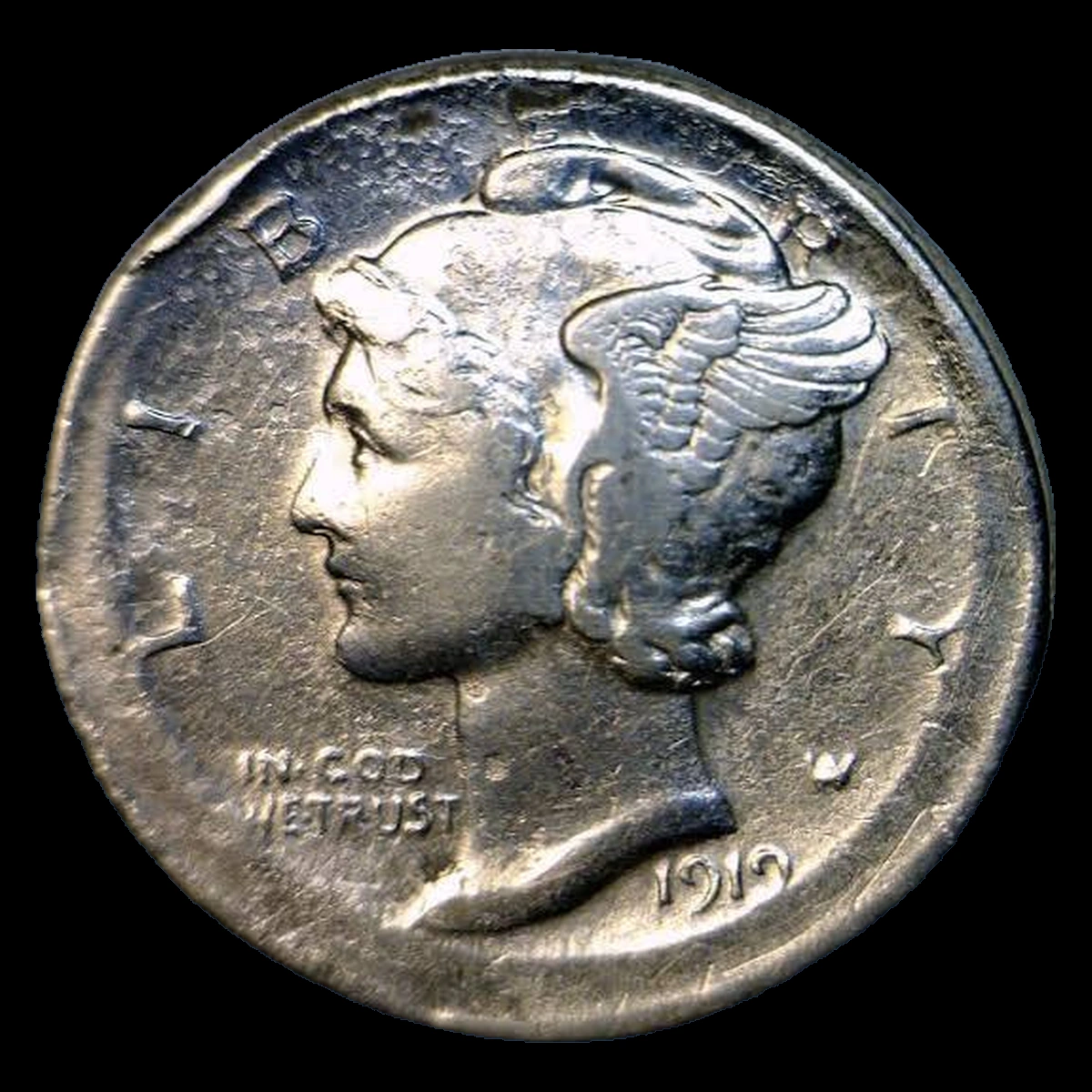
6. 1919 Dime An uneven expanded outline: broadstrike Error
A broadstrike forms when the collar fails to restrain the blank during striking. Metal spreads outward, sometimes leaving far more border space on one side.
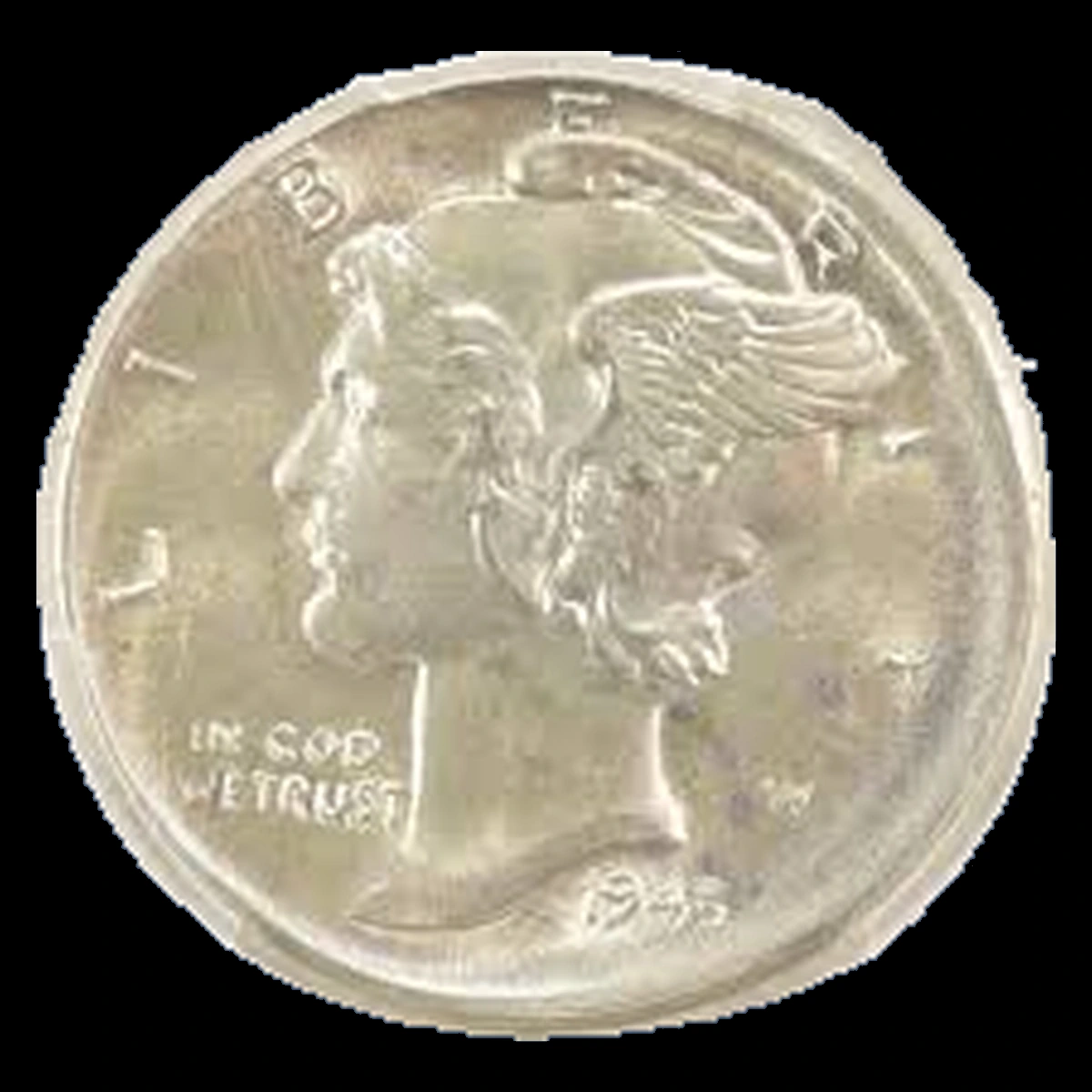
A separate PCGS MS64 Philadelphia example has a broad blank arc at the right and an affected bottom of the final 9. Its catalog identifies an uncentered broadstrike.
How to Identify
Compare the entire Heritage MS64 example rather than deciding from the last 9 alone. The outline, design, and edge formation should agree with the cataloged event.
Look for natural spreading and areas where the collar did not form normal reeding. Later hammering can increase width while flattening existing details.
The MS63 clipped combination is a different coin. Any missing metal must be considered separately when evaluating its weight and expansion.
What It’s Worth
Philadelphia broadstrikes have an estimated whole-coin range of $250–$1,500. Condition, original surfaces, and the clarity of expansion affect the result.
The $1,000 MS63 combination offer is a same-year comparison that includes its straight clip. No realized amount is supplied for the distinct Heritage MS64, and the two error ranges should not be added for the combination coin.
7. 1919 Dime The design shifts beside a blank crescent: off-center strike Error
A historical dealer catalog reports a Philadelphia 1919 dime struck fifteen percent off-center toward three o’clock. Its blank sat partly outside the dies, leaving some intended design beyond the available metal.
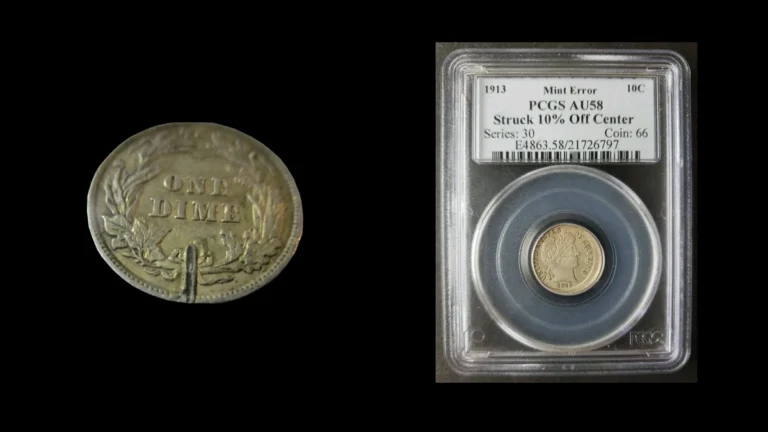
A separate PCGS MS64 Full Bands example was struck ten percent off-center. Its later sale and grade belong to that second coin.
How to Identify
Photograph both faces and relate their displacement to the same unstruck crescent. A centered reverse with only the front shifted may indicate a misaligned die.
For the historical example, compare the reported fifteen-percent rightward direction. Do not impose that description on other genuine 1919 off-center coins.
Inspect the plain metal for grinding or polishing that removed an existing design. The full date and actual mint evidence should remain part of the comparison.
What It’s Worth
Genuine readable-date Philadelphia examples have an estimated whole-coin range of $200–$2,000. Preservation and the amount of displacement affect their appeal.
The PCGS MS64 Full Bands ten-percent example sold for $612.44 at Heritage in June 2026. That grade and price do not describe the older fifteen-percent three-o’clock report.
Conclusion
The valuable FS-101 attribution depends on the doubled motto, so a normal date is not a reason to stop looking. For physical strike errors, the full outline and both faces provide the more useful evidence.
Keep the two off-center reports distinct and value the clipped broadstrike as one coin. The documented transactions, private-sale report, and dealer asking prices each support a different level of comparison.