Rare 1976 Dime Errors (List & Pictures)
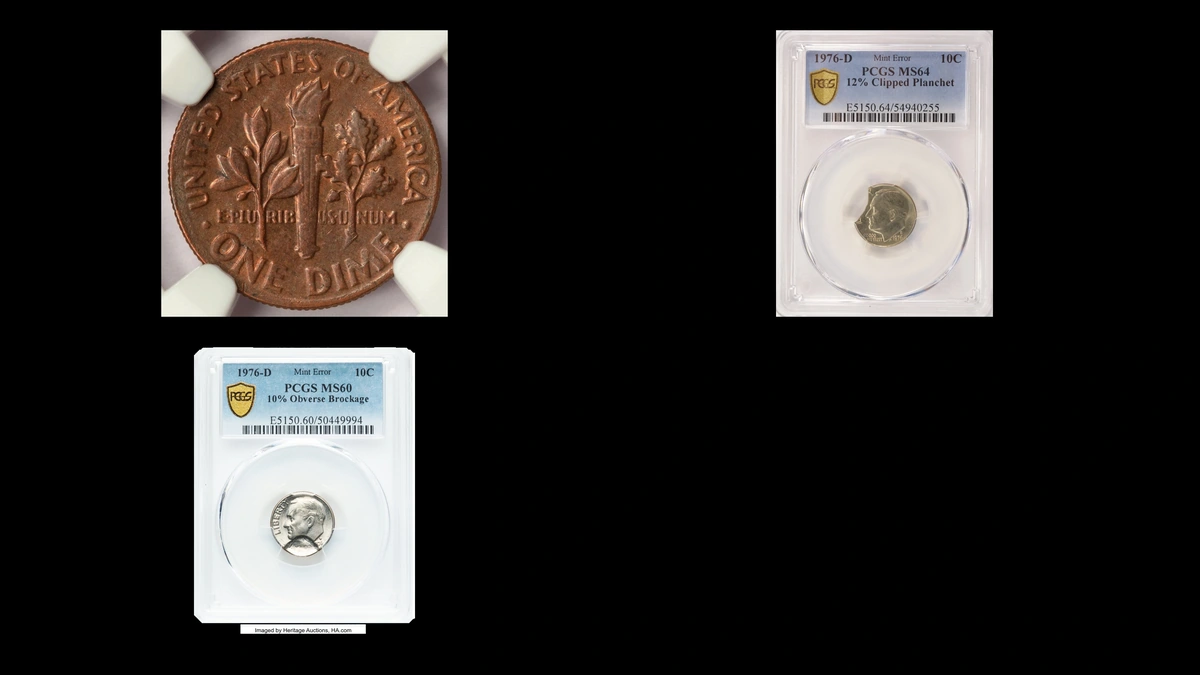
A regular 1976 dime has a single date, so the absence of a Bicentennial double date is normal. Genuine 1976 dime errors include unusual blanks, missing metal, and repeated strikes, with estimated values of $20–$7,500.
The largest supplied sale is $5,040 for a dime overstruck on a finished Peruvian coin in January 2022. Compare the metal and surviving designs before moving to the outline and smaller transferred impressions.
1. 1976 Dime Older Foreign Detail beneath Roosevelt: Peru Overstrike Error
A finished 1976 Peruvian half-sol received a second identity when it was struck with a 1976 Roosevelt dime design. The no-mintmark example was graded NGC MS66, indicating an unworn coin with very few distracting marks.
Because the host was already a coin, remnants of its design can survive beneath the dime features. That is a different starting point from an unused foreign blank.
How to Identify
Trace connected older letters or shapes between Roosevelt and the reverse torch details. Their positions should make sense as one Peruvian half-sol design beneath the later impressions.
Compare both faces with the documented coin and a normal host design, rather than relying on brass-like color. Plating can change a dime’s appearance without creating an earlier coin design underneath.
What It’s Worth
$3,000–$7,500 is a working estimate for a comparable authenticated overstrike. The NGC MS66 Peru example sold for $5,040 in January 2022.
2. 1976 Dime A Cataloged Foreign-Metal Example: Panama Attribution Error
Another unusual dime was cataloged as struck on a Panama one-tenth balboa and graded PCGS MS63 Brown. The abbreviated description does not establish whether the starting piece was a finished coin or an unused blank.
Brown describes appearance, not a complete alloy analysis. The information from the separate copper-blank dime below should not be transferred to this specimen.
How to Identify
Begin with the certified specimen’s holder and photographs, matching the actual piece rather than a seller’s broad description. Search for connected foreign letters or design remnants that could demonstrate a previously struck host.
If no older design is established, leave the coin-versus-blank distinction unresolved. Its recorded metal, edge, and any available measurements need their own examination; color cannot identify Panama.
What It’s Worth
$500–$4,000 is an estimated range for comparable authenticated foreign-metal dimes. The Panama-described MS63 Brown example sold for $822.50 in January 2016.
3. 1976 Dime Copper Metal throughout the Blank: Wrong Planchet Error
A 1976-D from the Fred Weinberg Collection was cataloged as struck on a copper blank weighing 2.2 grams. PCGS graded it MS64, and no intended denomination for the blank was identified.
For comparison, an ordinary clad dime weighs 2.268 grams and measures 17.91 millimeters across. The unusual coin’s similar weight makes its metal structure especially important.
How to Identify
Examine the edge for solid copper rather than the ordinary pale layers around a copper center. Missing cladding and added plating can also produce a brown surface, so a specialist may need to assess composition.
The 2.2 grams is an actual measurement of this specimen. Do not call it a standard 1976 cent blank, whose normal 3.11-gram weight differs substantially.
What It’s Worth
$500–$2,500 is an estimate for an authenticated copper-blank dime of this kind. Clear identity, original surfaces, and supported composition matter more than a copper-colored face alone.
4. 1976 Dime Copper Exposed beneath a Lost Covering: Missing Clad Layer Error
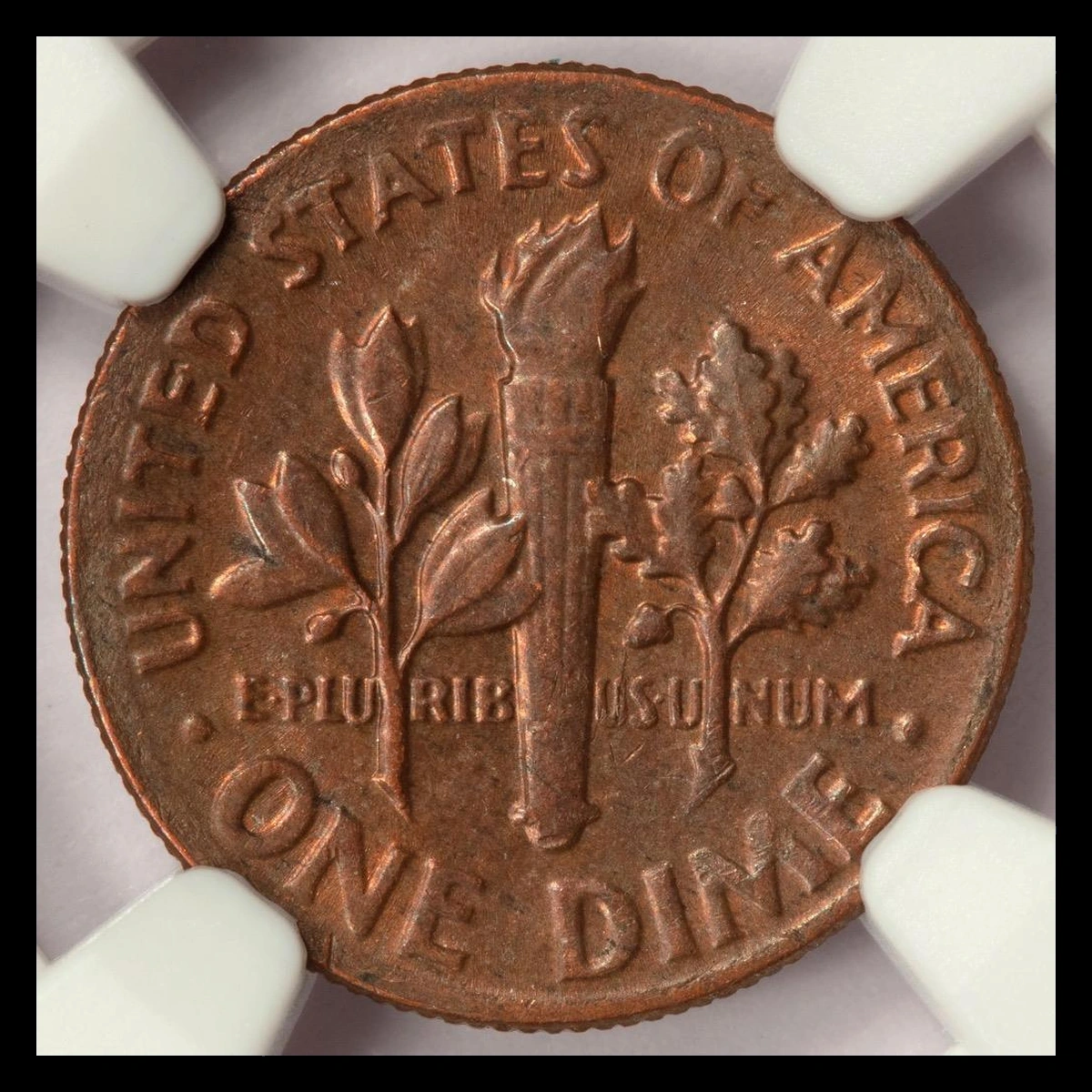
A missing layer changes a dime’s construction rather than simply its color. A no-mintmark 1976 example was cataloged with this error and an ANACS MS63 grade.
The supplied record does not establish which face lost its layer. Determine that from the actual coin instead of applying the front-layer description of a different-year comparison.
How to Identify
Follow the edge of the exposed copper and compare it with the surviving outer metal on the opposite face. The ordinary copper stripe along a dime’s edge is not itself an error.
Record a loose coin’s weight, then inspect whether the design formed naturally on the copper. Reduced weight can support missing metal, but grinding or chemical removal can also make a coin lighter.
What It’s Worth
$50–$500 is the supplied estimate for comparable authenticated examples. The 1976 ANACS MS63 sold for $44 in January 2004, below that working range.
A separate 2000-D with its front layer missing, graded MS65, sold for $104 in December 2022. It is a more recent different-year comparison with its own face attribution.
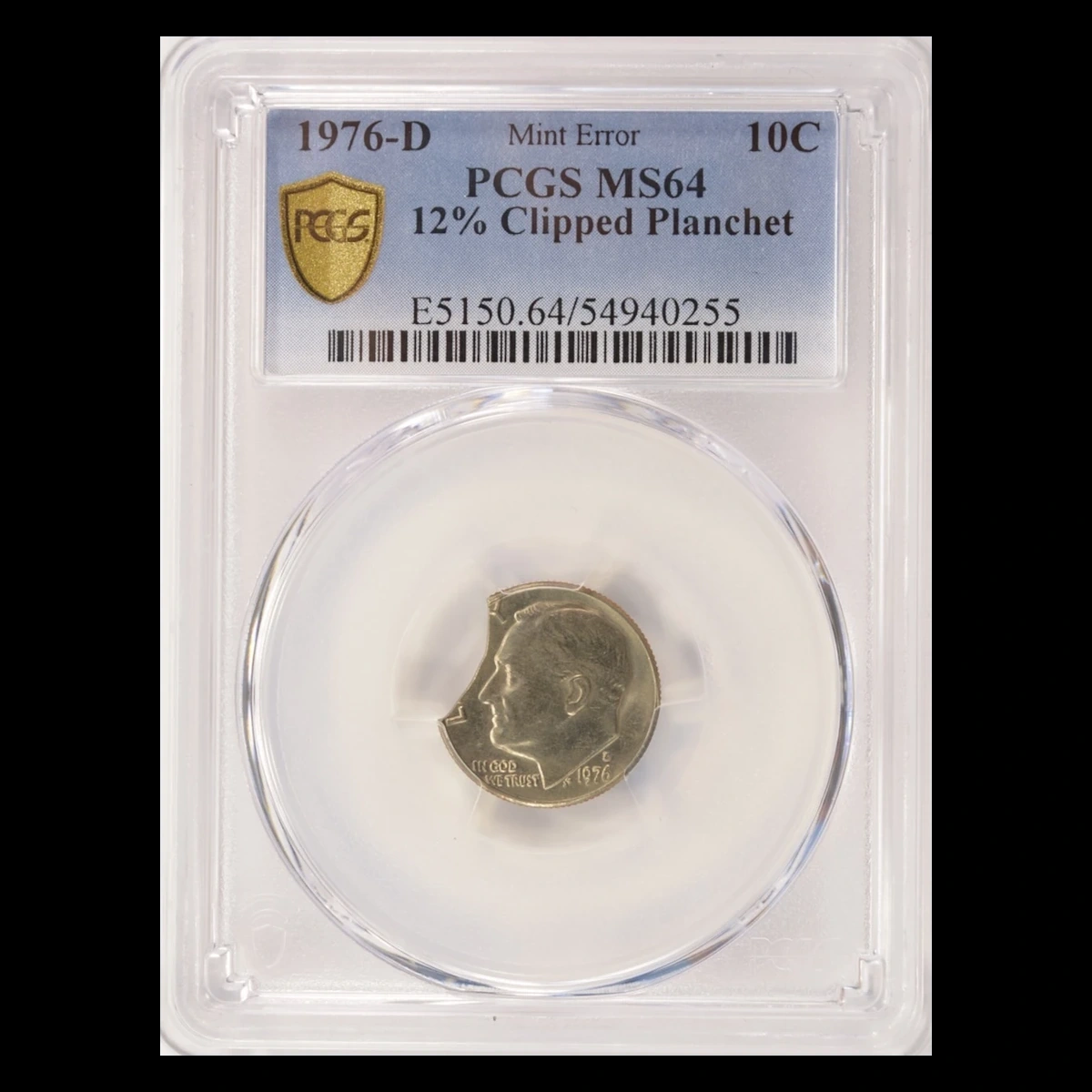
5. 1976 Dime Three Curved Gaps in the Edge: Clipped Planchet Error
A no-mintmark dime graded NGC AU58 has three curved clips. The blank was incomplete before the design was struck, leaving three openings within one coin’s outline.
How to Identify
Photograph all three gaps with the surviving date, then inspect each boundary separately. Rim detail tapering or stretching toward a gap can support formation before striking.
Check the exposed edges for filing, cutting scars, or crushing. Opposite-rim weakness can be helpful when present, but it need not appear opposite every clip.
What It’s Worth
$25–$300 is an estimate for comparable genuine clipped dimes. The triple-clip AU58, showing only slight wear, sold for $51 in January 2017; that was the price for the whole coin, not for each missing section.
6. 1976 Dime Complete Designs inside an Expanded Outline: Broadstrike Error
A broadstrike spreads outward when the collar fails to contain the blank. The collar is the ring that normally controls the edge and keeps the coin near its intended diameter.
Ordinary 1976 broadstrikes are reported without a single established measurement. Width needs to be considered alongside the struck detail, since later flattening can also enlarge a dime.
How to Identify
Check that the lettering and main designs remain complete on both faces inside the wider border. Compare the coin with a normal dime at the same photographic scale.
Inspect Roosevelt, the torch, and the edge for crushing or hammer marks. A complete natural strike with outward expansion is a stronger indication than a wide disk whose details have been flattened afterward.
What It’s Worth
$20–$250 is an estimated range for genuine 1976 broadstrikes. Clear expansion around an attractive complete design generally offers more appeal than slight spreading on a worn or damaged coin.
7. 1976 Dime Much of the Disk Was Never Struck: Off-Center Strike Error
A 1976-D in ANACS MS63 was struck 55% off center toward 12:30, slightly right of the top. A separate no-mintmark 55% example received a PCGS Uncirculated Details assessment for damage.
Those descriptions belong to different coins. The damaged piece’s condition and missing mint letter should not be assigned to the Denver example.
How to Identify
Find the date in the small struck area, then relate that area to the untouched metal on both faces. The displacement should fit one blank that was partly outside the dies.
Look for grinding in supposedly blank areas and assess later damage separately. The 55% figure describes displacement, while 12:30 describes direction; neither measures rotation between the two designs.
What It’s Worth
$40–$700 is an estimate for genuine 1976 off-center dimes. Date visibility and preserved surfaces remain important even with a dramatic shift, and a Details-graded damaged coin needs a different condition comparison.
8. 1976 Dime A Small Recessed Mirror Image: Partial Brockage Error
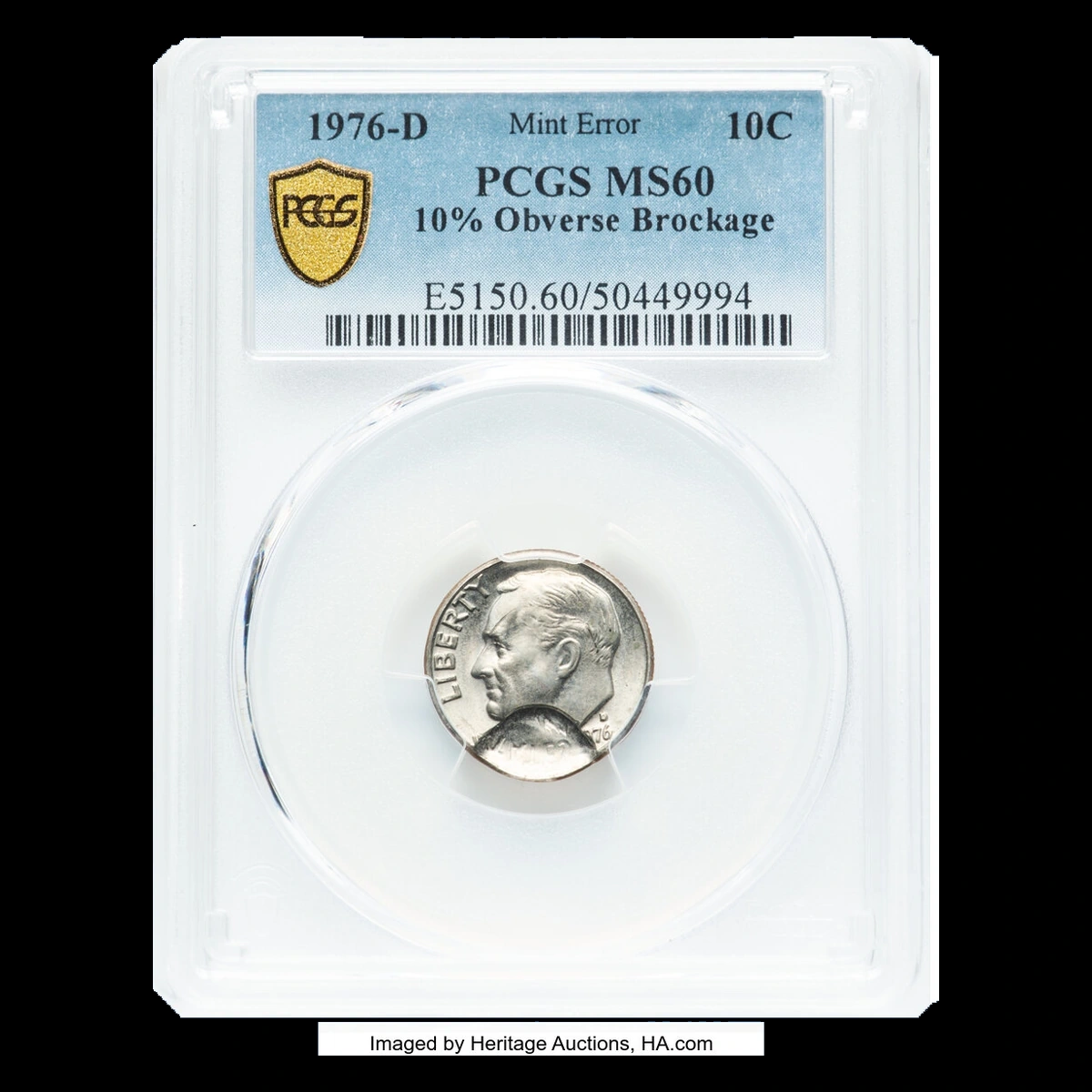
A documented 1976-D in PCGS MS60 carries a 10% brockage on the front beside Roosevelt’s normal design. A struck coin impressed part of its raised design into another blank, leaving a backward image below the surface.
How to Identify
Choose a recognizable copied letter or design fragment and trace adjoining detail. Side lighting should show a recessed image, and any copied lettering should read backward within the otherwise normally oriented coin.
A smooth indent from an unstruck blank lacks that copied design. The percentage does not specify a clock position, and the surrounding surfaces must also be checked against later coin-squeezing damage.
What It’s Worth
$75–$1,000 is an estimated range for comparable partial brockages. The PCGS MS60 example sold for $99 in June 2025; its unworn but noticeably marked condition helps explain why clarity and preservation matter alongside size.
9. 1976 Dime Two or Three Groups of Design: Multiple Strikes Error
Several distinct 1976 examples record repeated blows. A no-mintmark dime flipped over before a second strike 70% off center, while a separate no-mintmark report has an 85% displaced second strike with its reverse blocked.
Denver reports include a 90% second strike and a separate MS61 double strike. A Denver MS67 triple strike has largely overlapping first and second impressions, followed by a third strike 90% off center.
How to Identify
Trace connected letters and design features through each position before counting the blows. A flipover can place normally raised front and reverse remnants on one face, unlike a recessed backward brockage.
A later strike can have its reverse blocked, so both faces need not show equally complete new images. On the indented Denver example, another blank was proposed as the obstruction; later counting-wheel damage is a separate condition issue.
What It’s Worth
$100–$2,000 is an estimate for authenticated repeated-strike dimes. The PCGS MS64 flipover example sold for $423 in January 2017.
A different Denver double strike with counting-wheel damage brought $41 in March 2004. That damaged coin is a poor direct benchmark for a clean, visually distinct multiple strike.
Conclusion
Color, size, and an unusual shape are starting observations for a 1976 dime, not complete identifications. A copper blank, a lost outer layer, and an overstruck foreign coin can look similar until their edges and designs are examined.
Keep each specimen’s measurements and grade attached to its own description. Clear photographs of both faces can also separate a backward brockage from the normally raised remnants of a flipover or another repeated strike.