Rare 1973 Dollar Errors (List & Pictures)
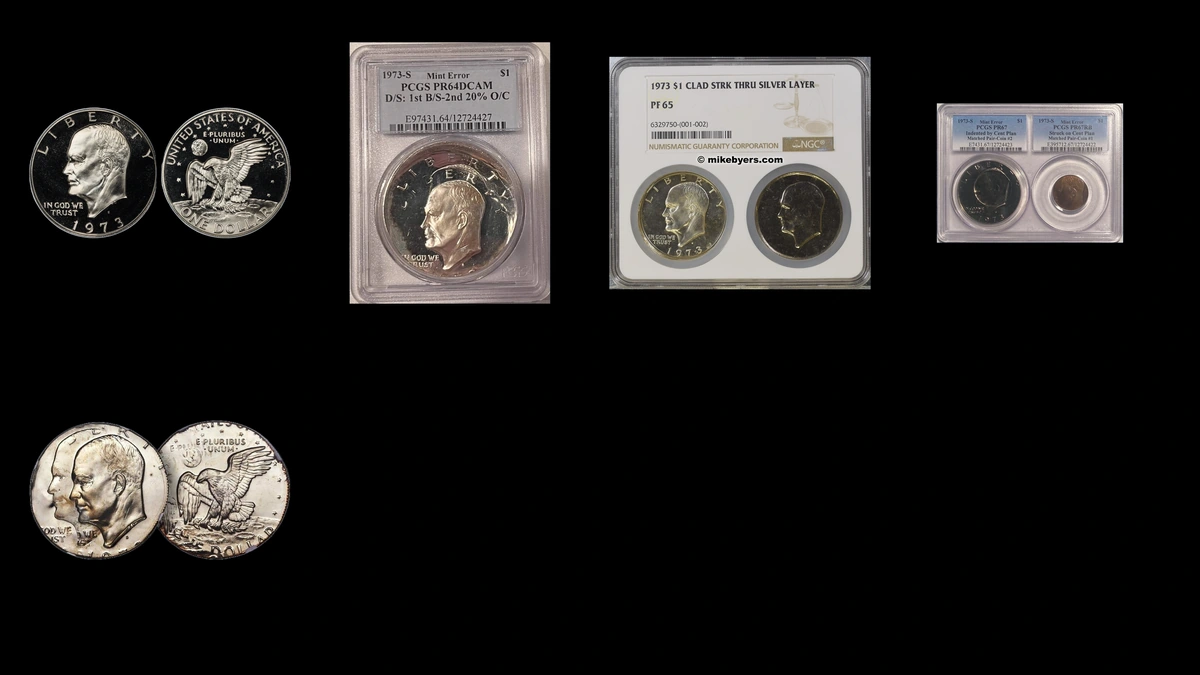
Some 1973 dollar errors fit on one coin; others survive as matching pieces from a single striking accident. Estimates span $25–$150,000, with the largest figures reserved for complete rare combinations.
A comparable undated three-dime “clover” set sold for $105,000 in 2021, while the dated 1973 set is a separate object. First identify the finish and metal, then compare the visible feature with the appropriate group below.
1. 1973 Dollar Repeated Front Outlines: Doubled Die Error
Extra raised edges can be part of the die’s design before it strikes a dollar. A cataloged 1973-S silver proof variety is separate from a doubled-front variety on the ordinary silver issue.
Proofs are specially prepared collector coins. NGC also identified the ordinary variety on a wrong-metal dollar, adding a separate material error to that particular coin.
How to Identify
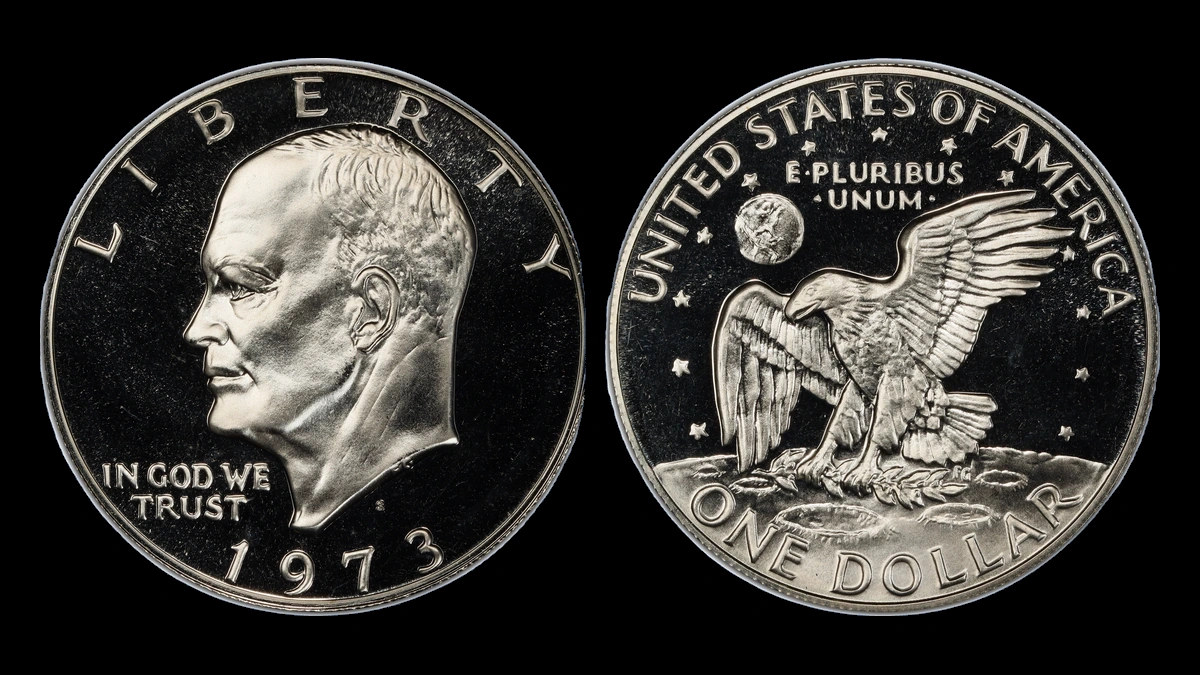
Choose a reference with the same finish and metal before studying the lettering and date. Follow the specific pattern of raised outlines rather than expecting identical doubling on every letter.
A flat shelf or shifting reflection does not establish the variety. On an ordinary-finish S coin, identify the metal separately from the doubled design.
What It’s Worth
$25–$500 is the estimate for doubled designs on the correct metal. PCGS records a silver proof graded PR69 at $255 in a June 2019 eBay result.
A wrong-metal coin needs the material comparisons later in this article. Its value should not be reduced to a doubling-only estimate.
2. 1973 Dollar The Eagle Faces the Wrong Way after a Flip: Rotated Dies Error
With Eisenhower upright, a normal dollar shows an upright eagle after a top-to-bottom flip. A documented 1973-S copper-nickel proof instead has a half-turn relationship, leaving the eagle upside down.
This is called medallic alignment because a sideways flip makes both faces upright. The documented coin graded NGC PR69 Ultra Cameo has strong contrast between its frosted design and bright background.
How to Identify
Record one continuous top-to-bottom flip without adding a sideways twist. Two separately rotated photographs cannot establish the faces’ physical relationship.
Repeat the motion while keeping the holder’s corners aligned. Confirm the S and proof finish after measuring the actual rotation.
What It’s Worth
$500–$2,500 is the estimate for comparable authenticated examples. The NGC PR69 Ultra Cameo coin sold for $1,200 in January 2025.
A slight lean does not match a full half-turn error. Haze, fingerprints, and scratches also affect the value of a proof.
3. 1973 Dollar A Curved Trace without a Missing Piece: Incomplete Punch Error
A cutting punch can begin a boundary without finishing it. The later coin strike may leave that curved trace visible even though the disc remains substantially intact.
A documented 1973-D example came from a Mint Set and graded PCGS MS65. Unlike a clip, it does not require a large section of the blank to be absent.
How to Identify
Follow the arc under low light and examine how the coin design formed over or around it. Include the point where the trace approaches the edge.
A later circular scratch can cut through finished detail and leave fresh displaced metal. Do not bend the dollar or try to open the incomplete cut.
What It’s Worth
$300–$2,500 is the range for a comparable authenticated incomplete punch. The Denver MS65 specimen sold for $1,680 in March 2024.
A clear original cutting trace is the important feature. An unexplained arc should not inherit that specimen’s price or Mint Set history.
4. 1973 Dollar A Gap Already Present in the Blank: Clip Error
A cutter overlapping an earlier hole in the metal strip can produce an incomplete dollar blank. Its missing section remains after the design is struck.
Reports describe a small clip of about 3% near four o’clock on an NGC MS64 coin and a separate worn example with about 15–20% missing. Those measurements belong to different coins.
How to Identify
Check both ends of the gap for natural rim and design changes, then inspect the exposed boundary for sawing or filing. Weakness opposite the gap can support an original clip.
Normal copper-nickel dollars weigh 22.68 grams, but a light coin alone proves little. Metal removed after striking also reduces weight.
What It’s Worth
$75–$750 covers the supplied clip group. Size, condition, and a surviving date all help determine the closer comparison.
A collector recalled passing on the larger worn example at $200 in 2010. That was an offered price, not a completed sale.
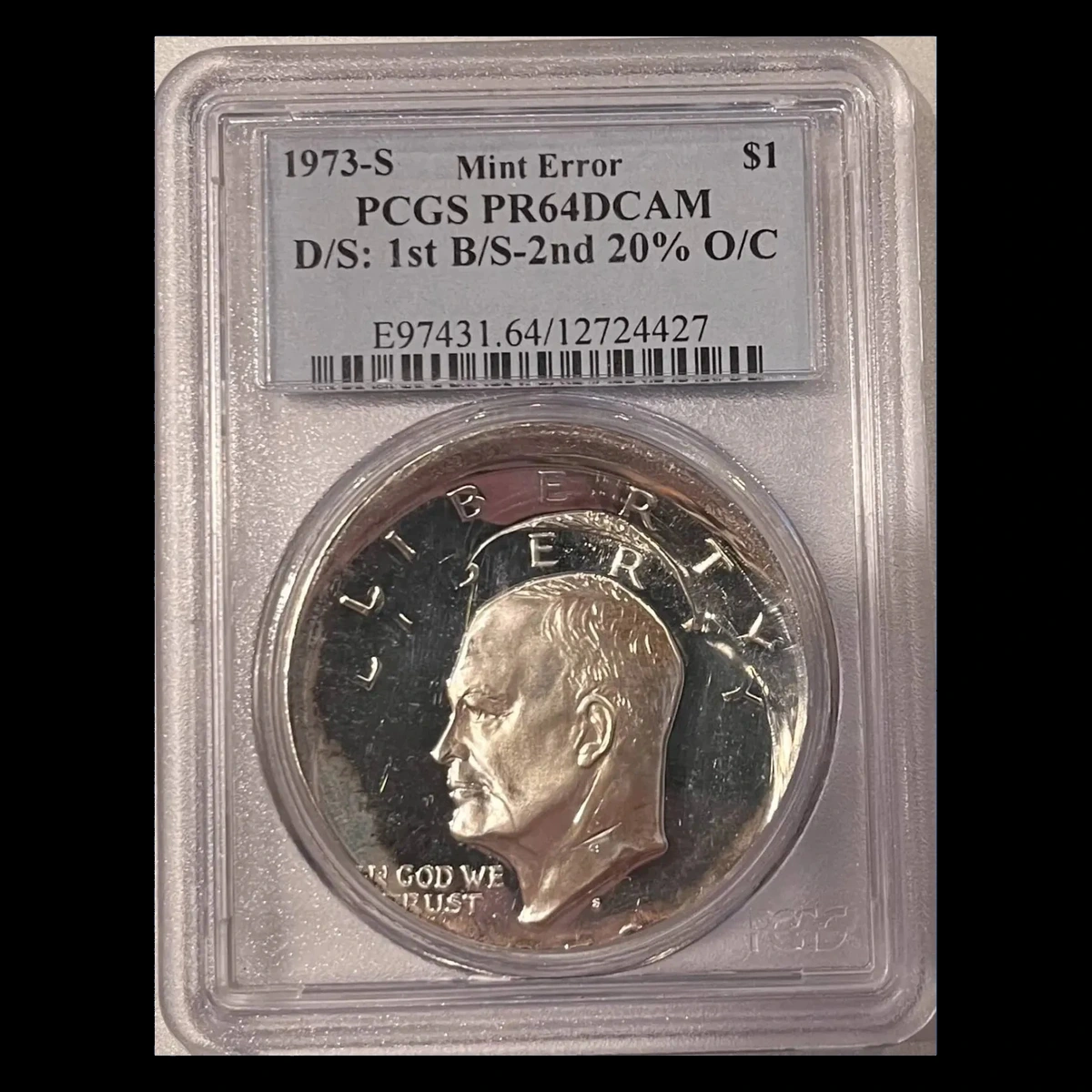
5. 1973 Dollar Bare Crescent beside Missing Design: Off-Center Strike Error
A misplaced blank can receive only part of the dollar’s design. The result combines unstruck metal on one side with missing artwork on the other.
The year listing mainly reports ordinary Philadelphia and Denver examples. It does not supply a fixed percentage or a particular San Francisco proof.
How to Identify
Find a readable 1973 date before assigning the year. Check both faces for designs that fit the same displaced blank.
A complete picture within expanded metal suggests a broadstrike instead. A single shifted face may involve a misaligned die.
What It’s Worth
$100–$3,500 is the estimate for confirmed ordinary 1973 off-center dollars. A 1978 dollar struck 30% off center sold for $1,680 in March 2023 as a different-year comparison.
The amount of displacement, original surface, and visible date matter together. An undated dramatic error should not be assigned a 1973 identity from appearance alone.
6. 1973 Dollar Overlapping Pictures on Expanded Metal: Multiple Strikes Error
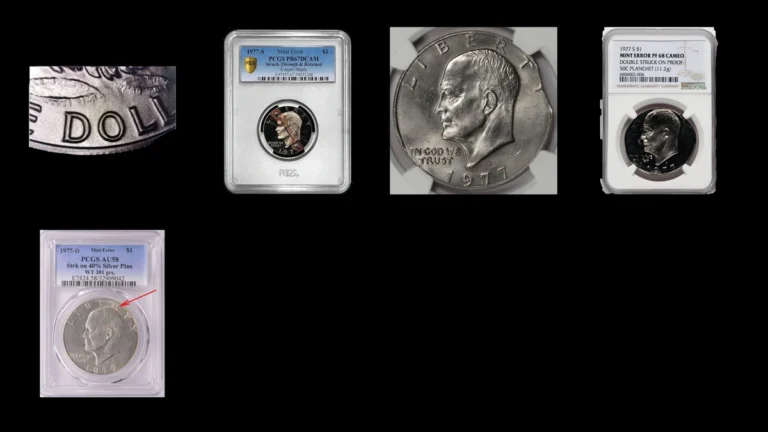
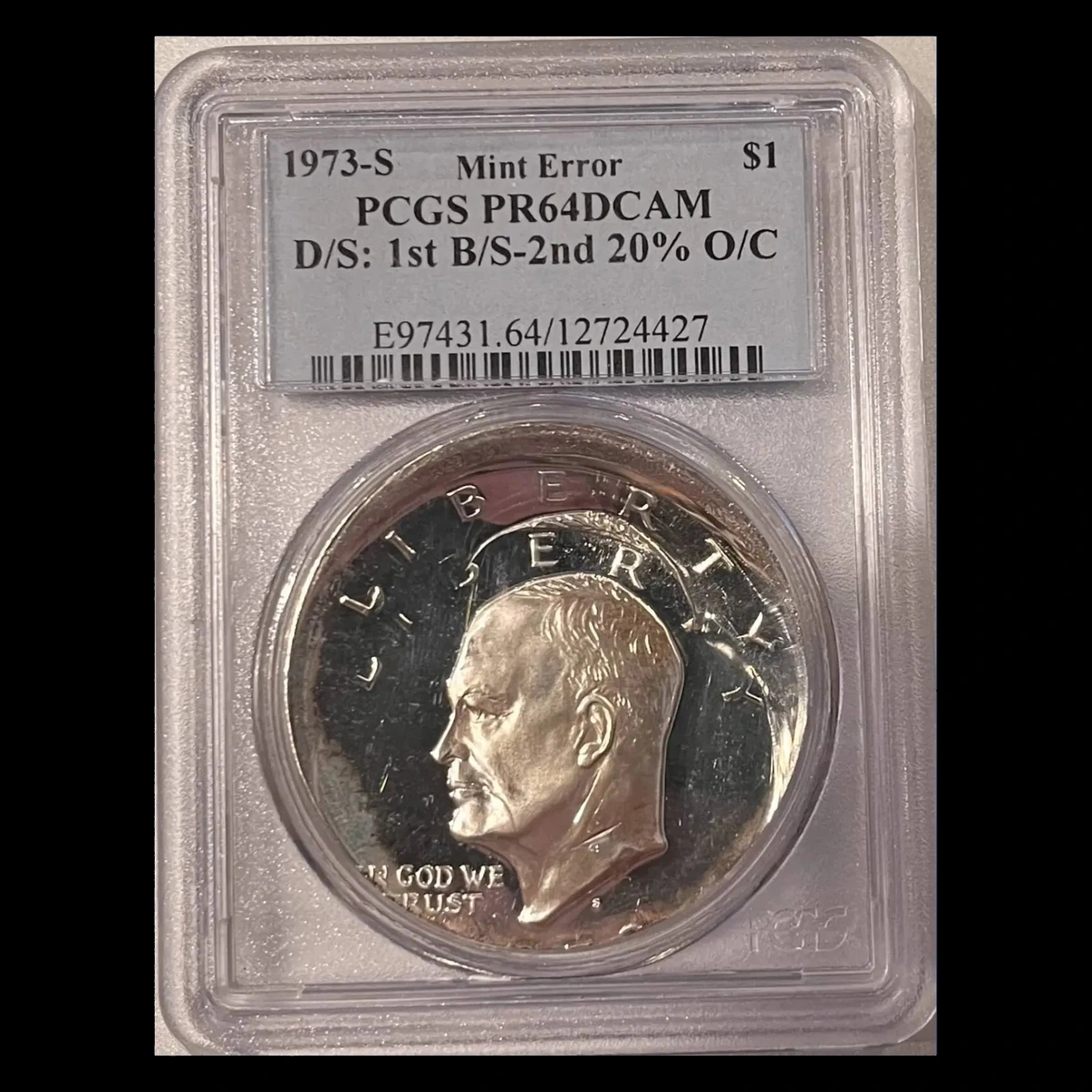
A later blow can spread a dollar beyond its first struck edge and leave displaced pictures. This differs from normal proof production, which can use repeated blows without moving the coin.
Copper-nickel proof examples include double and multiple strikes. A separate silver proof preserves faint earlier details outside the stronger main picture.
How to Identify
Find surviving edge grooves from the contained strike, then follow the metal that spread beyond them. Trace repeated letters or portrait outlines into a consistent second picture on both faces.
Confirm the material before comparing specimens: normal copper-nickel dollars weigh 22.68 grams and 40% silver dollars about 24.59 grams. Use recorded measurements for sealed coins.
What It’s Worth
$1,000–$20,000 covers authenticated examples, with dramatic combinations and silver proofs toward the higher portion. Separate copper-nickel double strikes brought $1,920 and $2,880 in January 2025.
A multiple-struck copper-nickel proof also brought $2,880 that month. Each figure prices one complete coin, rather than an amount for every blow.
7. 1973 Dollar Material Blocking the Design: Struck Through Error
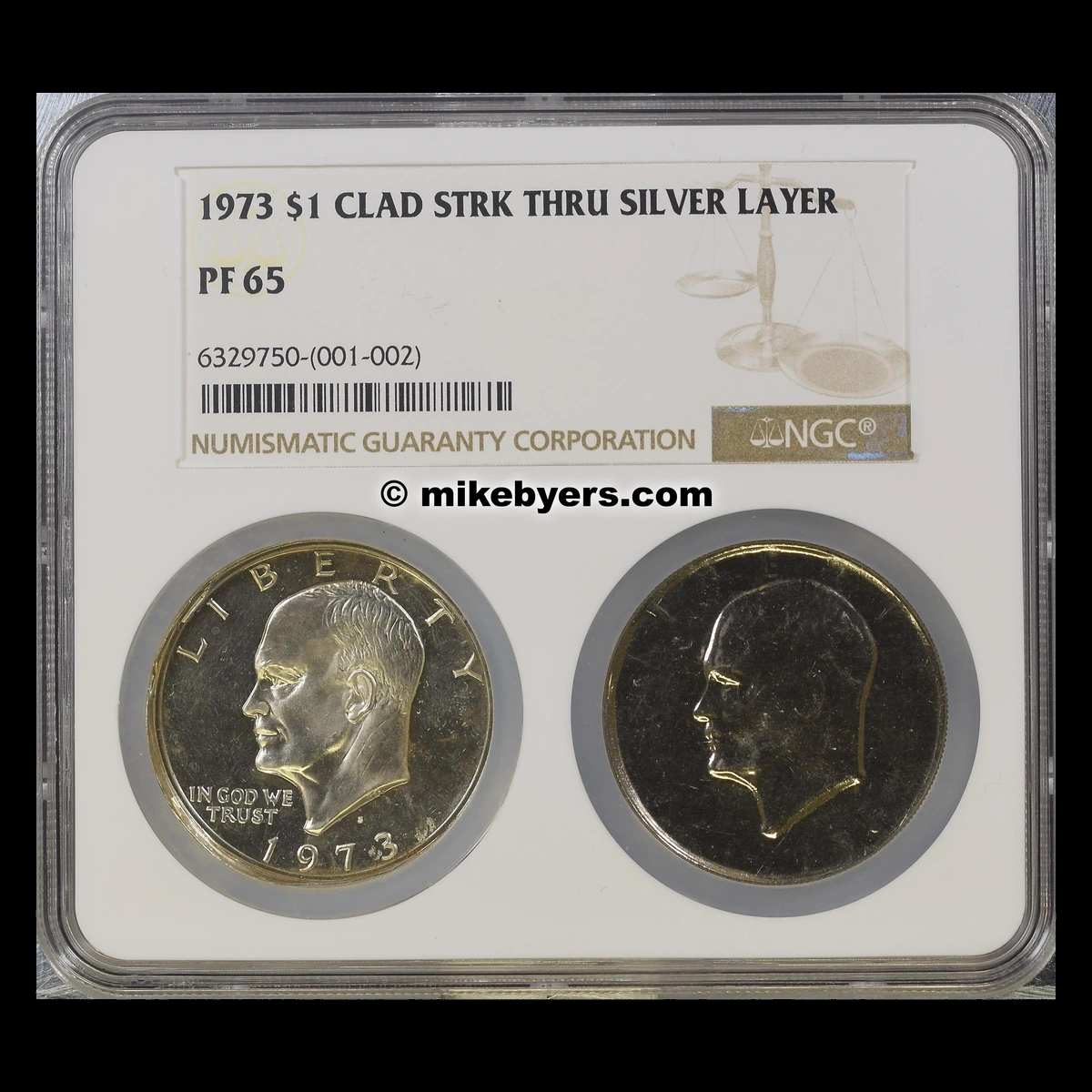
A silver proof has a reported mass-of-thread impression, while an ordinary silver dollar has a separate reverse obstruction mark. Material between the die and blank prevented full contact in each affected area.
A more complex event paired a copper-nickel dollar with a loose silver-rich layer from another blank. The dollar’s front is blurred, and its back is normal; the thin layer carries a normal front image above and a recessed reversed front image underneath.
How to Identify
For the pair, keep all four views labeled by object and face. The thin layer’s shape and impressions must explain the dollar’s blocked front.
Do not flex the layer or press the pieces together. For separate marks, name thread only when its texture supports that description, and leave the ordinary reverse obstruction’s material unspecified.
What It’s Worth
$75–$20,000 spans this group, with ordinary obstruction marks estimated at $75–$1,000. The complete silver-layer pair has a separate estimate of $10,000–$20,000.
Mint Error News reports a Heritage result of $13,200 for the pair. The layer is part of the same striking event, not an unrelated wrong-metal dollar to price again.
8. 1973 Dollar A Smaller Blank Pressed into the Portrait: Indent Error
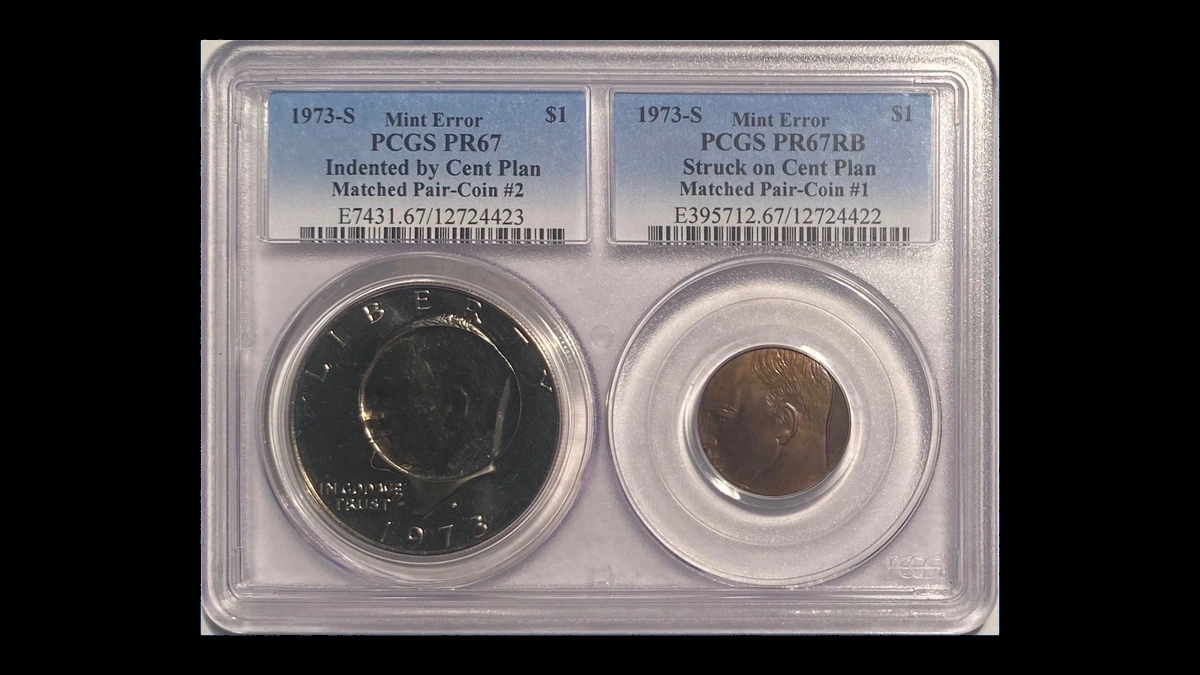
A matching pair preserves an indented dollar and a 1.73-gram copper-based piece. The small piece covered most of Eisenhower’s head, leaving a rounded depression while the dollar’s reverse stayed largely unaffected.
The partner carries a portrait and a faint ear image underneath, but its original denomination is not established. A separate 40% silver proof is reported with a dime blank still attached.
How to Identify
For the detached pair, compare the small piece’s shape and images with the dollar’s indentation. Its weight and copper color do not establish a country or denomination.
An attached blank must remain attached while its join is examined. Do not expect reversed Roosevelt lettering from a blank that had not yet received a dime design.
What It’s Worth
$5,000–$55,000 spans these distinct combinations. The dollar and copper-based partner sold together for $40,250 in January 2008 and have an estimated complete-pair range of $25,000–$55,000.
The separately reported silver proof retaining a dime blank has a conditional estimate of $5,000–$25,000. Neither figure prices a loose unidentified disc without its documented relationship.
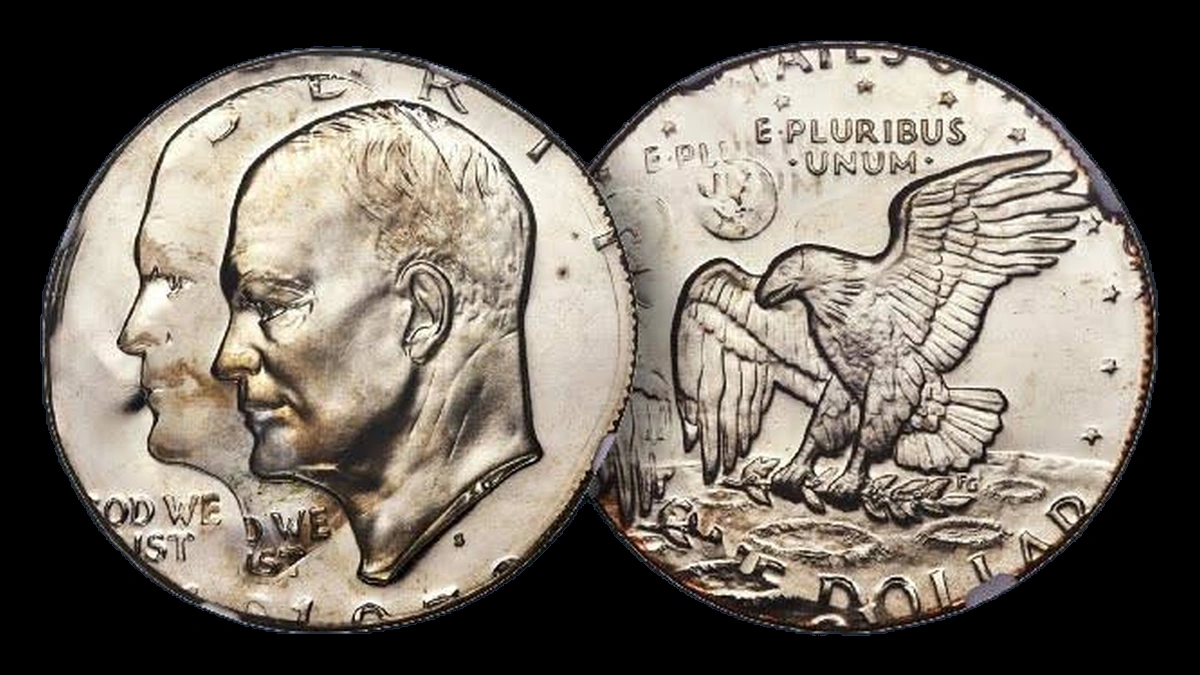
9. 1973 Dollar Wrong Size or Metal under the Dollar Dies: Wrong Planchet Error
A planchet is a prepared coin blank, and the wrong one can change the available space or metal. Reported proof examples include half-dollar blanks, a 3.1-gram cent blank, and a 26-gram bronze piece spread to about 40 millimeters.
Another error looks normal-sized: an ordinary San Francisco silver issue struck on copper-nickel material. A normal copper-nickel S proof is legitimate and must not be confused with it.
How to Identify
Establish finish first for a normal-sized S dollar, then check composition and recorded weight. NGC found an ordinary wrong-metal example in blue packaging, but packaging alone cannot prove the metal.
The documented half-dollar blanks include separate 11.1-gram and 11.3-gram coins. Keep those measurements attached to their own specimens, and do not assign an original intended use to the unidentified bronze blank.
What It’s Worth
$10,000–$60,000 covers the supplied wrong-blank group. Estimates are $10,000–$25,000 for half-dollar blanks, $12,000–$30,000 for cent blanks, and $20,000–$60,000 for the bronze example.
The ordinary S issue on copper-nickel has an estimate of $10,000–$50,000. Published Heritage results include $20,400 for the cent-blank double strike and $19,200 for the 11.1-gram half-dollar-blank coin.
The latter sale does not belong to the separate 11.3-gram example. Match blank, strike pattern, and condition before selecting a price comparison.
10. 1973 Dollar One Dollar Design across Three Dime Blanks: Clover Set Error
Three touching dime blanks received portions of one dollar design at the same time. Two sat above a third, forming a clover arrangement without overlapping.
The lower piece carries the S and almost all of 1973, missing the lower half of the first digit. Most of Eisenhower’s profile lies on the upper-left piece, and the eagle extends across the three backs.
How to Identify
Use the documented arrangement to follow the design across all three pieces. The dated set graded PCGS PR65 should explain one simultaneous event, not three unrelated off-center strikes.
Keep the pieces protected together and compare photographs without rearranging the holder. Their touching edges and shared image positions are central to identification.
What It’s Worth
$75,000–$150,000 is the estimate for the complete authenticated three-piece set. A comparable undated set sold for $105,000 in 2021, as described in the Heritage account reproduced by Mint Error News.
The dated 1973 set was listed as unsold in January and May 2025. The $105,000 result therefore belongs to the separate undated set, not this one.
Conclusion
Finish and metal are essential starting checks for an S dollar, while incomplete punches and clips require different edge evidence. A repeated strike also needs actual displacement or abnormal spread beyond normal proof production.
When several objects survived one accident, preserve their relationship and price the complete combination. The largest estimates here depend on those rare matching sets, not an isolated extra letter or loose piece.