Rare 1923 Half Dollar Errors (List & Pictures)
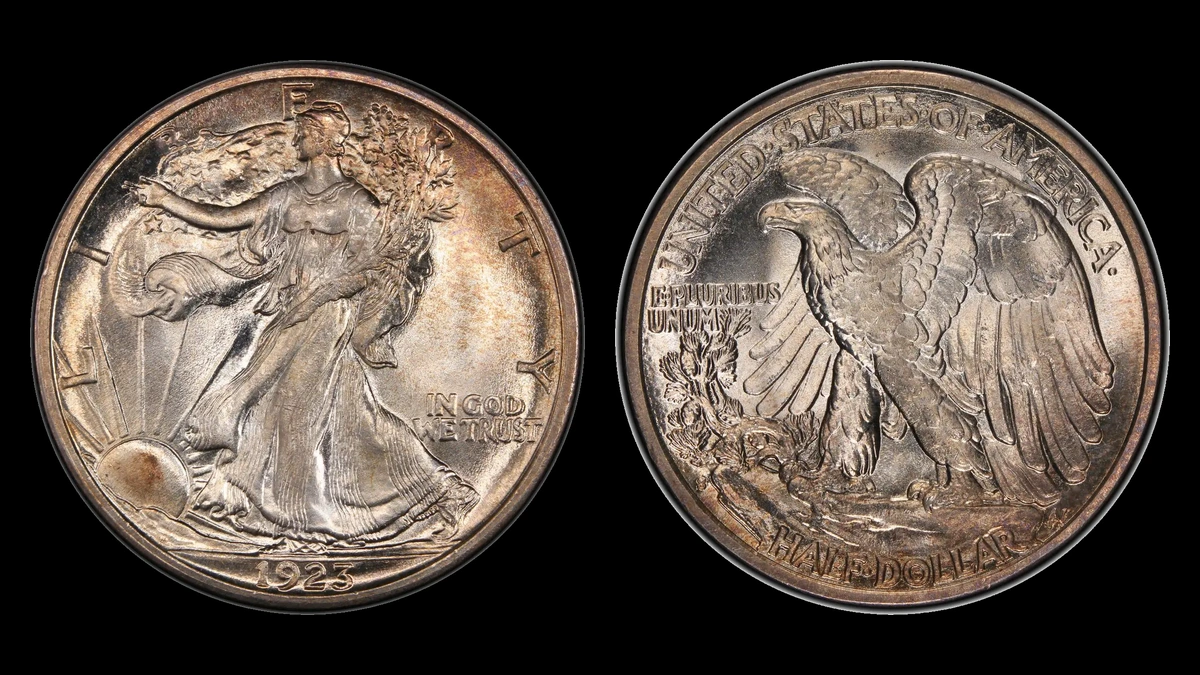
For reported 1923 half dollar errors, the off-center category carries an estimated $150–$1,000 range for genuine circulated coins with readable dates. Its identity depends on the position of the whole design.
A documented $480 sale supplies context from a 1976 Kennedy half; no confirmed 1923 sale appears in the supplied evidence. The checks below explain how a blank crescent and two displaced designs can distinguish an off-center strike from soft detail.
1923 Half Dollar A Blank Crescent Beside the Design: Off-Center Strike Error
Look at the entire outline before concentrating on Liberty’s hand or the eagle. An off-center strike leaves some metal unmarked while part of the design runs beyond the coin’s edge.
The unmarked portion tells you that some of the blank lay outside the stamping tools when pressure was applied. Those tools, called dies, could impress their designs only on the metal between them.
The CoinValueChecker 1923 guide reports this error type without naming a certified 1923 example or a sale. Treat it as a reported category that still needs confirmation on an individual coin.
How to Identify
Take full-face photographs of both sides with the rim visible. The design on each face should be displaced beside the unstruck area, rather than one face having an uneven rim while the other remains centered.
Read the surviving date, then find the S on the back to identify San Francisco. If the strike missed the mintmark area, a missing letter cannot tell you which mint made the coin.
A softly struck 1923-S may have a weak hand or eagle breast while the design still sits in its proper position. Those soft details alone are not evidence of an off-center strike.
Inspect the blank crescent under magnification for cuts, file marks, and metal pushed up along a damaged edge. Metal removed after striking can make a coin look incomplete without having been off center at the Mint.
The normal half dollar started at 12.50 grams and about 30.6 mm across. A scale and calipers help document a loose piece, although wear and the faulty strike can affect the measurements or outline.
Include the edge in the examination because its grooves can be affected too. An error specialist can assess the relationship between the blank area, displaced designs, and edge more reliably than a cropped photograph allows.
What It’s Worth
Estimated range: $150–$1,000 for circulated coins with readable dates. A larger visible shift can increase interest, especially when enough design survives to identify the coin securely.
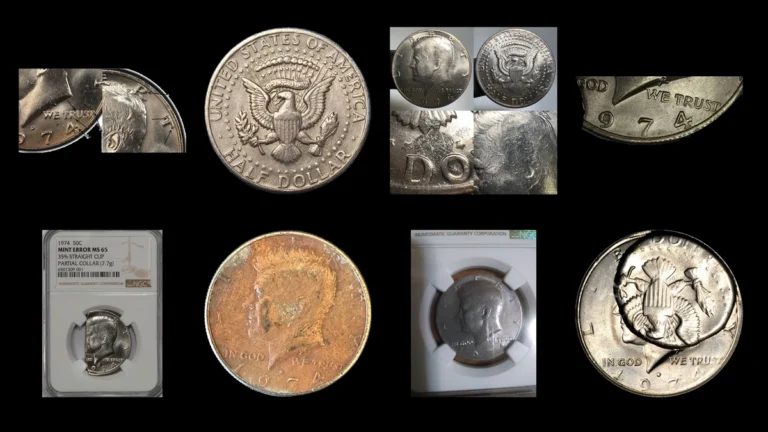
Heritage reported a $480 sale in December 2025 for a 1976 half struck fifteen percent off center. Its NGC MS64 grade indicates an unworn coin.
That sale illustrates the error on a different design and year, with different metal and condition. The 1923 estimate is broader because the older silver issue and its remaining detail also matter.
Conclusion
Begin with the blank metal and the position of both designs. A weak hand, worn eagle, or uneven rim does not replace those checks, and readable identity remains essential.
The $150–$1,000 estimate is for genuine circulated examples of the reported error. Keep the $480 Kennedy sale in its proper role as a comparison rather than a documented price for a 1923-S.