Rare 1849 Half Dollar Errors (List & Pictures)
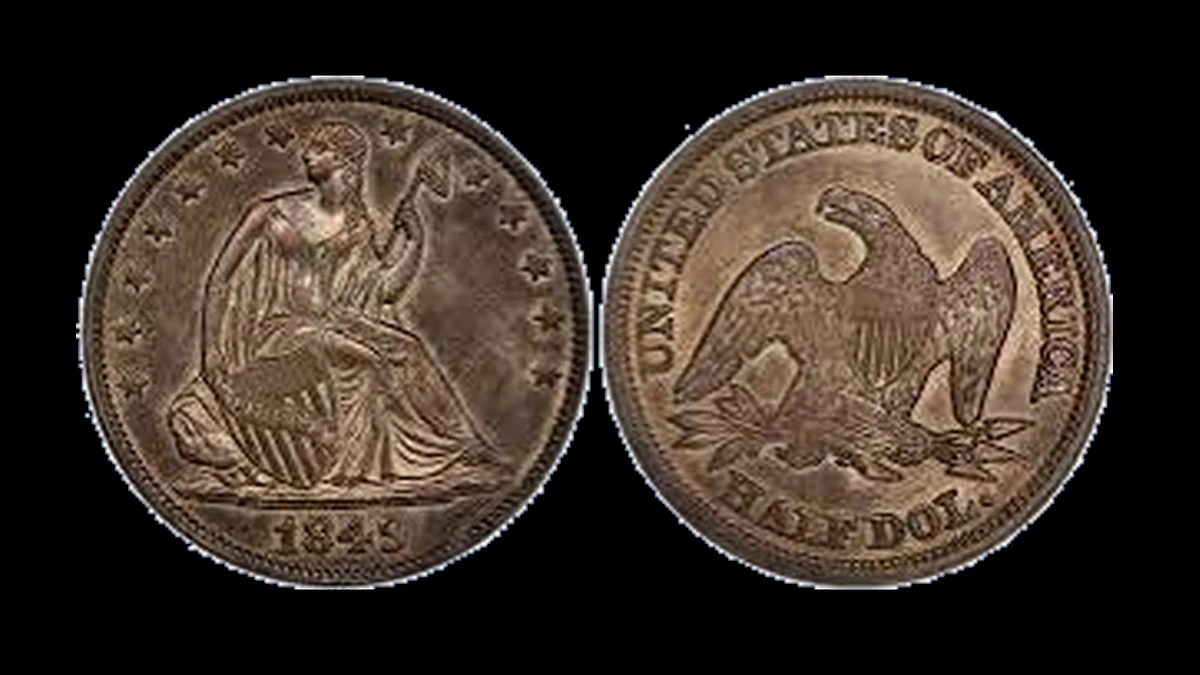
The space around 1849 can tell a different story from the digits themselves. Extra number fragments and a long raised portrait line are the main clues in this guide to 1849 half dollar errors.
Estimated ranges run from $350–$16,000 for the specific grades below. The highest cited sale is $15,275, paid at Heritage in October 2014 for an exceptionally preserved New Orleans coin.
Check the mintmark, then follow the date or portrait route that fits your coin.
| Feature | Where to look | Estimated comparison |
|---|---|---|
| Misplaced date | Outside the normal date | $350–$750 around AU50 |
| Repunched date | Extra bases beside the digits | $2,000–$9,500 for the cited unworn varieties |
| Die crack | Liberty’s head, shoulder, and arm | $12,000–$16,000 near MS65 |
Philadelphia halves have no mintmark, while an O below the eagle identifies New Orleans. A normal unworn 1849 half weighs 13.36 grams and measures about 30.6 millimeters across, with a grooved edge.
1. 1849 Half Dollar A Number Fragment Outside the Date: Misplaced Date Error
For a misplaced date, widen your view beyond the four clear numbers. A small trace from an earlier, badly positioned date punch can remain outside their intended location.
WB-10 names a Philadelphia variety with this feature. The label helps you select the right reference photo rather than compare every bump near 1849.
The date punch marked the steel stamping tool, called a die. Repositioning the date left a piece of the first attempt that later appeared on coins.
How to Identify
Photograph the date together with the nearby seat and border. Those landmarks show whether a suspected fragment is in the right place.
Under a 10× magnifier, compare the fragment with a confirmed WB-10. Its shape should resemble part of a number rather than an ordinary border tooth or a small irregular lump.
Make sure the coin has no mintmark. A shape on an 1849-O cannot be assigned to this Philadelphia variety just because it lies near the date.
Look separately at any extra strokes close against the normal digits. Those may belong to a repunched date, covered next, rather than a misplaced fragment.
What It’s Worth
Estimated range: $350–$750 for identified examples comparable to a lightly worn AU50 coin. Clear remaining detail and appealing surfaces help place it within that bracket.
A PCGS AU50 WB-10 sold for $432 at Stack’s Bowers in August 2025. AU50 is a grade for a coin with light wear, not a fully unworn example.
Use this price with the misplaced-date identification attached. It should not be replaced by the much higher sale of a dramatic repunched-date coin simply because both are from 1849.
2. 1849 Half Dollar Earlier Digit Bases Beside 1849: Repunched Date Error
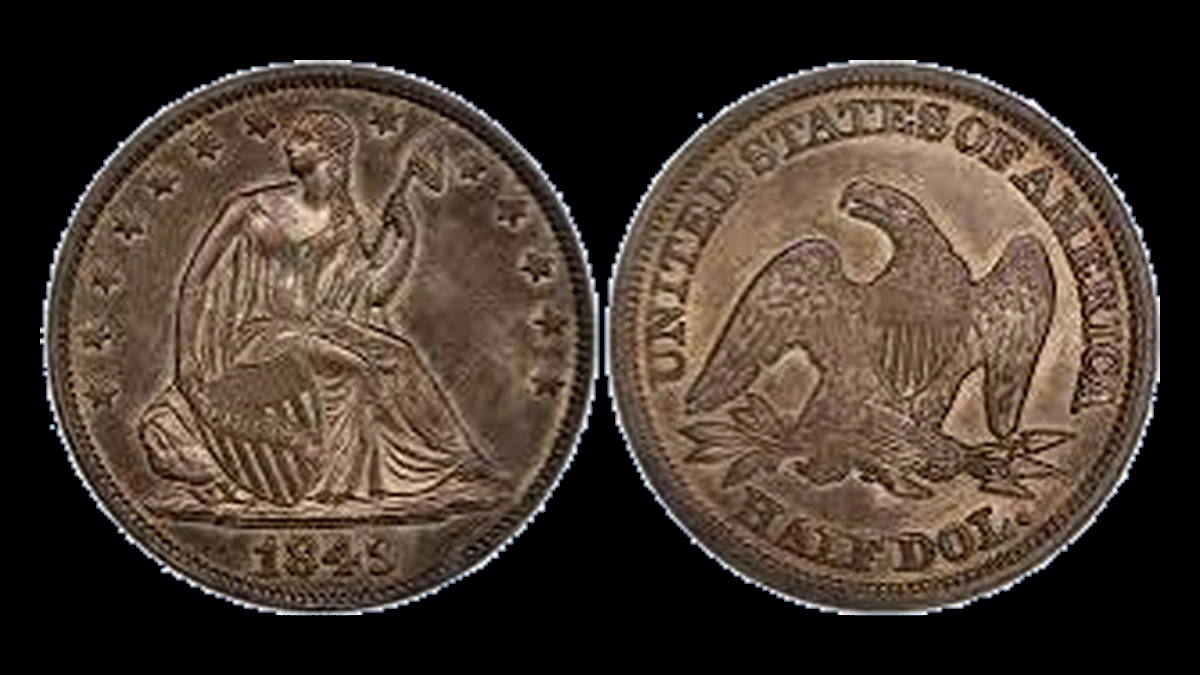
The dramatic FS-301 variety lets you trace parts of an earlier date along all four numbers. The surviving bases lie to the left of the final digits.
This time, the important clue is a repeated pattern across the date. The first punch was too far left, and the corrected impression did not hide it completely.
Other 1849 repunched dates show different amounts of extra detail. WB-3, for example, is a different variety from FS-301.
How to Identify
Start at the 1 and work across to the 9, matching each earlier base with a reference. Strong FS-301 examples can show the pattern without magnification.
A magnifier helps with weaker or worn remnants. Do not build an identification from one thick-looking digit when the reference shows a pattern across four.
A low, flat shelf beside a digit can result from movement during striking. It does not by itself reproduce the consistent shifted bases of the dramatic variety.
Keep the normal date and the absence of a mintmark in your full-coin photographs. A close-up labeled only “1849 repunched date” needs its variety checked before it becomes a useful match.
What It’s Worth
Estimated range: $2,000–$9,500 for unworn examples comparable to the two cited varieties. This range combines differences in both preservation and the date pattern.
Heritage sold an NGC MS64 FS-301 for $9,400 in October 2014. A different repunched date, WB-3 graded MS63, brought $2,220 there in October 2023.
Both grades describe coins without circulation wear, though they allow visible marks. The lower WB-3 result shows why the variety name matters alongside the grade.
3. 1849 Half Dollar A Raised Route Across Liberty: Die Crack Error
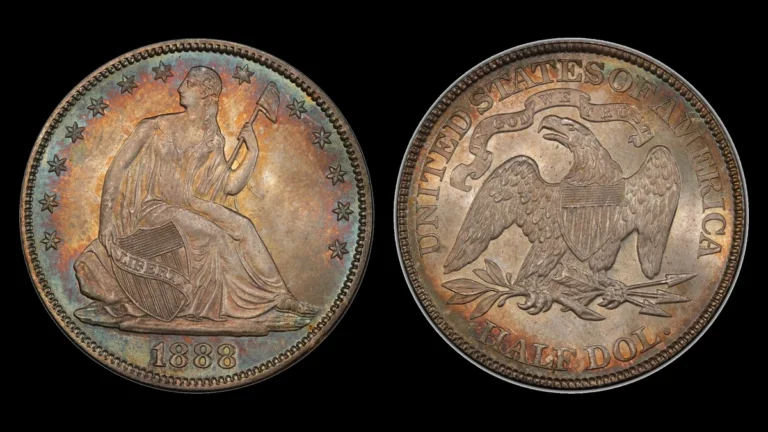
On the New Orleans example discussed here, a line travels from near star 8 across Liberty’s head and down her arm. It crosses several parts of the design rather than sitting only in the open background.
The line came from a fracture in a die. Silver entered the narrow opening during striking and left a raised copy of it on the coin.
The auction description identifies the coin as Die Pair 13 and notes cracks on its back as well. Those additional features belong to the same example.
How to Identify
First find the O below the eagle. Then follow the front line from star 8 through the back of the head, ear, cheek, and chin.
Continue along the shoulder and arm toward the hand. Keeping that whole route visible prevents an isolated scratch from seeming like a match.
Use side lighting and a magnifier to check that the line stands above the surface. A later scratch cuts into the coin, even when it passes through the same general area.
Compare the reverse cracks only with photographs of this same die pair. Do not combine unrelated lines from different reference coins.
What It’s Worth
Estimated range: $12,000–$16,000 for similarly fine unworn examples near MS65 with original surfaces. The narrow condition scope is essential to using this estimate.
The NGC MS65 CAC example sold for $15,275 on October 27, 2014. New Orleans halves are difficult to find with that degree of preservation.
The raised route helps identify the die pair, but it does not give a worn coin the same five-figure value. Compare overall wear and surface quality as carefully as the crack itself.
Conclusion
For Philadelphia coins, keep the date area wide enough to separate an outside fragment from repeated digit bases. For the New Orleans crack, follow the entire head-to-hand path rather than one short line.
The $350–$16,000 estimates cover very different grades and varieties. Keep those labels attached to the prices when deciding which example resembles your coin.