Rare 1909 Half Dollar Errors (List & Pictures)
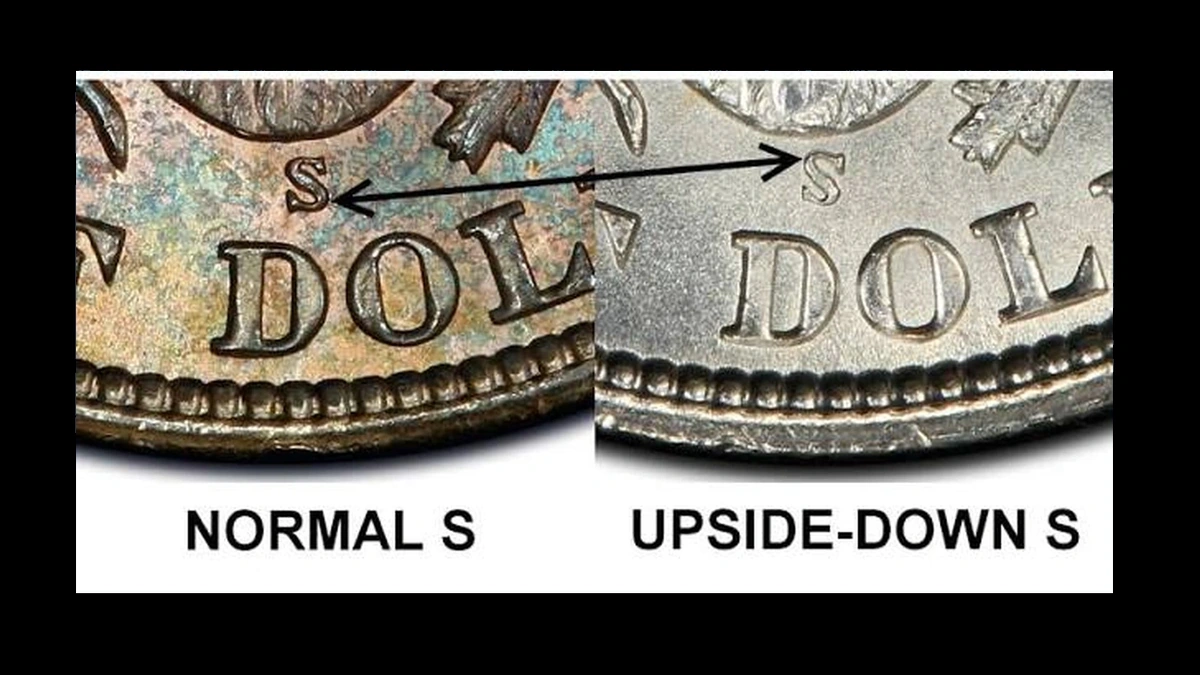
Shape is a useful starting point for 1909 half dollar errors: a broad swelling changes Liberty’s profile, a narrow ridge may record a crack, and an inverted S changes a tiny letter’s proportions.
Estimated values across the examples below range from $150–$3,500, with a Mumps variety selling for $2,702.50 in November 2002. Examine the portrait first, distinguish any thin raised lines, and finish at the reverse mintmark.
| Visible change | Place to look | Category | Estimated value |
|---|---|---|---|
| Unusually full neck and jaw | Liberty’s profile on an O coin | Mumps die swelling | $2,200–$3,500 for comparable MS65 coins |
| A narrow raised ridge | Reported 1909-O; exact path unconfirmed | Die crack | $150–$400 |
| S with reversed upper and lower shapes | Below the eagle | Inverted mintmark | $150–$750 |
O indicates New Orleans and S indicates San Francisco. For a loose example, normal unworn measurements are about 12.50 grams and 30.6 mm, with a grooved edge.
1. 1909 Half Dollar An Overly Full Neck and Jaw: Mumps Die Swelling Error
Compare Liberty’s lower profile with a normal 1909-O. The Mumps nickname refers to a broad raised area around the neck and jaw, rather than an extra letter or a sharp line.
The working die’s surface sank as the tool deteriorated, creating additional space for silver during striking. That changed surface produced a fuller portrait on the coin.
NGC describes Mumps on 1909-O halves, coins from New Orleans’ final year of coin production. The swelling sits within the portrait instead of forming a rim-connected cud.
How to Identify
Put the neck and underside of the jaw under low side lighting. Compare the rise across the whole area with a normal portrait rather than relying on a bright reflection at the cheek.
Check that the raised silver blends naturally into the stamped design. Added material can leave a seam or different texture, while an impact may leave a dent with metal pushed up alongside it.
Read the O on the reverse to keep the comparison within the recorded mint. A wide swollen profile and a thin die-crack line have different diagnostic shapes even though both can result from deterioration of a tool.
What It’s Worth
Estimated range: $2,200–$3,500 for an example comparable to the cited NGC MS65. MS65 denotes a well-preserved coin without circulation wear.
Heritage sold that coin, described with pronounced Mumps, for $2,702.50 on November 23, 2002. It is a historical sale of a high-grade specimen, not a current quotation for every coin with swelling.
Much of the result reflects the coin’s preservation. A circulated example with the same profile needs a price comparison at its own level of wear.
2. 1909 Half Dollar A Thin Line Standing Above the Surface: Reported Die Crack Error
A die-crack report exists for 1909-O, but the supplied material does not establish a specific path on a same-year photograph. Treat the ridge as a feature requiring confirmation rather than borrowing a route from another date.
When a steel die splits, silver can enter the narrow opening as the design is struck. The finished coin then carries a thin raised line reflecting the split in the tool.
How to Identify
Follow the suspicious line from end to end with a magnifier. The feature should remain a ridge rather than a cut bordered by irregular lips.
Examine its center while moving the light from side to side. A scratch can have raised edges, so their brightness alone does not establish a die crack.
Rule out material resting on the surface and keep full views of the 1909 date and O mintmark. A matched photograph of another 1909-O with the same raised route is the missing direct comparison needed for this report.
What It’s Worth
Estimated range: $150–$400 for a circulated example with roughly XF detail and a modest genuine crack. The range values the coin as a whole.
A regular 1909-O graded PCGS XF Details with scratches sold for $192 at Heritage in June 2025. It was not attributed as the reported crack variety, and its condition problem limits its usefulness for an undamaged example.
3. 1909 Half Dollar The S With Its Proportions Reversed: Inverted Mintmark Error
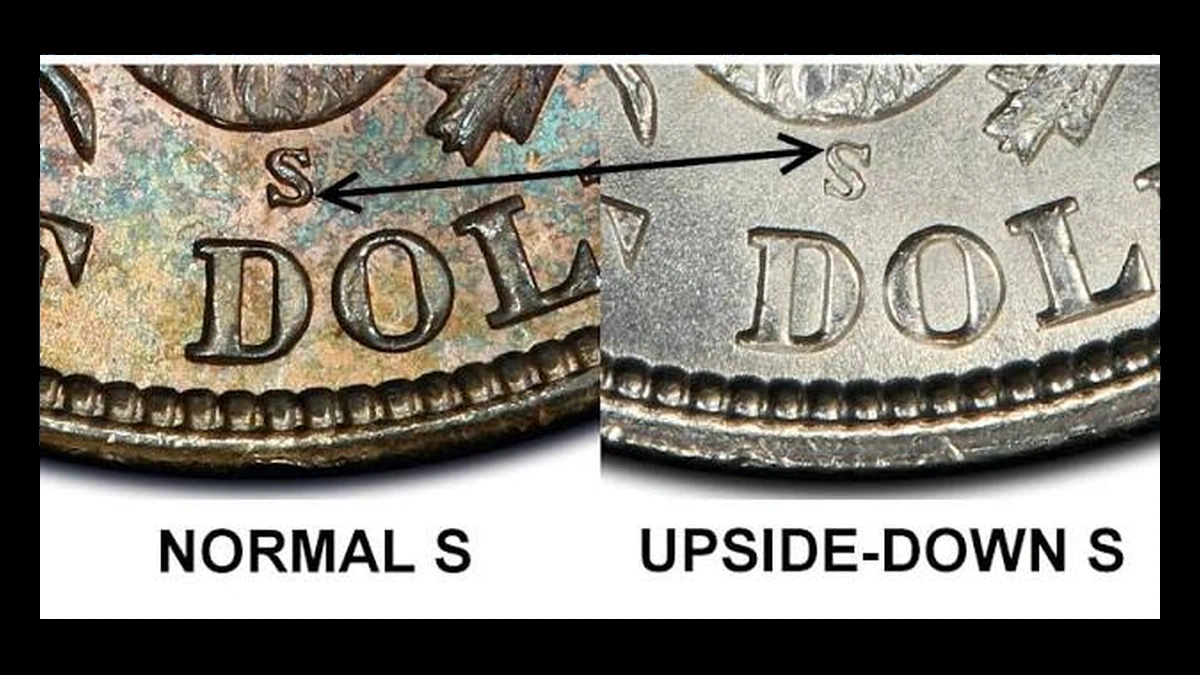
The variety called FS-501 uses an S that was punched upside down into the reverse die. Because an S still resembles an S after turning, its unequal upper and lower curves provide the useful clue.
The reversed orientation was already fixed in the tool before striking. This is a different question from whether a coin’s whole reverse is rotated relative to its front.
How to Identify
Set equally sized photographs of a normal S and the candidate side by side, with both reverse designs upright. Compare the letter ends, upper curve, lower curve, and full outline together.
The suspect letter should fit the normal punch style turned upside down. A thick edge, worn curve, or second-looking stroke alone cannot show that full reversal.
Inspect the surrounding silver for cuts or other signs of alteration, and confirm the 1909 date. Rubbed detail and shadows should not supply portions of the S that are no longer visible.
What It’s Worth
Estimated range: $150–$750 covers identified examples from about Fine to About Uncirculated. The surviving mintmark shape needs to remain clear enough for attribution.
GreatCollections records $230.62 for a PCGS F15 in August 2025. PriceCharting records a PCGS AU50 at $625 from an April 2026 eBay transaction.
The AU50 has much lighter wear than the F15. Surface quality and a legible inverted shape help determine where another circulated example fits within the estimate.
Conclusion
The portrait and mintmark demand different comparisons: a normal neck-and-jaw profile for Mumps, a confirmed raised route for a crack, and the entire punch shape for an inverted S. The unspecific crack report should stay qualified until matching evidence is available.
Values of $150–$3,500 span several conditions. The upper Mumps range applies to preservation comparable to the MS65 sale, not automatically to every swollen portrait.