Rare 1826 Half Dollar Errors (List & Pictures)
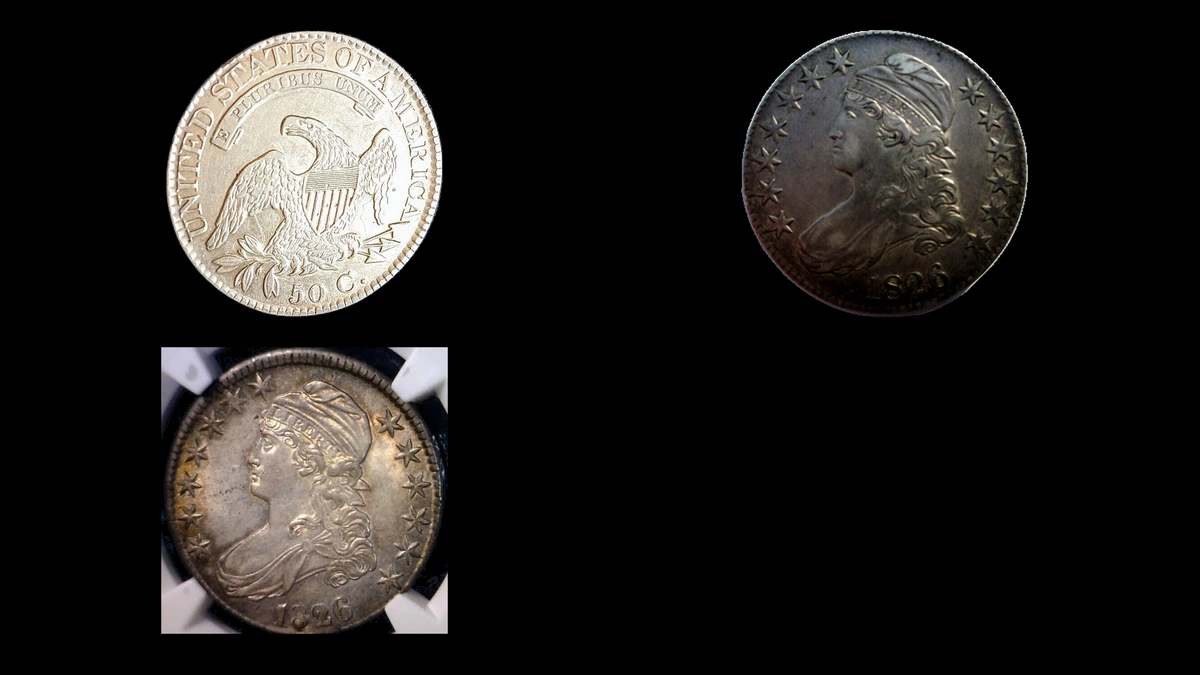
Turn an 1826 half dollar over before deciding what an unusual line means. A doubled-looking nose, an angled eagle, and repeated edge words require different evidence.
Estimated whole-coin comparisons for these 1826 half dollar errors span $150–$1,800. A slightly off-center MS63 sold for $1,500 in December 2023.
Follow the portrait, reverse, edge, and outline checks below without treating every extra mark as the same error.
| Observation | Check | Estimated range |
|---|---|---|
| Extra nose contour | Double-profile appearance | $150–$400 |
| Eagle tilted after a controlled flip | Rotated dies | $200–$500 around XF |
| Overlapping edge words | Doubled edge lettering | $250–$600 |
| Unexpected shapes near the eagle | Die clash | $250–$950 |
| Raised paths along letters | Die crack | $200–$1,300 |
| Both designs slightly displaced | Off-center strike | $900–$1,800 around MS62–MS63 |
A normal unworn example is about 13.48 grams and 32.5 millimeters across, with lettering on the edge. An ordinary O-101 graded EF40 sold for $240 including fees in August 2025, providing worn-coin context for several comparisons below.
1. 1826 Half Dollar An Extra Outline beside the Nose: Double-Profile Appearance Error
A seller describes an 1826 with a doubled nose among several unusual features. That wording describes how it looks without establishing why the extra edge formed.
Movement during striking can leave a second-looking contour, while damage can imitate one. The description alone does not prove a double strike or a doubled die.
How to Identify
Keep the nose in focus while moving the light. A physical second outline remains in place as the shadows change.
Inspect the lips, chin, and surrounding surface with a magnifier. A scraped channel or raised lip beside a dent points to later damage rather than another original contour.
Judge how far the extra outline continues. One isolated line deserves a different assessment from several related portrait details.
What It’s Worth
Estimated range: $150–$400 for worn examples with a modest extra nose outline. The ordinary EF40 sale at $240 provides whole-coin context rather than a nose-specific premium.
A seller asks $900 for an uncertified example with several reported features. That combined asking price does not isolate the value or establish the cause of its double-profile appearance.
2. 1826 Half Dollar An Eagle Leaning Left after a Flip: Rotated Dies Error
An auction catalog describes an O-115 with a reverse rotated about thirty-five degrees counterclockwise. The design can remain centered while its orientation relative to the front changes.
The angle concerns the relationship between the two stamping tools. Straightening each face separately in a photograph removes the evidence needed to demonstrate it.
How to Identify
Hold Liberty upright and flip top to bottom around a fixed horizontal line. A normal U.S. half should finish with the eagle upright as well.
Keep the camera still and compare the before-and-after views. Repeat the movement to make sure the same tilt returns without a sideways twist.
Nashville lot 4152 describes the thirty-five-degree leftward turn. A protractor can measure the result from correctly oriented photographs.
What It’s Worth
Estimated range: $200–$500 around XF condition for a comparable thirty-five-degree rotation. The cited 2010 catalog description does not supply a sale result.
The $240 ordinary EF40 sale is a different variety and a condition comparison. The measured tilt and surface quality affect whether the rotated coin draws extra interest.
3. 1826 Half Dollar Letters Crossing the Edge Words: Doubled Edge Lettering Error
The edge inscription was applied before the front and back received their designs. Repeating or shifting that step could leave extra letters across the normal words.
A seller reports this feature on an 1826. It need not accompany a doubled portrait because different tools produced the edge and faces.
How to Identify
Read the edge through a full turn and take overlapping photographs. Keep track of the overlaps so the same letter is not counted twice in the image sequence.
Find a readable repeated letter crossing the original wording. Compare its depth and surface with nearby characters under magnification.
Look for fresh engraving, filing, or jewelry damage. Unusual spacing or a dented letter alone does not establish a second original impression.
What It’s Worth
Estimated range: $250–$600 for worn examples with clear overlapping letters. No verified sale amount is supplied for the seller’s 1826 report.
An 1834 half with doubled edge words brought $220 in July 2026. It carried a Fine Details grade with cleaning, so both the different date and the surface problem belong in that comparison.
4. 1826 Half Dollar Unexpected Shapes around the Eagle: Die Clash Error
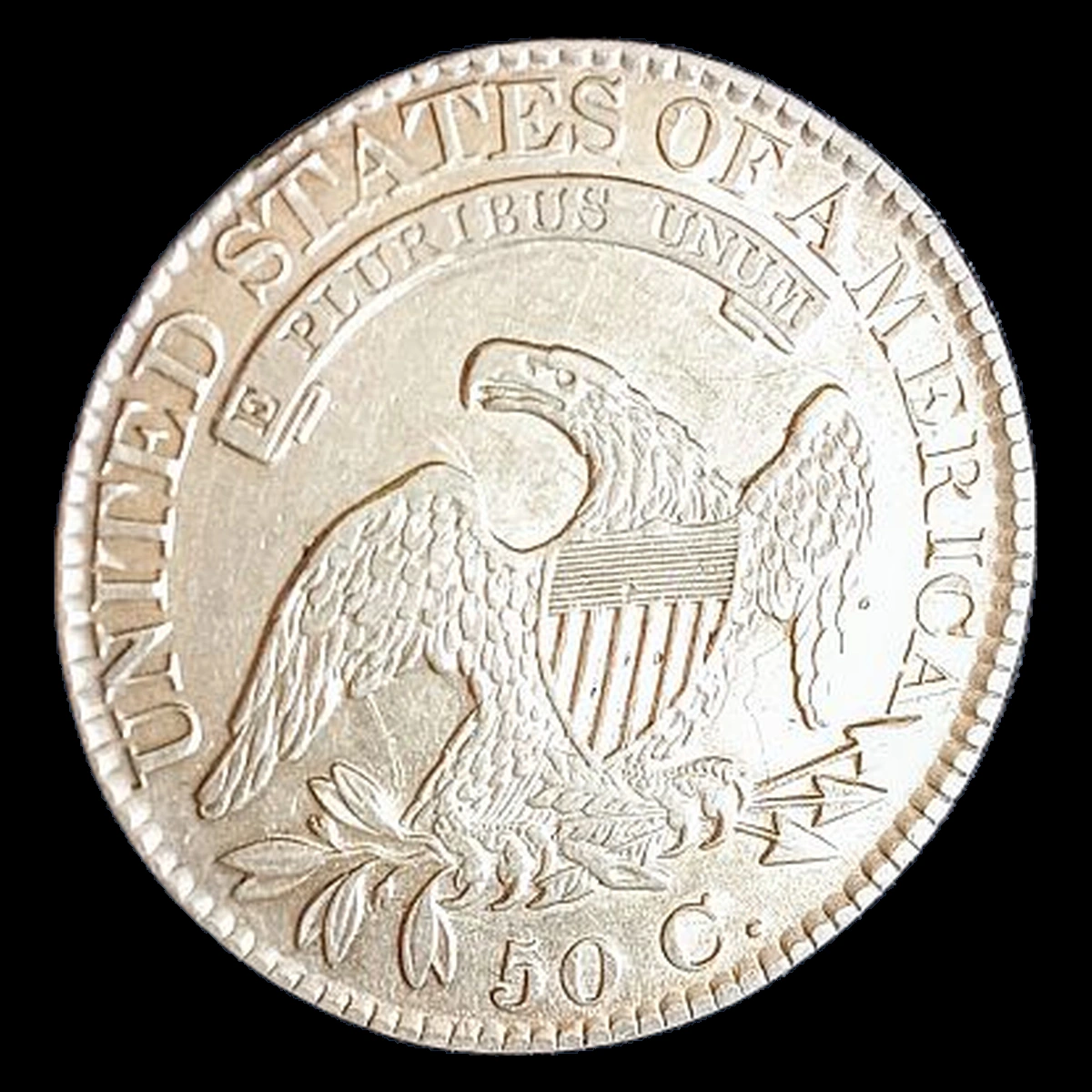
A clash can transfer parts of one design to the opposite die when the tools meet without a blank between them. Later coins may show those traces alongside their normal designs.
One collector’s 1826 has reported marks above and right of the eagle’s head. A different seller describes marks beneath both wings.
How to Identify
Keep clear photographs of both faces together and compare the extra fragment with the opposite design. A recognizable shape matters more than the mere presence of a line.
Use the correct location for the particular example: above and right of the head, or beneath the wings on the separate seller’s coin. Do not combine the two reports into one required pattern.
Change the light to inspect shallow transferred detail. A scratch cutting into the surface does not need to match anything on the other face.
What It’s Worth
Estimated range: $250–$950 for worn through slightly worn examples with identifiable clash marks. A seller’s $900 offer concerns an uncertified coin described as having several unusual features.
The offer is not a certified grade, completed sale, or separate clash value. The ordinary $240 EF40 comparison also does not prove that the coins share the same marks.
5. 1826 Half Dollar Raised Lines along the Letter Tops: Die Crack Error
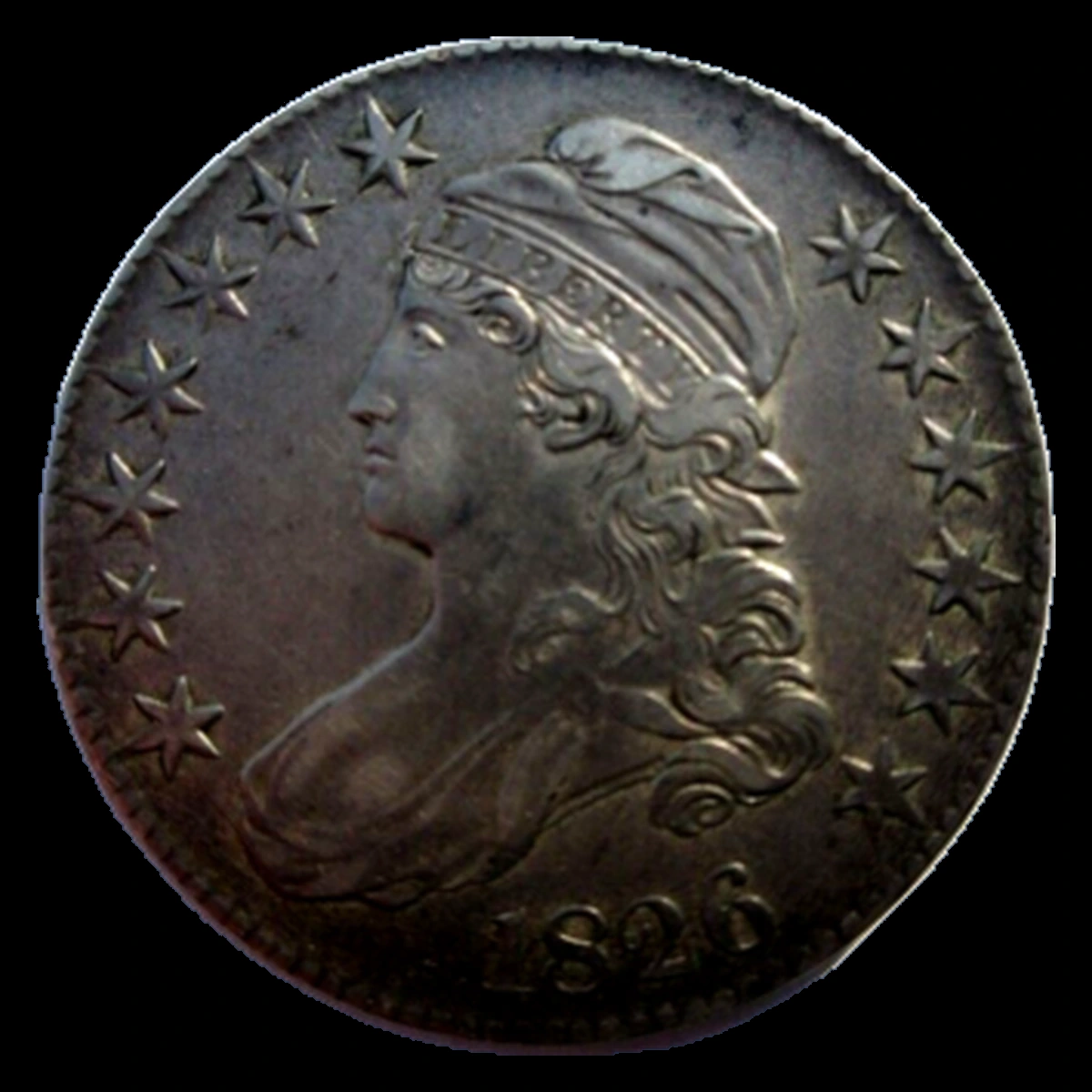
Reported cracks on O-118a follow NITED STATES and MERICA on the reverse. A separate offered coin has a line below the date on its front.
These are different routes. Silver entering a fracture in a stamping die leaves a raised ridge, but not every die develops the same pattern.
How to Identify
Keep the letter tops visible while tracing the reverse route. If you are examining the separate date-underline example, use that coin’s front-side reference instead.
Light each line from opposite directions. Look for a continuous ridge rather than a recessed cut, dragged metal, or a series of unrelated marks.
Compare both complete faces with one matching example. A plausible location is not enough if the route differs.
What It’s Worth
Estimated range: $200–$1,300 for common worn examples through lightly worn coins of comparable quality. This is a whole-coin bracket rather than a fixed amount per crack.
An O-104 with cracks on both faces sold for $1,020 including fees in August 2025. Its AU58 grade indicates very little wear, and its variety differs from O-118a.
6. 1826 Half Dollar A Small Shift on Both Faces: Slightly Off-Center Strike Error
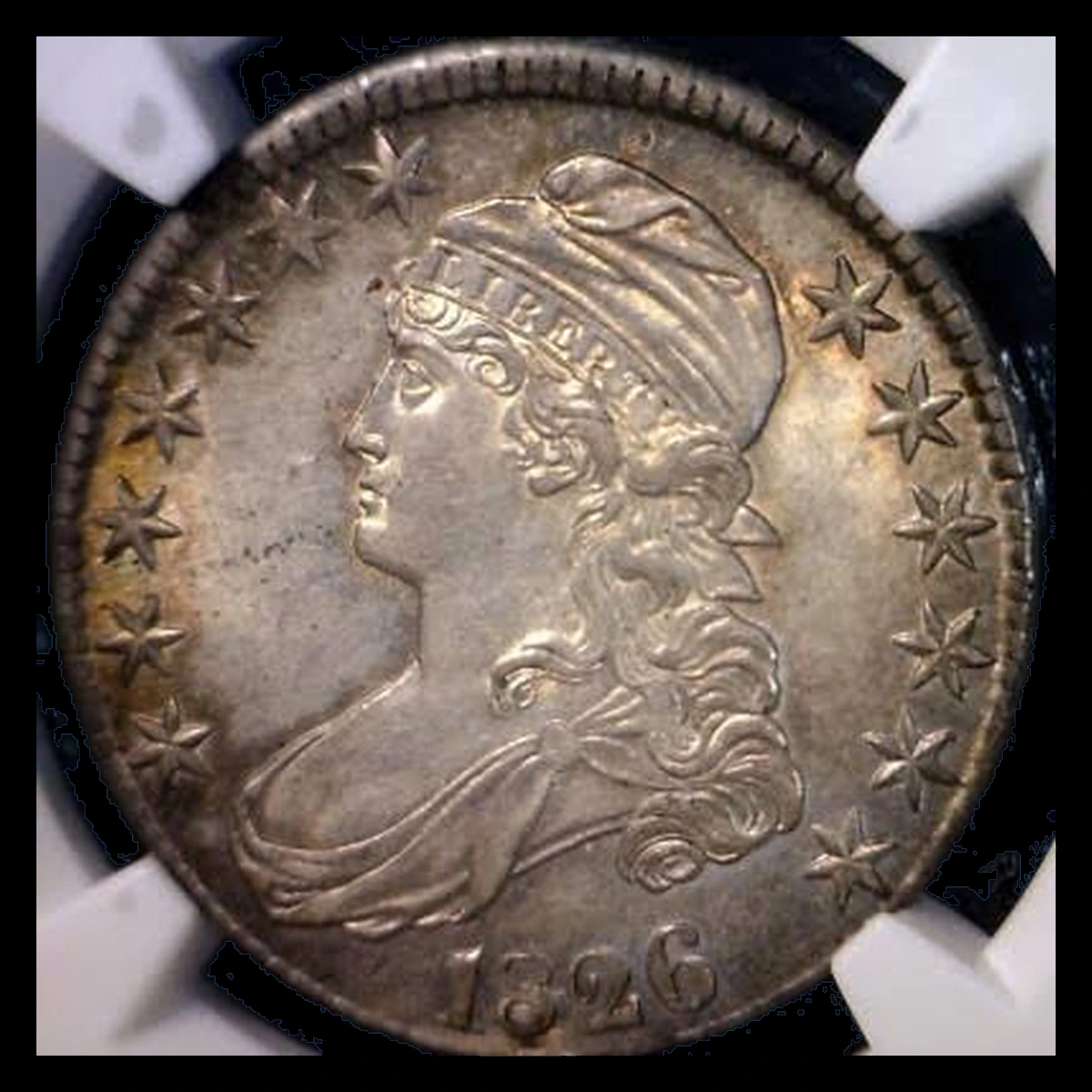
The cataloged MS62 O-104a shows displacement toward the lower front and upper reverse. A separate slightly off-center example graded MS63.
Neither description gives a measured percentage. Keep their separate grades, photographs, and sale histories with the correct coins.
How to Identify
Inspect the entire border before focusing on the portrait. On the O-104a, check that the lower-front shift agrees with the upper-reverse shift.
Preserve orientation between the two photographs. If only one design shifts, a misaligned die may explain the uneven border instead.
Check the lettered edge for trimming or cuts that imitate displacement. Early halves can have uneven borders, so a single wide rim is weak evidence.
What It’s Worth
Estimated range: $900–$1,800 for similarly preserved unworn coins with small shifts. MS62 and MS63 describe unworn examples that still have visible marks.
The MS63 sold for $1,500 on December 18, 2023. The separate MS62 O-104a brought $1,080 in October 2018 and $1,140 in December 2020.
These prices include the whole coin’s condition and surfaces. Slight off-centering alone does not add that amount to a heavily worn half.
Conclusion
Use the correct view for the question: a portrait close-up, a controlled flip, a full edge sequence, or linked photographs of both faces. Each preserves evidence that a cropped image can hide.
The $150–$1,800 estimates combine different conditions and features. A seller’s combined offer should not become a separate price for every mark described on the same coin.