Rare 1807 Draped Bust Half Dollar Errors (List & Pictures)
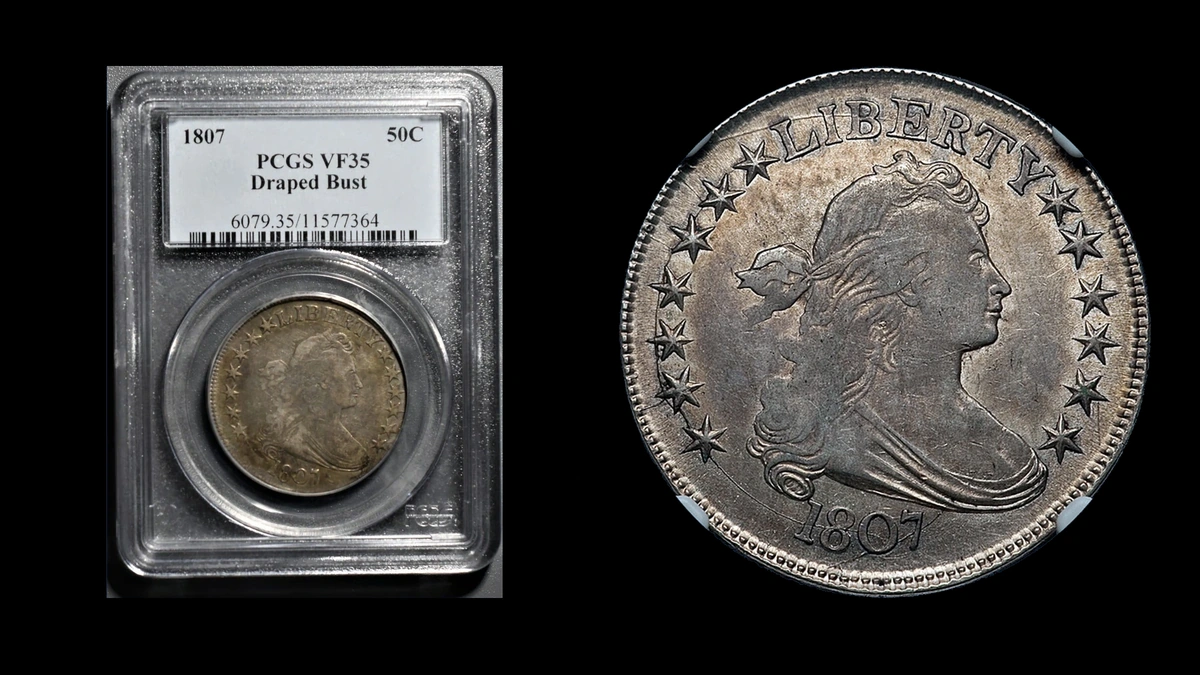
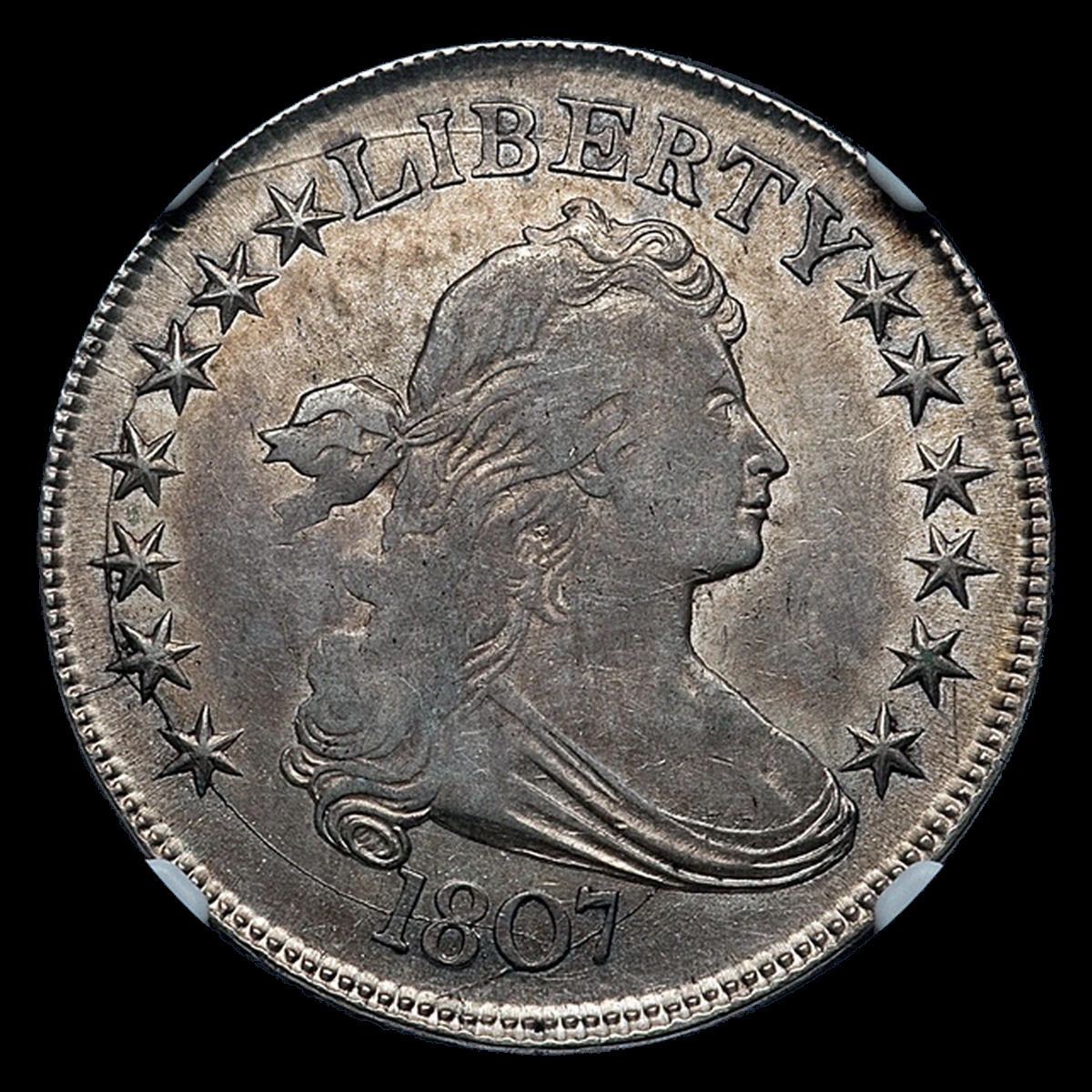
The right-facing portrait identifies the coin in this guide to 1807 Draped Bust half dollar errors. Worn-coin estimates range from $200 to $6,000, with several subtle features carrying little or no separate premium.
A supplied clash comparison reached $5,500 before fees in January 2008, but it was dated 1803. For 1807, follow the outline, face alignment, lower curls, and surface marks before choosing a condition-matched price.
| What looks unusual | Check | Category | Estimated worn-coin value |
|---|---|---|---|
| Design slightly to one side | Complete outline on both faces | Slight off-center strike | $300–$2,500; no premium in cited opinion |
| Eagle slightly tilted after flipping | Repeatable face relationship | Slight die rotation | $300–$2,500 |
| Lower curls unusually soft | Matching weak reverse area | Sunken-die weakness | $200–$1,200 |
| Raised routes near letters and stars | Full paths under low light | Die cracks | $350–$3,000 |
| Faint design shapes out of place | Comparison with opposite face | Die clash | $500–$6,000 |
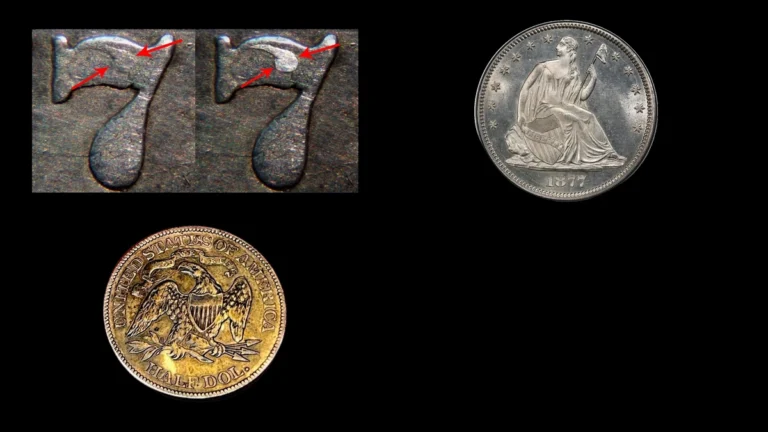
Both Draped Bust and a different half-dollar design occur in 1807, so confirm the right-facing portrait and eagle with shield. The Draped Bust coin has a lettered edge, an original weight near 13.48 grams, and a diameter around 32.5 mm.
1. 1807 Half Dollar A Modest Shift Within the Outline: Slight Off-Center Strike Error
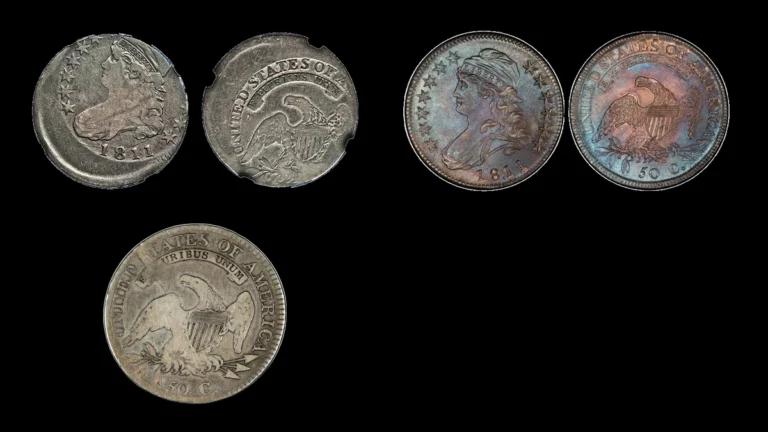
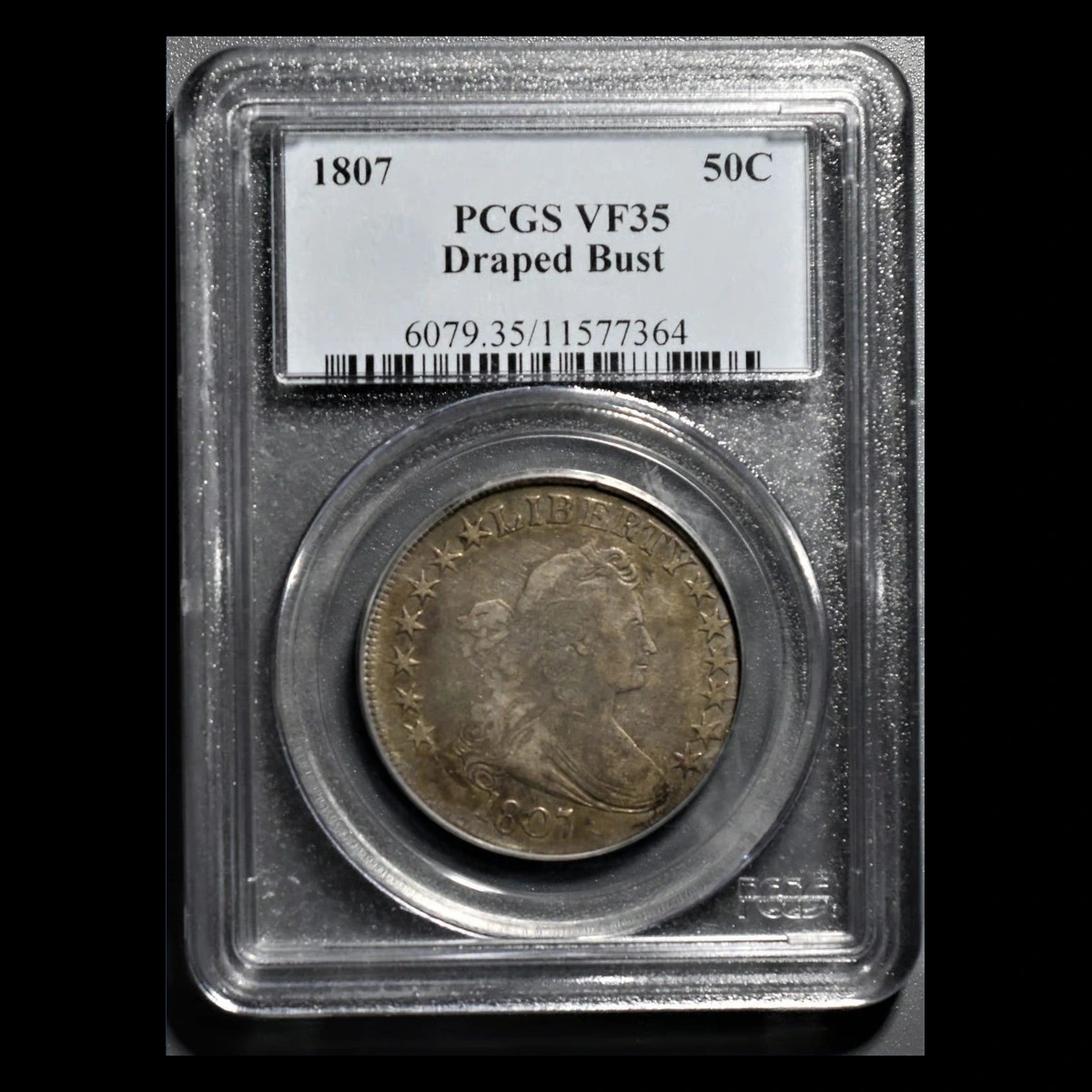
Full-face photographs are the best starting point for this small difference. In an illustrated discussion, specialist Nysoto estimated the shown 1807 Draped Bust half at roughly three to four percent off center.
The position of the blank between the two dies determines where the design lands. A small displacement should be described at that scale instead of being illustrated like a dramatic missing-design error.
How to Identify
Hold the camera directly above the coin and include its entire outline. Perspective and uneven cropping can exaggerate a modest shift.
Compare the position of both designs. If only one face is displaced, movement of one stamping tool may explain the appearance rather than an off-center blank.
Inspect the border for genuine design loss and for later filing or impacts. The described small shift needs consistent whole-coin evidence rather than a dramatic-looking isolated crop.
What It’s Worth
Estimated whole-coin range: $300–$2,500 across worn grades. The specialist’s original comment specifically considered this modest offset too small to add an error premium.
A different AU50 1807 sold at CNG for $1,900 before fees in September 2026. It supplies nearly unworn condition context, not a sale of the forum specimen.
Prices for major off-center early halves are unsuitable for this comparison. The amount of displacement is part of the evidence, not just the label.
2. 1807 Half Dollar A Small Tilt Between the Faces: Slight Die Rotation Error
An owner described the reverse of an NGC-encased 1807 as ten to fifteen degrees out of alignment. The report did not state whether the tilt was clockwise or counterclockwise.
The relevant angle is between the two designs. A coin resting diagonally inside its holder does not demonstrate that relationship, and an NGC holder alone does not certify the owner’s separate observation.
How to Identify
Set Liberty upright and turn the coin top to bottom without twisting sideways. Under normal alignment, the eagle should finish upright.
Repeat the flip because slight hand movement can imitate a small angle. An external paper guide can help measure the tilt without opening a sealed holder.
Record the actual direction and amount instead of guessing from the owner’s brief report. Two photographs individually rotated upright cannot resolve the alignment.
What It’s Worth
Estimated range: $300–$2,500 for ordinary worn coins with a slight tilt of this scale. Most of the variation reflects preservation.
Same-date context includes a PCGS VG8 at $384 in April 2025 and the AU50 at $1,900 before fees in September 2026. Neither result concerns the owner’s reported rotated coin.
3. 1807 Half Dollar Soft Lower Curls Beside Sharper Detail: Sunken-Die Weakness Error
Localized weakness can look like wear until the opposite face is examined. NGC researcher David Lange attributed soft lower curls and the corresponding reverse area on an illustrated 1807 to a sunken die.
A die is the steel stamping tool. Inadequate hardening can allow part of it to sink during use, leaving a deeper space that the silver does not fully fill.
How to Identify
The NGC forum example provides the specific two-face comparison. Check the lower curls and their corresponding reverse area together.
Assess nearby detail and other exposed high points for ordinary wear. Scraping or smoothing can create an artificial soft patch and may leave fine lines or a hollowed surface.
The described relationship supports Lange’s explanation for that example. Weak hair alone on another half dollar does not establish the same cause.
What It’s Worth
Estimated range: $200–$1,200 for worn coins with the identified localized weakness. Strong remaining detail elsewhere and original surfaces matter to the condition assessment.
The ordinary PCGS VG8 sold for $384 at Heritage in April 2025. It was heavily worn and was not Lange’s illustrated coin, so its result supplies general context only.
4. 1807 Half Dollar Ridges From Lettering Toward the Eagle: Die Cracks Error
The CNG AU50 has fine raised lines around the front stars and lettering. On the back, routes extend from ED in UNITED toward the wingtip and from the last S in STATES toward the clouds.
A separate cataloged unworn example has a front crack near star seven and LIBERTY. That route must remain tied to its own specimen instead of being added to the CNG pattern.
The ridges formed when silver entered splits in the dies. Their raised character distinguishes them from later scratches cut into the finished coin.
How to Identify
Trace each route through its named landmarks under low light. For the AU50, compare both reverse routes alongside the front’s surrounding lines.
Change the light direction to judge whether a mark rises above the surface. A scratch can have bright edges but retains a recessed center.
Keep separate reference coins separate in the photographs and notes. A correct general error name does not mean their crack paths must match.
What It’s Worth
Estimated range: $350–$3,000 for worn examples with visible cracks. An attractive nearly unworn coin may exceed a heavily worn piece with more dramatic die damage.
The PCGS AU50 brought $1,900 before buyer’s fees at CNG in September 2026. The amount values the complete coin rather than either reverse ridge individually.
5. 1807 Half Dollar Fragments Resembling the Other Face: Die Clash Error
Legend’s Regency XIII catalog describes strong clashes on both sides of an NGC MS64 1807. The description does not provide a complete map of the transferred shapes.
Clashing occurs when the dies meet without a blank and mark one another. Coins struck later can carry parts of those transferred designs in unexpected areas.
How to Identify
Compare enlarged views of both faces and try to relate an extra shape to the opposite design. Its form and position should fit that transfer, rather than simply being a random line.
Distinguish the shapes from raised cracks, scratches, and parallel lines left when a blank’s weight was adjusted. A coin can have several kinds of marks without all of them being clashes.
The sparse catalog description requires an actual reference image to locate exact diagnostics. Avoid assigning a familiar clash position from another year without evidence.
What It’s Worth
Estimated range: $500–$6,000 for worn examples with recognizable clashes. This is not an estimate for the finer unworn Legend MS64.
An 1803 Draped Bust half with clashes and cracks, graded PCGS AU53, sold for $5,500 before fees in January 2008. Its different year, condition, and combination of features limit it to a broad comparison.
The Legend coin requires its own unworn-condition price references. A transferred fragment alone does not set a coin’s value.
Conclusion
Confirm the Draped Bust design and compare both faces before interpreting a soft patch or small displacement. Modest off-centering, slight rotation, die weakness, cracks, and clashes require different evidence.
The $200–$6,000 estimates cover worn coins, with condition central throughout. The $1,900 1807 sale excludes buyer’s fees, while the larger clash comparison belongs to 1803 and should remain clearly labeled that way.