Rare 1947 Half Dollar Errors (List & Pictures)
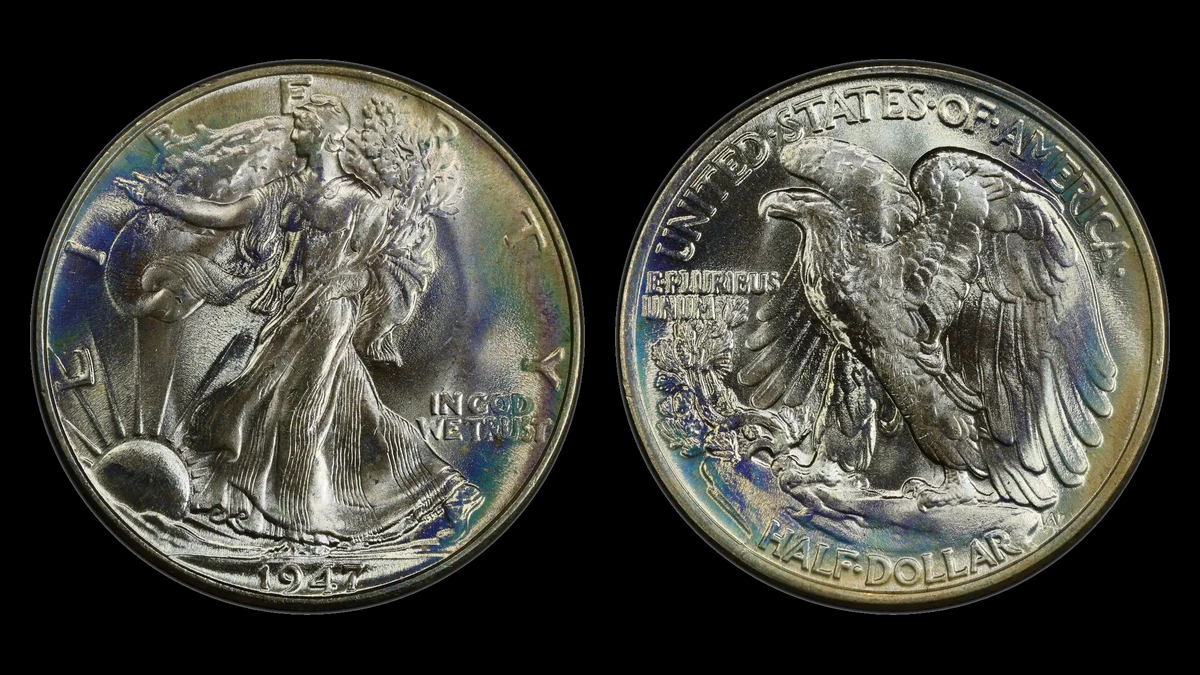
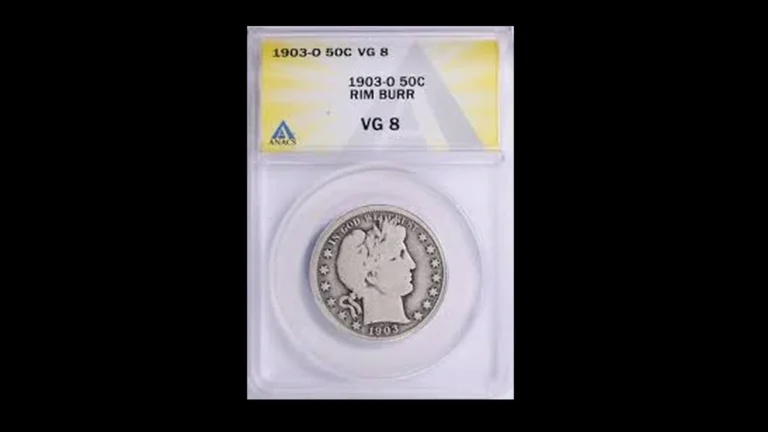
A dealer’s $275 offering for a coin with front lamination gives a useful starting point for 1947 Walking Liberty half dollar errors. The thin separating layer is a different kind of find from repeated letters or a second strike.
Estimated values across this guide run from $50–$25,000. The largest comparison is a 1942 half on a quarter blank that sold for $18,000 in January 2022, rather than a documented 1947 sale.
Inspect each face before checking missing metal and unusual size.
| Where to look | Feature | Estimated whole-coin value |
|---|---|---|
| Liberty’s side | Lamination | $75–$500 |
| Front outlines | Doubled-die candidate | $75–$2,500 |
| Low on the back | Repunched D | $50–$350 |
| Eagle and back lettering | Minor reverse doubling | $50–$300 |
| Edge gap | Clip | $60–$300 |
| Design and blank margin | Off-center strike | $50–$12,000 |
| Crossing design impressions | Double strike | $8,000–$15,000 |
| Size, weight, and metal | Wrong blank | $10,000–$25,000 |
The normal starting measurements are 12.50 grams and about 30.6 mm across, with a grooved edge. A scale, calipers, and a 10× magnifier are useful for loose coins; use recorded measurements for a sealed graded coin.
1. 1947 Half Dollar Silver Separates on the Front: Lamination Error
The documented dealer example is a Philadelphia half graded NGC MS65, meaning unworn with relatively few marks. Its description identifies a lamination on the front.
Lamination is separation within the alloy, which may allow a thin layer to lift or break away. The listing does not specify the exact location or say that a flap remains attached.
How to Identify
Keep the whole coin and grading label with any close-up of the dealer example. For another candidate, examine whether the separation continues beneath intact original surface.
A gouge can push metal up beside a channel without creating a natural layer. A spot or shallow scratch also needs a different explanation.
Do not lift an attached flake to test it. Its connection to the surrounding metal is part of the evidence you want to preserve.
What It’s Worth
$75–$500 is the estimate, covering smaller worn flaws through attractive unworn examples. Surface quality and the character of the separation both affect collector interest.
Northeast Numismatics offered the MS65 front-lamination coin at $275. That is an asking price, not a completed auction result.
2. 1947 Half Dollar Extra Outlines on Liberty’s Side: Front Doubled-Die Candidate Error
The front is called the obverse. A true doubled die has repeated detail in its steel stamping tool, which transfers those extra shapes during a single strike.
The supplied discussion refers to a 1946 reverse variety without identifying a 1947 front die. This category needs a matching front-side example rather than borrowing the older coin’s identity.
How to Identify
Photograph the suspected detail within a full front view, then compare the same area on a normal coin. Rounded extra contours and split corners are more useful than general thickness.
A low, flat ledge may come from movement during striking. Change the light to rule out glare before deciding that a second outline is physically present.
No precise diagnostic location is established for this entry. A photograph of another year cannot fill that gap in identification.
What It’s Worth
$75–$2,500 is a comparison estimate for a properly identified 1947 example, from modest circulated doubling to a strong feature on an attractive unworn coin. It does not apply to an ordinary reflective edge.
A recognized 1939-D FS-101 sold for $2,160 in April 2025 in NGC MS67+ condition. Its exceptional preservation and established variety explain why it is a comparison, not a 1947 price record.
3. 1947 Half Dollar Another D Curve beside the Mint Letter: Repunched Mintmark Error
Find the small D low on the back, below the branch and left of HALF DOLLAR. Minor reported varieties have a piece of an earlier D above or diagonally beside the final letter.
The letter was punched into the die by hand. If its position changed between blows, part of the earlier impression could remain for later coins to copy.
How to Identify
Trace the extra curve and compare its shape with the main D. It should make sense as part of another letter rather than an isolated lump.
Keep upward and diagonal punch positions separate. A coin is not expected to display every pattern mentioned in the guide.
Check for a damaged mintmark or a flat shelf from striking movement. Match the actual earlier D position to the appropriate reference image.
What It’s Worth
$50–$350 is the estimated whole-coin range for these minor 1947-D varieties, from circulated to ordinary unworn condition. The supplied guide suggests added premiums around $10–$40 worn and $50–$150 unworn.
Those premiums are additions to a normal coin’s value, while the range here prices the entire coin. A small repeated mintmark should not inherit the price of a much more dramatic variety from another year.
4. 1947 Half Dollar Small Repeated Back Details: Doubled Die Reverse Error
The Philadelphia reverse-doubling report describes a very minor feature. It does not name an exact letter or feather to use as a ready-made identification point.
Repeated detail in a die can appear on many coins from that tool. That differs from one coin receiving two separate strikes.
How to Identify
Use a Philadelphia comparison with no mint letter on the back. Examine any extra contour while changing the light, keeping its position within the eagle-side design visible.
A rounded feather edge may reflect light in a way that looks doubled. Look for a stable, raised second shape that matches a known example rather than selecting a feather by guesswork.
What It’s Worth
$50–$300 is the estimate for clearly identified minor doubling on worn through ordinary unworn Philadelphia halves. It includes the value of the whole coin.
The year guide suggests premiums of $10–$40 circulated or $50–$150 unworn above normal value. These modest figures should not be replaced with prices for the more prominent 1946 doubled reverse.
5. 1947 Half Dollar A Gap Interrupts the Rim: Clipped Blank Error
A clip means part of the blank was absent before striking. The incomplete edge changed how nearby metal moved and how the rim formed.
The reported 1947 category does not specify one mint, shape, or position. A curved bite can form when the blank-cutting punch overlaps an earlier hole, but other shapes are possible.
How to Identify
Inspect where the rim and edge grooves end at the gap. Natural struck transitions are more useful than the outline of the missing piece alone.
Look for file lines, burrs, or a cut passing through a finished rim. Weakness on the opposite side can support a clip, even if that clue is faint.
Any loss of weight should make sense for the missing area and wear. Later cutting also lowers weight, so the scale cannot settle the cause by itself.
What It’s Worth
$60–$300 is the estimate for a genuine small or moderate clip on a typical circulated or modest unworn coin. The guide describes $30–$60 added premiums for small clips.
A 1942-S rim clip graded MS62 sold for $81.90 including premium in May 2025. Its small gap and unworn condition make a different-year comparison, not a price paid for a 1947 clip.
6. 1947 Half Dollar Bare Silver beside a Shifted Design: Off-Center Strike Error
When the blank sits off center, part of the picture misses the silver and part of the metal receives no picture. Both faces should reflect the same misplaced blank.
The 1947 account includes the category without identifying one certified coin’s exact shift. General percentages in a guide are not measurements of a particular example.
How to Identify
Compare full views of both faces and look for corresponding lost design beside original blank metal. An uneven border on one side alone can come from a shifted die.
Check the boundary for grinding or later flattening. Include all surviving date digits and edge grooves in the photographs.
If the mintmark area never received a strike, a missing D does not establish Philadelphia. The surviving design must support any year and mint identification.
What It’s Worth
$50–$12,000 is the broad comparison range, with ordinary minor circulated shifts starting around $50–$120 in the guide. The upper end represents rare, exceptionally preserved examples.
A 1918 half struck 10% off center sold for $10,575 in April 2013 in MS65 condition. That other-year sale does not promise the same amount for another coin shifted by 10%.
7. 1947 Half Dollar A Second Picture Overlaps the First: Double Strike Error
A coin that moves between blows can show two sets of Liberty, date, or eagle details. The later strike may flatten part of the earlier picture while leaving other areas visible.
The supplied 1947 material discusses the series without establishing a certified dated example here. A candidate needs its own evidence of two striking events.
How to Identify
Trace two recognizable design impressions through the places where they cross. Their relationship should explain which details survived the earlier strike and which were flattened later.
Random dents do not form a consistent second picture. A sunken, mirrored mark can come from another finished coin being pressed against the surface.
Keep the readable date in the full views and inspect how the edge changed. A few doubled-looking letters alone belong to a different investigation.
What It’s Worth
$8,000–$15,000 is the estimate for a substantial authenticated candidate with clear overlapping strikes. A minor shift or heavily damaged example needs a closer comparison.
An undated San Francisco Walker, graded AU53, sold for $11,400 in August 2025 with its second strike 90% off center. The year is unknown, so this is not a 1947 transaction.
8. 1947 Half Dollar The Design Is on the Wrong Size or Metal: Wrong Blank Error
A blank intended for another denomination may not have room for the half-dollar picture. Size, weight, and metal together can reveal what entered the press.
The available material draws on other Walking Liberty years without establishing a specific 1947 blank. Do not assume “quarter blank” or “dime blank” from appearance alone.
How to Identify
Record weight, diameter, and thickness before naming a possible blank. The proposed identity must also explain how Liberty and the eagle fit the surviving metal.
Examine the complete edge for filing, original spreading, and remaining grooves. A normal half can become smaller through alteration.
A professional metal test that leaves the surface intact can check a proposed alloy. Color alone may come from a coating rather than the original blank.
What It’s Worth
$10,000–$25,000 is the comparison estimate for a substantial authenticated candidate. Its actual blank, readable identity, and condition determine whether the following examples fit.
A 1942 Walker on a quarter blank sold for $18,000 in January 2022 in NGC MS64 condition. An undated PCGS MS64 quarter-blank example brought $15,000 that May.
Neither result documents a 1947 wrong-blank coin. Both concern unworn pieces with a specific blank identity, rather than coins that simply look unusual.
Conclusion
A separating layer and a small extra D stroke call for close-up inspection, while missing metal and unusual size need measurements too. Let the feature choose the check instead of treating every odd mark as the same kind of error.
The $275 lamination offering belongs to 1947; the largest auction comparisons do not. Keep that distinction, the mint, and the condition beside any range you use.