Rare 1946 Half Dollar Errors (List & Pictures)
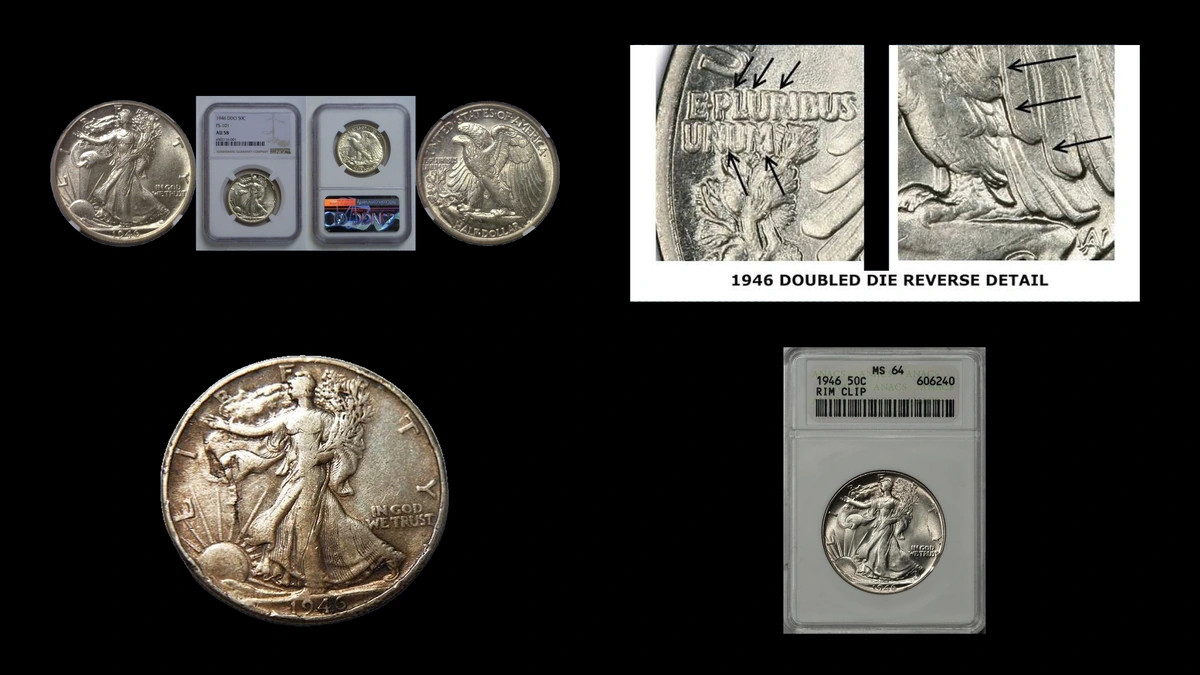
A Philadelphia 1946 doubled-reverse half dollar sold for $9,400 in 2017. Its PCGS MS66+ grade describes unusually strong unworn preservation.
Estimated 1946 half dollar errors values run from $50 to $12,000. Compare Liberty’s contours and the eagle first, then investigate the metal and outline.
This guide concerns Walking Liberty halves, not the different Booker T. Washington commemorative. Normal specifications are 12.50 grams, 30.6 millimeters, and a reeded edge.
| First observation | Category | Estimated whole-coin value |
|---|---|---|
| Extra torso contours | FS-101 doubled obverse | $75–$3,000 |
| Repeated feather and motto details | FS-801 doubled reverse | $75–$9,500 |
| Extra S outline | Repunched mintmark | $75–$1,500 |
| Peeling front layer | Lamination | $100–$600 |
| Raised line or patch | Die crack or break | $50–$1,000 |
| Small edge gap | Clip | $75–$500 |
| Widened complete design | Broadstrike | $3,000–$7,000 |
| Blank crescent beside displaced design | Off-center strike | $100–$12,000 |
| Eagle leans after a controlled flip | Rotated dies | $50–$500 |
1. 1946 Half Dollar Extra Lines Follow Liberty’s Figure: FS-101 Doubled Die Obverse Error
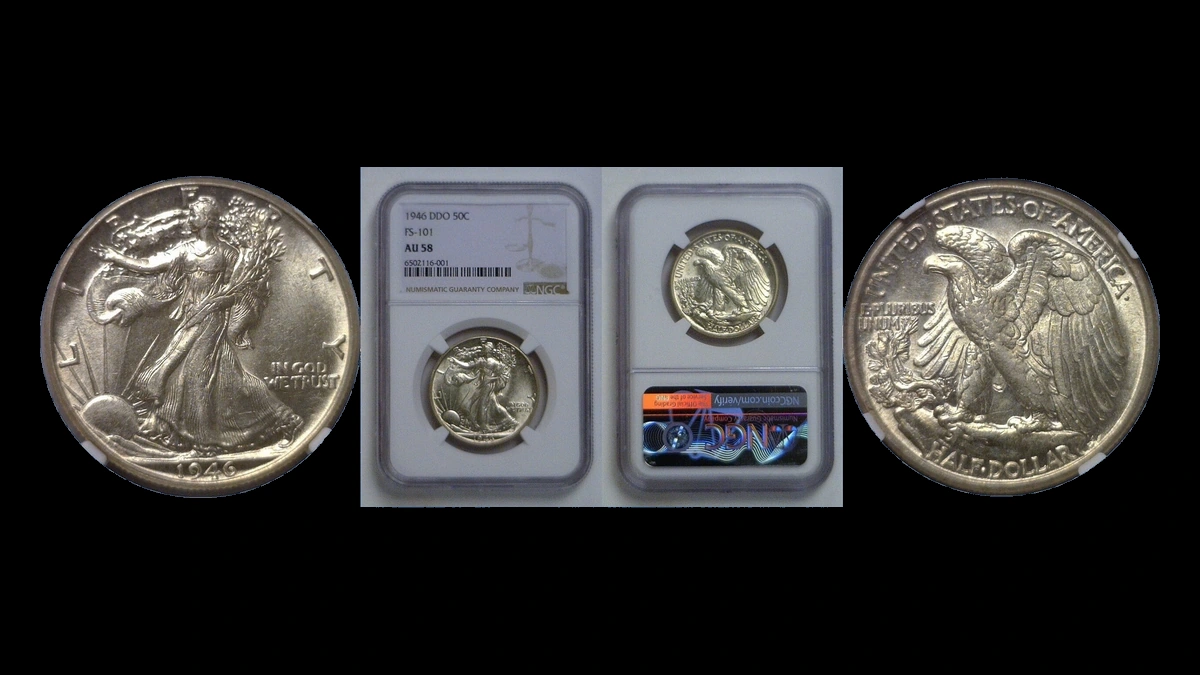
Liberty’s chest, left arm, and nearby cloth or flag folds are the useful starting points for the Philadelphia FS-101. The date is not its principal inspection area.
The extra contours were formed in the die, the steel stamping tool, before it made the coin. Coins from that die can share the same pattern without each receiving two strikes.
How to Identify
Align a photograph of the candidate with an identified FS-101, keeping the full torso visible. Compare a normal Philadelphia coin too, because the intended clothing design already contains closely spaced lines.
Trace the added contours through the chest, arm, and neighboring folds under changing light. Their positions should agree with the variety instead of merely looking crowded.
A flat shelf, rubbed detail, or reflection can imitate another edge. A correct weight and diameter do not establish the doubled pattern.
What It’s Worth
Identified FS-101 examples have an estimated $75–$3,000 range from worn through attractive high-grade condition. Wear can reduce the visibility of the diagnostic contours.
A PCGS MS66 sold at Legend for $2,585 in January 2020. That well-preserved example supports a comparison near the upper range, not an automatic price for any doubled-looking fold.
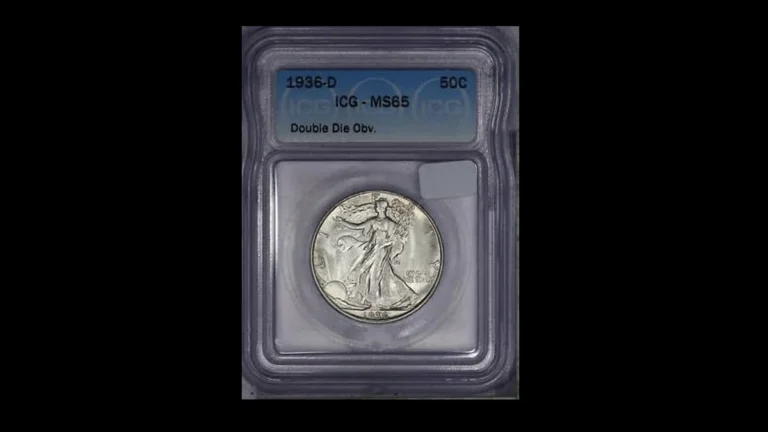
2. 1946 Half Dollar Eagle Feathers and Motto Have Repeated Edges: FS-801 Doubled Die Reverse Error
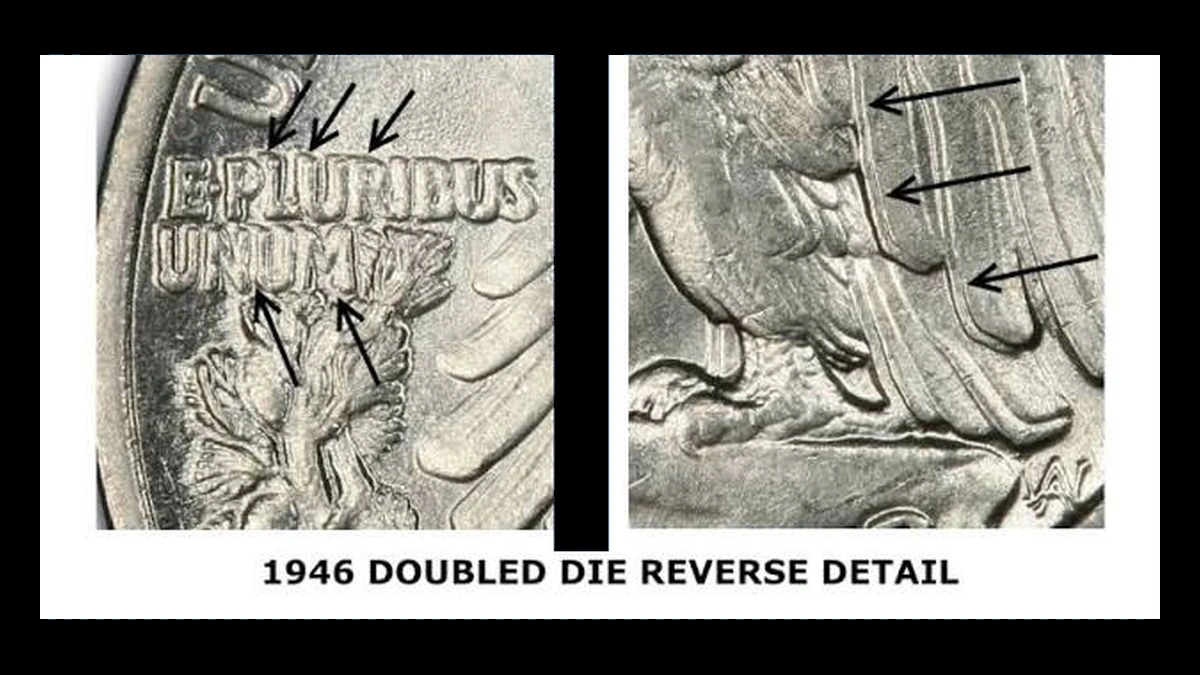
The established Philadelphia doubled reverse is known as FS-801. Extra feather edges, E PLURIBUS UNUM, and the branch at the left provide several connected comparison areas.
A separate collector report concerns doubling on a 1946-S. Its mint and pattern must remain separate from the Philadelphia variety and its auction record.
How to Identify
Confirm an intact reverse mintmark area before comparing the design. An S identifies San Francisco and prevents a direct attribution to the Philadelphia FS-801 discussed here.
Use the PCGS illustrated explanation to match the motto, feathers, and branch. Look for repeated rounded relief in the correct locations.
Inspect more than one letter or feather while moving the light. An isolated shelf or a bright reflection is weaker evidence than a consistent match across the design.
What It’s Worth
The Philadelphia variety has an estimated $75–$9,500 range, with ordinary worn pieces far below exceptional unworn coins. Both attribution and preservation matter.
An NGC MS65 sold for $2,040 at Heritage in November 2024, while a PCGS MS66+ brought $9,400 in 2017. Neither price sets the value of the separately reported San Francisco doubling.
3. 1946 Half Dollar A Second Curve Remains beside S: Repunched Mintmark Error
On a reported 1946-S/S, part of an earlier mintmark placement survives beside the final S. Hand punching the letter into the reverse die more than once could leave this kind of fragment.
The GreatCollections listing combines a PCGS MS66 condition grade with a separate VSS RPM-001 variety identification. Those descriptions do different jobs and should not be treated as the same attribution.
How to Identify
Find the S at the lower left of the reverse and compare its outline with the listed RPM-001 example. The position and shape of the additional fragment matter more than overall thickness.
Use an ordinary 1946-S to understand the normal letter shape. Then exclude flat strike-related shelves, dents, and altered metal around the candidate.
The source does not supply a verbal direction for the extra S. Read that detail from the actual illustrated specimen instead of borrowing another repunched mintmark’s orientation.
What It’s Worth
Matching 1946-S/S examples are estimated at $75–$1,500 across worn and attractive unworn grades. The listed MS66 has no supplied public sale amount.
A 1939-D/D graded PCGS MS64+ sold for $1,292.50 in September 2017. Its different year and letter make it a broad repunching comparison, not a 1946-S sale.
4. 1946 Half Dollar A Layer Opens on the Front: Obverse Lamination Error
A seam, attached flap, or shallow exposed area can reveal separation within the silver alloy. This is lamination, involving a layer of metal rather than two full discs splitting apart.
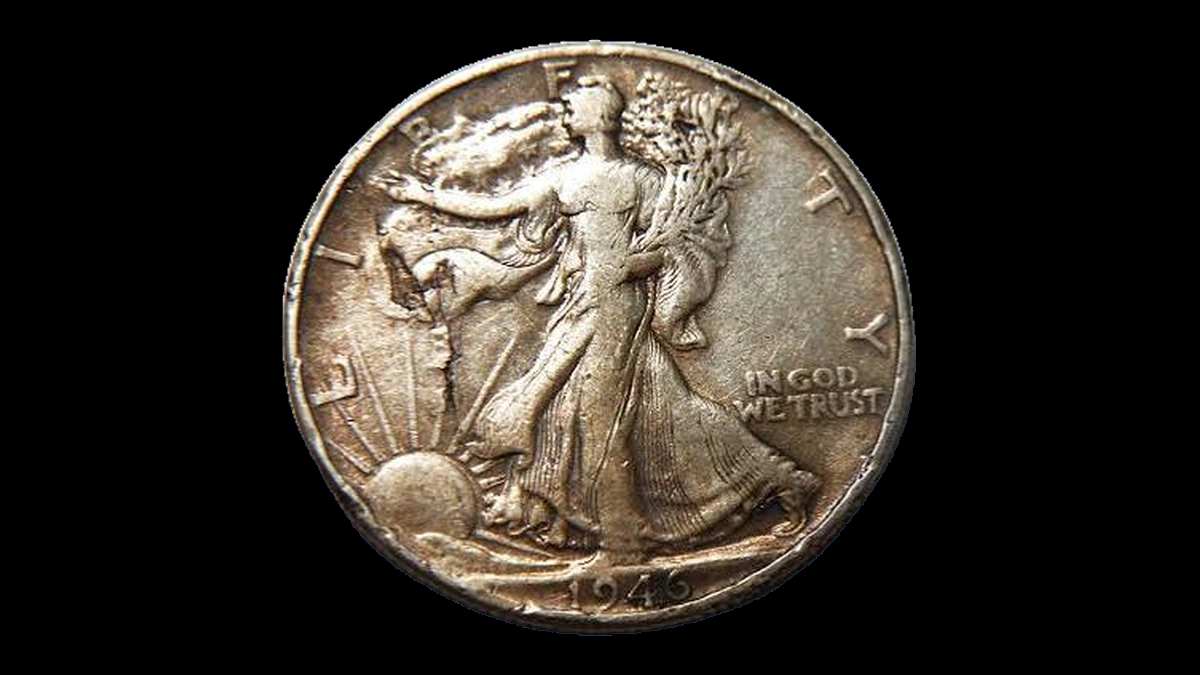
Sullivan Numismatics lists a Philadelphia 1946 graded PCGS F12 with obverse lamination. The well-worn grade shows that the defect can remain identifiable after substantial circulation.
How to Identify
Illuminate the affected area from a low angle and follow the boundary of any layer. A scratch cuts through the surface rather than exposing a naturally separating sheet.
Do not press or pull an attached flap. It may retain nearly all the original weight, so a normal scale reading cannot rule out lamination.
Check whether the seam continues toward the edge and document nearby damage separately. The source does not prescribe an exact front location for every example.
What It’s Worth
Comparable worn through ordinary unworn coins are estimated at $100–$600. Visibility, the survival of an attached layer, and the condition of the rest of the coin affect appeal.
Sullivan’s F12 example carries a $100 asking price. It is a dealer offer, not a completed auction result.
5. 1946 Half Dollar A Ridge or Lump Stands above the Surface: Die Crack or Break Error
Inspect raised features separately from peeling metal. Coin metal entering a fracture in a die can form a narrow ridge, while a missing piece of the die can leave a larger raised area with normal details absent.
A substantial break connected to the rim is especially useful to examine. No confirmed 1946 crack path or exact break size is established in the supplied material.
How to Identify
Move the light across the feature to determine whether it rises above the surrounding surface or cuts into it. Trace the complete ridge instead of judging a short bright segment.
For a broad patch, check whether the lost design and raised metal occupy the same area. If it reaches the rim, inspect the edge for an impact that could have pushed metal inward.
Do not assign a documented route or a specific die identity when none is supplied. The coin must establish the feature.
What It’s Worth
Confirmed examples are estimated at $50–$1,000, with minor cracks generally near the lower end and large rim-connected breaks requiring individual comparison.
A 1976-D Kennedy reverse die break graded NGC MS65 sold for $256 at Heritage in June 2026. That later copper-nickel coin offers broad context, not a direct value for a 1946 silver half.
6. 1946 Half Dollar A Small Section of Edge Is Missing: Clipped Planchet Error
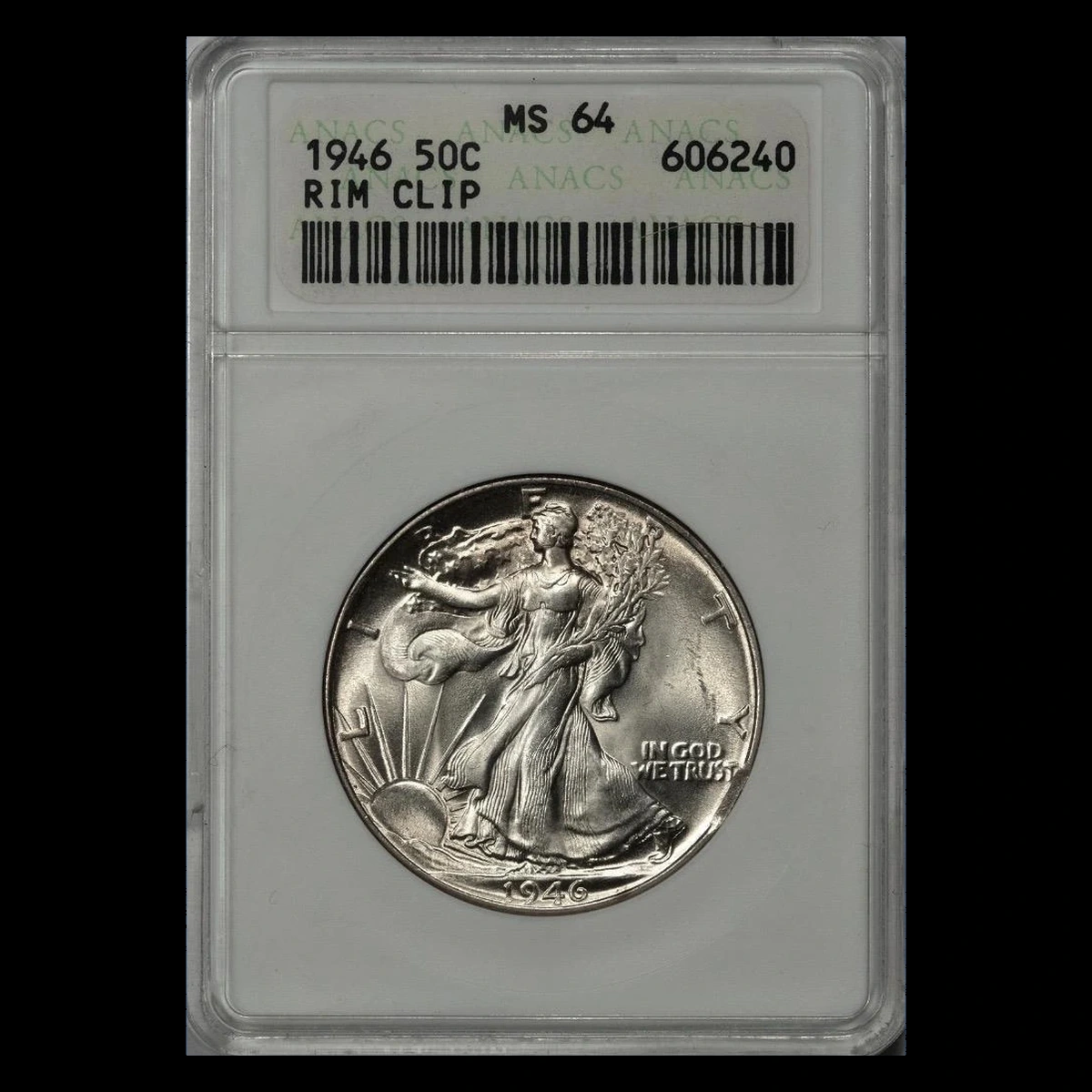
The reported 1946 clip is small and appears on an ANACS MS64 example identified in Mint Error News. A side view may make the absent section easier to notice than a straight-on photograph.
A clip begins when blank cutting produces an incomplete disc, such as by overlapping a previous hole or the strip’s edge. The rim and design subsequently form around the missing metal.
How to Identify
Inspect how the rim approaches both ends of the opening. Nearby design may weaken as it reaches the gap rather than end in a freshly cut surface.
Look for file scratches and sharp burrs along the edge. Weakness opposite the gap can support a clip diagnosis, although it may be faint on a small clip.
Record weight and an intact diameter, allowing for wear. A tiny missing section may produce only a small measurable weight change.
What It’s Worth
Small genuine clips are estimated at $75–$500 from worn through attractive unworn condition. No confirmed sale price is supplied for the 1946 MS64.
A 1942-S clip graded ANACS MS62 sold for $81.90 including the buyer’s fee in May 2025. That nearby-year example helps frame an affordable modest clip without assigning its price to every 1946.
7. 1946 Half Dollar A Wide Border Contains the Complete Design: Broadstrike Error
A broadstrike forms when the collar fails to restrain the blank and metal spreads outward during the strike. The full design remains present inside the enlarged outline.
No named certified 1946 specimen is established in the supplied material. A widened coin needs evidence of original striking, since later hammering can also increase diameter.
How to Identify
Measure several widths and verify that the complete designs fit on the metal. Spreading itself removes no material, so weight should remain compatible with the original standard and subsequent wear.
Inspect whether the details formed as metal spread or were crushed afterward. Examine the edge for unusual reeding; a step can suggest partial contact with the collar rather than a wholly unrestrained strike.
A cut-off design beside untouched metal belongs in the off-center investigation below. Width alone cannot distinguish the categories.
What It’s Worth
The comparison-based estimate is $3,000–$7,000. Mint Error News’ July 2025 guide uses that range for Walking Liberty broadstrikes, from a small spread on a worn coin to a large unworn example.
These are series guide values, not completed 1946 sales. The actual spread, preservation, and any later damage must support a comparable assessment.
8. 1946 Half Dollar Blank Metal Remains beside a Displaced Design: Off-Center Strike Error
If a blank is partly outside the dies when they strike, some design can run off the metal while another area remains untouched. This changes the design’s position as a whole, beyond an uneven rim.
The source establishes no clearly dated 1946 specimen. An undated Walker cannot enter this year’s list simply because the design is recognizable.
How to Identify
Read the surviving date first, then compare the struck-to-blank boundary on both faces. The displacement should make sense as one original strike.
Inspect smooth areas and the edge for filing or cutting that could imitate missing design. If the mintmark region is absent, the lack of a letter cannot establish Philadelphia.
Document any uneven outline with calipers, but do not assign a shift percentage without measuring the actual coin. A complete photograph is more useful than a close crop of blank metal.
What It’s Worth
Genuine identifiable examples have an estimated $100–$12,000 range from modest worn shifts to striking unworn pieces. Date visibility and undamaged surfaces matter.
A 1918 struck ten percent off center and graded PCGS MS65 sold for $10,575 at Heritage in April 2013. It supports the scale of the upper comparison without establishing a 1946 transaction.
9. 1946 Half Dollar The Eagle Repeatedly Leans after Flipping: Rotated Dies Error
Finish by checking the relationship between the two faces. Rotated dies place the designs at the wrong relative angle even when both remain centered.
A tilted holder or separately rotated photograph cannot demonstrate this. No measured 1946 example is established in the supplied material.
How to Identify
Hold Liberty upright against a vertical reference and flip the coin top to bottom without twisting sideways. Repeat the movement and record whether the eagle lands at the same incorrect angle.
Check that the coin has not slipped in a holder. Inspect the edge for a seam that could indicate joined coin halves rather than an original mint product.
Photograph or record the controlled flip while preserving orientation. The relationship of both faces is the evidence, not the lean in one picture.
What It’s Worth
A confirmed visible rotation on a worn or ordinary unworn coin is estimated at $50–$500. A slight tilt may add little to normal value.
A 1941 Walker described by Musick Auction as lightly worn with rotation received a $70 winning bid in May 2026. That different-year coin was not in a grading-service holder, and the figure is a bid rather than a stated all-in cost.
Conclusion
The most specific 1946 comparisons begin with FS-101 around Liberty’s figure and FS-801 on the Philadelphia reverse. Match those patterns before applying prices, and keep the separately reported San Francisco details distinct.
For physical errors, use the edge, dimensions, and both faces together. Several categories here lack a named 1946 specimen, so preserve that uncertainty and let the actual coin supply the evidence before assigning an error premium.