Rare 2012 Half Dollar Errors (List & Pictures)
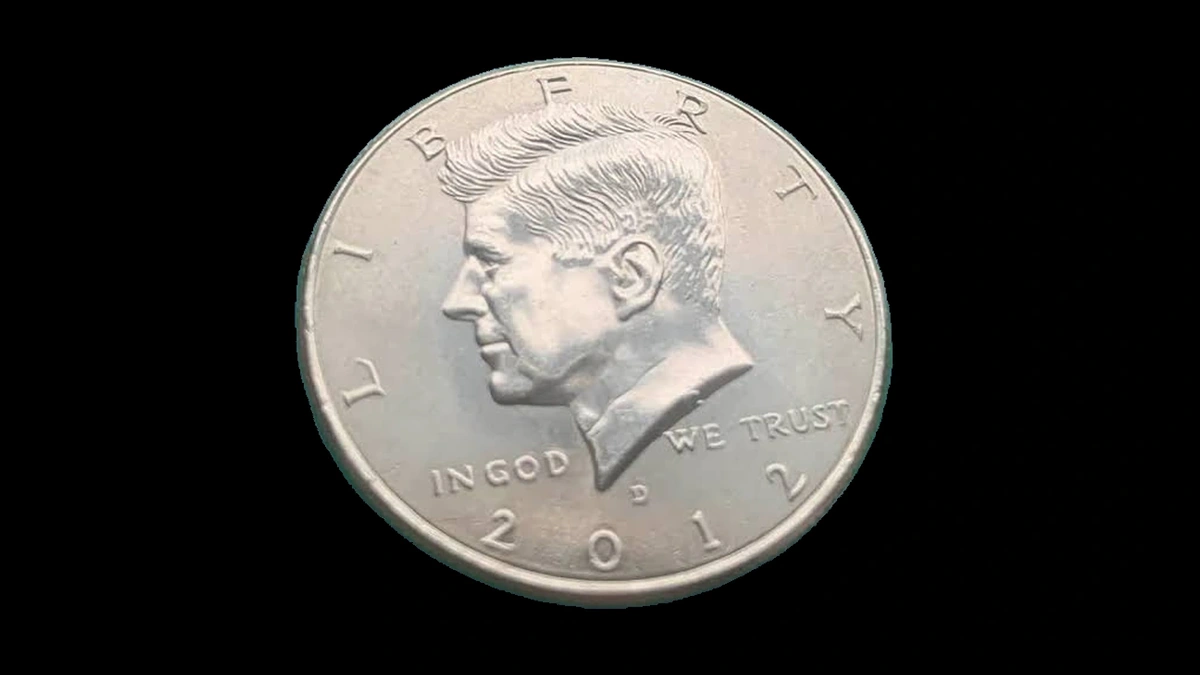
Before weighing a possible error, identify which 2012 half dollar you have. The normal silver Proof is heavier than the clad version, so extra weight alone does not make it a wrong-blank coin.
Estimated values for the 2012 Kennedy half dollar errors below run from $10–$3,000. A 1967 Special Mint Set half on a quarter blank sold for $840 in 2019, offering a different-year comparison for the final candidate category.
Check raised details first, then the surface, outline, and metal.
| Visible feature | Category | Estimated range |
|---|---|---|
| A raised narrow line | Die crack | $10–$30 |
| An extra rounded outline | Reported 2012-D doubled die | $30–$200 |
| A local weak patch or depression | Strike-through | $30–$350 |
| A missing piece of the edge | 2012-D clip | $40–$150 |
| A wider body with complete designs | Broadstrike | $60–$200 |
| Missing design beside bare metal | Off-center strike | $75–$350 |
| Exposed copper where outer metal is absent | Missing clad layer | $200–$1,900 |
| Measurements fit another coin’s blank | Wrong-blank candidate | $600–$3,000 |
Clad P, D, and S halves normally weigh 11.34 grams; they have bonded outer layers around a copper center. The 2012-S 90% silver Proof weighs 12.50 grams and is a regular collector issue.
Both measure about 30.61 mm across and have grooved edges. Read the mintmark below Kennedy’s neck and keep the finish and metal type with your measurements.
1. 2012 Half Dollar A Narrow Ridge Crosses the Surface: Reported Die Crack Error
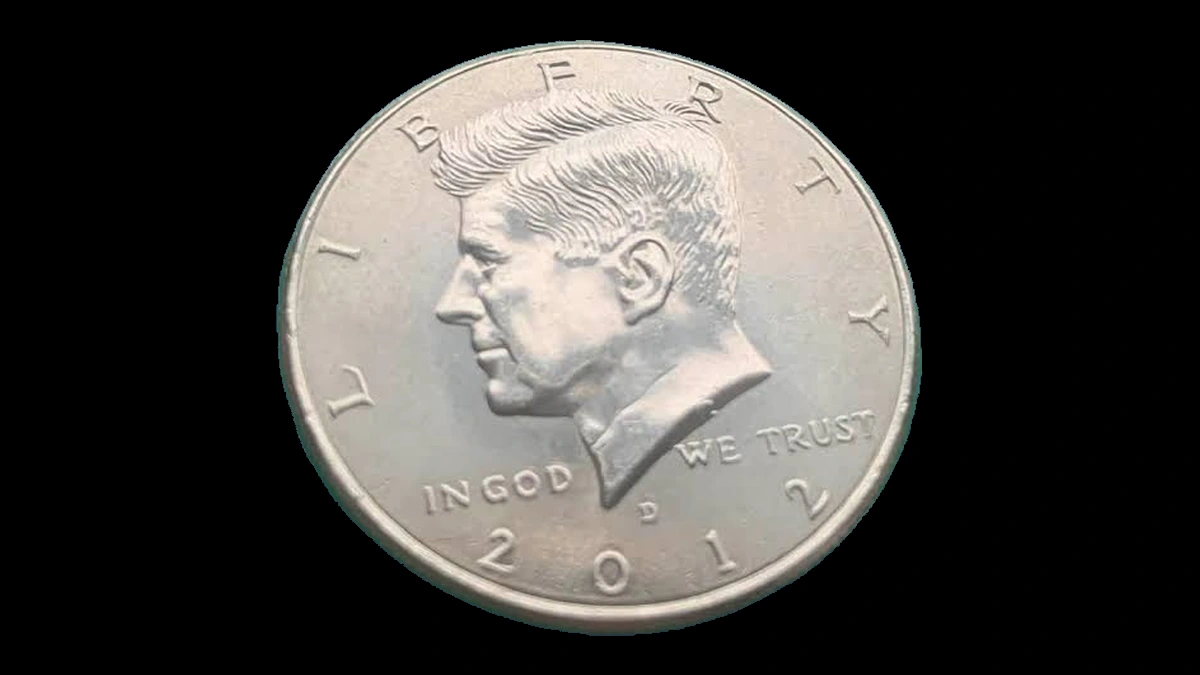
A crack in a die, the steel tool used to stamp coins, can admit metal during striking. That metal forms a raised line on the finished coin.
The 2012 report names no particular mint or route for the line. Do not assume a fixed path through Kennedy’s hair or the eagle.
How to Identify
Tilt the coin under low light and follow the entire line through a 10× magnifier. The center should rise above the surface rather than form a recessed channel.
A scratch can push metal up along its edges while remaining cut down the middle. A broad raised lump also differs from the narrow crack described here.
What It’s Worth
$10–$30 is the guide estimate for a minor visible crack on an ordinary clad half. It is not a recorded auction result.
A clean surface makes a small ridge easier to appreciate than a similar line among scratches. The estimate does not assign it the value of a large broken-die lump.
2. 2012 Half Dollar An Extra Outline Repeats: Reported 2012-D Doubled Die Error
A doubled die carries repeated detail before it strikes a coin. Modern die preparation can create that effect without the older repeated hand-guided process.
The 2012-D report names no confirmed variety number or affected face. The date and lettering are places to begin looking, not established diagnostic points.
How to Identify
Move the light to see whether the suspected extra contour remains physically present. A reflection can disappear with a small change in angle.
Rounded extra detail differs from a low shelf that trims the main letter. The latter can result from movement during striking.
Confirm D and compare the exact shape and position with a verified same-die example. The source does not justify calling a particular front or back letter doubled without that match.
What It’s Worth
$30–$200 is the estimate for a confirmed minor example. Clear detail and attractive surfaces support the higher portion.
This is a modern Kennedy comparison range, not a recorded sale of a named 2012-D variety. Thick lettering alone does not establish the feature being priced.
3. 2012 Half Dollar One Area Does Not Receive the Design: Strike-Through Error
An obstruction between the blank and die can leave a shallow impression or missing detail. A solid object may leave a shape, while grease or packed debris may simply block a recess in the die.
The 2012 discussion supplies no specific object, mint, or finish. A wire, thread, or cloth pattern should not be assigned merely because it seems possible.
How to Identify
Inspect the boundary where normal design meets the affected patch. Look for an interruption formed during striking rather than a gouge across completed details.
Compare nearby high points and the opposite side for ordinary wear or general strike weakness. Pushed-up damage and an edge impact can suggest a later dent instead.
Small strike-throughs may leave weight and diameter normal. Measurements cannot identify the obstructing material by themselves.
What It’s Worth
$30–$350 is the estimate for local impressions on ordinary clad halves. Subtle grease-related weakness belongs near the lower end.
A dealer offers an undated Kennedy with impressions on both sides for $125 in AU58 condition. That very lightly worn asking-price comparison is not a 2012 transaction.
4. 2012 Half Dollar A Section of the Edge Is Missing: Reported 2012-D Clip Error
A clipped blank was incomplete before the design was struck. Pressure then shaped the remaining metal around the existing gap.
The Denver report establishes neither a curved or straight shape nor a missing percentage. Those details need to be observed on the actual coin.
How to Identify
Confirm D, then follow how the rim and nearby design approach the missing area. Natural strike changes can show that the gap existed before the pictures formed.
Look for file tracks, sharp cuts, or burrs through the finished edge. Weakness opposite the opening is a useful supporting clue when visible.
Compare the weight loss with the missing area and measure intact spans. A low reading alone cannot distinguish a clip from later cutting.
What It’s Worth
$40–$150 is the estimate for a genuine clip, based on Kennedy-series comparisons. No specific 2012-D sale sets the range.
A dealer offers a 1971-D with a 10% clip and an MS64 grade for $90. It is a different-year asking price, not a completed sale or the missing percentage of the 2012 report.
5. 2012 Half Dollar The Complete Picture Sits on a Wider Coin: Broadstrike Error
A broadstrike occurs when the retaining ring fails to control the coin’s width. Metal flows outward while the complete design remains on the blank.
The reported category covers ordinary 2012-P and 2012-D halves. Its wider border can be uneven without making the strike off center.
How to Identify
Measure across several directions and account for all the design on both faces. Expansion beyond the usual diameter, with weight near normal, supports spreading rather than missing metal.
Look for natural outward flow and absent or incomplete edge grooves. A coin hammered wider after manufacture can show crushed details and pressure marks.
The key is a complete naturally struck picture on an expanded body. Size alone is insufficient.
What It’s Worth
$60–$200 is the estimate for the reported 2012 category. The year guide’s narrower $60–$80 discussion concerns lower MS62 examples.
Dealer offers of $165 for a 1990-P and $175 for a 1983-P, both MS65, provide more attractive unworn comparisons. They are asking prices for other dates, not 2012 auction records.
6. 2012 Half Dollar A Blank Crescent Borders a Missing Picture: Off-Center Strike Error
An off-center blank sits partly outside the area reached by the dies. It leaves untouched metal beside an incomplete design, with a corresponding effect on both faces.
The reports concern ordinary 2012-P and 2012-D coins. They do not establish a 2012-S Proof error from a Proof example of another year.
How to Identify
Compare both full outlines and find where the intended design runs beyond the metal. The bare margin should retain original unstruck surface.
If only one picture shifts while the opposite face remains centered, check for a misaligned die instead. Inspect for later trimming or smoothing around the blank-looking area.
Read the date from the coin before estimating the shift. Each specimen needs its own surviving identity and percentage.
What It’s Worth
$75–$350 is the estimate for roughly 10–20% displacement with a readable date. The guide discusses $75–$150 around MS62–MS64.
Sullivan Numismatics asks $350 for a 1976 half struck 10% off center in MS65. That different-year retail offer supports the upper comparison, rather than a $350 sale of a 2012 coin.
7. 2012 Half Dollar Copper Replaces an Outer Surface: Reported Missing Clad Layer Error
Part or all of a face may show the copper center when an outer layer is absent. Partial loss leaves a boundary against surviving outer metal, while complete loss affects nearly the whole side.
The 2012-D report does not identify the face or extent of loss. A normal silver Proof is a different product and is not a missing-clad example.
How to Identify
Compare both faces and look for a real layer boundary or design struck into exposed copper. Brown staining or a coating can change color without removing a layer.
Use a digital scale to check for a reduction from 11.34 grams consistent with the visible loss. The edge should help explain how the exposed area meets the remaining layers.
Inspect for scraping or forced removal. Exposed copper and low weight need a manufacturing explanation together.
What It’s Worth
$200–$1,900 is the estimate for confirmed examples, using modern Kennedy missing-layer comparisons. Partial exposure on an ordinary coin belongs nearer the lower end.
Extensive loss with clear evidence and attractive surfaces can support a higher figure. The range is not a 2012-D auction record, and a stained coin with intact layers does not fit it.
8. 2012 Half Dollar Weight and Size Fit a Different Coin: Wrong-Blank Candidate Error
A wrong-planchet error puts the half-dollar design on a blank intended for another denomination. A smaller blank may not have room for the outer parts of Kennedy’s design.
The 2012 guide raises this possibility using other Kennedy dates without identifying a confirmed 2012 specimen. A normal silver Proof or the wrong coin in a package does not establish a wrong blank entering the press.
How to Identify
First rule out the normal clad and silver products using the mint, finish, and weight. Then record the candidate’s full outline, edge construction, and any naturally missing outer design.
A quarter blank starts near 5.67 grams and 24.3 mm; a nickel blank starts near 5 grams and 21.21 mm. A half-dollar strike may spread either, so use weight, size, and metal together.
Metal testing can distinguish an alloy from an altered surface. The proposed blank must explain the measurements and the Kennedy design on it.
What It’s Worth
$600–$3,000 is the comparison estimate for a confirmed strike on a smaller-denomination blank. Its actual blank identity determines which comparison is useful.
A 1967 Special Mint Set Kennedy struck on a quarter blank sold for $840 in 2019. That different date and finish demonstrate the mechanism, not a documented 2012 discovery.
Conclusion
A raised crack calls for a height check, an expanded rim needs complete-face views, and unusual metal needs measurements as well as photographs. These tests address different steps in manufacture.
Keep the normal silver Proof separate from clad halves throughout the process. For the wrong-blank category, the value range is conditional on establishing the error rather than simply finding an unusual weight or color.