Rare 1846 Dime Errors (List & Pictures)
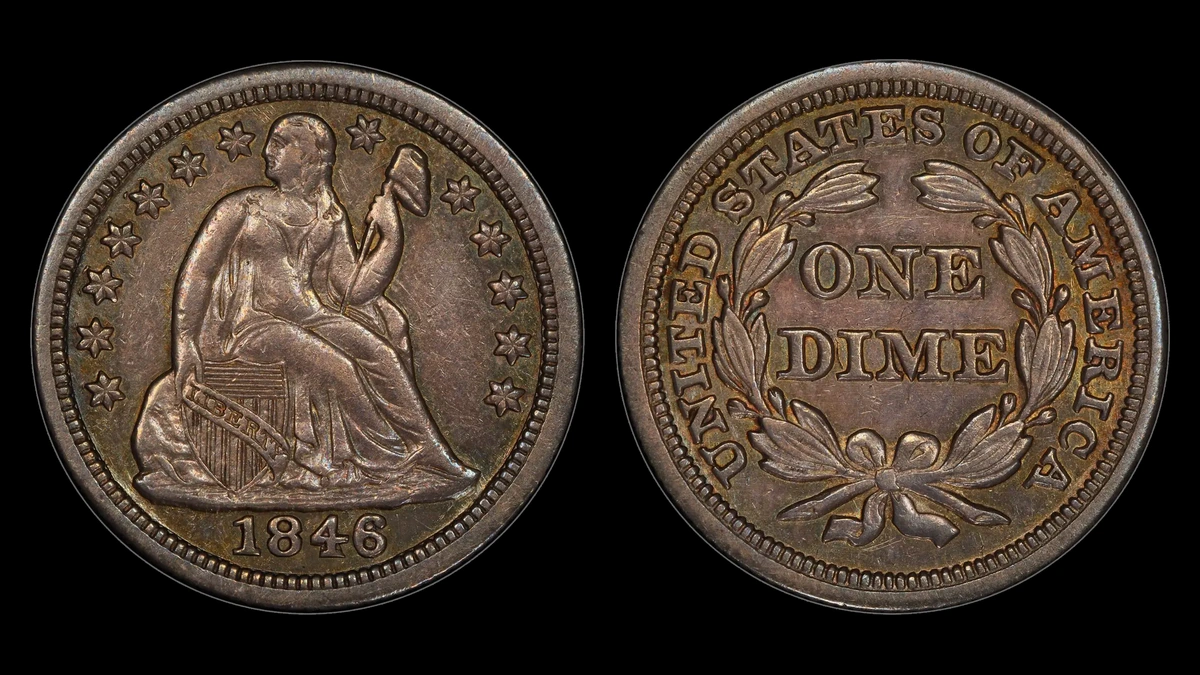
The small bumps beside the stars are the most useful starting point for the 1846 dime errors discussed here. Estimated values for worn examples are $350–$3,500, and an attributed F-101 sold for $3,120 in August 2021.
Check the star details and date position before using the reverse lines as supporting evidence.
1846 Dime Raised patches cluster beside the stars: Die Chips and Associated Reverse Lines Error
On the F-101 Liberty Seated dime, several stars have small areas of extra raised metal nearby. The reported positions are stars 3, 4, 5, 6, and 13.
These patches reflect small pieces breaking out of the die, the steel stamping tool. Silver entered the resulting cavities when a blank was struck, producing bumps instead of depressions on the coin.
The locations are inside the design, unlike a large rim-connected die break known as a cud. Their association with specific stars helps distinguish the variety from an arbitrary surface blemish.
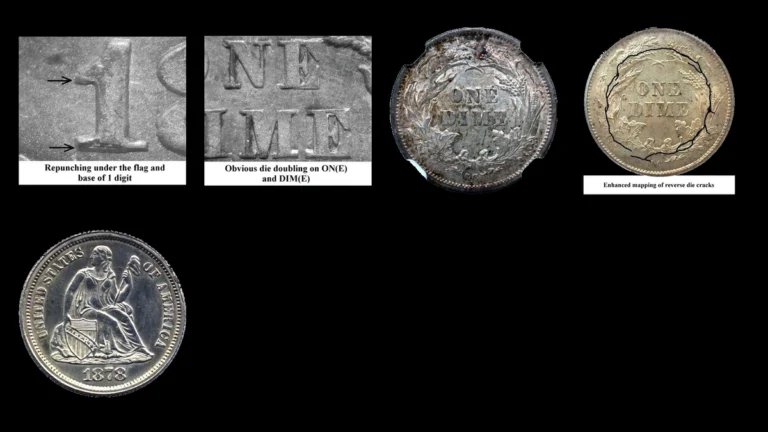
Lines above parts of AMERICA toward the reverse rim accompany the variety. Specialist descriptions differ over calling those lines cracks, so the clearer star chips carry more weight in the explanation here.
How to Identify
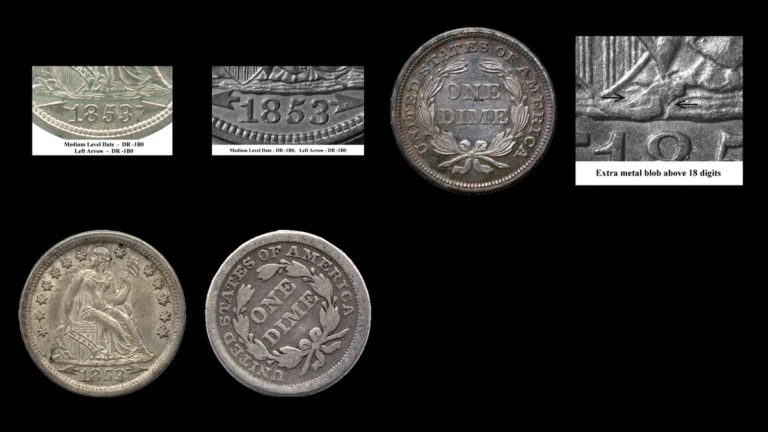
Find a clear image of an attributed F-101 and orient both obverses the same way. Check the high, level date before comparing individual bumps beside the stars.
A specially made collector Proof with a sloping date does not substitute for this regular-use variety. The correct arrangement of the date and the star features must belong to the same coin.
At about 10× magnification, work through stars 3–6, then inspect star 13 separately. Compare the outlines and positions of the patches rather than treating any extra-looking metal in those regions as a match.
Changing the light angle can help distinguish a raised feature from an incised scratch. Dirt may also obscure the star edges, but scraping or cleaning a suspected chip would damage the evidence you need to examine.
On the reverse, follow the lines above AMERICA toward the rim and compare their arrangement with the reference. Record what is visible without making the disputed crack description the deciding test.
An accessible coin can be checked against the original specifications of approximately 2.67 grams and 17.9 millimeters, along with its grooved edge. Those measurements concern the coin’s basic identity; the matching star patches establish the relevant die feature.
What It’s Worth
The estimate is $350–$3,500 for a worn whole coin. The scarcity of the 1846 date already contributes substantially to its value before the chips are considered.
PCGS records an F-101 sale for $3,120 at Stack’s Bowers in August 2021. That coin was graded AU Details, which indicates slight wear together with a surface or condition problem.
The Details designation belongs in any comparison with the sale. A coin with different wear, altered surfaces, or less visible diagnostics should not receive the same valuation merely because it also has a bump near a star.
No separate dollar amount for the individual chips is established by that result. It is the price of the complete attributed dime, including its date, condition, and other qualities.
Conclusion
The most persuasive identification starts with the high, level date and matching raised patches beside the specified stars. The reverse lines add context, but their terminology is less settled than the visible die chips.
Keep the scarce date and surface condition in the valuation. The $350–$3,500 range and the $3,120 recorded sale describe whole coins, not an automatic bonus for each patch.