Rare 1864 Dime Errors (List & Pictures)
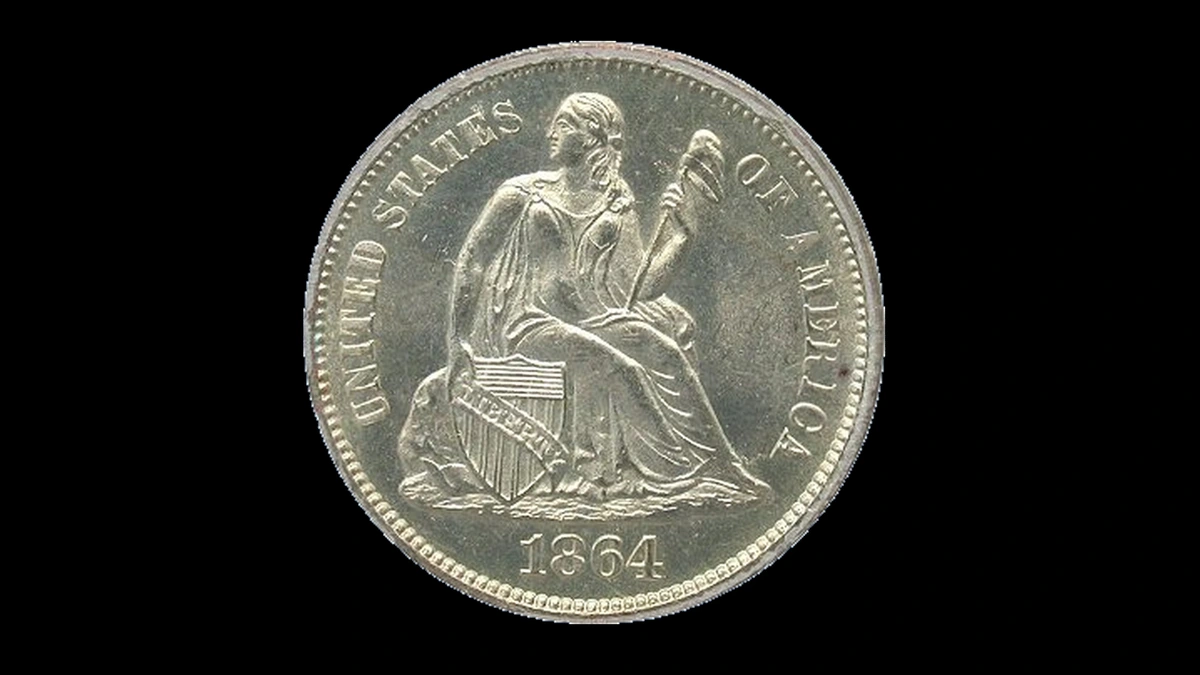
A Proof 1864 dime sold for $3,596.01 in January 2016, but that result includes the coin’s exceptional condition. The 1864 dime errors below span estimated whole-coin values of $500–$8,000.
Use the small letter flaws to identify the dies, then look for evidence that the dies struck each other. A normal example weighs 2.49 grams, measures 17.9 millimeters, and has a reeded edge.
1864 Dime Tiny raised flaws in the letters: letter die defects Error
Some 1864 dimes have little irregularities attached to particular letters, almost like extra strokes. These features came from the dies—the tools that impressed the coin’s design—and can help identify which pair made the coin.
There are two different groups to compare, rather than one set of marks shared by every 1864 dime. The F-101 Proof and F-102 Proof have different identifying flaws.
How to Identify
For F-101, examine the F in OF, the E in UNITED, and the E in AMERICA on the front. The reverse has a flaw at the lower left diagonal of the M.
For F-102, concentrate on the reverse denomination: below the E in ONE, across the lower part of the I in DIME, and along the M’s left diagonal. Several matching features make a stronger attribution than a single unusual-looking letter.
F-102 dies were also used to strike coins for circulation, with F-102a identifying a later condition of those tools. A Proof finish and a circulation finish should therefore be assessed separately even when small defects connect their dies.
A scratch cuts into the coin, while a die defect can produce a raised feature that repeats on other coins. Do not confuse these tiny letter details with the transferred design shapes discussed in the next section.
What It’s Worth
The estimated range is $500–$8,000 for the complete coin, with condition and Proof status doing much of the work. These identifying marks do not establish an equally large extra payment for the defect itself.
An NGC PR67 Cameo F-102 brought $3,596.01 in January 2016. That was a high-grade Proof with contrasting reflective fields and frosted design, so a worn circulation coin should not be priced from that result.
A later F-102a graded NGC MS64 sold for $2,760 in September 2019. It provides circulation-coin context, while also illustrating why the die variety and the coin’s finish both belong in a price comparison.
1864 Dime Faint shapes in the open areas: clashed dies Error
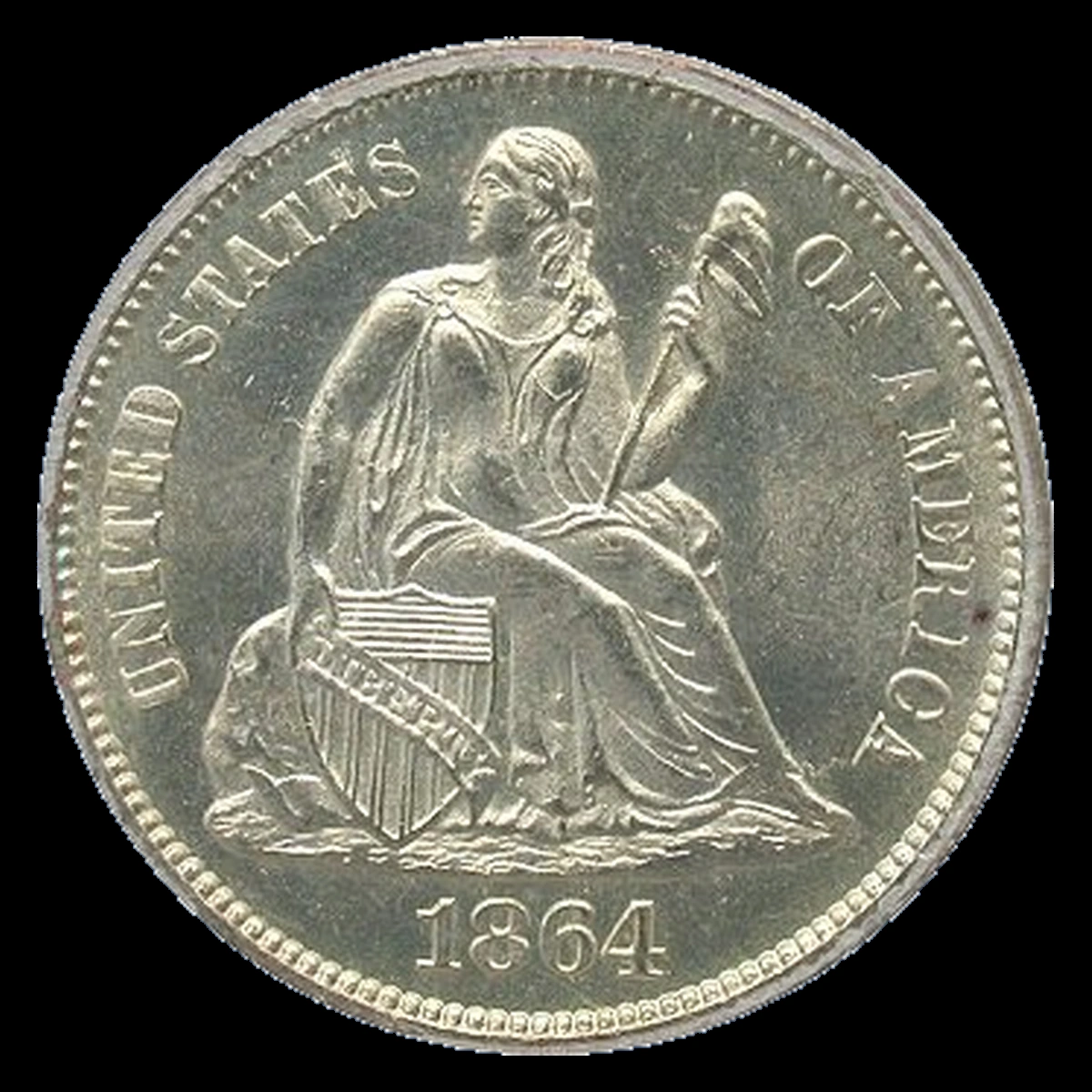
A die clash happens when the two dies meet without a coin blank between them. The contact can damage their surfaces with traces of the opposing design, which then appear on coins struck afterward.
The later F-102a circulation variety has clash evidence from both dies. Its connection to earlier Proof dies does not mean that every F-102 Proof also carries those later clash marks.
How to Identify
First establish the letter details associated with F-102, then compare the open areas on both faces with the F-102a reference photographs. The task is to match the position and direction of faint transferred shapes, not merely to find lines.
Clash marks should make sense as parts of the opposite die’s design. Random scratches, cleaning lines, or isolated surface stains do not make that connection.
Use gentle changes in lighting when inspecting a faint mark. A line that disappears into reflected light may still need examination, but a photograph’s shadow alone cannot establish the attribution.
What It’s Worth
Clashed F-102a examples have an estimated whole-coin range of $700–$6,000. The amount depends heavily on preservation and how securely the variety is identified.
The NGC MS64 F-102a sold for $2,760 in September 2019 is the directly relevant example supplied here. A PCGS F12 with CAC approval brought $1,560 in August 2025, but that worn coin was not identified as this clash variety.
The latter sale shows that an ordinary 1864 dime can already be valuable. It does not isolate a clash premium, and the $6,000 upper estimate is not a documented sale quoted in this guide.
Conclusion
Start with a map of the letter defects, then decide whether the coin also matches the later clash stage. This keeps an early Proof and a later circulation strike from being treated as the same thing.
For value, compare coins with the same finish and similar wear before considering the die features. An expensive 1864 dime may owe much of its price to the underlying coin rather than to one tiny raised mark.